


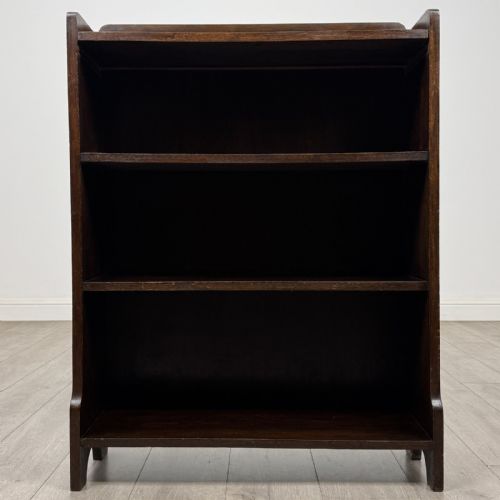

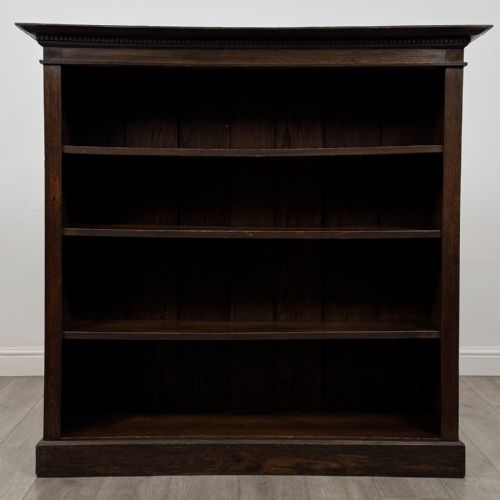
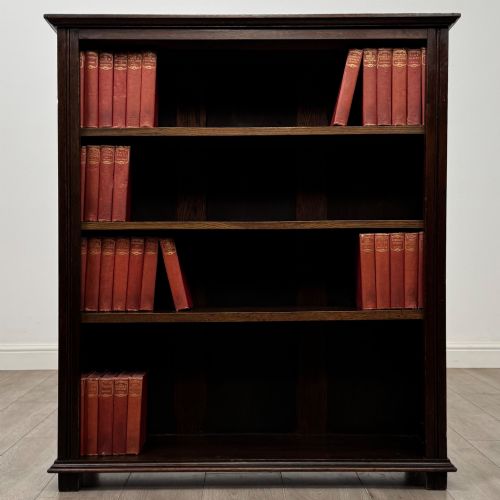
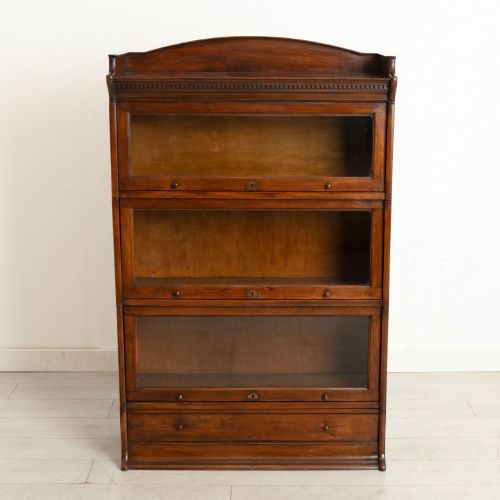
Dark Oak Library Bookcase
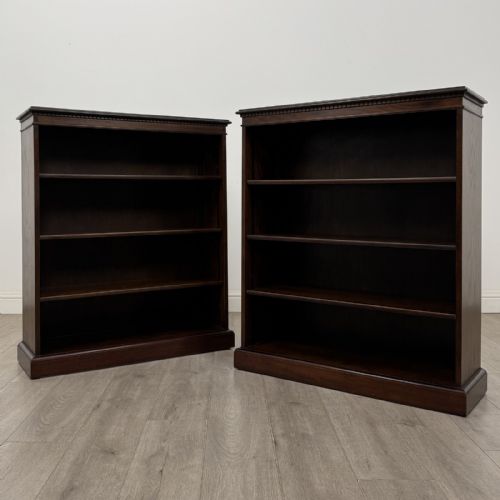
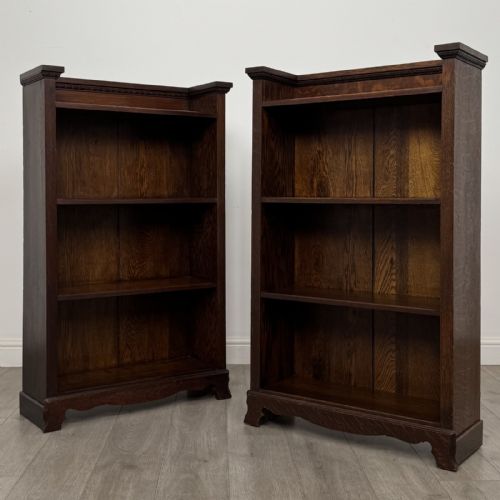
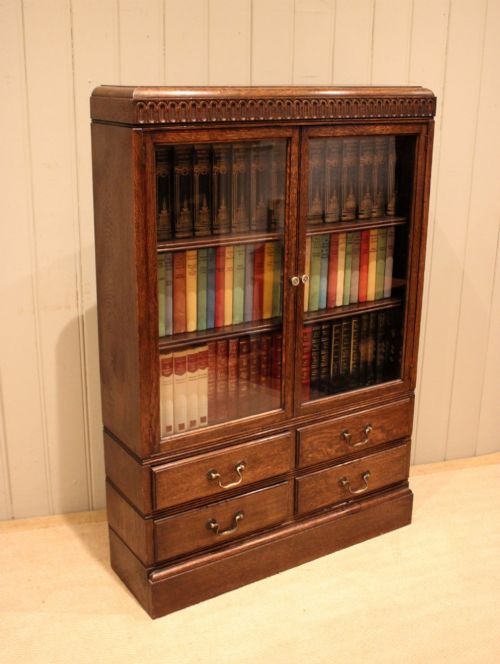
A dark oak library bookcase brings rich timber grain and serious book storage to a room, ranging from simple open shelves to glazed and revolving forms.
Dark Oak Library Bookcase
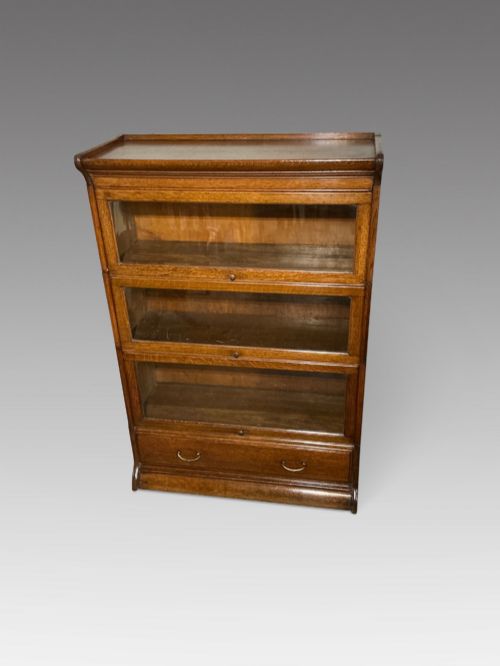
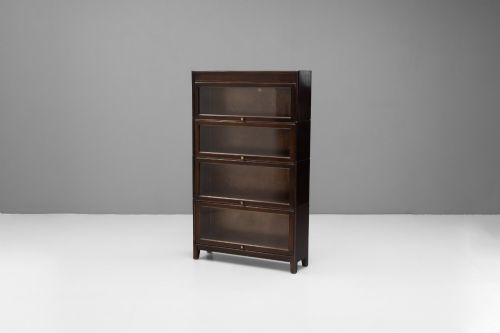
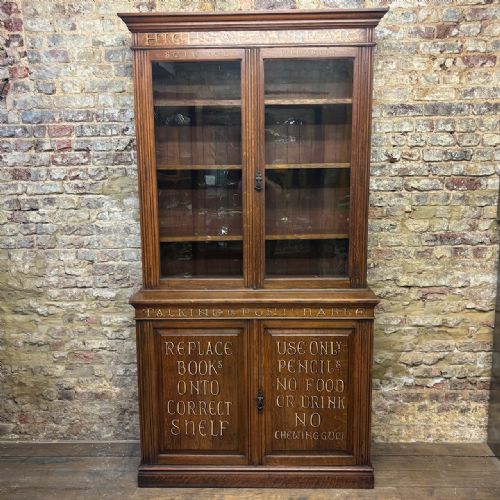
A dark oak library bookcase is a sturdy piece of furniture designed to hold substantial collections of books, appearing across periods from the nineteenth century into the twentieth century. These pieces span simple open front formats to complex glazed cabinets, revolving designs, and sectional stacking units.
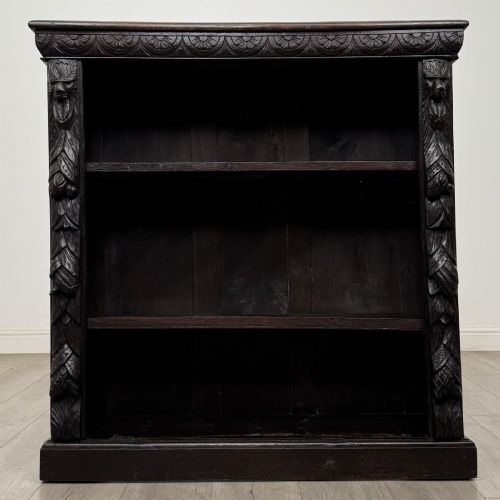
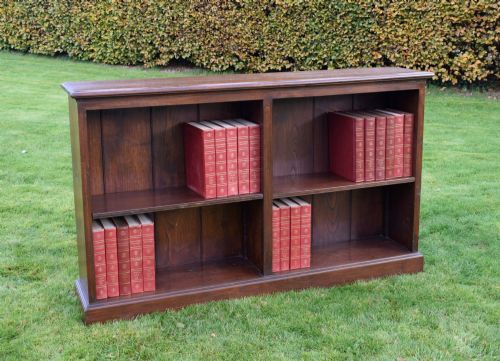
Buyers browsing this selection frequently encounter Edwardian open variants alongside Victorian carved examples and industrial items. The forms stretch from low dwarf bookcases to tall narrow units and large breakfront pieces built for institutional or domestic libraries.
Origin details reveal English workshops alongside French library carts and specialised school furniture. Construction utilises durable timber adapted to both intimate studies and large reading rooms.
Materials and construction methods
Makers built these pieces primarily using solid oak and golden oak, often selecting quarter-sawn timber to display prominent medullary rays. Secondary materials include walnut for contrast, alongside glass for cabinet doors and lead or iron for structural reinforcement.
Joinery methods relied on sturdy tongue-and-groove joints, adjustable shelf brackets in metal or wood, and carved ornamentation reflecting Jacobean Revival, Gothic Revival, Arts and Crafts, and Renaissance Revival aesthetics. Glazed doors utilised wooden framing secured with putty or lead cames.
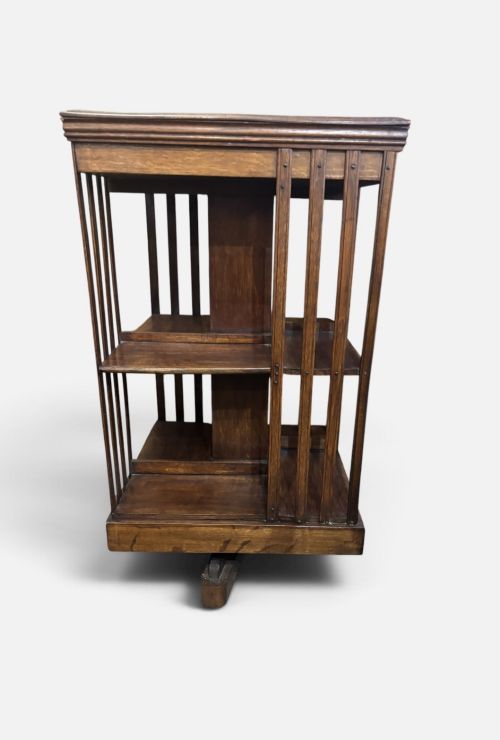
Hardware incorporates brass hinges, handles, and cast iron fittings that support rotating mechanisms in revolving models or stacking hardware in sectional barrister units.
Dark Oak Library Bookcase Retail Price Guide 2026
Typical asking prices for dark oak library bookcase among the pieces listed under this phrase on Sellingantiques today, from the lower quarter to the upper quarter. They describe what is for sale here now, not the wider market.
Craftsmanship across these pieces demonstrates diverse revival styles, including Gothic, Jacobean, and Renaissance influences applied to practical book storage.
Indicators of superior craftsmanship
Quality rests upon the selection of the timber and the depth of the carving, where hand-tooled details on Victorian and Gothic Revival pieces show crisp relief and deliberate placement. Lesser examples display mechanical stamping or plain surfaces without architectural mouldings.
The integrity of the internal shelving system dictates utility, with adjustable mechanisms operating smoothly and supporting heavy volumes without sagging. Superior units incorporate solid backboards and tight joints rather than thin plywood substitutes.
Hardware execution also separates standard production from finer output, with heavy brass fittings, robust leaded glass panels, and fully functional revolving or stacking mechanisms operating without binding.
Heals·Globe Wernicke·Minty
The Dark Oak Library Bookcase Glossary
- Breakfront
- A cabinet design where the central section projects forward from the flanking wings. This architectural layout creates depth and visual rhythm in large library rooms.
- Globe Wernicke
- A proprietary stacking barrister bookcase system featuring modular glazed sections. Each tier lifts and slides inward to access the books inside.
- Dwarf bookcase
- A low shelving unit designed to sit beneath window height. These pieces keep floor space open while providing accessible surface display areas.
- Green man
- A sculptural architectural motif depicting a face carved from or entwined with leaves and vines. It appears frequently on carved Victorian and revival furniture.
- Quarter-sawn
- Timber cut at right angles to the annual growth rings, producing a distinct tiger-stripe grain pattern. This method yields exceptionally stable boards resistant to warping.
Dark Oak Library Bookcase: Frequently Asked Questions
How do I adjust the shelves?
Most period library bookcases utilise wooden ratchets, metal pins, or sliding shelf tracks inside the uprights. You simply lift the shelf slightly to disengage the supports and reposition them into adjacent slots.
Older Victorian and Edwardian systems may require gentle handling if timber has expanded over decades, so apply steady pressure rather than force when adjusting shelf heights.
Where should I place a revolving bookcase?
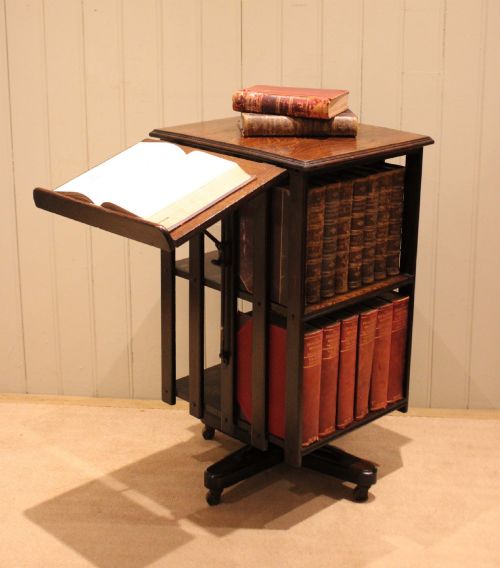
A revolving bookcase works best freestanding in the centre of a room or beside an armchair where all four sides remain accessible. Because they rotate on a central pivot, they require clearance space around them.
Keep them away from direct heat sources and strong sunlight to protect the dark oak finish and prevent the rotating base from drying out unevenly.
Are stacking bookcases difficult to assemble?
Stacking barrister bookcases consist of individual modular tiers that rest one upon another beneath a top cornice and above a fixed base. You assemble them by stacking the separate glass-fronted sections vertically.
No complex hardware is required, but you must ensure the floor is entirely level so the sliding doors operate smoothly across all tiers.
How do I care for dark oak timber?
Maintain the timber by dusting regularly with a soft, dry cloth and applying traditional beeswax sparingly to nourish the grain. Avoid silicone-based polishes that build up sticky residues over time.
Maintain stable indoor humidity levels to prevent the solid oak panels and carved mouldings from cracking or warping in changing seasons.