

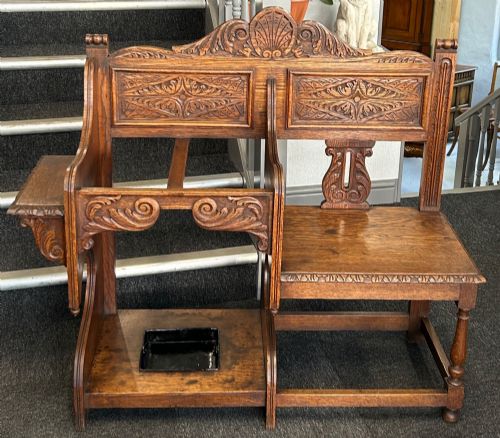
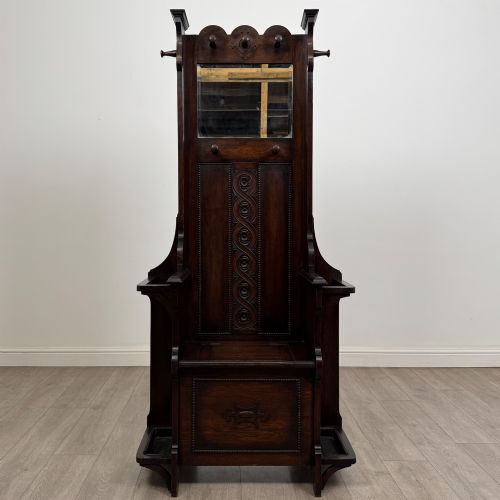
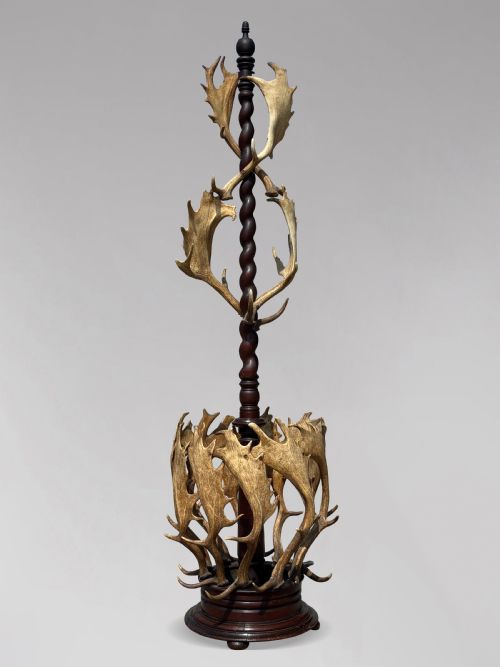
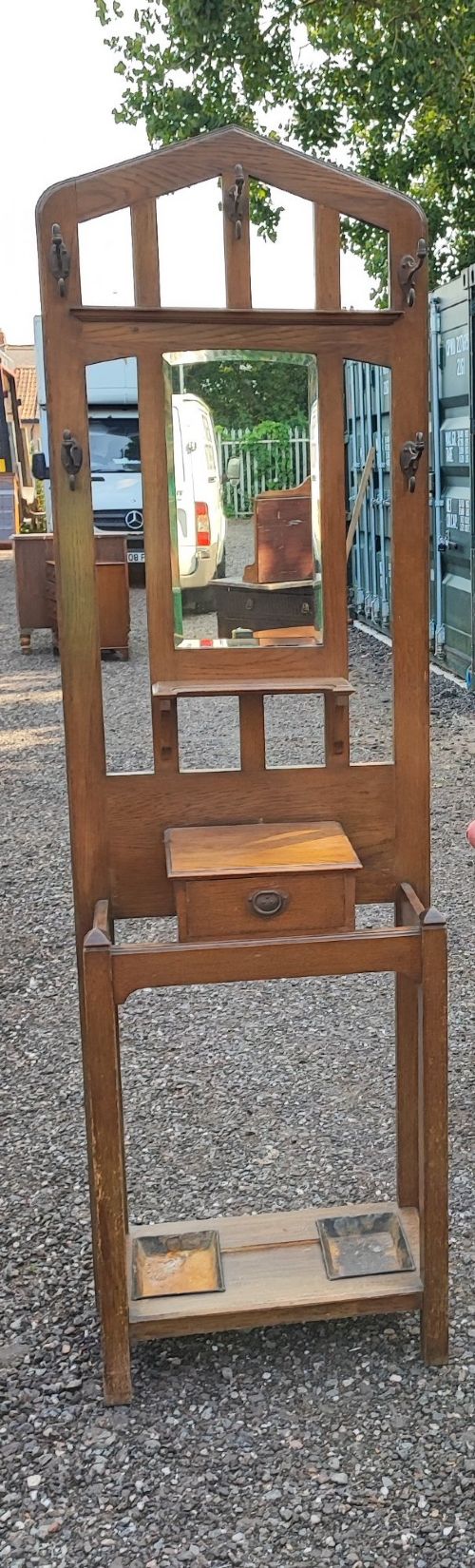
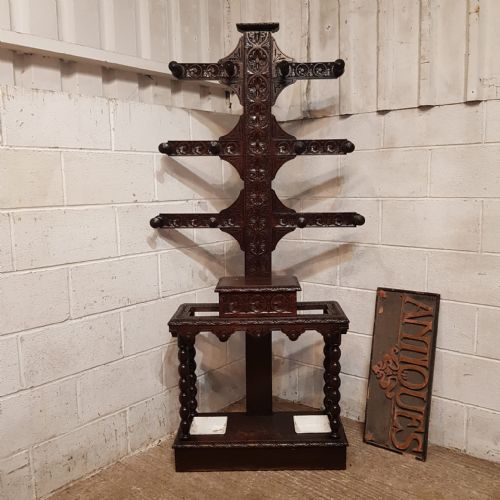
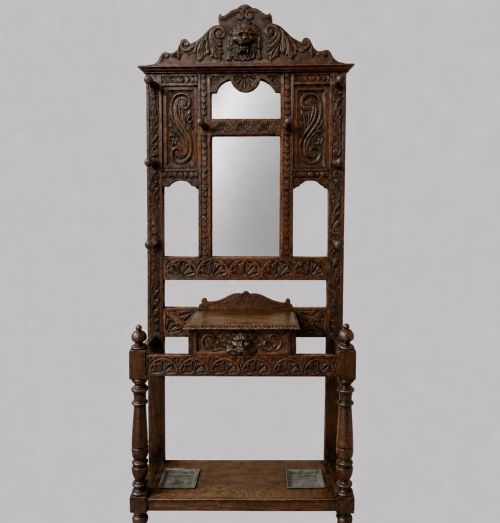


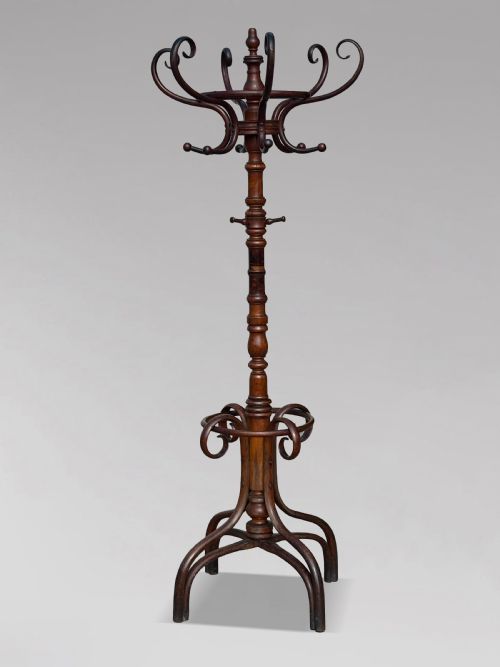


Dark Oak Hall Tree
A dark oak hall tree organises the entrance with a timber frame designed for hats, coats, and walking sticks.
Dark Oak Hall Tree
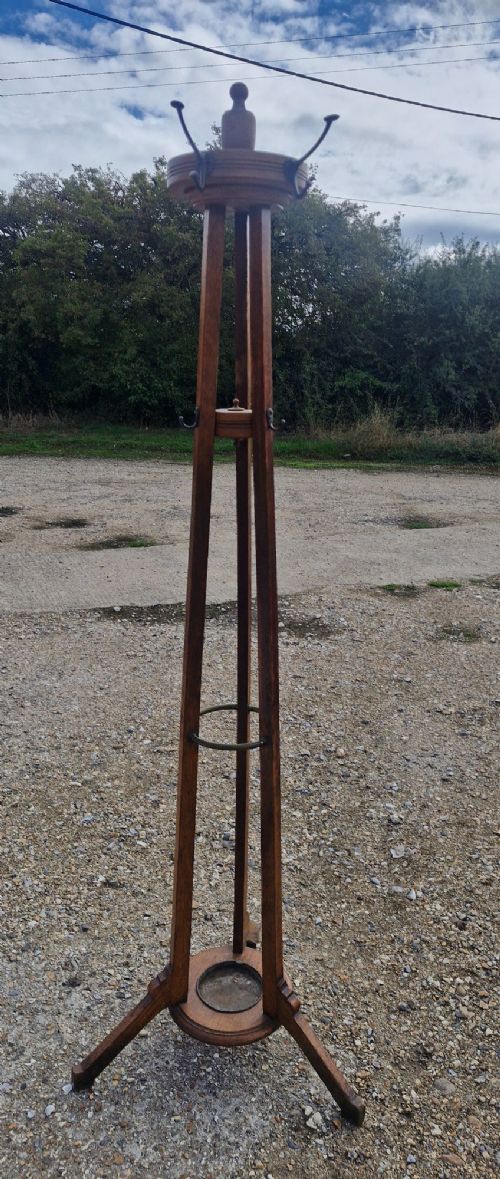
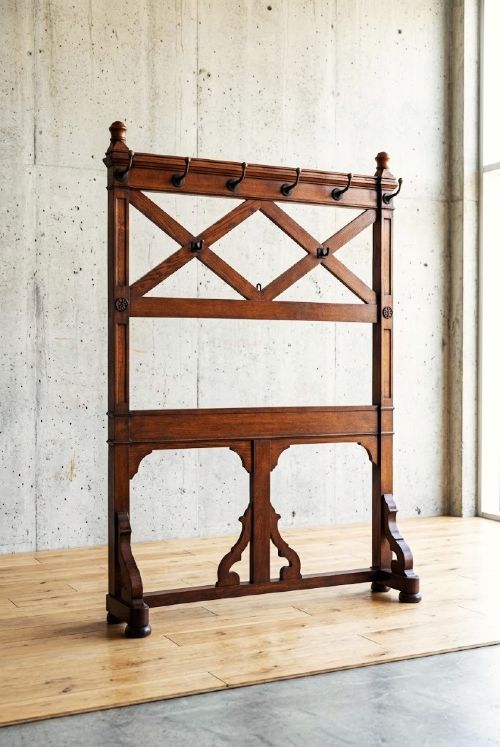
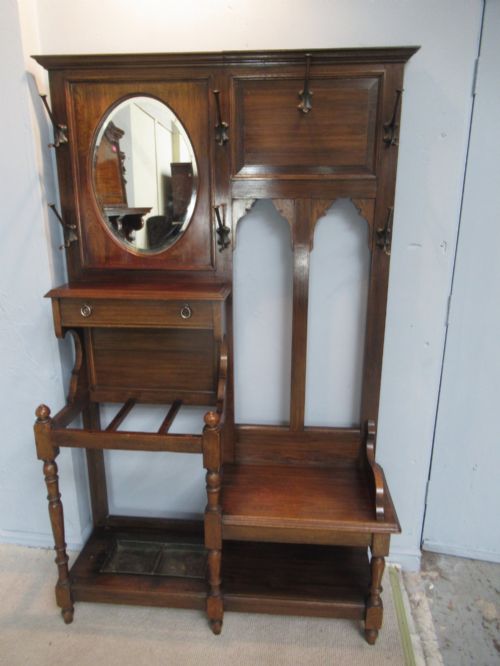
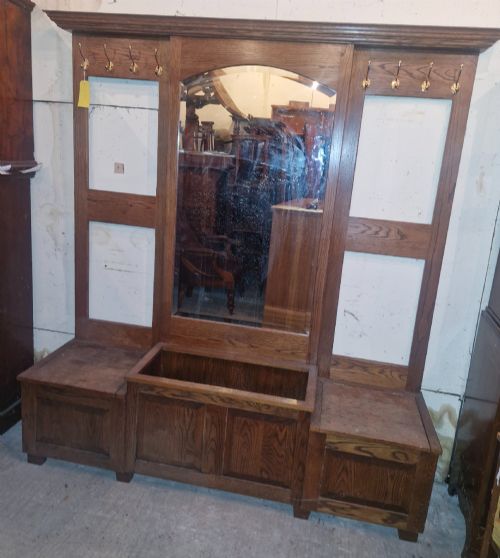
A dark oak hall tree provides a substantial entryway furnishing intended for hanging garments and storing umbrellas or sticks. These pieces anchor a hallway by combining vertical coat hooks with umbrella wells and frequently incorporate a central mirror or bench seat.
The versions most commonly met on this page date from the Victorian and Edwardian periods, stretching from the mid-nineteenth century into the early twentieth century. Examples span various scales, from narrow apartment pieces to large, heavily carved designs.
Regional and stylistic influences shape these items, with Gothic Revival, Arts and Crafts, and Black Forest interpretations appearing alongside standard Victorian and Edwardian forms. The overriding function remains the reception of outdoor wear at the threshold of the home.
How they were made
Makers utilised solid oak and carved wood as the primary structural material, often applying dark finishes to achieve rich tones. Metal fittings such as brass, iron, and cast iron formed the structural coat hooks, drip pans, and umbrella rings.
Decorative elements relied heavily on hand carving, seen in Greenman motifs, animal figures, and architectural tracery. Integrated bevelled glass mirrors and occasional marble inserts completed the assembly of the timber framework.
Several pieces feature carved wooden bears and foxes staring out from the coat pegs, bringing the deep forest directly into the hallway.
What varies in quality
Depth and crispness of the timber carving separate standard utility items from exhibition pieces. Relief work featuring figures or foliage demonstrates the hand of a skilled carver rather than routine factory output.
The integration of secondary materials dictates overall heft and execution. Heavy cast iron drip pans, substantial brass hardware, and thick bevelled mirror glass indicate a higher grade of manufacture than light tin or plain glass.
J. Parker of Woodstock·Fischel
The Dark Oak Hall Tree Glossary
- Greenman
- A sculptural architectural ornament depicting a face carved from or entwined with leaves and vines. This motif frequently appears on nineteenth-century carved woodwork.
- Gothic Revival
- A nineteenth-century design movement drawing inspiration from medieval architecture. Pieces in this style display pointed arches, tracery, and robust proportions.
- Arts and Crafts
- A design movement prioritising traditional craftsmanship and simple forms over mass production. Items from this tradition display honest construction and minimal surface ornament.
- Bentwood
- Wood steamed and bent into curved structural shapes. This technique created lightweight umbrella stands and revolving coat holders.
Dark Oak Hall Tree: Frequently Asked Questions
What is a dark oak hall tree?
A dark oak hall tree is a large hallway furniture piece designed to hold coats, hats, and walking sticks upon entering a home. It combines several storage functions into a single wooden structure.
Most examples include vertical rows of metal hooks, a central mirror, and an umbrella stand with a metal drip tray at the base.
How were these pieces used?
Families utilised these stands at the main entrance of a house to deposit outdoor garments before stepping into the main living rooms. Visitors placed their hats and walking sticks on the hooks and in the lower wells.
Many designs incorporated a hinged seat or bench, allowing a person to sit down while removing heavy boots.
How do I date a hall stand?
Dating relies on stylistic clues and construction methods corresponding to specific periods such as the Victorian or Edwardian eras. Heavily carved Gothic or Black Forest motifs point to the mid to late nineteenth century.
Cleaner lines and simpler joinery typically indicate later Edwardian or Arts and Crafts manufacture from around nineteen hundred to nineteen ten.
Where should I place one?
These pieces suit large entrance halls, long corridors, or spacious boot rooms where adequate floor space and wall clearance exist. Because they stand quite tall and deep, they require a solid wall for stability.
Keeping them away from direct heat sources prevents the solid oak timbers and carved details from drying out and splitting over time.