


Dark Oak Corner Seat
A dark oak corner seat provides compact seating while anchoring an awkward room juncture with rich, grained timber.
Dark Oak Corner Seat
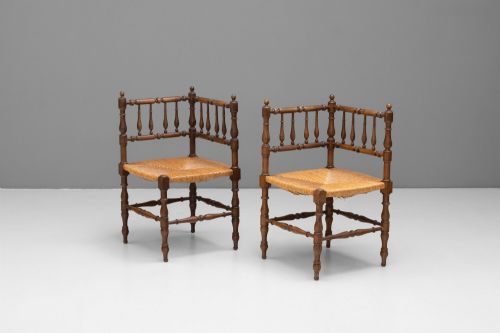
A dark oak corner seat functions as an intelligent space-saving design, utilising awkward room junctions by placing a seat on the diagonal. These sturdy chairs and armchairs appear across several eras, ranging from 18th-century examples to later Victorian revivals and 1920 pieces.
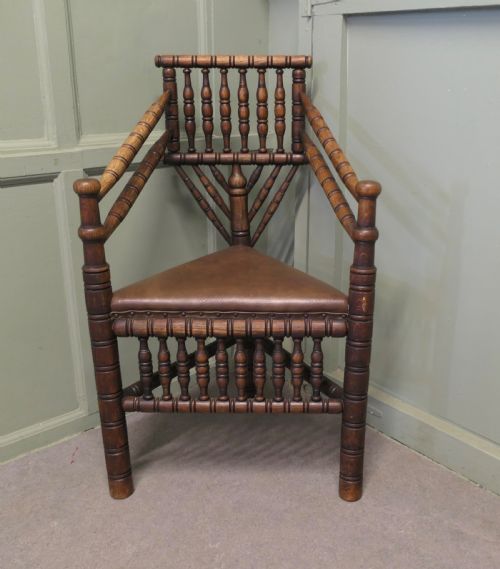
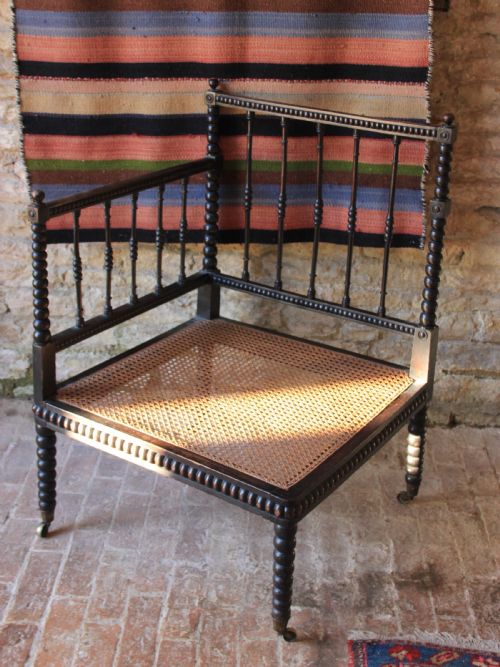
The versions most frequently encountered on this page take the form of turners chairs, bobbin-turned corner chairs, and heavily carved Victorian armchairs. Makers often built them with rush, cane, or wooden seats designed to fit snugly into the meeting point of two walls.
How they were made
Makers relied primarily on solid oak, frequently augmented with beech, ebonised wood, and brass details. Turnery techniques created the characteristic bobbin and spindle legs seen on many examples.
Seating areas incorporated woven rush, cane, leather, or carved wooden panels fitted firmly into the timber frames. Carved ornamentation added distinct stylistic flourishes, particularly during the Victorian Gothic and Saxon revivals.
Several examples are traditionally known as Old Saxon chairs, despite originating centuries later during the reign of Queen Victoria.
What varies in quality
The distinction between standard examples and superior pieces rests on the depth and crispness of the hand-carving and the integrity of the joined frame. Early 18th-century pieces often display tighter joint tolerances and finer timber selection than mass-produced later variants.
The complexity of the turnery and the original condition of materials like rush or cane significantly influence the overall integrity of the piece. Substantial framing without excessive modern reinforcement denotes a superior build.
The Dark Oak Corner Seat Glossary
- Turners Chair
- A heavy armchair constructed predominantly from turned wooden spindles and members, sometimes historically termed an Old Saxon chair. These pieces often feature a triangular seat base.
- Bobbin Chair
- A seat decorated with continuous spool-shaped turnings along the frame and legs. This decorative woodworking style enjoyed great popularity during the 19th century.
- Corner Chair
- An armchair designed with a diagonal orientation to fit specifically into room angles. The backrest typically curves around two adjacent sides of the square seat.
- Gothic Revival
- A design movement drawing inspiration from medieval architecture and motifs. Pieces from this style frequently incorporate pointed arches and heavy carved tracery.
- Rush Seat
- A seating surface woven from dried marsh grasses twisted into cords. This traditional method provides a resilient and textured pad within the wooden frame.
Dark Oak Corner Seat: Frequently Asked Questions
What is a dark oak corner seat?
A dark oak corner seat is a specialised chair built on a triangular or diagonal footprint designed to fit directly into the corner of a room. These pieces combine functional seating with compact geometry.
They appear in various historic styles, from simple 18th-century vernacular designs to heavily carved Victorian revival armchairs.
How were these chairs used historically?
These seats served as practical furniture for parlours, studies, and bedrooms where floor space was at a premium. Their unique shape allowed occupants to sit comfortably in room corners without blocking walkways.
Some variants, such as turners chairs or spinning chairs, supported specific domestic tasks or provided an imposing fireside seat.
How do I tell an 18th-century piece from a Victorian one?
Earlier 18th-century pieces generally rely on simpler, robust joinery and modest proportions without excessive ornamentation. The timber often shows softer patination and wear consistent with age.
Victorian and later examples frequently feature heavier relief carving, complex bobbin turnings, and stylistic nods to Gothic or Saxon revivals.
Where should I place a corner chair today?
A corner chair excels in dead zones such as empty landings, hallways, or bedroom corners where standard rectangular furniture fails to fit. It creates an intentional decorative focal point while offering a functional resting spot.
Pairing the seat with a small wall-hanging or table enhances the architectural lines of the corner.