




Dark Oak Cane Holder
A dark oak cane holder organises hallway walking aids through sturdy timber and metal fittings.
Dark Oak Cane Holder
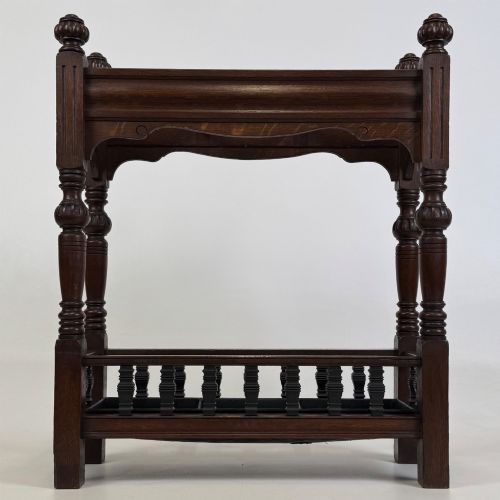
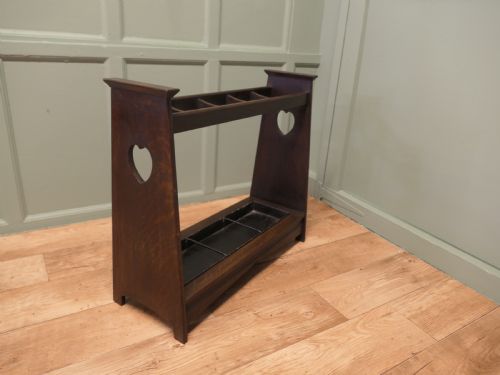
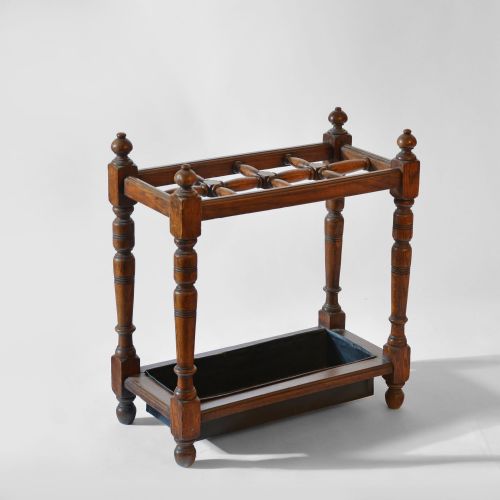
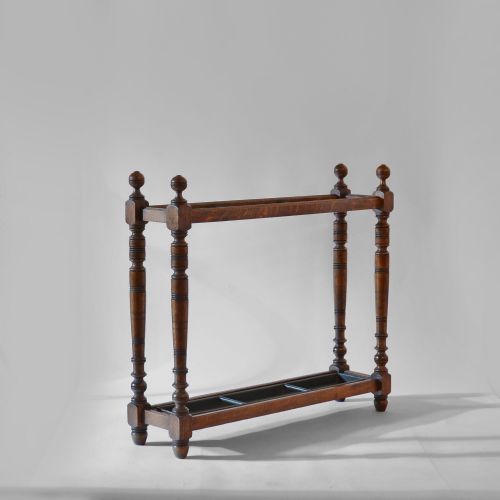
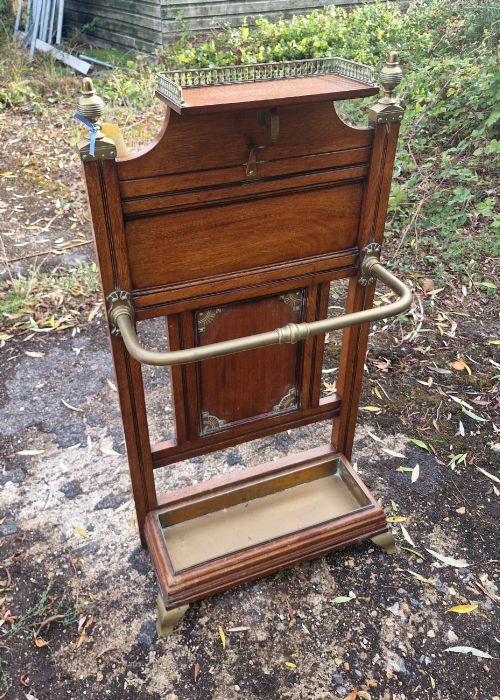
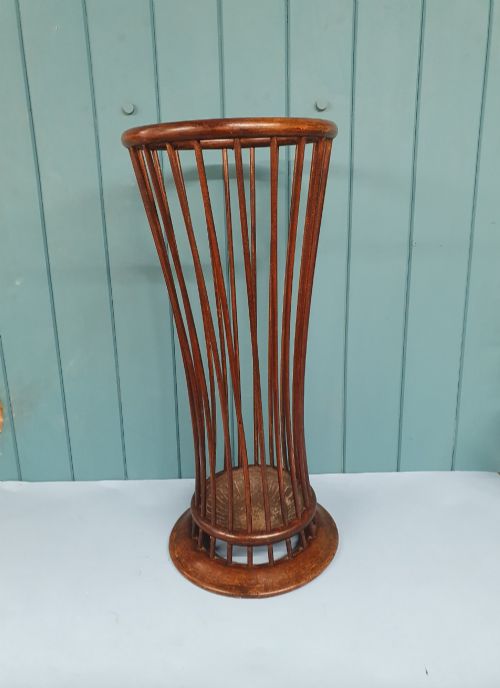
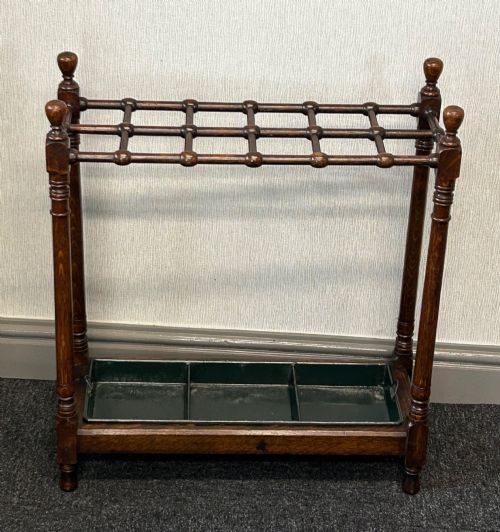
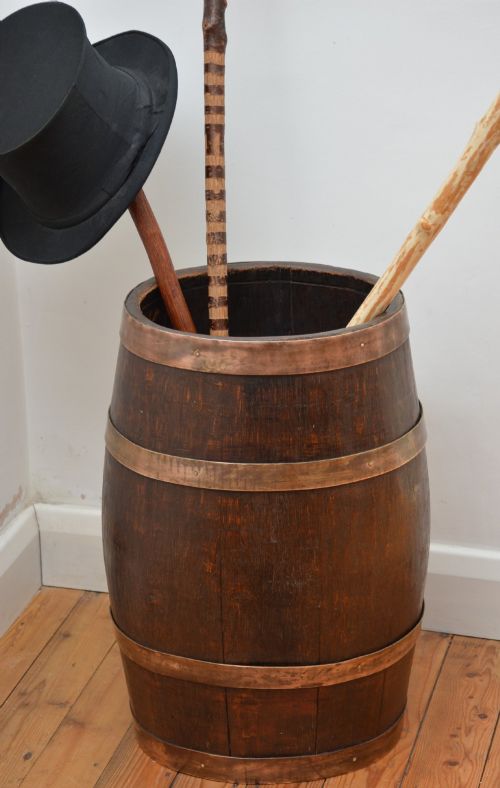
A dark oak cane holder appears across this selection as umbrella stands, stick stands, and combined hall furniture dating from the nineteenth and early twentieth centuries. These pieces serve hallways in Victorian and Edwardian country houses and town residences.
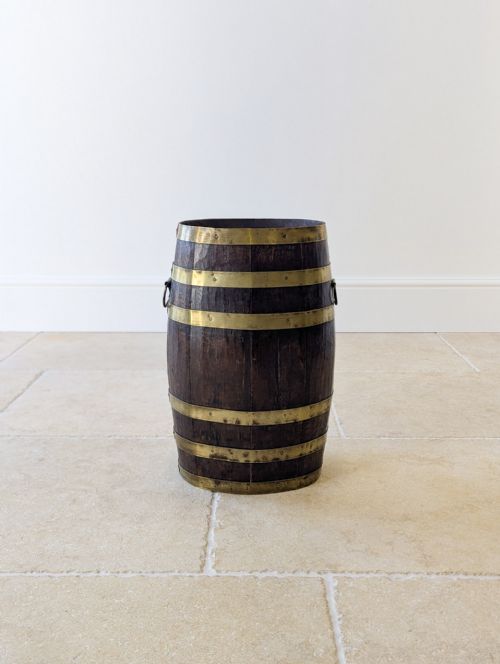
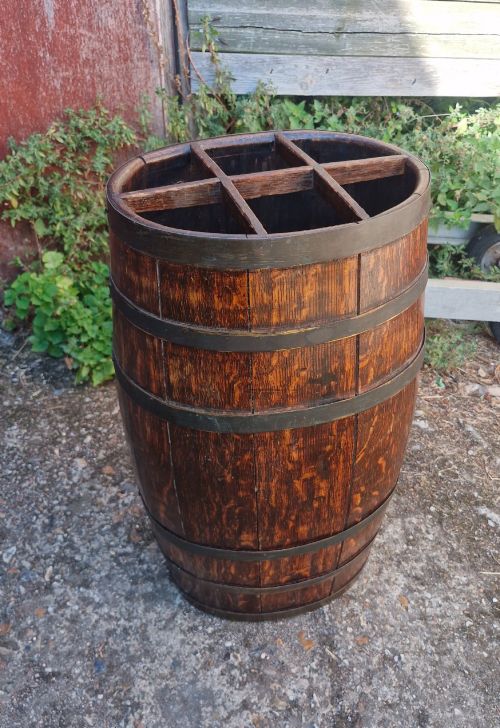
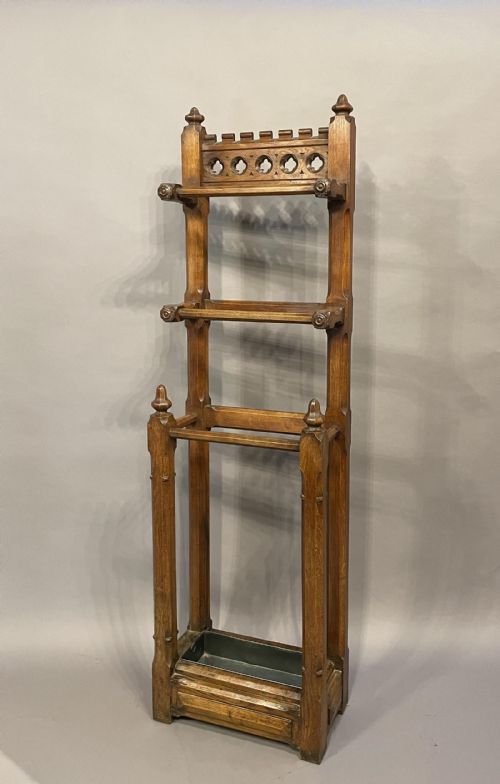
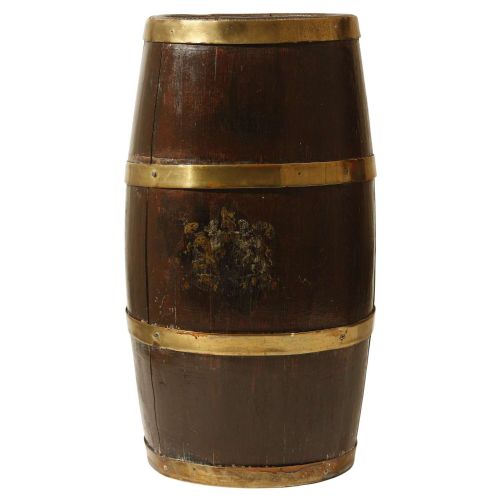
The commonest forms include coopered barrel stands bound in brass or iron, rectangular slatted frames, and carved Arts and Crafts designs. Most specimens date from the Victorian and Edwardian eras, utilising solid oak and applied metal hardware.
Makers from the late nineteenth century onward adapted traditional cooperage and cabinetmaking methods to produce hall accessories for walking sticks and umbrellas. Examples range from simple barrel bodies to elaborate hall racks with integrated drip trays.
Construction and Materials
Makers constructed these stands primarily from solid oak, utilising coopered stave techniques for barrel forms and traditional joinery for rectangular frames. Metal components such as brass bands, copper hoops, iron braces, and zinc drip trays provide structural support and moisture protection.
Surface decoration relies upon natural timber grain enhanced by carving, barley twist turnings, or contrasting metal mountings. Artisans applied these methods during the Victorian, Edwardian, and Arts and Crafts periods to ensure daily utilitarian durability.
Dark Oak Cane Holder Retail Price Guide 2026
Typical asking prices for dark oak cane holder among the pieces listed under this phrase on Sellingantiques today, from the lower quarter to the upper quarter. They describe what is for sale here now, not the wider market.
Listings feature solid oak combined with brass, iron, zinc, and copper across Victorian and Edwardian periods.
Assessing Quality
Quality rests upon the integrity of the timber framing, the retention of original metal drip trays, and the precision of coopered stave joints. Superior examples display robust brass or iron bindings and thoughtful carving without structural compromise.
The presence of period metalwork, such as signed brass braces or original zinc liners, elevates a piece above standard utility items. Proportion and execution within styles like Gothic Revival or Arts and Crafts further distinguish finer examples.
Heals of London·Liberty Design
The Dark Oak Cane Holder Glossary
- Coopered
- Constructed from curved wooden staves bound together by metal hoops, similar to barrel-making. This technique provides inherent strength for holding tall walking sticks.
- Drip tray
- A removable metal basin placed at the base of a stand to catch moisture from wet umbrellas. Original trays preserve the functional integrity of the piece.
- Bergere
- A type of woven cane panelling used in select furniture backs and sides. It introduces textural contrast to solid timber frames.
- Barley twist
- A carved spiral decorative motif found on upright supports and columns. This ornamental turning gained popularity during the late nineteenth century.
- Demi lune
- A half-moon shape designed to sit flush against a hallway wall. This profile optimises floor space in narrow entryways.
Dark Oak Cane Holder: Frequently Asked Questions
How do I clean a dark oak cane holder?
Maintain the timber surface by applying a microcrystalline wax to nourish the grain and protect against moisture.
Avoid harsh chemical cleaners that strip the historic finish and dry out the oak staves.
Are original drip trays common?
Original metal drip trays survive in a portion of these pieces, particularly those made with fitted zinc or copper bases.
Replacements remain functional, though surviving original trays contribute to the historical completeness of the stand.
What styles are typical for these stands?
Victorian, Edwardian, and Arts and Crafts designs dominate the selection, often incorporating Gothic Revival or Aesthetic Movement motifs.
Coopered barrels and rectangular framed racks reflect the prevailing domestic tastes of the late nineteenth and early twentieth centuries.
How were barrel stands constructed?
Barrel stands utilise coopered staves held together by brass or iron bands, mirroring traditional cask-making techniques.
This method allows the timber to expand and contract naturally while supporting heavy walking sticks and umbrellas.