
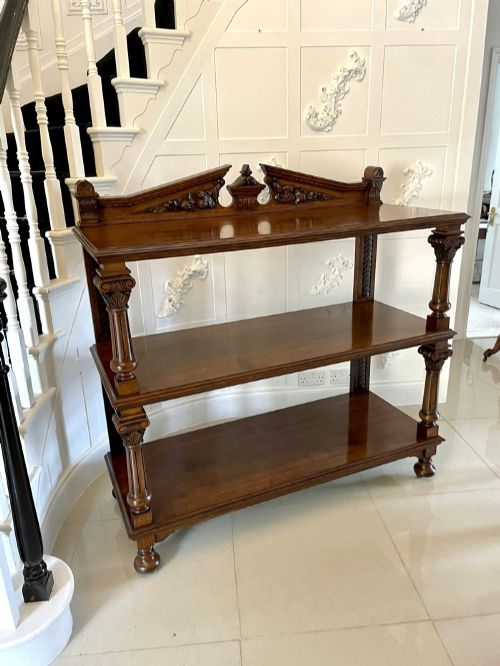
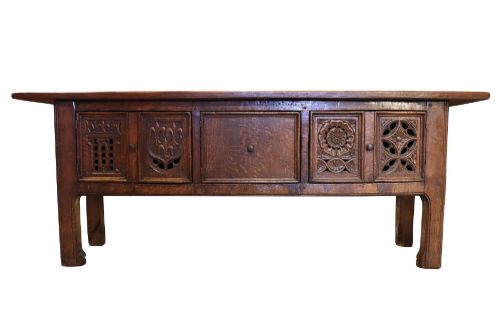
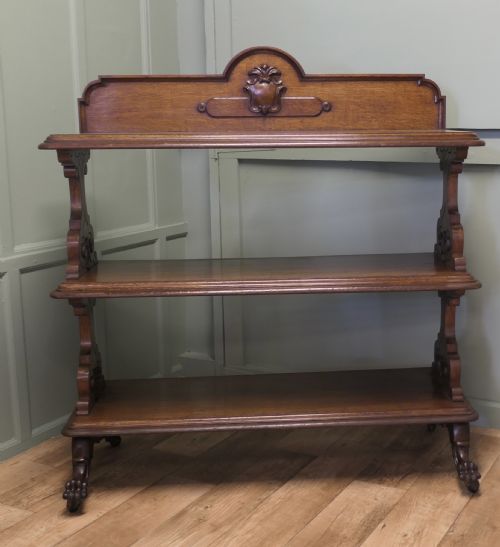
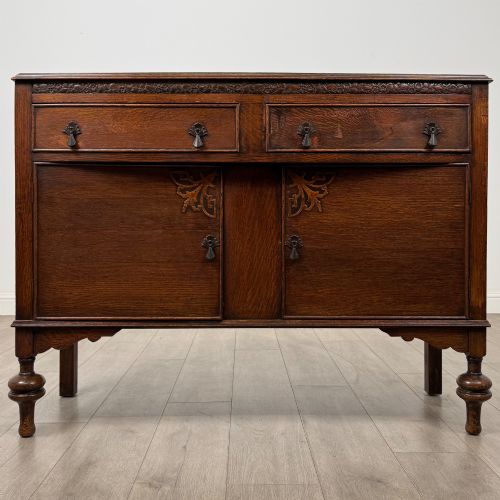

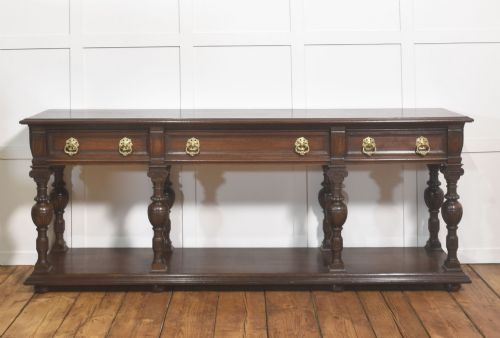


Dark Oak Buffet Table
A dark oak buffet table brings rich grain and solid proportions to a dining room, combining practical storage with centuries of craftsmanship.
Dark Oak Buffet Table
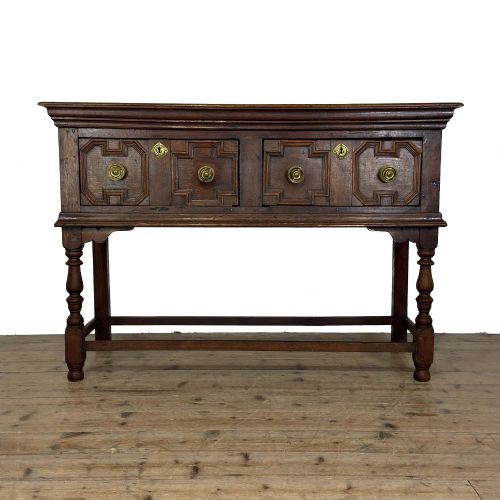
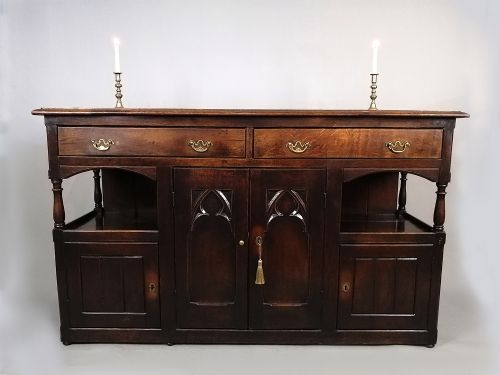
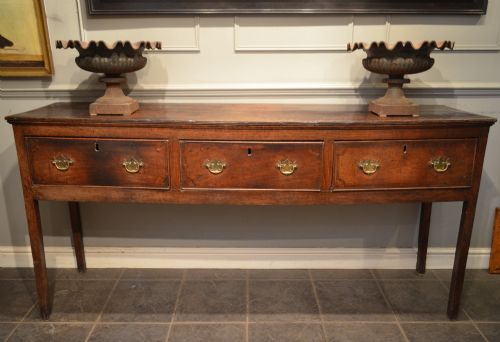
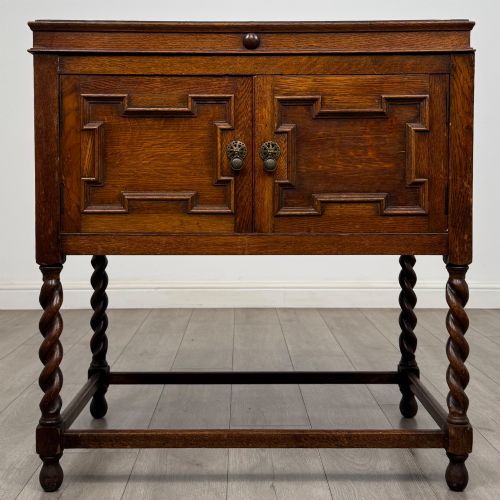
A dark oak buffet table encompasses a variety of heavy serving furniture, dresser bases, and sideboards designed for domestic use. The pieces appearing here span from the 18th century through the Edwardian period, reflecting diverse regional British and European traditions.
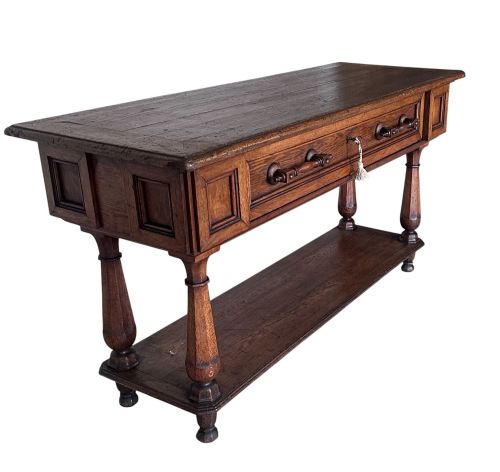
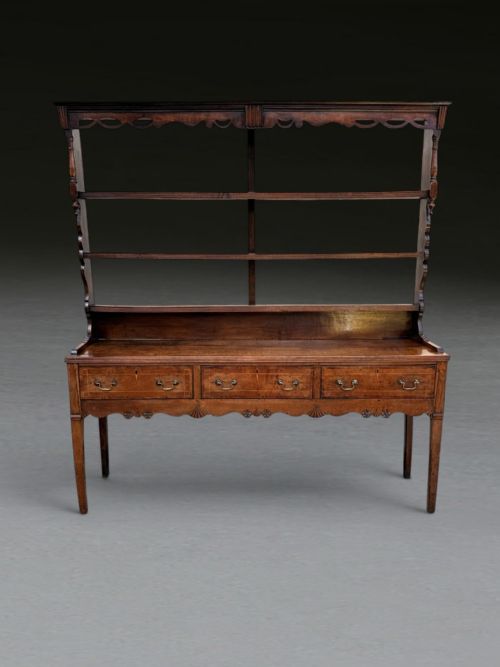
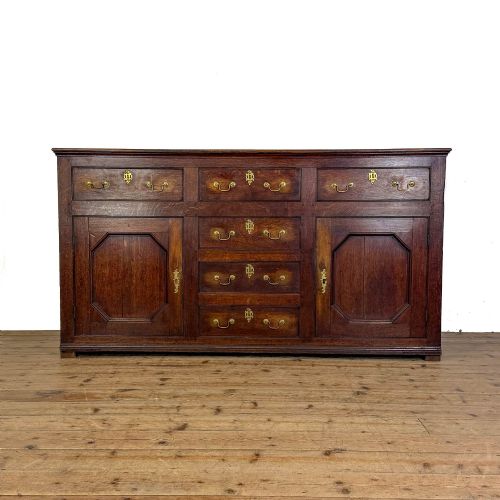
Most items you encounter under this description are solid timber dresser bases or sideboards featuring deep drawers and lower shelves, known historically as pot boards. These forms evolved to hold heavy dining ceramics and food service items.
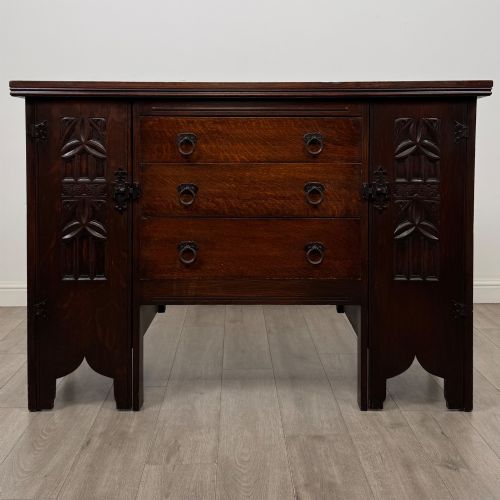
The selection ranges from vernacular English country pieces to elaborate revival furniture incorporating Gothic and Jacobean motifs. Each period brings distinct carving styles, from geometric panels to ornate Green Man reliefs.
How they were made
Makers built these tables primarily from solid timber using traditional joinery such as mortise and tenon frames, securing heavy tops and drawer structures without modern adhesives. The surfaces received hand-planed finishes that deepened in tone over centuries.
Carved decoration on these items relied on hand chisels, producing crisp relief work on panels and friezes. Secondary materials like brass handles, iron hinges, and occasional walnut or inlay timber accents provided functional contrast to the dominant oak.
Current listings span the 18th, 19th, and 20th centuries, incorporating oak, brass, iron, walnut, and leather.
What varies in quality
The distinction between standard utility furniture and superior examples lies in the depth of hand-carved detail and the selection of timber quarters. Superior pieces display dense, figured grain and well-proportioned elements that retain their original structural integrity.
Craftsmanship is evident in the execution of drawer linings, hand-cut dovetails, and the retention of original hardware. Alterations over long periods of use separate untouched examples from those rebuilt with later replacement timbers.
The Dark Oak Buffet Table Glossary
- Dresser base
- A low wooden sideboard fitted with drawers and frequently an open pot board beneath, used historically for food preparation and serving.
- Pot board
- The lower open shelf on a dresser base designed for storing pots and heavy tableware off the floor.
- Dumbwaiter
- A multi-tiered freestanding serving table used to hold dishes beside a dining table without requiring a servant.
- Green Man
- A sculptural architectural motif depicting a human face entwined with leaves and vines, popular in Gothic Revival carving.
- Cabriole leg
- A furniture leg that curves outward in a convex arc and tapers inward to a foot, common on 18th-century designs.
Dark Oak Buffet Table: Frequently Asked Questions
Where were these tables used?
These items stood primarily in large dining rooms, kitchens, and halls of country houses and domestic properties. They served as central stations for preparing meals and displaying heavy serving dishes.
Over time, many transitioned into principal living spaces and dining areas to provide surface space and enclosed storage for household linens and tableware.
How do I care for dark oak?
Maintain the timber by keeping it away from direct heat sources and sudden temperature fluctuations that cause wood to dry and split. Regular dusting with a soft cloth preserves the natural finish without heavy chemical buildup.
Occasional application of traditional beeswax feeds the grain and protects the surface from moisture while maintaining the deep colour.
What is a pot board base?
A pot board base refers to a dresser or sideboard featuring a raised lower shelf positioned between the legs near the floor. This open platform provided practical storage for large pots and pans in busy domestic kitchens.
In later or grander pieces, this shelf evolved into an enclosed cupboard or remained open to display decorative ceramics.
How do I identify a revival piece?
Revival items, particularly those from the 19th century and Edwardian eras, often copy earlier styles such as Jacobean or Gothic motifs with mechanical precision. Examining the tool marks, timber shrinkage, and interior construction reveals whether the piece dates to the original century or a later revival.
Revival pieces frequently employ machine-sawn timber elements alongside hand carving, whereas 18th-century originals rely entirely on hand-tooling.