




Dark Oak Barometer
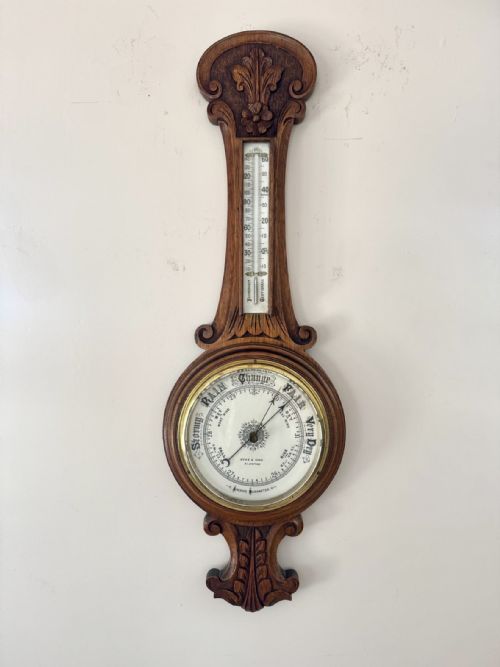
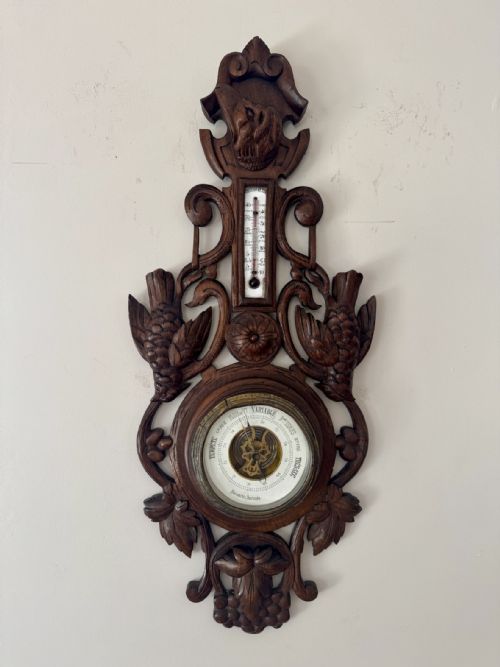
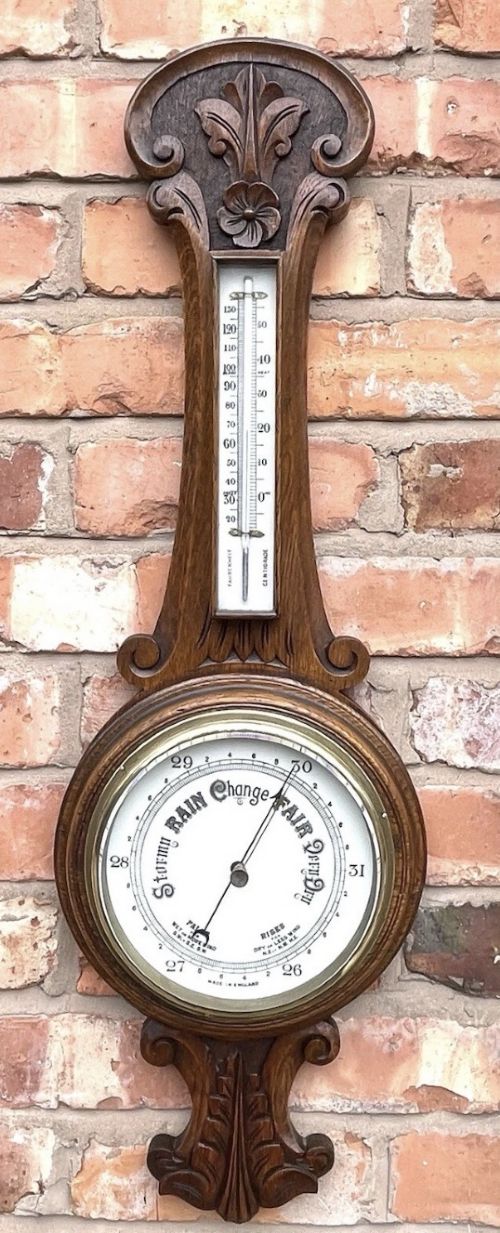
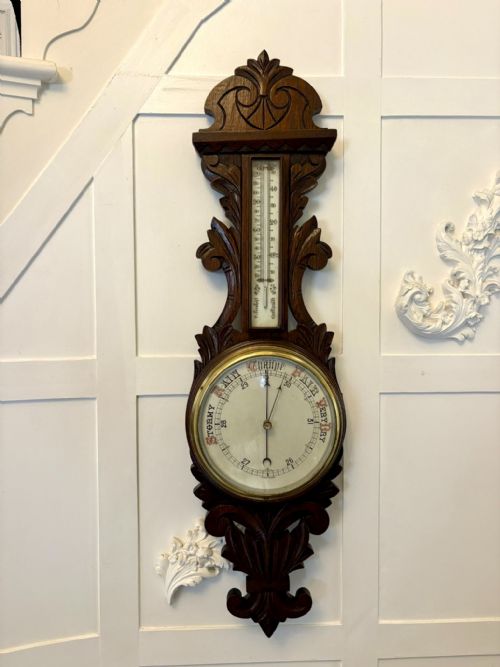
A dark oak barometer brings solid nineteenth-century and Edwardian utility to a wall, combining carved woodwork with brass indicators and glass dials.
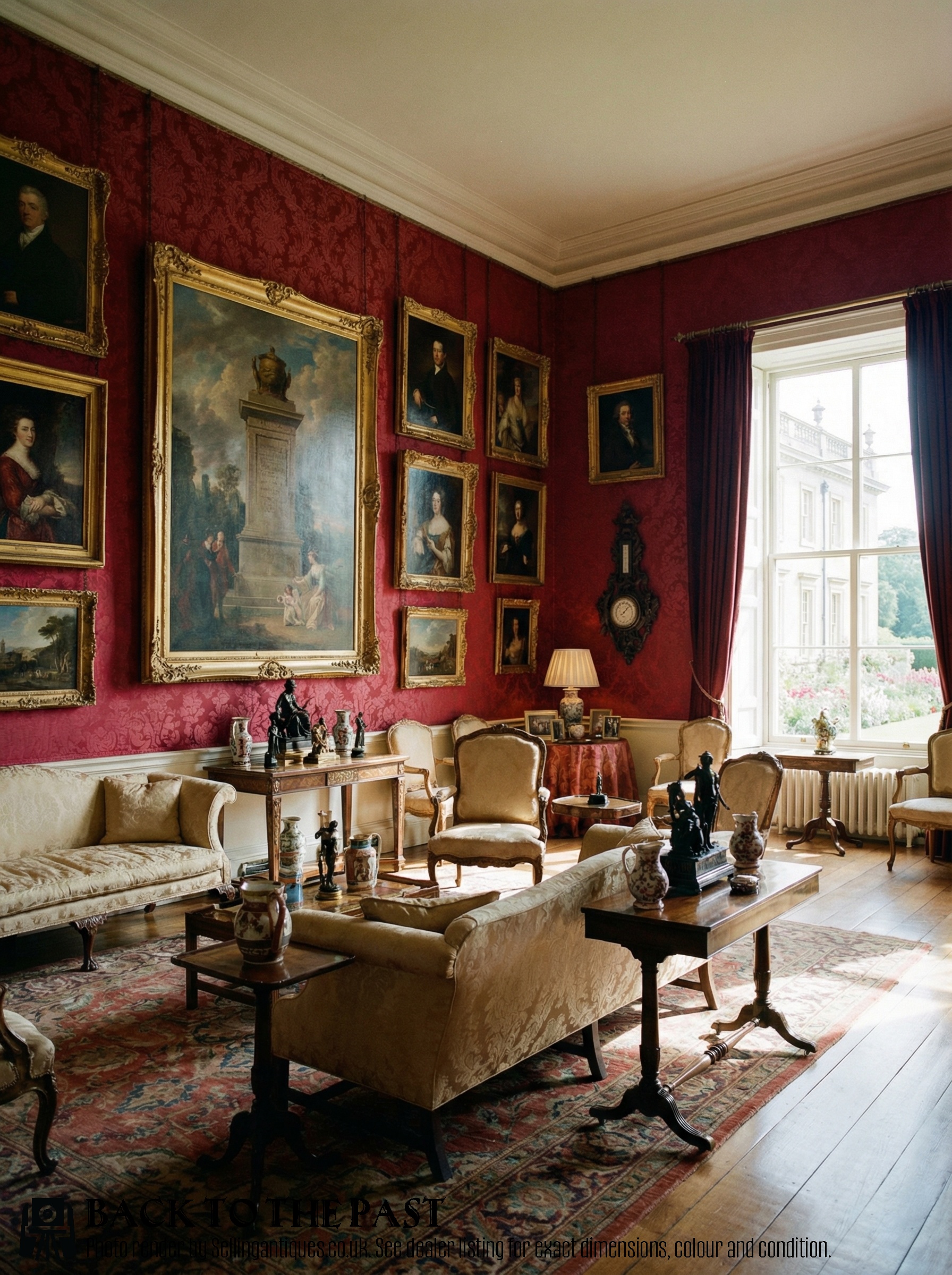
Dark Oak Barometer
A dark oak barometer is a weather-measuring instrument housed in timber, most frequently found in Victorian and Edwardian wall-hanging formats.
The selection ranges from banjo barometers featuring built-in thermometers and carved bird motifs to stick barometers, circular wall models, and mechanical barographs.
Originating largely from British workshops and Black Forest makers, these pieces combine domestic weather tracking with substantial architectural presence.
How they were made
Craftsmen built the housings using solid oak and lindenwood, shaping the timber through deep carving, turning, and joinery.
Functional elements rely on brass bezels, bevelled glass plates, ceramic or porcelain dials, and bone indicators alongside mercury or aneroid movements.
Dark Oak Barometer Retail Price Guide 2026
Typical asking prices for dark oak barometer among the pieces listed under this phrase on Sellingantiques today, from the lower quarter to the upper quarter. They describe what is for sale here now, not the wider market.
One enthusiastic Victorian barometer found its way into service commemorating the Duke of Wellington, proving even barometers joined the mourning.
What varies in quality
Quality rests in the crispness of the wood carving, from plain circular bezels to elaborate Black Forest foliage and avian figures.
The sophistication of the internal mechanism, whether a standard aneroid movement, a mercury-filled tube, or a recorded barograph drum, dictates the standing of the piece.
Hyde & Sons Sleaford·Negretti & Zambra·James Pitkin London·J Hicks of London·Aitchison for Zambrene
The Dark Oak Barometer Glossary
- Aneroid barometer
- A weather instrument that measures atmospheric pressure through the expansion and contraction of a flexible metal box without using liquid mercury.
- Banjo barometer
- A wall barometer shaped like a stringed musical instrument, typically accommodating a dial at the top and a thermometer or humidity gauge down the stem.
- Barograph
- A recording meteorological instrument that draws a continuous line of atmospheric pressure onto paper charts housed within a glazed timber case.
- Stick barometer
- A tall, narrow wall instrument containing a mercury-filled glass tube alongside a vernier scale for precise atmospheric readings.
- Bevelled glass
- Plate glass finished with an angled, polished edge, fitted into brass bezels to protect the barometer dial.
Dark Oak Barometer: Frequently Asked Questions
How do I read an aneroid barometer?
An aneroid barometer uses a pointer that moves across a graduated dial driven by internal metal capsules. By turning the setting hand to align with the current reading, changes in pressure become visible over subsequent hours.
Falling readings typically signal approaching unsettled weather or rain, while rising pressures indicate improving or stable conditions.
Where should I hang a wall barometer?
Wall barometers require stable interior locations away from direct sunlight, central heating radiators, and damp exterior walls. Consistent ambient temperatures prevent timber warping and protect internal mechanical components.
Secure fixings suited to the weight of solid oak and brass are essential, particularly for larger banjo styles and heavy barographs.
How do I distinguish Victorian from Edwardian barometers?
Victorian models often feature heavier, deep relief carvings, frequently displaying naturalistic motifs like birds, foliage, or classical shapes. Edwardian examples tend toward cleaner lines, simpler circular frames, and lighter oak tones.
Examining the dial typography, backboards, and brass fittings helps confirm the specific manufacturing period.
What is an Admiral Fitzroy storm barometer?
Developed in the nineteenth century, an Admiral Fitzroy barometer incorporates a mercury tube alongside specific written instructions and weather glass mixtures. These instruments aimed to predict gales based on combined barometric trends and chemical changes within the glass.
They usually appear in substantial oak cabinets featuring fitted thermometers and detailed engraved scales.