





Dark Navy Persian Rug
A dark navy persian rug brings deep indigo tones and traditional tribal motifs into a room, offering durability and enduring craftsmanship.
Dark Navy Persian Rug
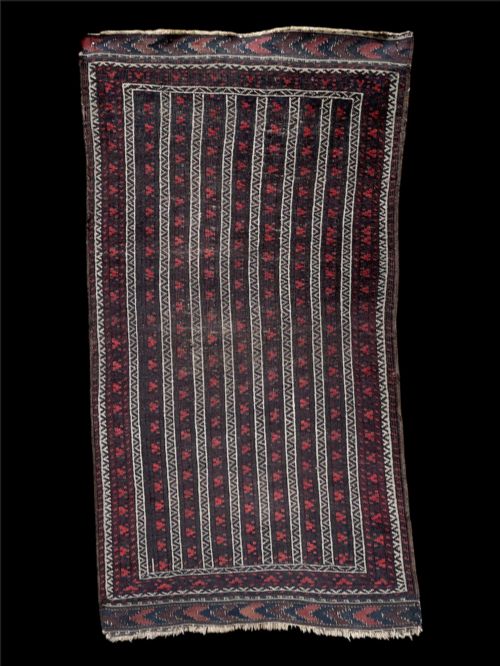
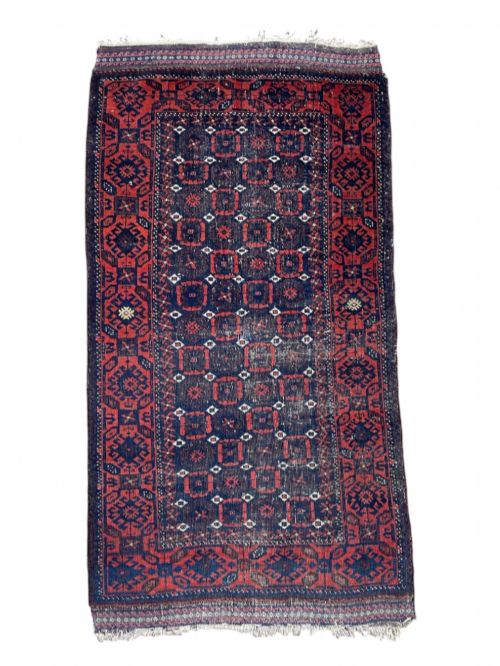
A dark navy persian rug encompasses hand-knotted floor coverings and smaller tribal items originating from nineteenth and early twentieth-century Persia. The selection centres on village and nomadic weaves, including pieces made by Baluch, Qashqai, Kurdish and Khamseh tribes.
Buyers encounter formats ranging from full carpets and area rugs to narrow hallway runners, cushions and saddlebag faces. These practical textiles served daily nomadic and village life before finding a place in modern interiors.
How they were made
Weavers constructed these pieces using wool for the pile and foundation yarns, frequently combined with cotton for structural warp and weft threads. Natural dyestuffs produced the rich indigo and dark navy grounds characteristic of these regional workshops and tribal groups.
Nomadic and village artisans tied dense knots by hand on upright or horizontal looms, securing the ends with woven flatweave skirts and sturdy selvedges. This traditional method created resilient textiles designed to withstand decades of heavy use.
What varies in quality
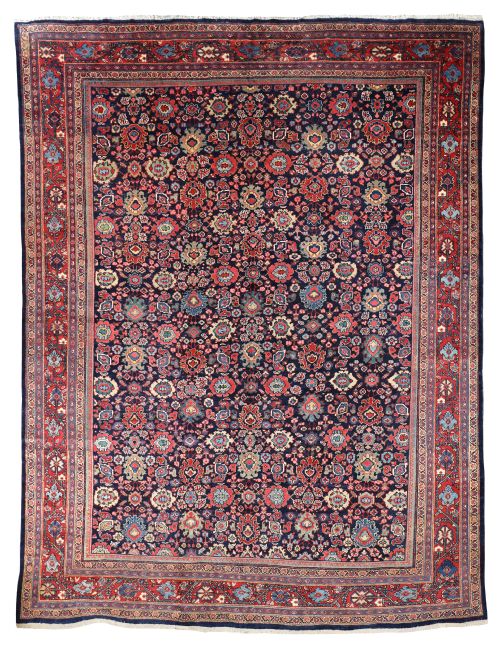
Knot density and structural tightness dictate the crispness of geometric and floral patterns across the surface of a dark navy persian rug. Finer weaves allow complex motifs like the Herati or Mina Khani designs to maintain sharp definition.
The purity and depth of the wool pile affect how the indigo dye absorbs light and ages over time. Even wear and intact original borders indicate a well-preserved textile that retains its structural integrity.
Baluch Salar Khani Tribe·Qashqai Tribes·Luri Tribe·Quchan Kurds
The Dark Navy Persian Rug Glossary
- Herati
- A repeating floral pattern composed of a central rosette enclosed by a diamond lattice and flanked by leaf motifs. It appears frequently in traditional Persian weaving.
- Mina Khani
- An all-over design layout featuring alternating rows of daisy-like flowers linked by curved stems. This motif is common in regional village carpets.
- Sofreh
- A flatwoven or piled cloth used primarily for sharing meals or kneading bread within nomadic households. These functional textiles double as striking decorative floor pieces.
- Kelleh
- A large rectangular carpet format, longer than a standard room-size rug but broader than a runner. These pieces typically occupied the centre of traditional Persian interiors.
Dark Navy Persian Rug: Frequently Asked Questions
How do I clean an antique rug?
Gentle surface brushing and professional specialist washing preserve the natural wool fibres and historic dyes without causing damage.
Avoid harsh chemical detergents or immersion soaking, which weaken the cotton foundations of older tribal weaves.
Where were these pieces made?
Nomadic tribes and village workshops across Persia produced these textiles, particularly in regions such as Khorassan, Fars and Sistan.
Local access to indigenous wool and traditional indigo dye plants shaped the distinct character of each weaving group.
Can I use a runner in a hallway?
Narrow runner formats suit high-traffic hallways and corridors, providing a durable floor covering that handles daily footfall.
Using a quality underlay prevents slipping and cushions the wool pile against hard stone or wooden flooring.
How do I identify tribal designs?
Tribal designs rely on geometric medallions, repeating animal symbols and stylized floral arrangements passed down through generations of weavers.
Asymmetrical layouts and regional colour palettes often point towards specific groups like the Baluch or Kurdish tribes.