
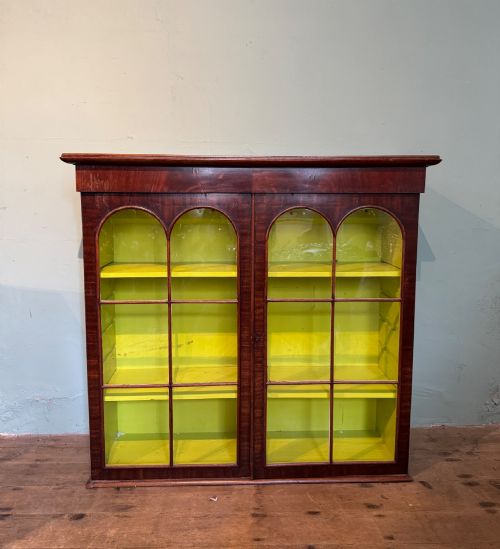
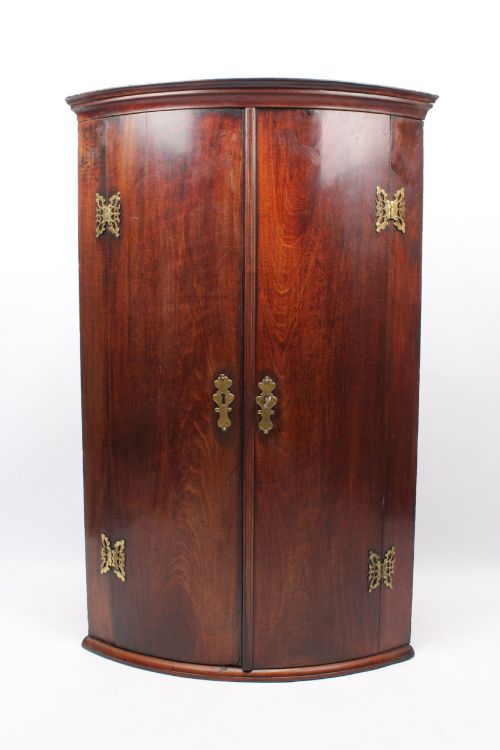
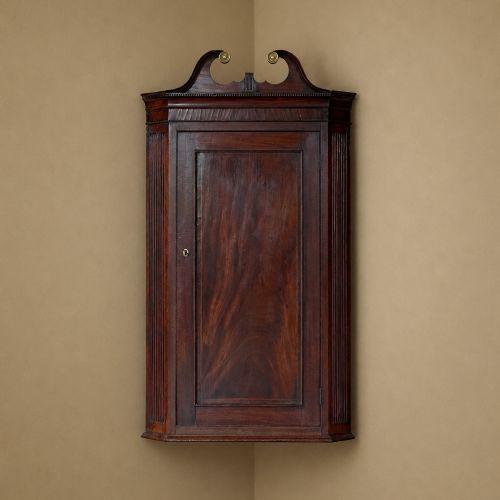
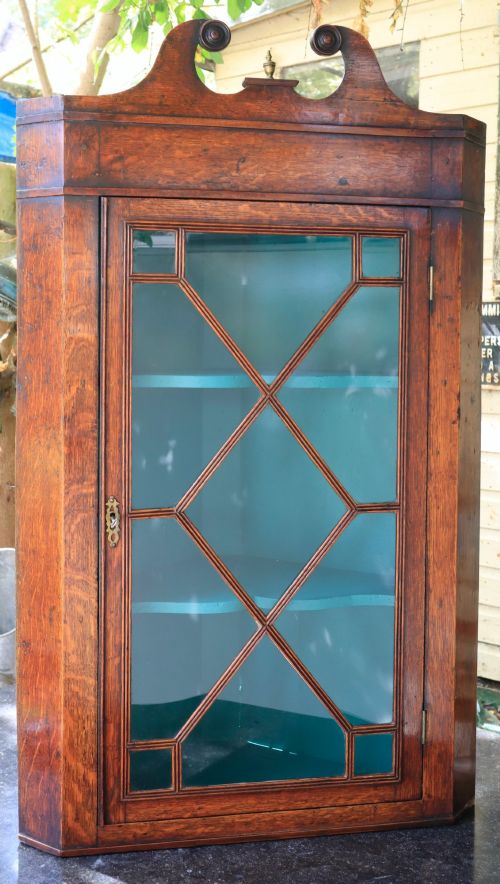
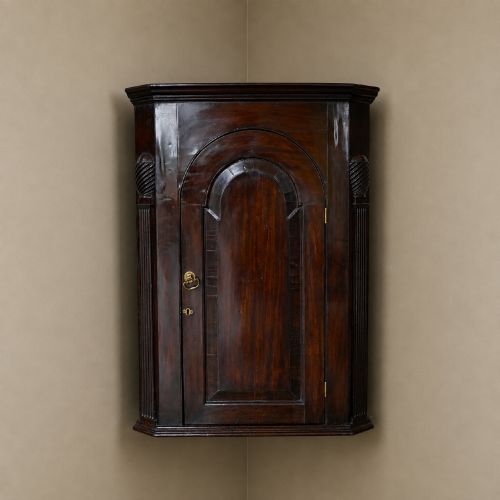
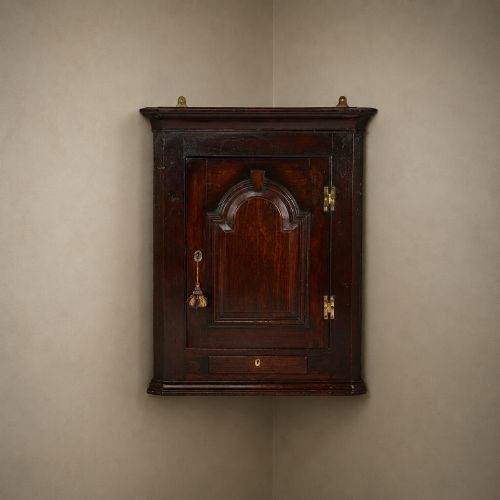
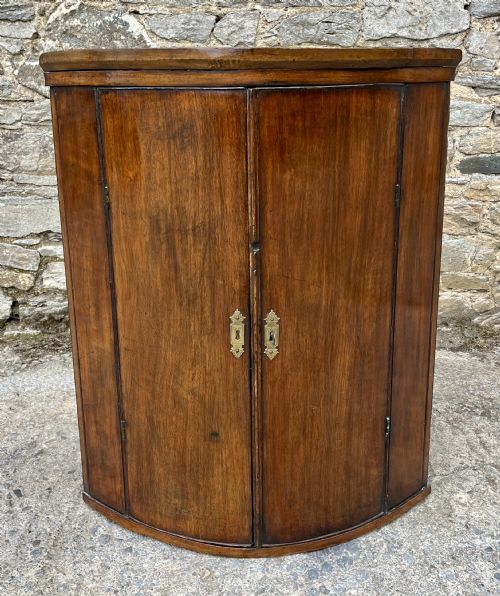


Dark Mahogany Wall Cupboard
A dark mahogany wall cupboard brings rich timber grain and compact storage to an unused room corner.
Dark Mahogany Wall Cupboard
A dark mahogany wall cupboard provides enclosed shelving designed to be hung securely on a wall rather than stood upon the floor. These pieces are frequently found as corner cabinets or bow front cupboards intended to fit neatly into domestic spaces.
Most examples encountered here originate from the Georgian and Victorian periods, alongside Edwardian revivals. They utilise various timber figures, including flame mahogany and occasional oak or satinwood inlay.
Buyers look for these wall-mounted units to display ceramics or store smaller items while adding period character to a room. The forms range from plain panelled doors to glazed display fronts and tambour shutters.
How they were made
Cabinet makers constructed these wall cupboards primarily using solid mahogany and flame mahogany veneers over secondary timbers such as oak. Brass fittings, including H-hinges, escutcheons and working keys, secure the doors and drawers.
Glass panels feature in glazed display variants, whilst decorative flourishes like wood inlay, satinwood stringing and broken arch pediments shape the exterior profiles of finer pieces.
Some corner cupboards hide small internal spice drawers behind the main doors, offering secret stashes for domestic valuables.
What varies in quality
The refinement of the timber selection dictates much of the visual merit, with deeply figured flame mahogany and crisp satinwood inlay marking out the superior examples. Plain secondary woods and simpler joinery appear on utilitarian models.
Architectural details such as broken arch pediments, dental mouldings, and well-proportioned bow fronts elevate the design from a basic storage box to a studied piece of furniture.
The Dark Mahogany Wall Cupboard Glossary
- Bow front
- A convex curved cabinet front that projects outward in a smooth arc. This shape gained popularity during the Georgian period.
- Pediment
- The decorative structure crowning the top of a cabinet. Elaborate versions include broken arch designs.
- Escutcheon
- A protective plate surrounding a keyhole. These are frequently cast in brass on period cabinetry.
- Tambour
- A flexible sliding shutter formed from narrow vertical strips of wood. It conceals interior shelving without requiring swing clearance for doors.
- Inlay
- A technique where contrasting woods or materials are set into the surface of the primary timber to create decorative patterns.
Dark Mahogany Wall Cupboard: Frequently Asked Questions
How do I hang a wall cupboard safely?
These cupboards are heavy, particularly when stocked with contents, and require secure fixing directly into wall studs or solid masonry. Professional installation using appropriate brackets ensures the weight distributes evenly without pulling from the wall.
Interior fixing points or sturdy rear hanging brackets built into the original carcase should be utilised where possible to keep the piece stable.
Were these always meant for corners?
While a large proportion of surviving examples are built on a triangular footprint to occupy room corners, flat-fronted wall cabinets and rectangular display boxes also appear in the record. Corner units made efficient use of smaller Georgian rooms.
Flat wall cabinets served different purposes, often functioning as medicine chests, spice cupboards or small bookcase units.
What is the difference between Georgian and Edwardian pieces?
Georgian cupboards date from the eighteenth and early nineteenth centuries, displaying solid proportions and traditional joinery methods. Edwardian pieces often reflect revivals of earlier styles or incorporate delicate satinwood inlay and Arts and Crafts influences.
Examining the interior construction, timber ageing and secondary woods helps clarify the specific period of manufacture.
How do I care for mahogany timber?
Mahogany responds well to occasional light waxing and benefits from being kept away from direct heat sources and strong sunlight. Sudden temperature shifts can cause timber to dry out or split.
A soft, dry cloth is sufficient for routine dusting, preserving the polished finish accumulated over the centuries.