

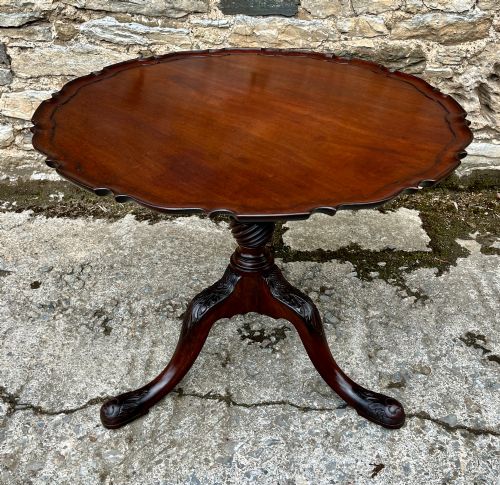
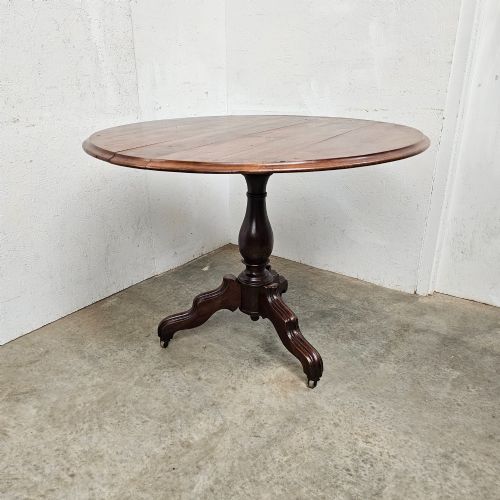


Dark Mahogany Supper Table
A dark mahogany supper table brings a rich timber tone and practical folding surface to an evening room.
Dark Mahogany Supper Table
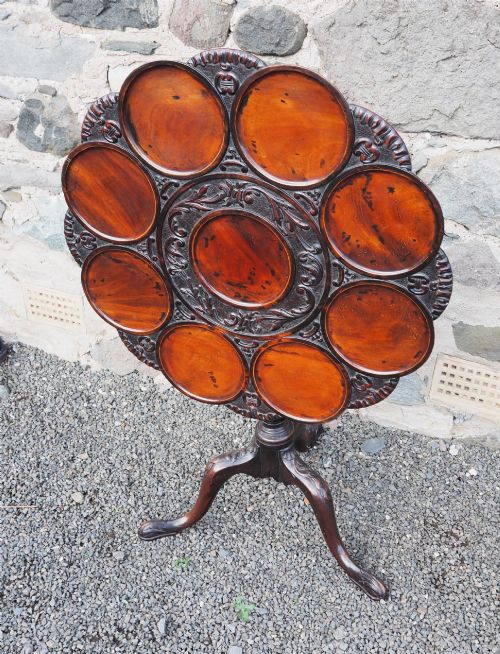
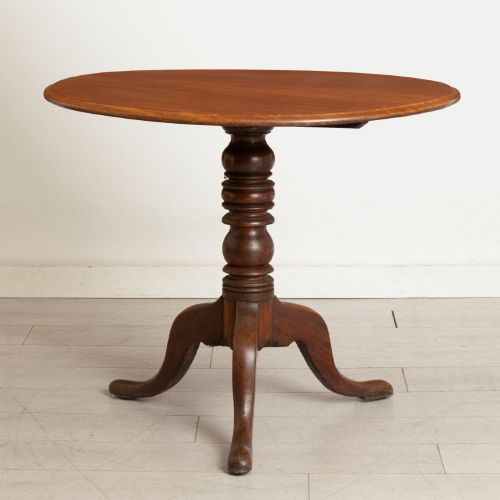
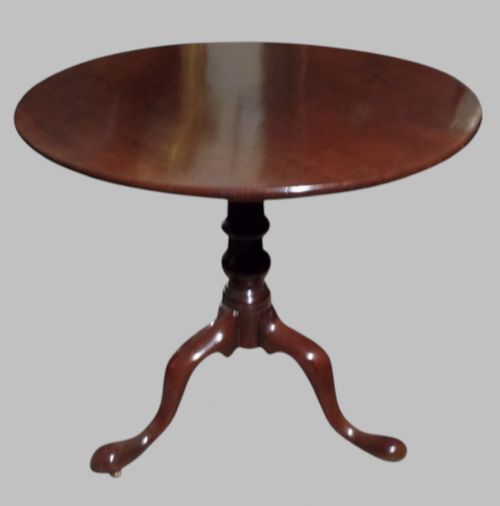
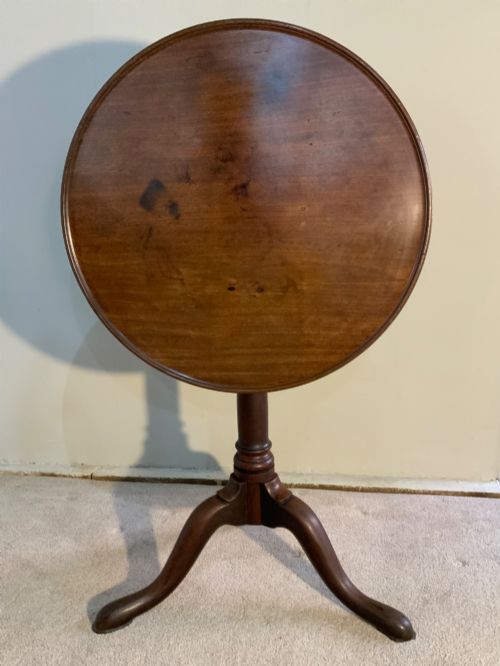
A dark mahogany supper table serves as a flexible surface for evening dining and social gatherings, appearing primarily across Georgian and Regency periods. These pieces frequently feature circular tops supported on tripod pedestals, often with tilt-top or birdcage mechanisms.
Buyers encounter numerous variants including occasional tables, drop-leaf formats, and pedestal dining designs. The forms range from compact three-legged wine tables to larger extending formats intended for formal dining rooms.
The aesthetic centres on deep, polished wood surfaces that display the natural grain of the timber. These tables suit both traditional settings and contemporary interiors that require a functional antique focal point.
Materials and construction
Cabinetmakers constructed these tables using solid timber veneers and primary woods, with Cuban mahogany frequently utilised for its dense grain and dark hue. Workshops also employed brass for inlaid details and mechanical fittings.
Mechanisms such as the birdcage action and tilt-top pivot allowed the circular tops to fold flat for storage against a wall when not in use. Tripod bases terminated in carved or turned legs that provided stability without bulk.
Joinery techniques relied on traditional dovetails, mortise and tenon joints, and pivot blocks. Carpenters shaped the edges into various profiles, including pie crust borders and tray top rims.
Quality variations
Quality rests heavily on the selection of timber, where dense Cuban mahogany with pronounced figuring distinguishes superior examples from plain stock. The depth of the hand-rubbed polish and the crispness of turned pedestal columns also dictate the tier of craftsmanship.
Mechanical execution separates utilitarian items from finer workshop output. A smooth, secure birdcage action that locks firmly without wobble demonstrates superior assembly and original precision.
Proportion and decorative restraint govern visual success. Tables featuring integrated one-piece timber tops and well-balanced tripod bases command greater appreciation than assembled or mismatched components.
James Mein·John Bivins
The Dark Mahogany Supper Table Glossary
- Tilt-top table
- A table with a hinged top that pivots to a vertical position for storage when not in use. This mechanism saved valuable floor space in period rooms.
- Birdcage action
- A rotating wooden framework beneath the table top that allows the surface to both tilt and revolve. It represents a sophisticated piece of 18th-century cabinetmaking.
- Tripod table
- A freestanding table supported by a central pillar resting on three legs. The design ensures stability on uneven historical flooring.
- Pie crust table
- A table featuring a raised, carved wooden edge shaped with undulating curves resembling pastry work. This decorative border often appears on Georgian tea and supper tables.
- Cuban mahogany
- A dense, heavy hardwood prized for its dark colour and rich grain patterns. Cabinetmakers utilised this timber extensively in high-status 18th- and 19th-century furniture.
Dark Mahogany Supper Table: Frequently Asked Questions
What is a supper table?
A supper table is a versatile antique surface traditionally used for evening meals, card games, and social gatherings. Many examples include tilting mechanisms designed to save space.
These pieces transitioned easily from functional dining items to decorative room accents when folded and placed against a wall.
How do tilt-top mechanisms work?
The top of the table connects to a pivoting block or a revolving birdcage frame secured to the central pedestal. A small brass catch or wooden peg locks the surface horizontally.
Releasing this catch allows the heavy wooden top to swing vertically for convenient storage in a corner.
How to date a mahogany table?
Dating relies on examining the timber species, construction methods, and stylistic cues such as leg profiles and edge mouldings. Georgian examples often feature slender tripod bases and distinct patination.
Later 19th-century interpretations incorporate heavier pedestals and different fastening hardware beneath the top.
Where should I place a tripod table?
Tripod tables fit comfortably beside seating areas, in hallways, or as central accents in a drawing room. Their compact footprint makes them ideal for corners.
Avoid positioning them in direct sunlight or near heat sources to protect the polished mahogany finish.