




Dark Mahogany Liquor Chest
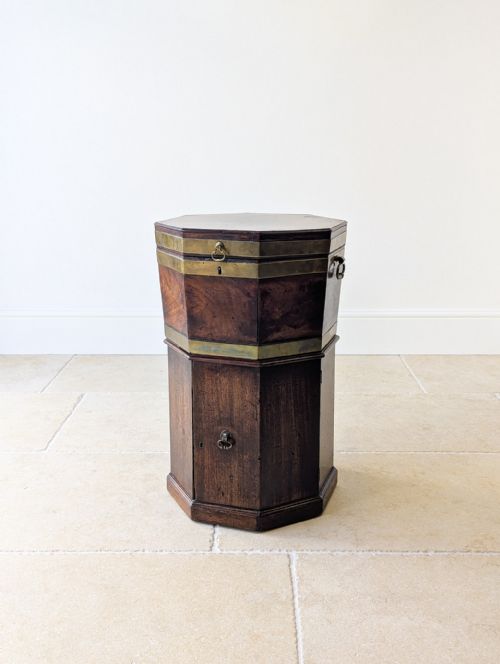
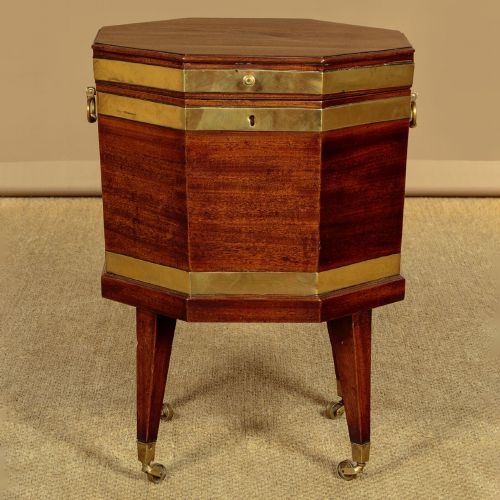
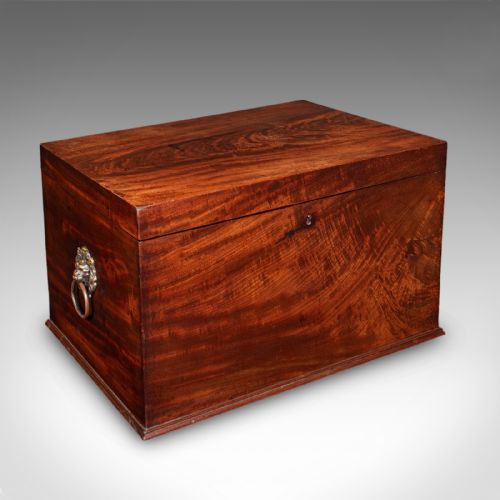
A dark mahogany liquor chest brings secure, stately drinks storage to a room, uniting rich timber with robust brass mounts.
Dark Mahogany Liquor Chest
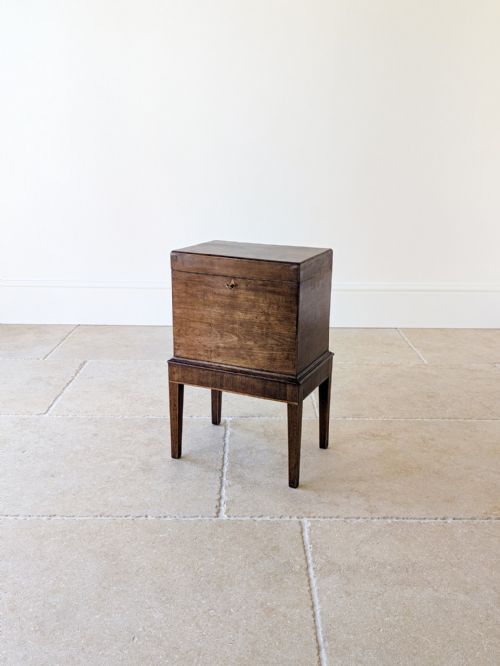
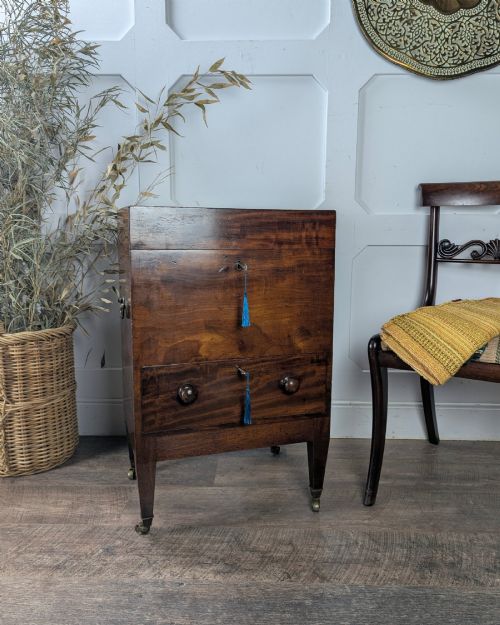
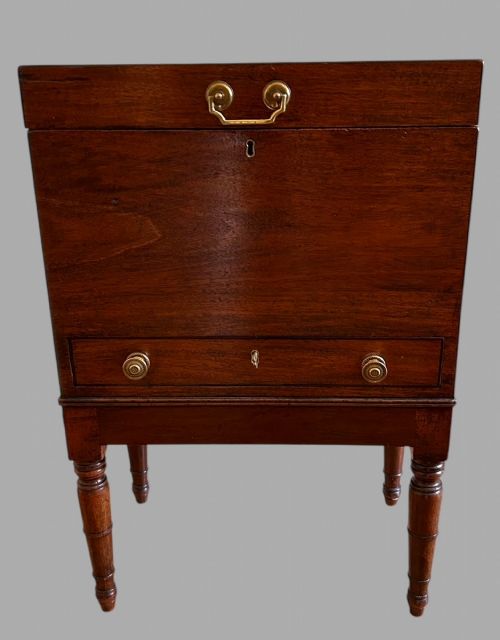
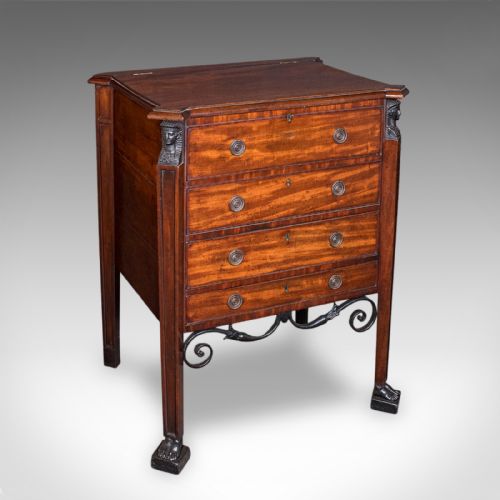
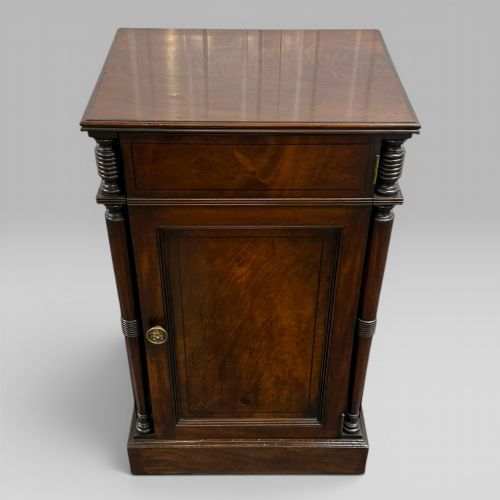
A dark mahogany liquor chest encompasses robust cellarettes, wine coolers and drinks cabinets designed to safeguard bottles and decanters. These pieces emerge predominantly from Georgian, Regency, Victorian and Edwardian periods.
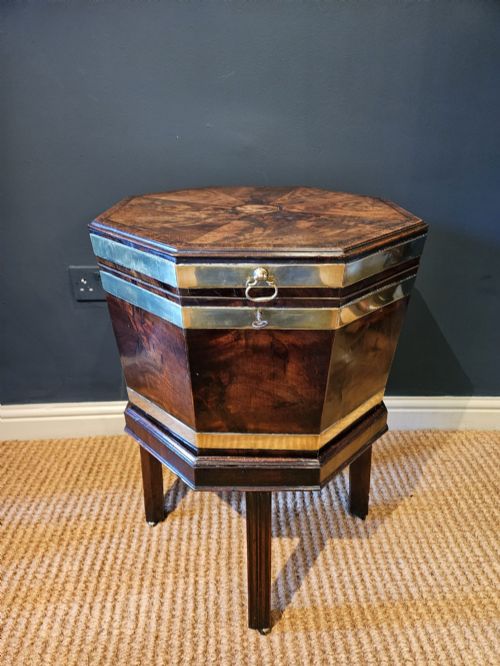
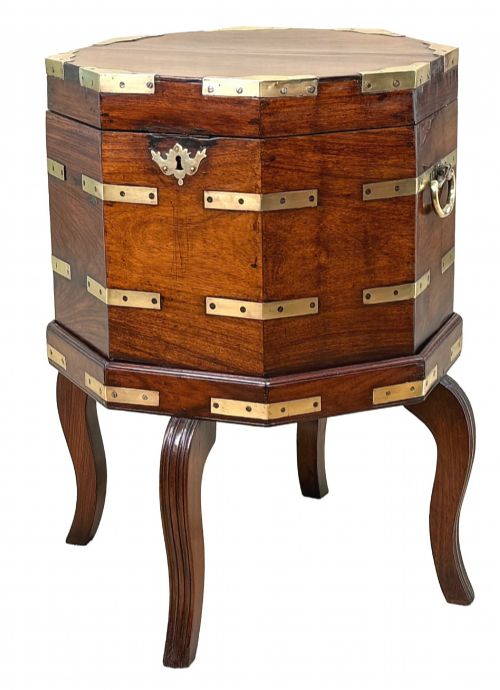
The standard form met on this page is the sturdy mahogany cellarette or wine cooler, often bound in brass and shaped in octagonal or sarcophagus outlines. Makers from the 18th Century onward utilised dense timbers to contain spirits and wine securely.
Variants span from Anglo-Indian padouk examples to grand Regency sarcophagus boxes and inlaid Edwardian cabinets. Each serves the practical function of storing drink with architectural presence.
Materials and construction
Construction relies heavily on solid mahogany, flame mahogany and padouk timbers, selected for density and deep natural grain. Cabinetmakers reinforced these heavy wooden bodies with brass banding, iron fittings and ormolu mounts.
Joinery techniques involve precise box construction, precise inlay work and heavy panel assembly to support the weight of bottles. Surfaces receive polished finishes that accentuate the dark figures of the timber.
Listings feature pieces spanning Georgian, Regency, Victorian and Edwardian eras, constructed primarily in mahogany, brass and padouk.
Judging quality in liquor storage
Quality rests upon the selection of timber figures, such as flame mahogany or padouk, and the crispness of brass or ormolu mounts. Superior examples demonstrate tight joinery and deliberate proportions across sarcophagus and octagonal forms.
Attribution to known makers or specific stylistic revivals elevates certain pieces beyond standard utilitarian storage boxes. The integration of specialised hardware, such as robust locks and internal bottle dividers, marks higher grade execution.
Gillows·Gillingtons·Freemans of Norwich·Withers Safe
The Dark Mahogany Liquor Chest Glossary
- Cellarette
- A lockable container or cabinet built specifically for holding wine bottles and spirits. These receptacles sit low on feet or castors for easy access during dining.
- Sarcophagus
- A burial-chest shape featuring a domed lid and panelled sides, adapted by Regency cabinetmakers for large wine coolers. This weighty classical form conveys formal dignity.
- Ormolu
- Gilt-bronze ornamentation applied to furniture surfaces to provide metallic contrast against dark wood. The technique involves mercury gilding on bronze.
- Padouk
- A dense exotic hardwood yielding deep reddish-brown tones, utilised in colonial and Georgian cabinetmaking. It provides exceptional durability for heavy storage boxes.
- Inlay
- The insertion of contrasting woods or metals into carved recesses of a timber surface to form decorative patterns. This method enhances the visual depth of the primary mahogany.
Dark Mahogany Liquor Chest: Frequently Asked Questions
What is a dark mahogany liquor chest used for?
These chests served historically to store wine bottles, decanters and spirits safely within dining rooms or parlours.
Today they function as standalone decorative side tables or practical storage containers for modern collections.
How do I distinguish a Georgian cellarette from a Victorian one?
Georgian models often display restrained octagonal shapes with crisp brass bands and linear proportions.
Victorian and later iterations lean towards heavier sarcophagus outlines or elaborate Revival ornamentation.
Where should I place a liquor chest in a room?
Their low profile and robust construction suit placement beside dining tables, against panelled walls or near seating areas.
They function effectively as surface tables for serving glassware or displaying decorative objects.
What woods are typically found in these chests?
Mahogany forms the primary body of the majority of pieces, frequently appearing as flame mahogany veneer.
Certain examples incorporate exotic timbers such as padouk alongside brass or iron reinforcement.