



Dark Mahogany Footstool
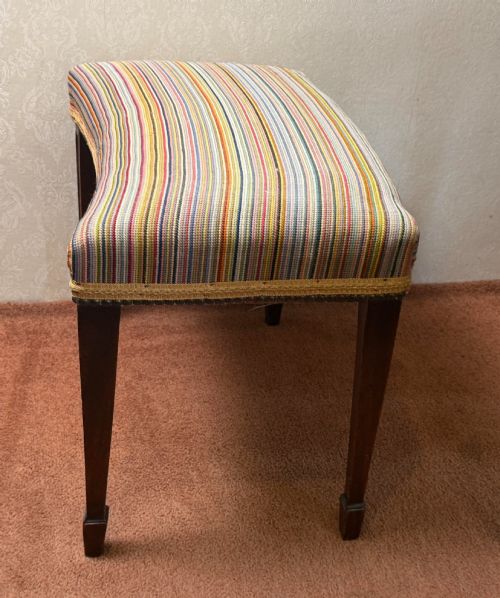
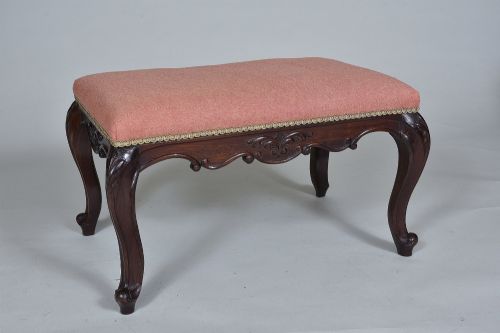
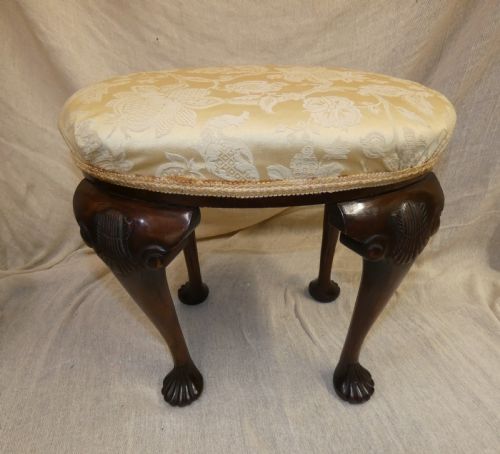
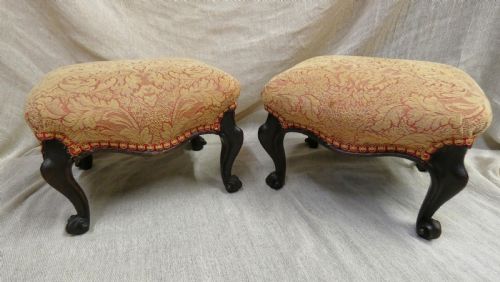
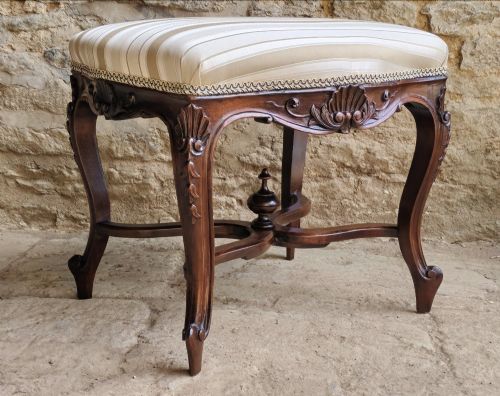
A dark mahogany footstool grounds a room with deep timber tones and traditional seating forms spanning the eighteenth century to the Edwardian era.
Dark Mahogany Footstool
When you search for a dark mahogany footstool, you encounter a wide selection of seating designed for resting feet or low sitting, ranging from compact piano stools to long ottomans. The examples gathered here span centuries of British and continental design, with the Victorian era and the eighteenth century providing the most frequent sightings.
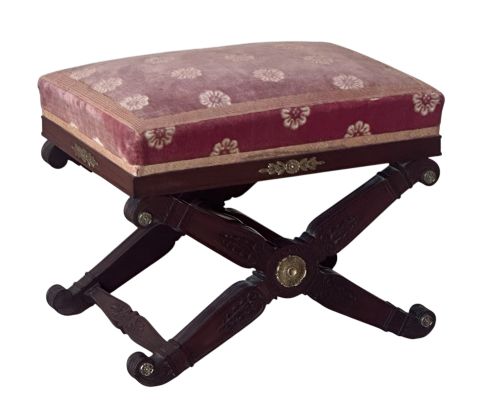
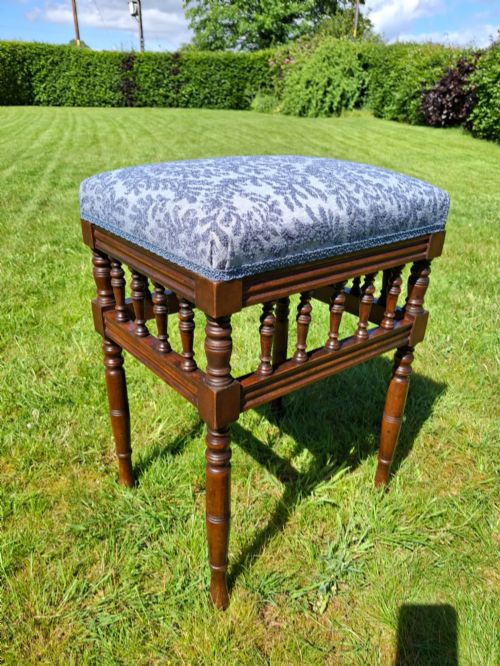
Makers produced these pieces in forms varying from simple square frames on tapering legs to elaborate X-frame designs and revolving music seats. Styles draw heavily on Georgian, Regency, and Chippendale traditions, alongside revival aesthetics that reference earlier eras.
Most entries function as straightforward domestic furnishings, while others serve specific purposes like piano practice or dressing table seating. The survival of these pieces demonstrates the enduring utility of sturdy timber construction paired with textile tops.
Materials and construction
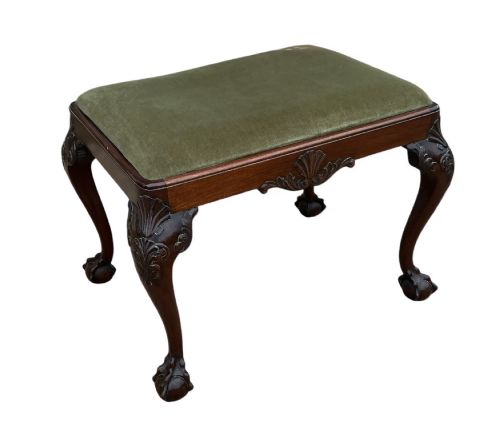
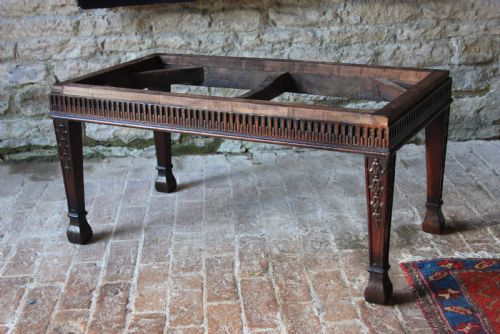
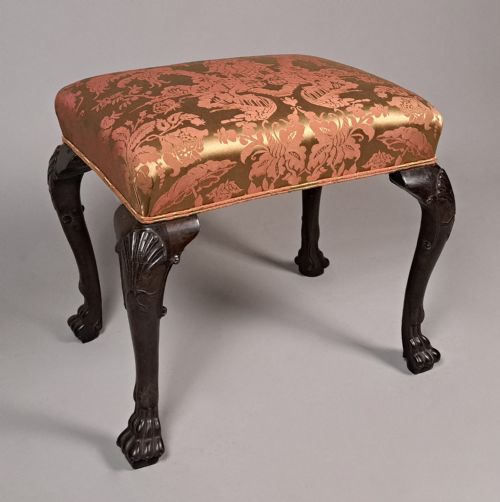
Cabinet makers built the primary frames using solid mahogany, often shaping the timber into cabriole legs, square tapering supports, or carved ball and claw details. Wood turning and precise joinery formed the structural backbone of these stools, ensuring stability under regular weight.
Workshops completed the pieces by applying upholstery to the top surfaces, utilising fabrics such as velvet, leather, wool, tapestry, and standard upholstery textiles. Brass hardware occasionally appeared on revolving mechanisms and castors, adding functional metallic contrast to the dark wood.
Several stools double as hidden music cabinets, proving that Victorians loved storing their scales inside their seats.
Craftsmanship and distinction
The degree of hand carving on the mahogany frame separates standard production pieces from finer examples, particularly where details like ball and claw feet or intricate rail moulding appear. Crisp lines in the woodwork indicate superior skill in the original cabinet maker.
The integrity of the internal frame and the quality of the covering fabric also determine the standing of a piece. Original materials, such as early leather or period tapestry, elevate the historical weight of the stool compared to modern re-upholstery.
Jas Shoolbred·James Shoolbred
The Dark Mahogany Footstool Glossary
- Cabriole leg
- A furniture leg that bends outward in a convex curve and tapers inward to a foot, typical of eighteenth-century and revival designs. This shape mimics animal limbs and provides sturdy support without heavy bracing.
- X frame
- A structural base formed by two intersecting diagonal members that create an X shape when viewed from the side. This form offers strong load-bearing capacity and often appears on formal stools.
- Revolving piano stool
- An adjustable seat mounted on a threaded spindle that allows the player to alter height by spinning the top. These pieces frequently incorporate wooden or brass screw mechanisms.
- Bergere
- A closed upholstered armchair or stool featuring woven cane panels set into wooden frames. This technique provides a lighter visual weight while maintaining structural resilience.
- Cock-fighting stool
- A specialised low seat traditionally featuring a padded chest rest or sloping top designed for spectators at sporting events. These forms are notably uncommon in standard domestic inventories.
Dark Mahogany Footstool: Frequently Asked Questions
What is a dark mahogany footstool used for?
These pieces serve primarily as low seats for resting feet or for sitting at pianos and dressing tables. Their compact size allows them to fit easily beside armchairs or under tables when not in active use.
Historically, specific variants accommodated musicians who required adjustable seating heights during long practice sessions. Others functioned as movable rests in parlours and drawing rooms.
How do I identify a Georgian footstool?
Georgian examples often display straightforward timber frames with square tapering legs or pad feet, reflecting the restrained tastes of the eighteenth century. Look for dense, dark mahogany with patination accumulated over centuries of use.
Revival pieces from later periods frequently copied these lines, so examining the internal construction methods helps confirm the age of the timber. Original fixings and hand-cut joints provide further clues to period manufacture.
Are piano stools adjustable?
Many piano stools from the Victorian and Edwardian periods feature central wooden or metal screws that allow the seat to rotate and rise or fall. This mechanism was essential for helping musicians reach the keyboard at a comfortable height.
Other variants use fixed frames with hinged seats that lift to reveal internal storage compartments for sheet music. Checking beneath the upholstery usually reveals the mechanical workings.
How should I care for mahogany furniture?
Maintain the timber by keeping the stool away from direct heat sources and strong sunlight, which can dry and fade the dark wood finish. Regular dusting with a soft, dry cloth prevents particulate accumulation.
Treat the upholstered top according to its specific textile composition, whether it is leather, velvet, or wool. Avoid harsh chemical cleaners that might strip the historic polish from the mahogany frame.