
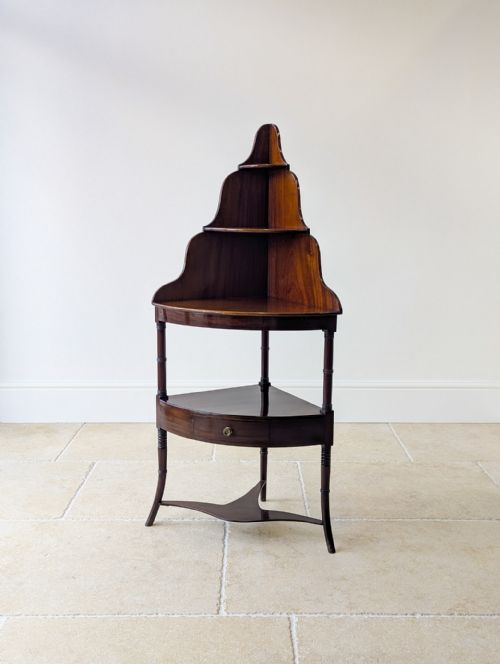
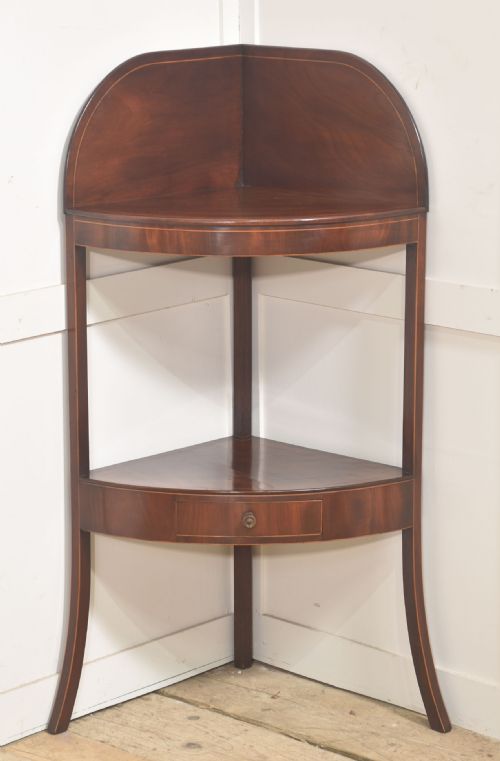


Dark Mahogany Corner Shelf
A dark mahogany corner shelf turns wasted angles into usable display space, bringing rich timber grain and period character directly to empty room intersections.
Dark Mahogany Corner Shelf
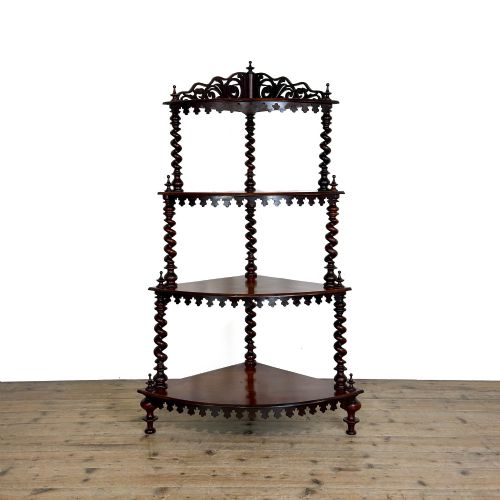
A dark mahogany corner shelf serves as a practical space-saving unit designed to fit snugly into room angles, housing books, ceramics or ornaments across multiple tiers. These items appear across various historical eras, functioning as freestanding stands, hanging cabinets or multi-tiered etageres.
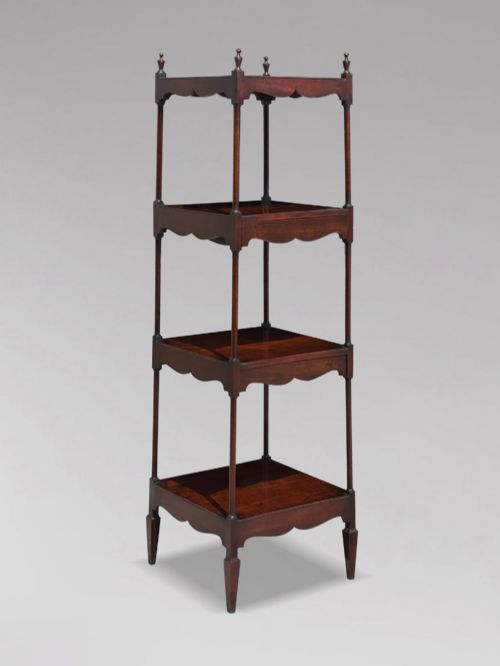
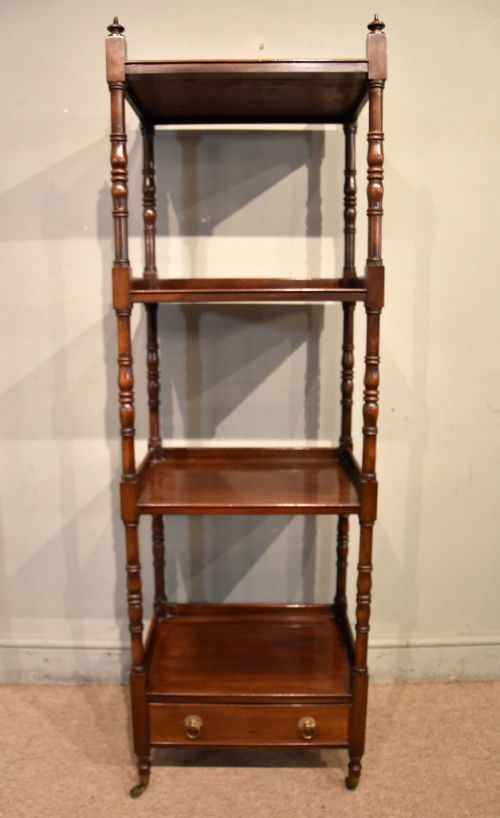
Buyers meet pieces stretching from the Georgian and Regency periods through to the Victorian and Edwardian eras. The selection spans simple three-tier wall brackets and tall four-tier whatnots to sophisticated glazed display cabinets and cupboards.
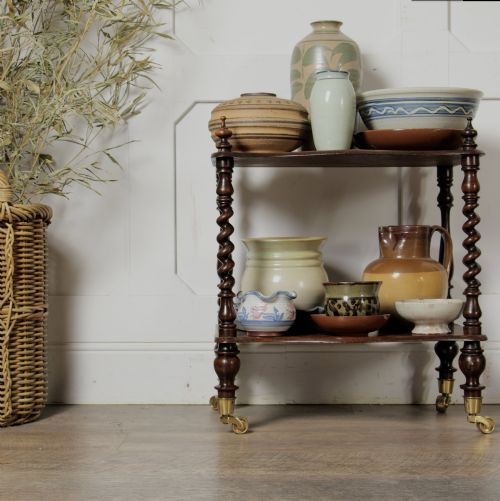
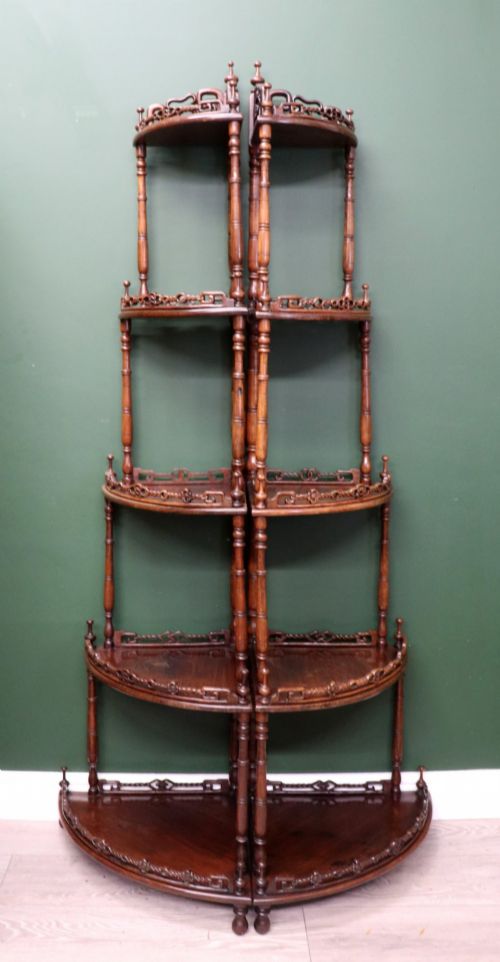
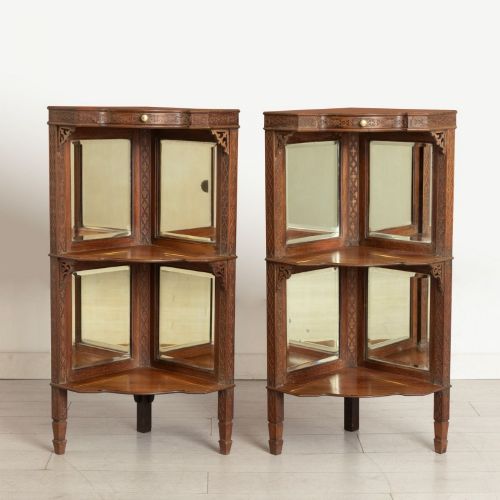
The most common formats utilise mahogany timber, often featuring graduated shelves supported by turned columns or barley twists. Many examples incorporate clever adaptations like tambour fronts, mirrored backs or lower cupboards for concealed storage.
How they were made
Cabinet makers constructed these units primarily from solid mahogany and mahogany veneers, occasionally incorporating secondary timbers like oak and walnut. Structural integrity relied on precise joinery to ensure the angled sides met walls flush and stable.
Decorative elements frequently involved brass fittings, boxwood stringing, and hand-carved details such as barley twists or ebonised accents. Mirror glass and cane inserts also appear in specific cabinet and shelving designs to lighten the visual weight of the dark timber.
Some Victorian units feature barley twists so lively the whole corner looks like it is about to dance.
What varies in quality
Quality rests heavily on the selection of timber, where rich, figured grain and deep, unblemished polish set superior pieces apart from plain stock. The crispness of carved details, such as turned uprights or moulded cornices, signals the level of craftsmanship invested by the original maker.
Structural robustness also defines the upper tiers of the market, visible in tightly fitted joints, original brass hardware, and intact mirror glass or shelving. Pieces that retain their balanced proportions and harmonious multi-tier construction demonstrate enduring structural integrity.
Gillows·Edwards & Roberts
The Dark Mahogany Corner Shelf Glossary
- Whatnot
- An open multi-tiered piece of furniture designed for displaying ornaments or books. These freestanding or hanging stands gained popularity during the Georgian and Victorian eras.
- Etagere
- A French term for a set of tiered shelves used for display. These pieces share a similar multi-level structure with whatnots.
- Tambour
- A sliding door made of narrow vertical strips of wood glued to a canvas backing. This mechanism allowed makers to enclose corner cupboards without requiring clearance for swinging doors.
- Campaign style
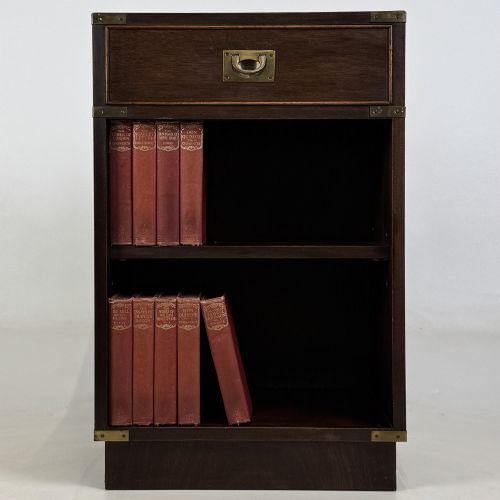
- Furniture constructed to be easily dismantled and transported for military travel. These items often feature recessed brass handles and corner brackets.
- Barley twist
- A type of turning shaped like a helix resembling a twisted rope. This decorative motif appears frequently on the vertical supports of 19th-century stands.
Dark Mahogany Corner Shelf: Frequently Asked Questions
How do I secure a hanging corner shelf?
Hanging models require sturdy wall fixings that match the weight of dense mahogany timber and whatever items you place upon the tiers. Ensure screws anchor directly into wall studs or utilise appropriate masonry plugs.
Because these units bear loads on angled brackets, checking the upper hanging loops or rear plates guarantees the structure remains safe and stable over time.
Where should I place a corner whatnot?
These pieces suit idle room angles, transforming awkward junctions into deliberate focal points for displaying books, ceramics or small sculptures. Freestanding variations tuck neatly beside seating groups or writing desks.
Keeping them away from direct heat sources prevents the mahogany timber and any veneer from drying out, cracking, or warping over the years.
How do I clean mahogany shelves?
Dust the timber regularly with a soft, dry cloth to prevent grit from accumulating in the grain or carved details. Avoid silicone-based polishes that leave a heavy buildup.
Applying a traditional beeswax occasionally feeds the wood and maintains a natural, soft lustre without harming the antique polish.
Can I store heavy books on these shelves?
Most tiered whatnots and corner shelves suit lighter decorative objects, small collections, and modest volumes rather than heavy reference libraries. The weight distribution depends on the stability of the upright supports.
Heavier items sit best on the lowest, most supported tier, while lighter ornaments belong on the upper shelves to maintain balance.
How do I date a mahogany corner unit?
Dating relies on observing construction methods, timber characteristics, and stylistic cues such as Georgian bracket feet, Regency tapering forms, or Victorian ebonised details. Secondary woods also offer clues about the era of manufacture.
Comparing the turned supports, hardware, and overall proportions against documented period examples helps narrow down the decade of creation.