
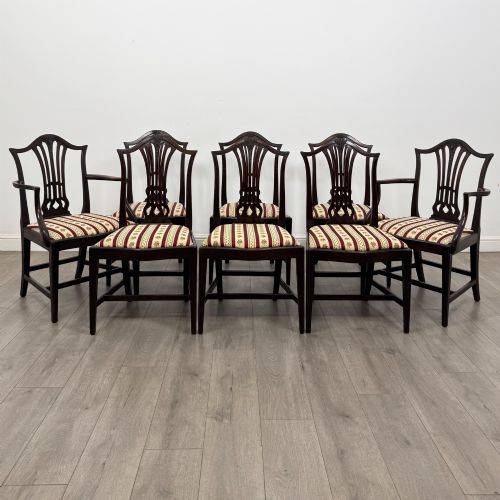
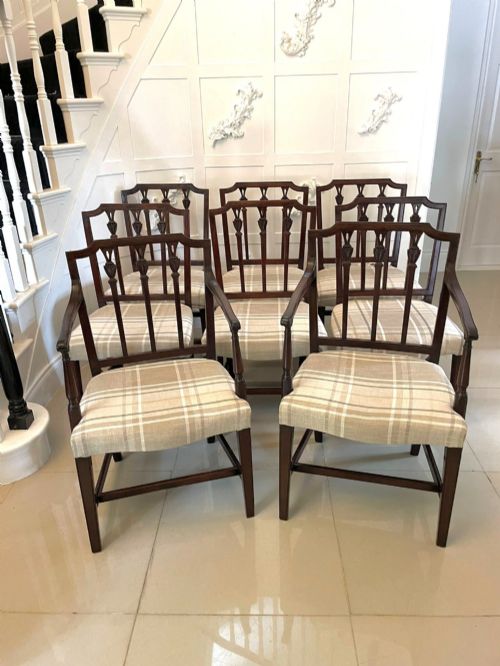
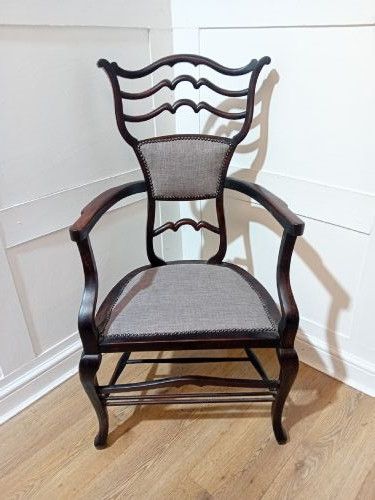
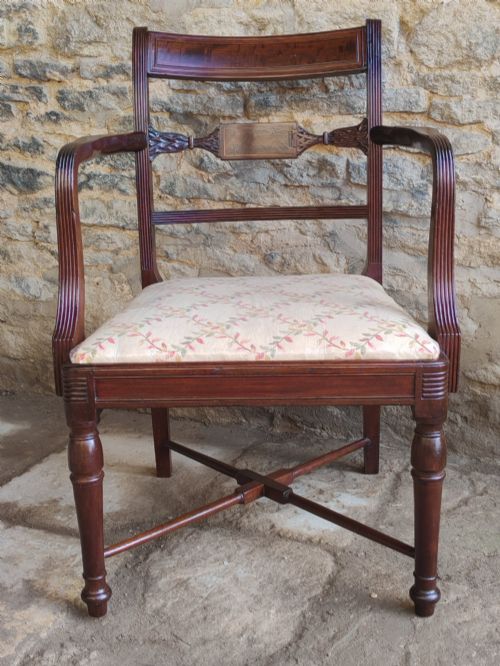
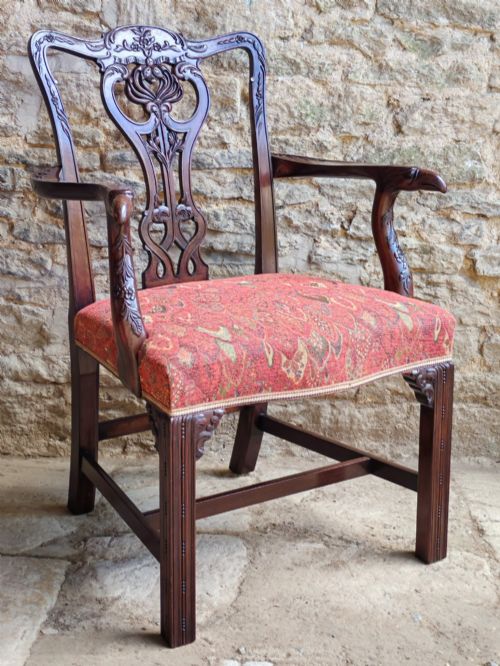

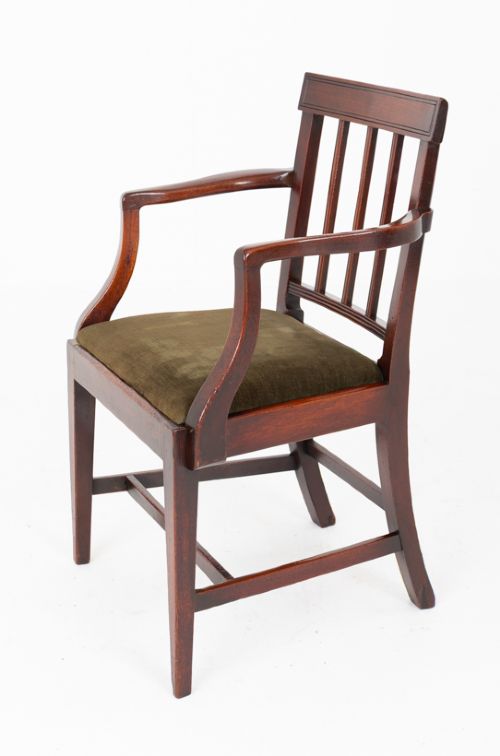
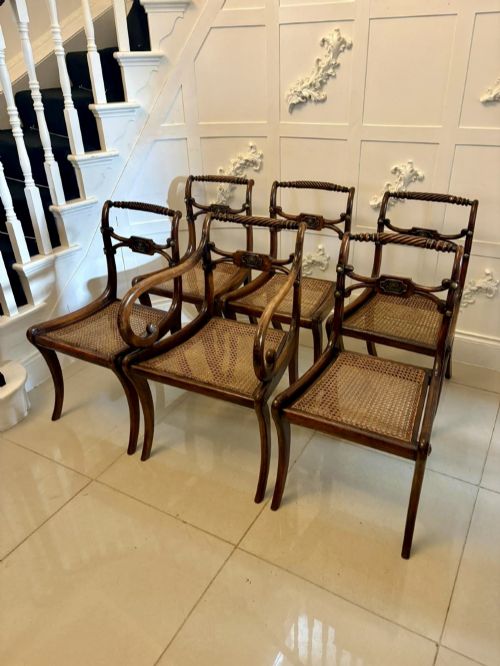
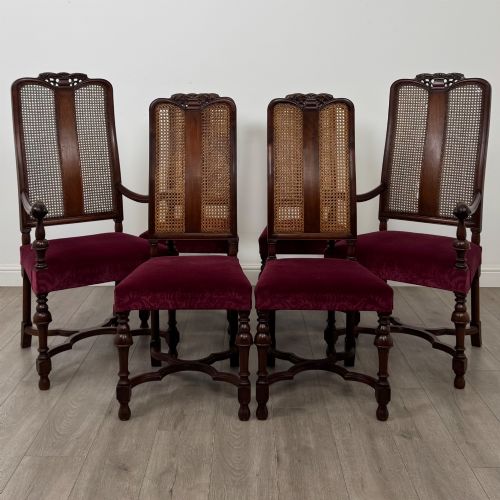
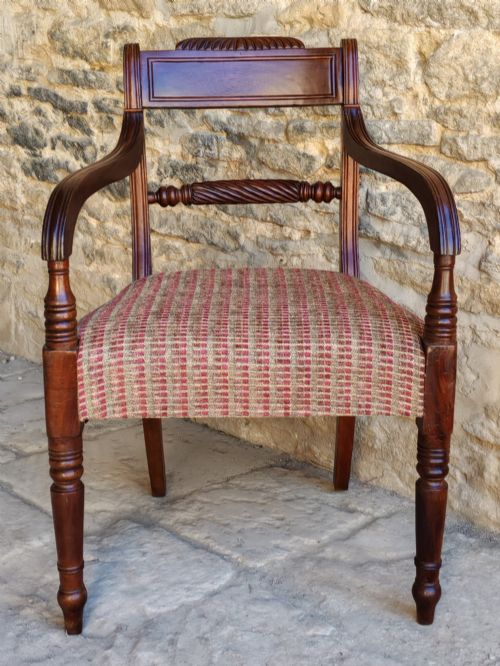
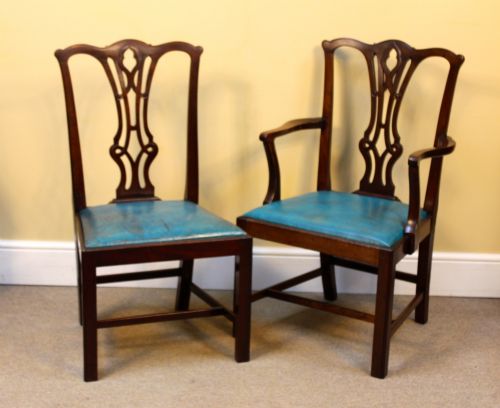
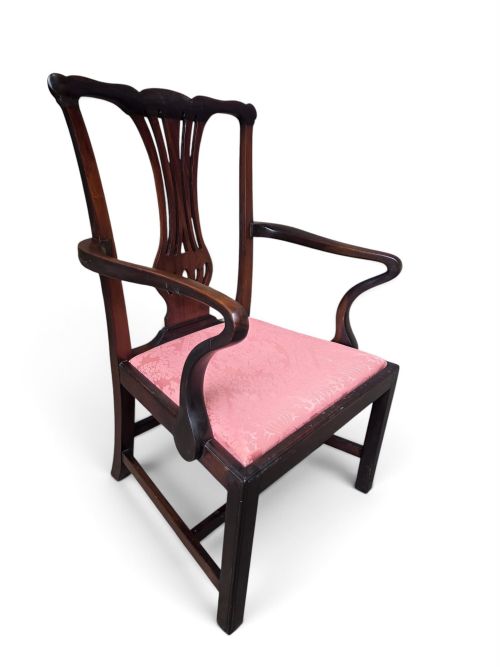
Dark Mahogany Carver Chair
A dark mahogany carver chair brings rich timber tones and commanding arm support to a study or dining table.
What these pieces are
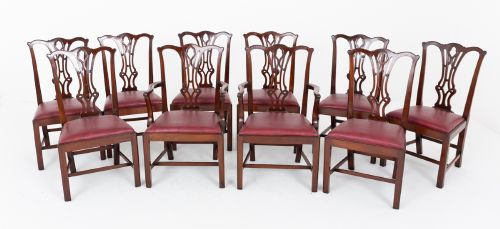
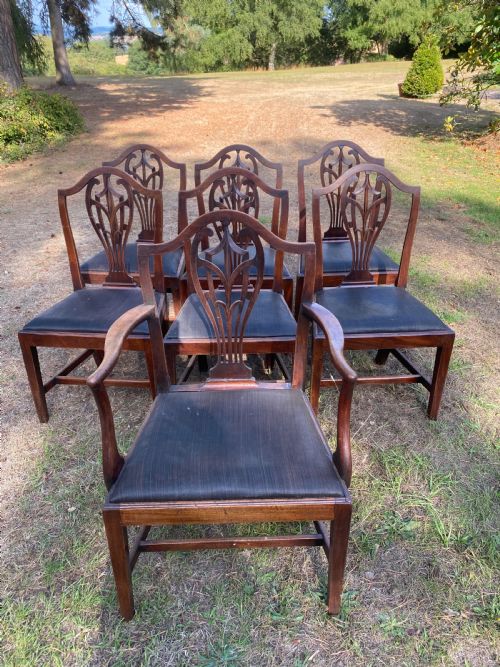
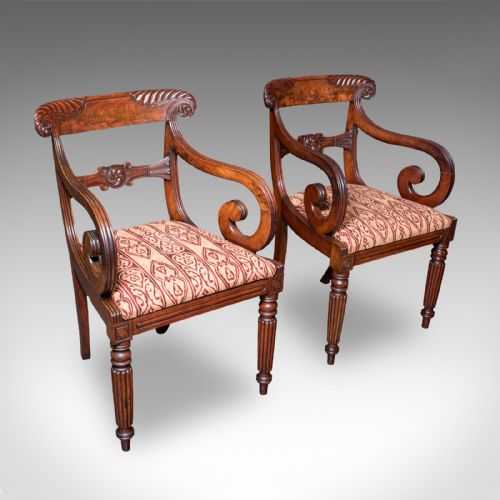
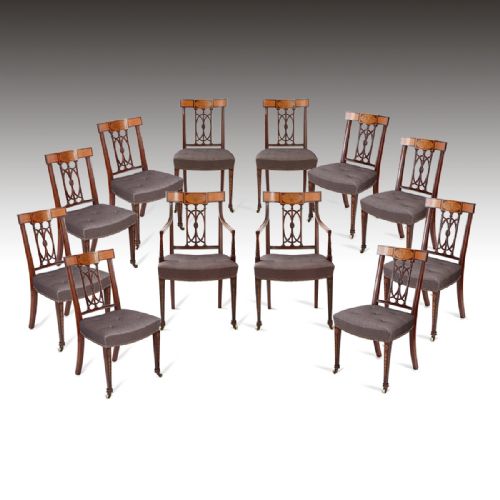
A dark mahogany carver chair is a sturdy armchair designed for the head of a table or a desk, distinguished by its prominent timber arms. The examples gathered here span the eighteenth and nineteenth centuries, taking forms from Georgian Chippendale designs to later Edwardian iterations.
Buyers encounter substantial proportions, distinct timber grains, and various seat coverings across these armchairs, dining chairs, and desk chairs. Each piece reflects the cabinet-making traditions of its specific era, ranging from genuine Georgian production to later nineteenth-century revival styles.
How they were made
The primary material is mahogany, occasionally accented with marquetry or fitted with brass details, providing a dense and durable structural frame. These timbers are shaped and joined to form robust armchairs capable of withstanding centuries of daily use.
Seating areas utilise a variety of textiles, including fabric, velvet, upholstered fabric, and leather, attached to the wooden frames to provide comfort. Joinery techniques from the eighteenth and nineteenth centuries ensure the stability of the arms and legs without modern fasteners.
Retail Price Guide 2026
Typical UK retail prices for dark mahogany carver chair, calculated from the Sellingantiques database of over a million retail prices indexed since 2003. This retail price guide relies exclusively on Sellingantiques data; no external sources or auction records are used, so the figures do not describe the wider market.
Some chairs arrive with brass fittings that have polished into tiny suns through centuries of sleeves brushing past.
What varies in quality
Quality in a dark mahogany carver chair lies in the crispness of the timber carving, the depth of the mahogany grain, and the harmony of the proportions. Superior pieces display thoughtful integration of arm supports and backsplats that speak to the confidence of the original maker.
The choice of upholstery materials and the execution of details such as marquetry or brass fittings further distinguish standard seating from exceptional examples. A well-preserved surface finish maintains the character of the wood without masking its natural figure.
The Dark Mahogany Carver Chair Glossary
- Carver chair
- An armchair traditionally placed at the head of a dining table or used at a desk. These pieces feature supportive wooden arms flanking the seating area.
- Mahogany
- A durable tropical hardwood prized for its rich dark colour and stable grain. It serves as the principal structural and visual medium for these chairs.
- Chippendale
- A style originating from eighteenth-century design books associated with Thomas Chippendale. It is characterised by ornate carving and balanced proportions.
- Marquetry
- Decorative veneer work arranged in patterns on wooden surfaces. This technique adds visual complexity to the flat panels of the chair.
Frequently Asked Questions
What is a carver chair?
A carver chair is an armchair traditionally used at the head of a dining table or positioned at a desk. The arms provide additional support compared to standard side chairs.
These pieces use mahogany as their primary material and appear in various historical styles from the eighteenth century onwards.
How do I date a mahogany chair?
Dating relies on examining the joinery, timber patination, and stylistic markers associated with periods like the Georgian or Edwardian eras. Structural details often reveal the manufacturing epoch.
Evidence from the listed items shows pieces originating across the eighteenth and nineteenth centuries, each carrying distinct period characteristics.
Where should I place an antique armchair?
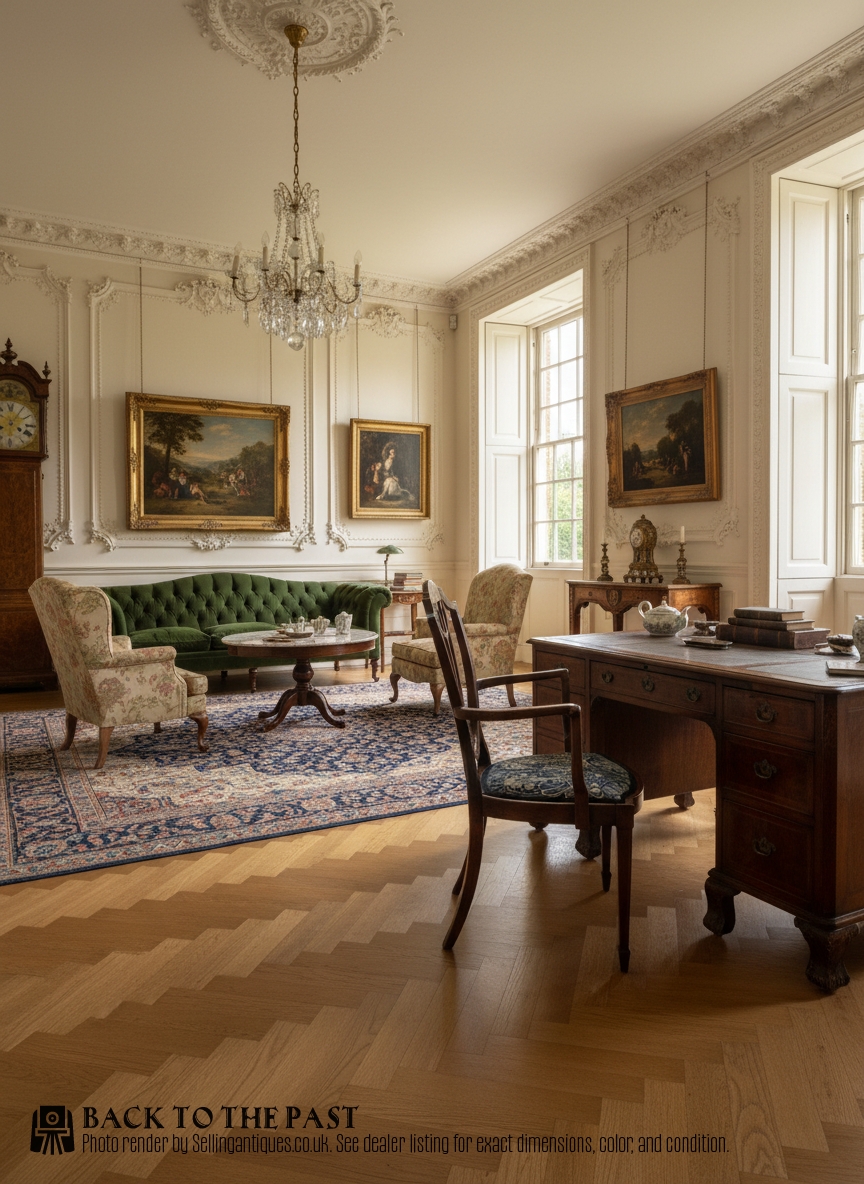
These armchairs function well as statement pieces in a study, library, or at either end of a dining table. Their substantial wooden frames anchor a room's decor.
Ensure the proportions suit the surrounding furniture and that the upholstery complements the existing textile palette of the space.
What fabrics are used for seats?
Original and replacement seats feature materials such as leather, velvet, fabric, and general upholstered textiles. These options provide varying levels of cushioning and texture.
The choice of covering often reflects either the period of manufacture or subsequent nineteenth-century reupholstery work.