



Dark Hardwood Cabinet
A dark hardwood cabinet brings dense, figured timber and intricate carving into a room, offering both practical storage and a strong visual anchor.
Dark Hardwood Cabinet
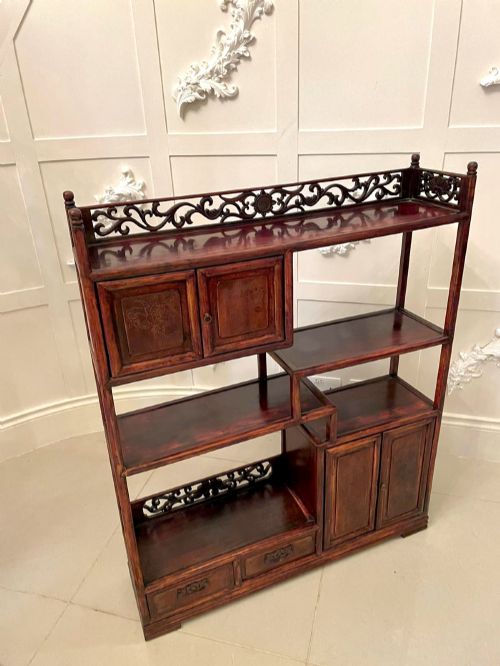
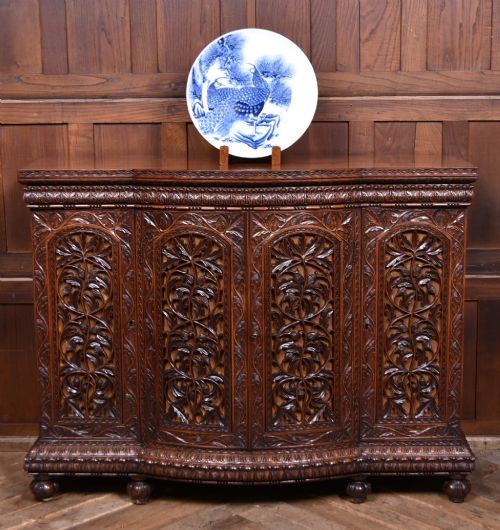
A dark hardwood cabinet encompasses a varied group of storage furniture created across different workshops and traditions, spanning freestanding display units, tabletop shodanas, and sideboards. When searching for a dark hardwood cabinet, buyers typically encounter pieces originating from nineteenth-century China, Japan, and Anglo-Indian colonial workshops.
The selection ranges from tall glazed display cases and heavy sideboards to small collector chests and table cabinets. Many of these pieces integrate specific regional forms, such as Chinese compound cabinets and Japanese Meiji period shodanas, alongside occasional items like bedside cupboards and music cabinets.
How they were made
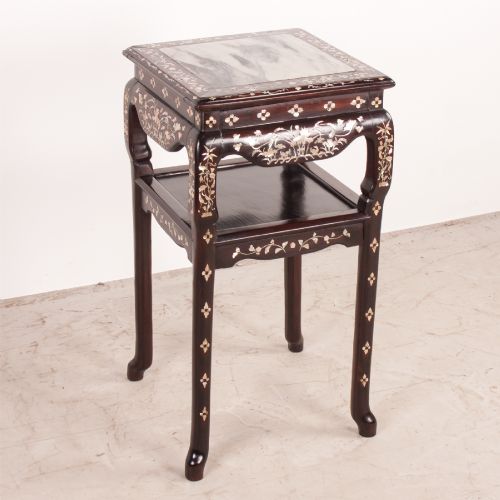
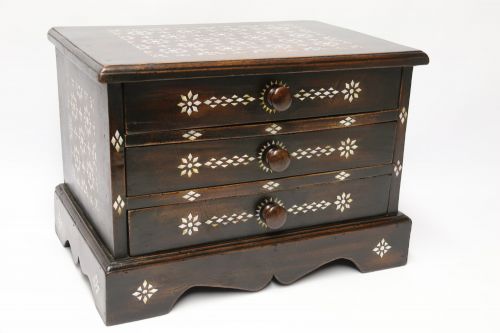
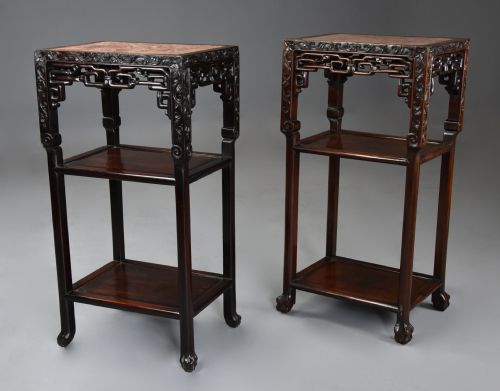
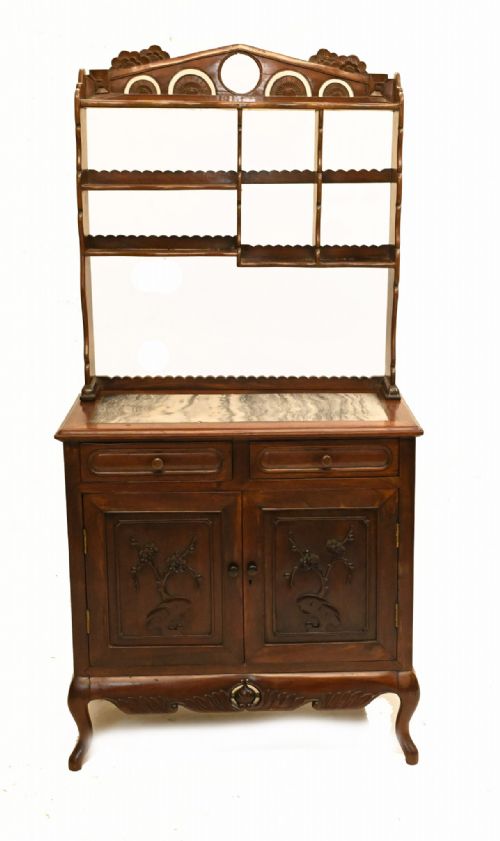
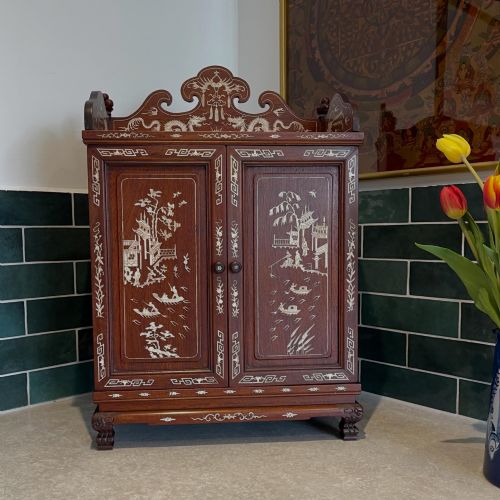
Carpenters utilised dense tropical timbers like padauk, rosewood, and zitan, building robust frames that accommodated deep relief carving and structural joinery without relying on excessive metal fasteners. Artisans enhanced these dark surfaces with contrasting materials, embedding mother-of-pearl inlay, brass hardware, and panels of veined marble into the dense wood.
Surface finishes involved traditional lacquering and hand-rubbed wax, which protected the heavy timber while accentuating its natural grain. Carving was executed by hand, creating intricate motifs of dragons, foliage, and geometric patterns directly into the hardwood structure.
Several pieces conceal tiny compartments behind sliding panels, built for storing secrets.
What varies in quality
The standard of a piece rests largely on the depth and crispness of the hand carving, alongside the selection and matching of the timber grain. Finer examples display meticulous joinery that remains tight and stable, whereas lesser items show coarser assembly and simpler surface decoration.
The integration of decorative elements such as inlaid mother-of-pearl, bronze animal mounts, or inset marble tops dictates the refinement of the object. Superior specimens retain their original patination and hardware, showing balanced proportions across complex forms like multi-tiered shodanas or glazed display bookcases.
Gabriel Viardot
The Dark Hardwood Cabinet Glossary
- Shodana
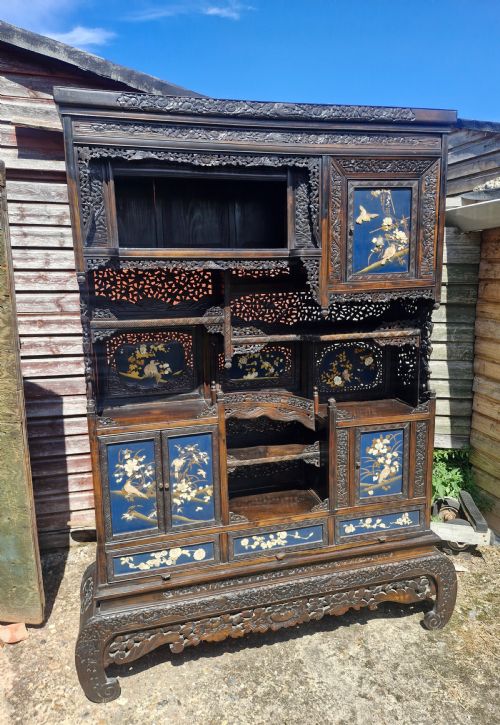
- A traditional Japanese multi-tiered display cabinet featuring staggered shelves, small cupboards, and sliding doors. These cabinets were designed to showcase small decorative objects and ceramics.
- Padauk
- A heavy, durable tropical hardwood prized for its deep reddish-brown colour and dense grain. It was frequently utilised in Anglo-Indian and Burmese cabinetmaking.
- Zitan
- An exceptionally dense and heavy Chinese hardwood belonging to the rosewood family, historically reserved for imperial and high-status furniture. It darkens significantly with age to an almost black tone.
- Hongmu
- A categorical Chinese term translating to red wood, used to describe dense, dark hardwoods utilised in traditional furniture construction. Pieces made from hongmu are valued for their structural weight and rich dark finish.
- Japonisme
- A western artistic style of the late nineteenth century influenced by Japanese art and design. It appears in European furniture that incorporates asymmetric arrangements and oriental decorative motifs.
Dark Hardwood Cabinet: Frequently Asked Questions
What is a shodana cabinet?
A shodana is a Japanese cabinet from the Meiji period characterised by asymmetric tiers, small cupboards, and sliding panels. They were built to display porcelain, okimono, and other small works of art.
The construction relies on intricate joinery without nails, often incorporating dark exotic hardwoods and decorative metal fittings. Their varied compartments provide a distinctive silhouette compared to western storage furniture.
How do I care for hardwood furniture?
Hardwood furniture requires stable indoor humidity and protection from direct sunlight to prevent the timber from splitting or warping. Dusting with a soft, dry cloth helps maintain the natural wax or lacquer surface.
Avoid placing these pieces near heat sources or damp areas. Gentle treatment of the original polish preserves the depth and dark tone of the wood over time.
Where were Anglo-Indian cabinets made?
Anglo-Indian cabinets were produced in workshops across the Indian subcontinent during the nineteenth century, often destined for British colonial officials or export markets. They combined traditional Indian carving techniques with European furniture forms such as sideboards and writing desks.
These pieces typically utilise regional timbers like padauk and feature dense floral or figural carving. The fusion of styles created robust furniture that served both decorative and practical domestic roles.