




Carved Hardwood Sideboard
A carved hardwood sideboard brings heavy tropical timber and deep chisel work into a room, offering both display surface and enclosed storage.
Carved Hardwood Sideboard
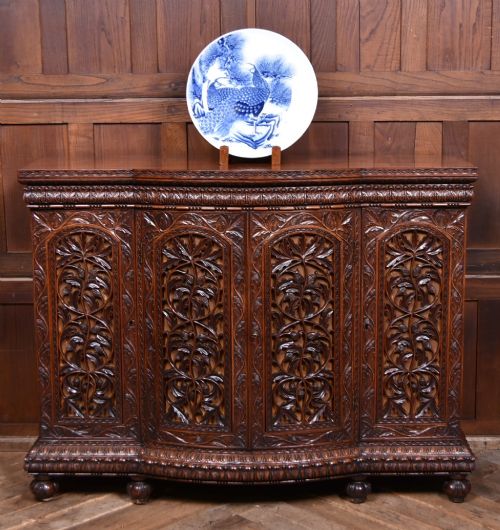
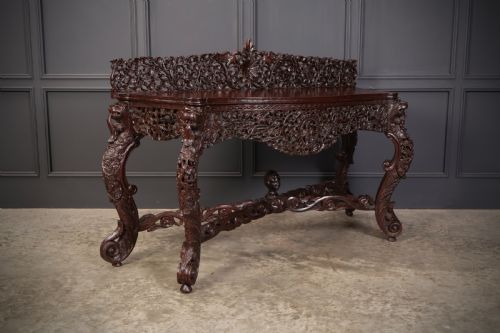
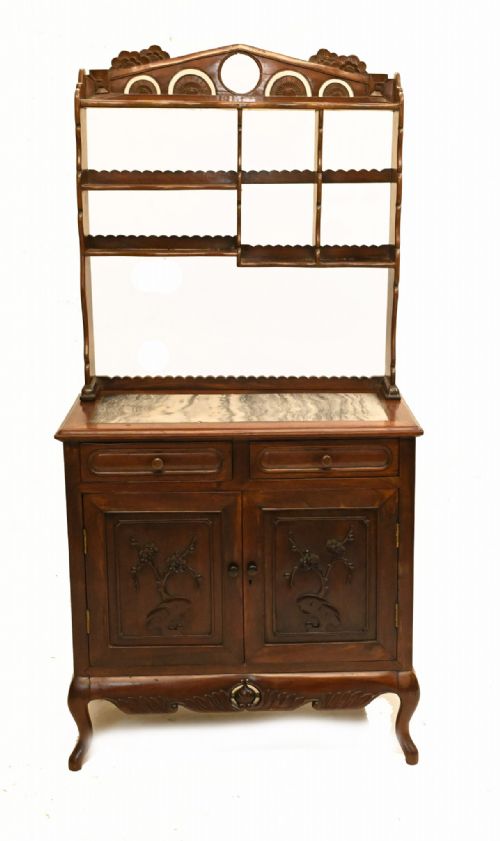
A carved hardwood sideboard combines heavy timber construction with dense surface ornamentation, appearing in forms such as console tables, cabinets, and dressers. When buyers search for a carved hardwood sideboard, they encounter regional furniture traditions including Anglo-Indian Colonial, Anglo-Burmese, and Chinese Qing Dynasty aesthetics.
The pieces available originate across the nineteenth century, including specific dates such as 1850, 1880, and 1900, alongside Victorian Gothic Revival interpretations. Sideboards and cabinets alternate with smaller console tables and specimen chests, all executed in dense timbers.
Anglo-Indian and Burmese examples bring Padouk wood and teak into prominence, while Chinese pieces utilise rosewood, lacquered hardwood, and traditional Shanxi Province styling. Each regional variation employs distinct carving motifs, ranging from dense floral foliage to geometric panel work.
Materials and construction methods
Cabinetmakers worked with dense tropical hardwoods including padouk, teak, and rosewood, which accepted deep, crisp chisel cuts without splintering. These heavy timbers provided structural stability for large sideboards, cabinets, and dresser bookcases.
Decoration relied on relief carving directly into the solid wood rather than applied veneers, creating layered visual depth across doors, friezes, and backsplashes. Secondary materials such as brass hardware and marble inserts occasionally supplemented the timber construction.
Carved Hardwood Sideboard Retail Price Guide 2026
Typical asking prices for carved hardwood sideboard among the pieces listed under this phrase on Sellingantiques today, from the lower quarter to the upper quarter. They describe what is for sale here now, not the wider market.
Padouk wood dust turns bright orange when freshly cut, though centuries of polish settle it into a rich, dark brown.
Distinguishing quality in carved furniture
Quality rests in the depth and sharpness of the chisel work, where crisp undercut foliage distinguishes superior carving from shallow, mechanical moulding. The selection of the timber grain, particularly in padouk and rosewood, dictates the visual impact of the polished surface.
Structural integrity depends on the joinery used to tame heavy hardwoods, ensuring doors hang true and panel shrinkage is accommodated naturally. Original brass fittings and intact marble tops further elevate the standing of a piece.
The Carved Hardwood Sideboard Glossary
- Padouk
- A dense, heavy tropical hardwood showing deep reddish-brown tones that darken with age. It forms the primary material for many nineteenth-century Anglo-Indian and Burmese sideboards.
- Console Table
- A table designed to stand against a wall, frequently supported by brackets or legs at the front. Several examples appear within nineteenth-century colonial furniture groups.
- Gothic Revival
- An architectural and decorative style drawing inspiration from medieval forms. Victorian interpretations occasionally apply these pointed arches and heavy moulding to hardwood furniture.
Carved Hardwood Sideboard: Frequently Asked Questions
What is a carved hardwood sideboard?
A carved hardwood sideboard is a storage and display piece fashioned from dense tropical timbers like padouk, teak, or rosewood, heavily decorated with chisel work. These items span nineteenth-century Anglo-Indian, Burmese, and Chinese traditions.
They function as substantial dining room or hallway furniture, offering cupboards, drawers, and flat top surfaces for presentation.
Where were these sideboards made?
The pieces originate from diverse workshops in Britain's overseas colonies and China during the nineteenth century. Anglo-Indian and Burmese cabinetmakers produced heavily carved padouk and teak forms for both local and export markets.
Simultaneously, Chinese workshops created hardwood cupboards, dressers, and storage cabinets reflecting regional styles such as Shanxi Province designs.
How do I care for padouk wood?
Padouk and other dense tropical hardwoods require minimal moisture and protection from direct sunlight to prevent the timber from drying out. Dusting with a dry or slightly damp cloth preserves the polished surface without clogging the deep recesses of the carving.
Avoid placing these heavy pieces near direct heat sources that might cause the solid wood timbers to split or warp.
How do I date a Chinese hardwood cabinet?
Dating relies on examining construction techniques, timber patination, and stylistic markers associated with the nineteenth century or the Qing Dynasty. Traditional joinery methods and regional aesthetic cues help narrow the period of manufacture.
Cabinetry from around 1800 to 1900 displays specific surface wear and tool marks consistent with hand-carved production before mass manufacturing.