

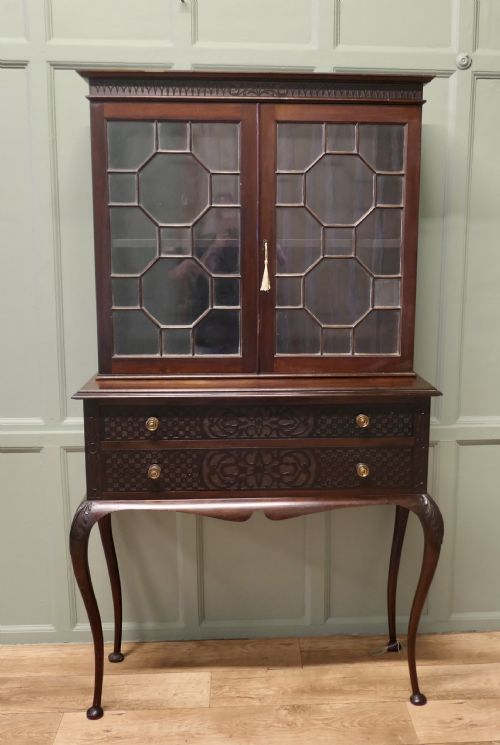
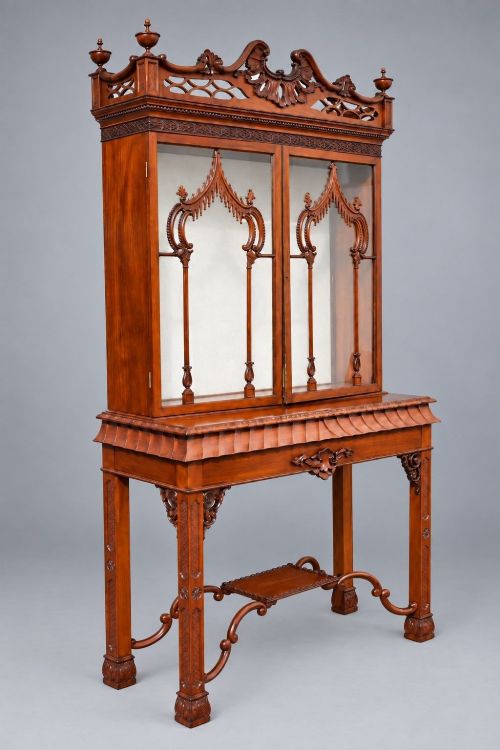
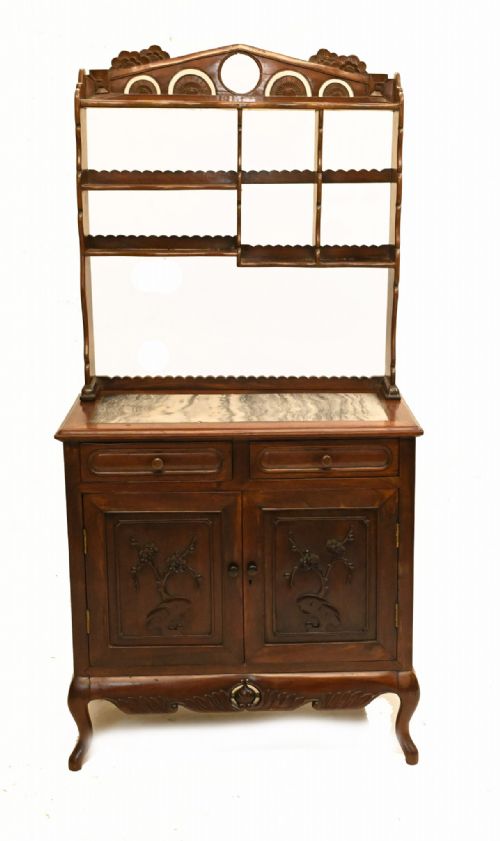
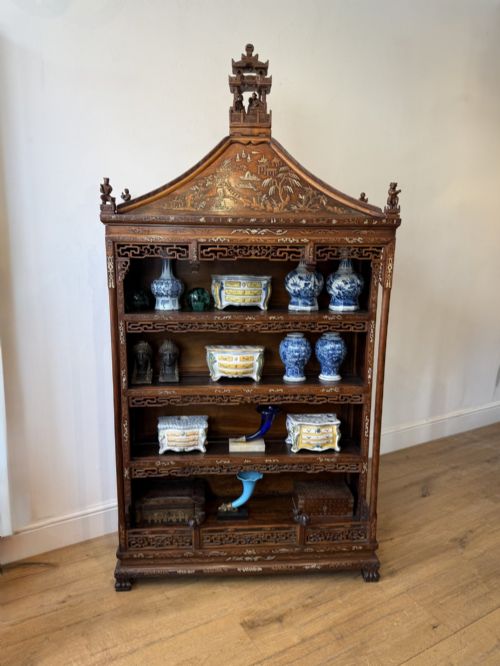


Chinese Carved Bookcase
A Chinese carved bookcase brings intricate hardwood joinery and generous display space into a room.
Chinese Carved Bookcase
A chinese carved bookcase combines structural shelving with detailed traditional carving, emerging across the nineteenth century in various forms. These pieces often serve as display cabinets, dressers, or open shelf units designed to hold books and decorative objects.
The versions most commonly met on this page span the Victorian era, the Qing Dynasty, and the Chinese Export market. Makers utilised specific regional aesthetics, blending British revival tastes with traditional craftsmanship.
How they were made
Workshops utilised dense timbers such as hardwood, mahogany, rosewood, padouk, and cherrywood for their primary frames. These dense woods supported deep, profuse relief carving without compromising structural integrity.
Craftsmen incorporated decorative elements including mother of pearl, bone inlay, and brass hardware into the timber surfaces. Glazed doors and glass panels frequently protected the upper sections, while open shelving accommodated larger volumes.
Chinese Carved Bookcase Retail Price Guide 2026
Typical asking prices for chinese carved bookcase among the pieces listed under this phrase on Sellingantiques today, from the lower quarter to the upper quarter. They describe what is for sale here now, not the wider market.
Listings feature periods spanning the Victorian era, Qing Dynasty, and the late nineteenth century.
What varies in quality
The depth and crispness of the hand carving separate standard production from exceptional examples. Profuse, sharp relief work across the hardwood requires significant labour compared to shallow surface stamping.
The choice of primary timber dictates longevity and visual weight, with dense rosewood and padouk achieving superior finish retention. Original glass panes and intact bone or mother of pearl inlays also elevate the standing of a piece.
The Chinese Carved Bookcase Glossary
- Shodana
- A Japanese or Asian tiered display cabinet featuring staggered shelves and small cupboards. These pieces showcase complex joinery and decorative panels.
- Padouk
- A heavy, durable tropical hardwood prized for its reddish hue and stability. It accepts fine hand carving exceptionally well.
- Chinoiserie
- European decorative style reflecting Chinese artistic motifs. It appears widely in revival furniture and export pieces.
- Hongmu
- A generic Chinese term for dense red hardwoods. Artisans utilise it for high-status cabinetry.
Chinese Carved Bookcase: Frequently Asked Questions
How do I date a Chinese carved bookcase?
Dating relies on timber selection, construction methods, and stylistic markers recorded in the evidence. Nineteenth-century examples often feature dense hardwoods and hand-cut joinery specific to the Victorian period or Qing Dynasty.
Changes in hardware, glass manufacture, and regional export styles help narrow the decade of production. Comparing the depth of relief carving against known period benchmarks provides further chronological context.
Where were these bookcases originally used?
These cabinets served in formal reception rooms, libraries, and parlours to store volumes and display curated objects. Export versions found a ready market in European homes influenced by Asian design.
Their dual function as bookcases and display cabinets made them versatile furniture forms for affluent nineteenth-century households. They bridged domestic utility and decorative exhibition.
Are these pieces made of solid hardwood?
The evidence shows construction from substantial timbers including rosewood, mahogany, padouk, and cherrywood. These dense materials formed the structural framework for heavy relief carving.
Secondary woods may appear in concealed areas, but the primary exterior surfaces utilise solid timbers rather than simple veneers. This accounts for their considerable weight and durability.
How do I clean and maintain the carved surfaces?
Dust accumulation in deep relief carving requires soft bristle brushes to protect the wood grain and any delicate inlay. Avoid liquid polishes that build up within the recesses of the carved panels.
Maintain stable humidity levels to prevent timber movement and protect natural inlays like bone or mother of pearl. Gentle microfibre cloths preserve the original patina of the hardwood.