
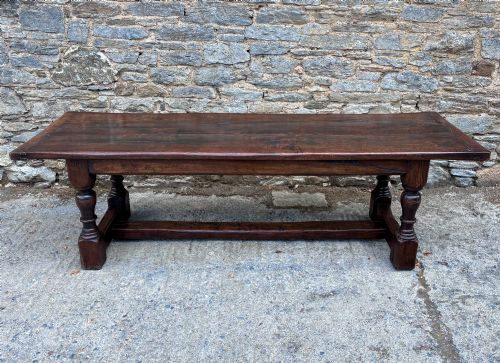
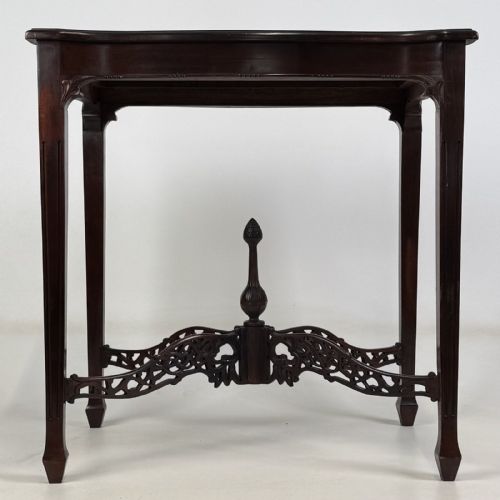
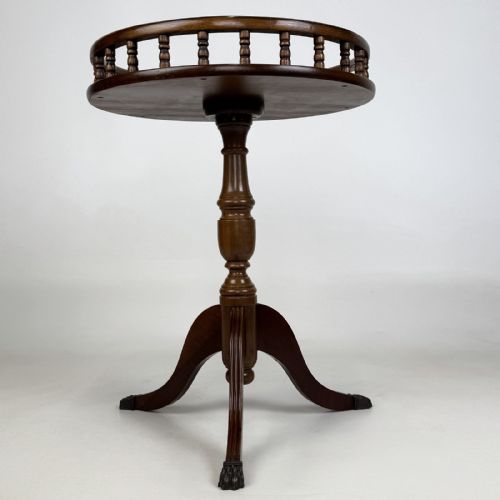
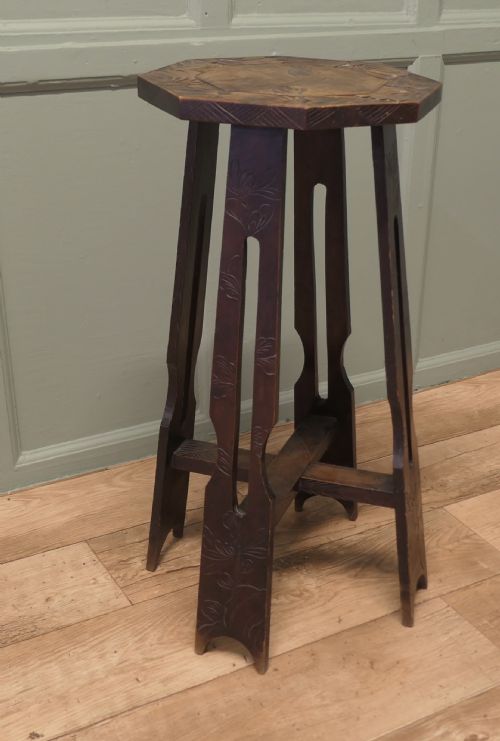
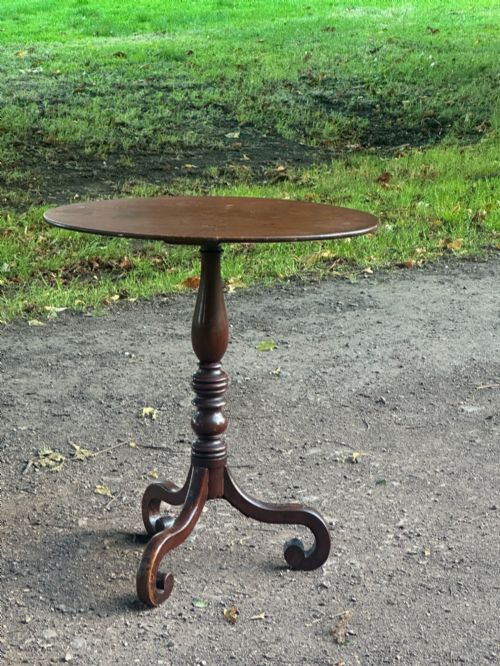
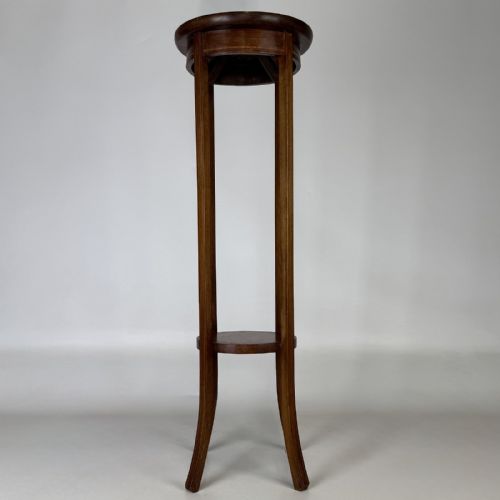
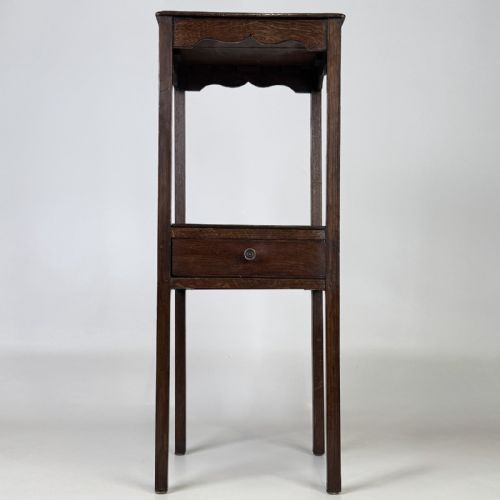
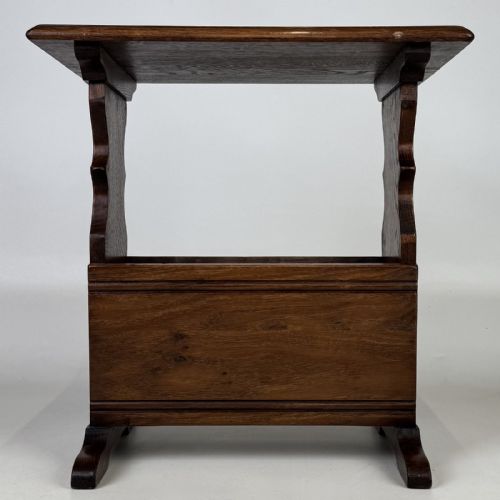
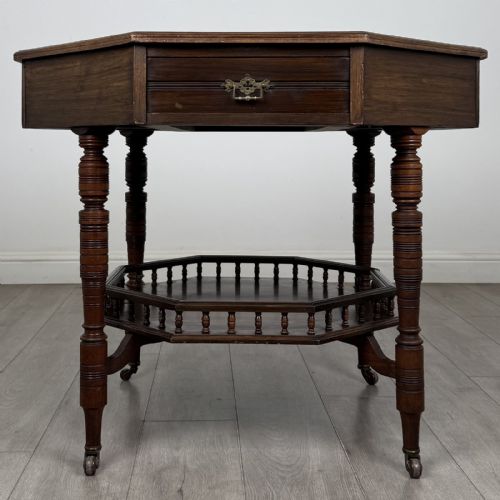
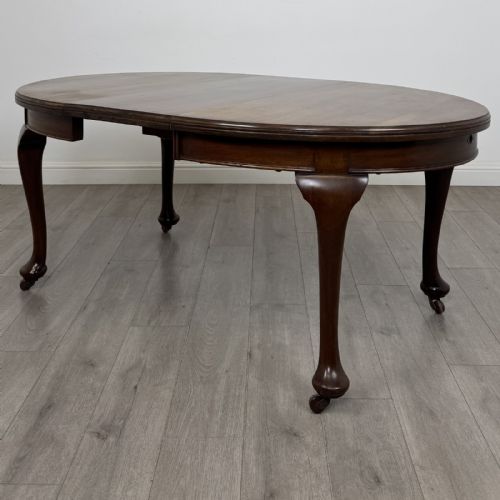
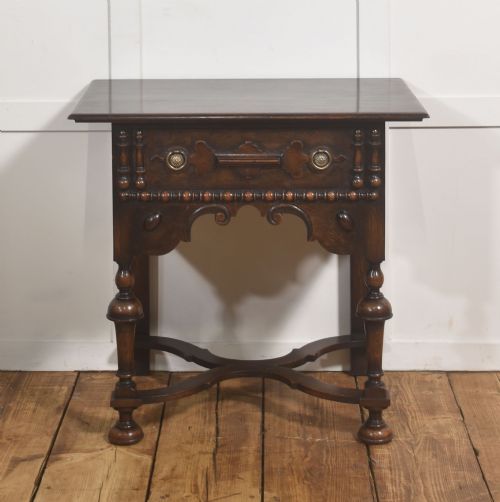
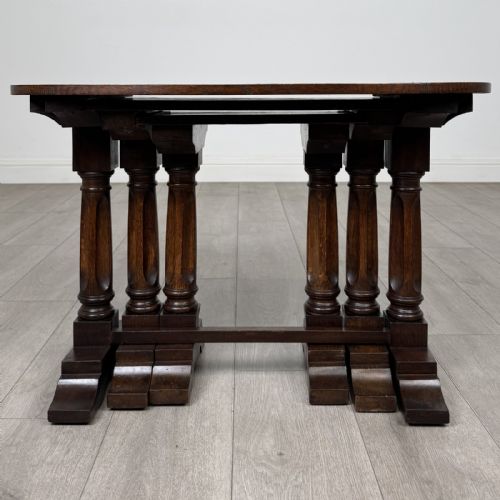
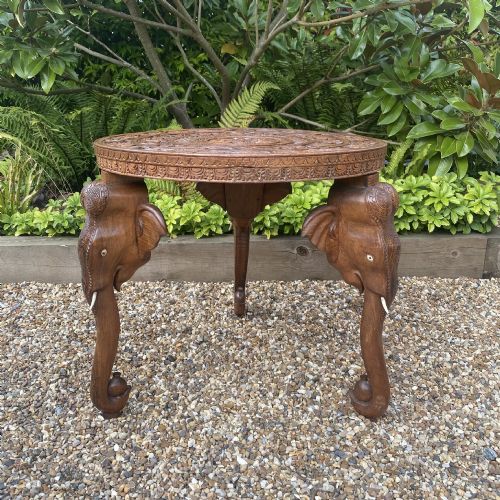
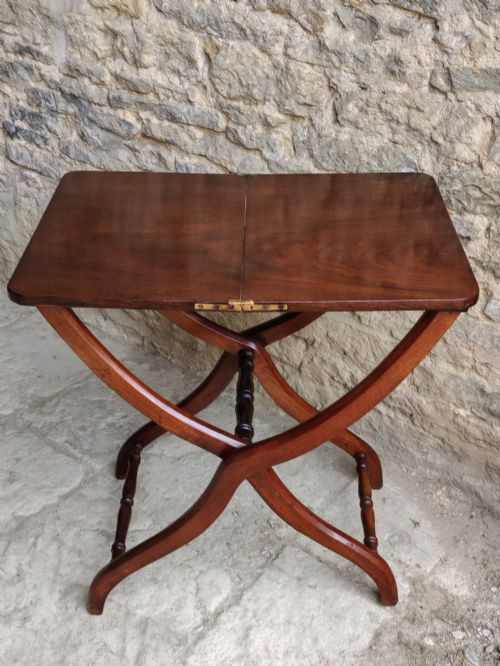
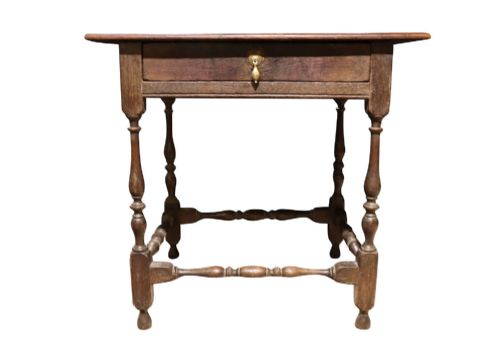
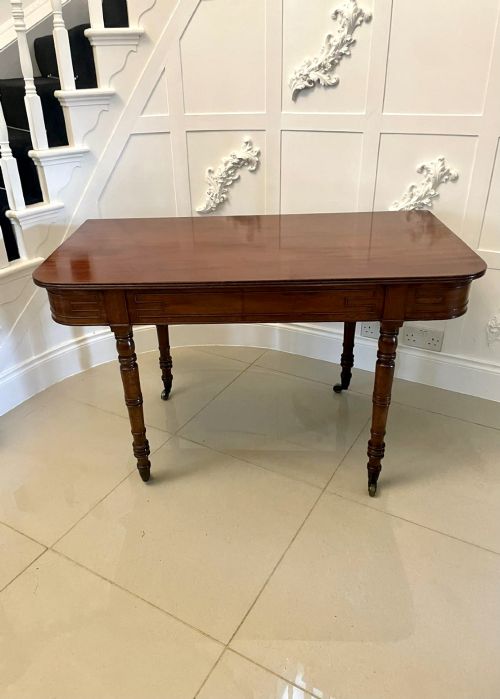
Dark Brown Wood Table
These pieces form a dark brown wood table, offering solid timber construction and rich grain patterns suited to practical daily use.
Dark Brown Wood Table
A dark brown wood table spans a broad domestic vocabulary, ranging from formal dining furniture to compact side pieces. Buyers encounter numerous dining surfaces, occasional tables, nests, and desks suited to various rooms.
The selection draws on periods from the eighteenth century through to the early twentieth century, including Georgian, Victorian, and Edwardian eras. Mahogany, oak, and walnut dominate the offerings across these traditional forms.
Side tables and small lamp stands appear frequently alongside larger extendable dining tables and writing desks. Regional variations include English, Dutch, and Burmese examples executed in native and imported timbers.
Materials and Construction
Cabinetmakers utilised dense hardwoods such as mahogany, rosewood, oak, and walnut to build durable frames and tabletops. Secondary timbers often support internal structures, while brass fittings and leather inserts appear on specific desks and sofa tables.
Joinery methods rely on traditional techniques including mortise and tenon joints, dovetailing for drawers, and turned or carved supports. Surfaces receive polish, wax, or oil finishes to protect the grain and deepen the natural tone of the wood.
Campaign tables were built to fold flat into wooden chests so British officers could pack up their dining rooms on a whim.
Assessing the Standard
Quality rests upon the selection of timber figures, such as figured mahogany or burr oak, and the precision of the underlying joinery. Superior examples display careful matching of wood grain across table leaves and top panels.
Original hardware, sound structural stability, and minimal timber replacement elevate a piece above standard utility items. Fine carving, crisp turning on legs, and intact mechanism components for extending tables indicate skilled workshop production.
Trollope & sons
The Dark Brown Wood Table Glossary
- Mahogany
- A durable tropical hardwood known for its deep reddish-brown colour and stable grain. It became the dominant timber for high-quality formal furniture through the eighteenth and nineteenth centuries.
- Tilt-top
- A tabletop hinged to its central pillar so it can tilt vertically when not in use. This mechanism allowed tables to be stored flat against a wall to save space in smaller rooms.
- Nest of tables
- A set of graduated small tables designed to fit neatly beneath one another. They offer flexible surface space for entertaining and stow away compactly when unoccupied.
- Sofa table
- A type of occasional table designed to stand in front of a sofa, typically featuring drop leaves on either end. Regency examples often incorporate two small drawers and trestle ends.
- Draw leaf table
- A dining table with extension leaves stored beneath the main top that pull out from each end. This design lengthens the surface without requiring separate loose leaves.
- Dumb waiter
- A tiered revolving or stationary stand placed near a dining table to hold dishes and silverware. It allowed diners to serve themselves without the constant presence of servants.
Dark Brown Wood Table: Frequently Asked Questions
What periods do these tables represent?
The pieces span several centuries, with examples originating from the Georgian, Victorian, and Edwardian eras. Earlier items date back to the seventeenth and eighteenth centuries.
Craftsmen built these tables using traditional joinery and dense hardwoods characteristic of their respective periods.
How do I care for a dark wood table?
Maintain the finish by dusting regularly with a soft cloth and applying beeswax periodically to nourish the timber. Keep tables away from direct heat sources and strong sunlight to prevent warping and fading.
Using coasters and placemats protects the polished surface from moisture and heat marks during daily use.
What woods were commonly used?
Mahogany, oak, walnut, and rosewood form the primary materials for these tables. Cabinetmakers selected these dense timbers for their strength and attractive grain patterns.
Secondary hardwoods and fruitwoods also appear in specific regional or vernacular pieces.
How do I identify a dining table extension mechanism?
Extending dining tables often utilise central runner tracks or drop-in leaves supported by additional gateleg frames. William IV and Victorian models frequently employ screw mechanisms or wooden slides.
Inspect beneath the tabletop to see how the leaves store or insert into the central frame.