
Dark Brown Settle
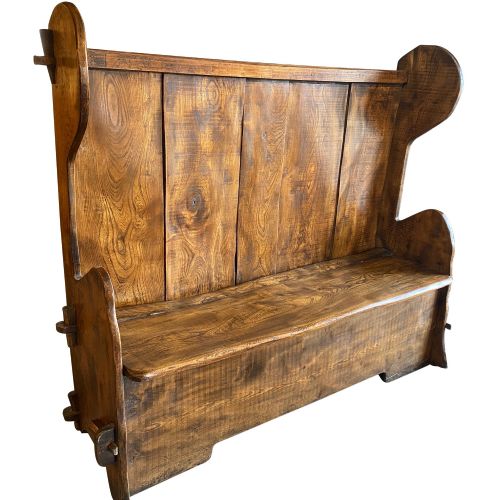
A dark brown settle anchors an entrance hall or living room with architectural presence, offering deep seating and period character.
Dark Brown Settle
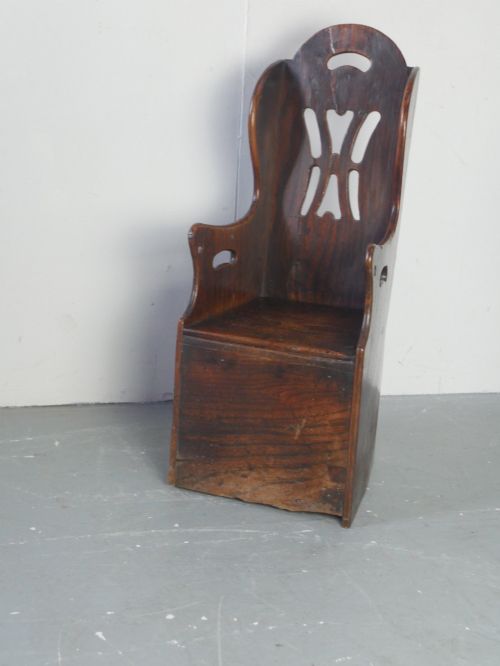
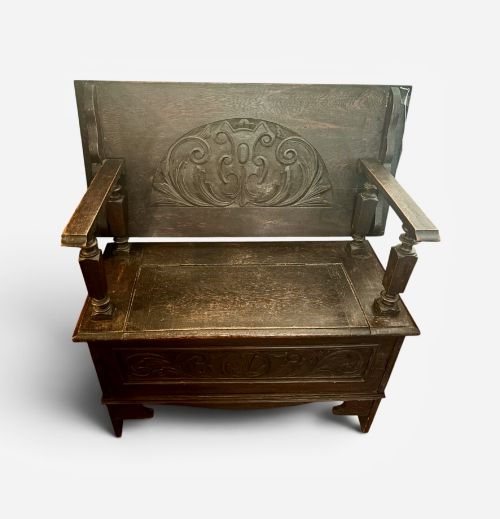
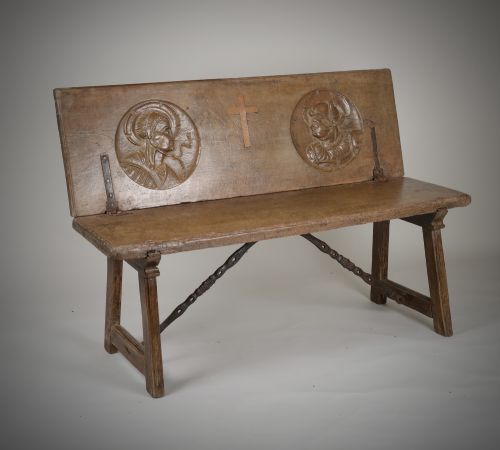
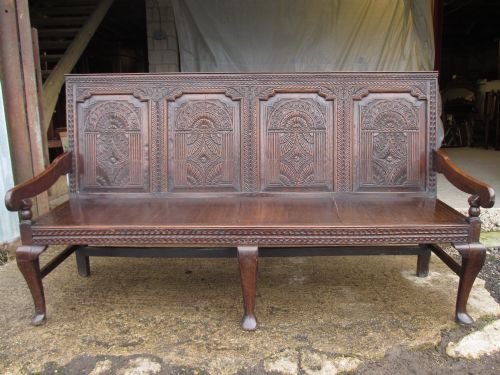
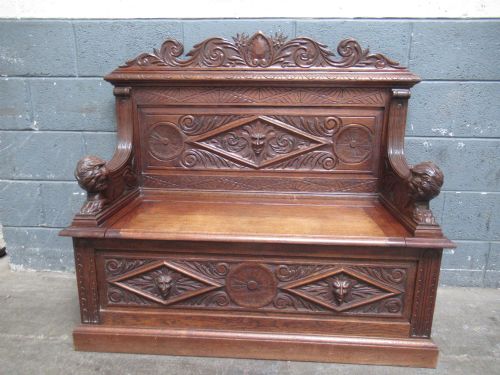
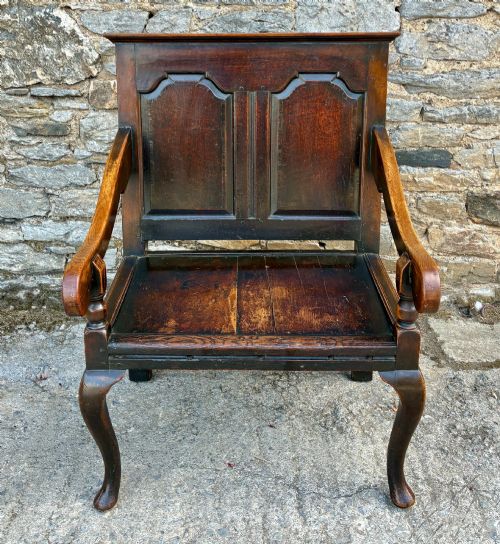
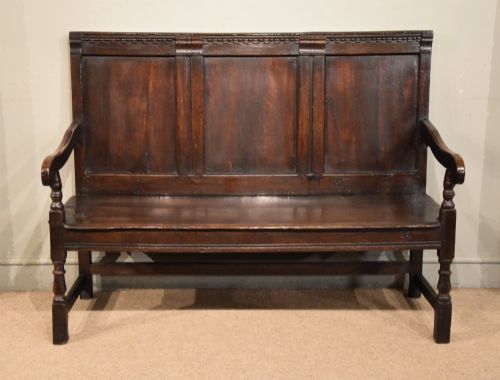
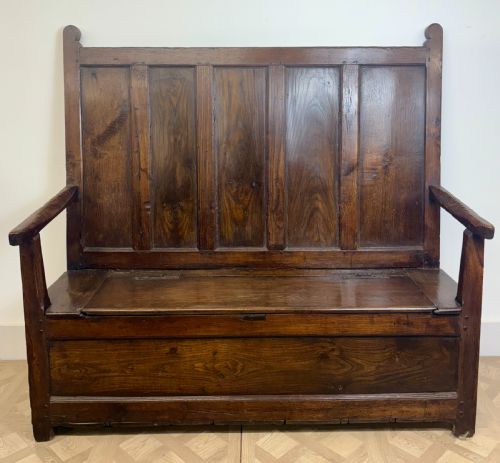
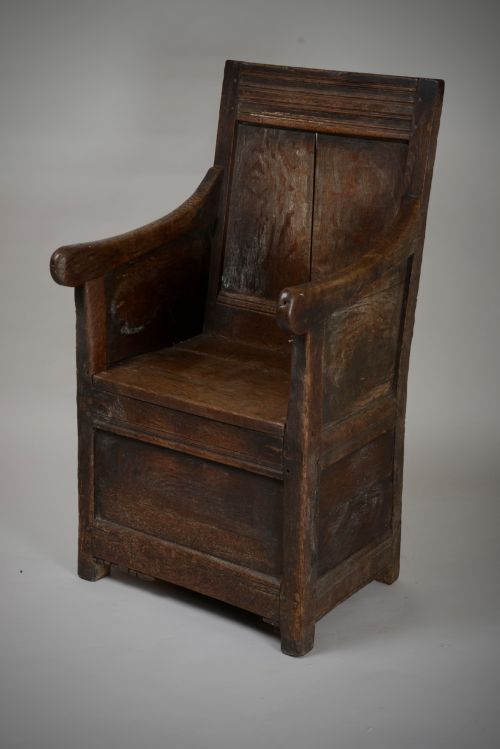
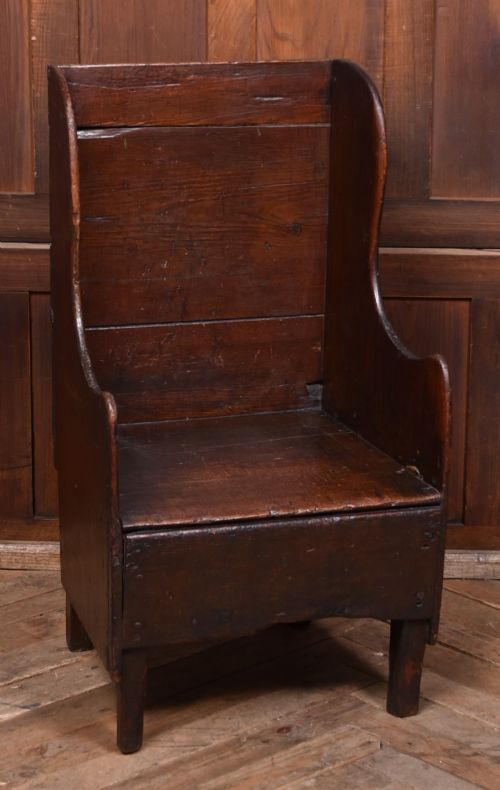
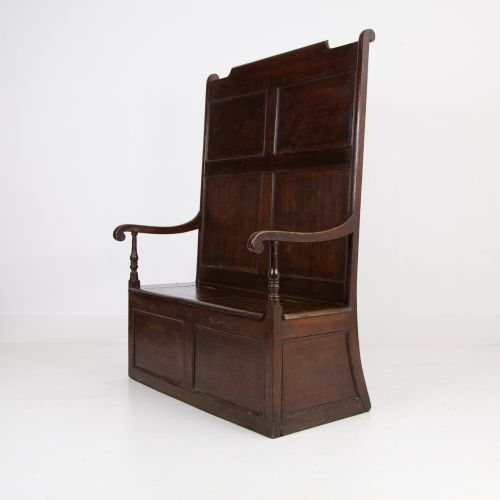
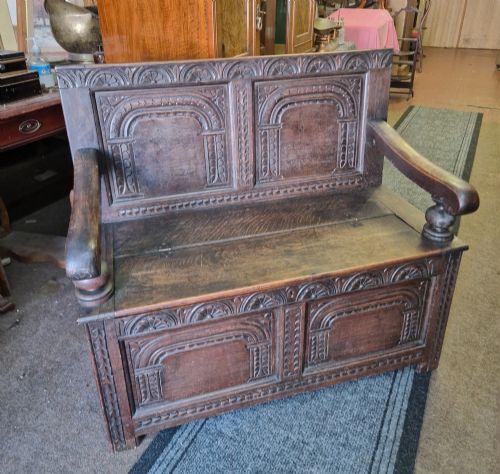
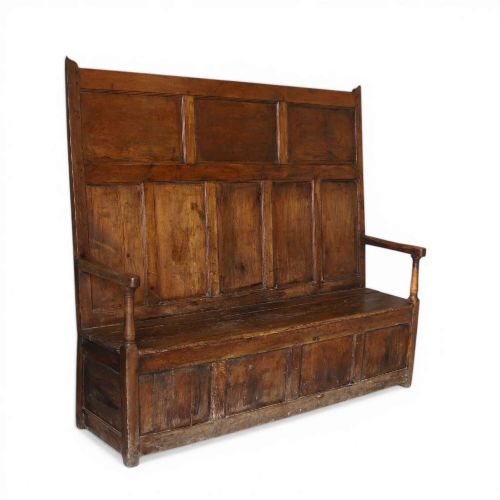
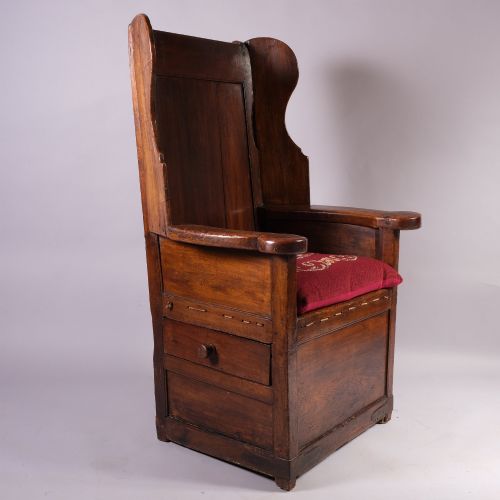
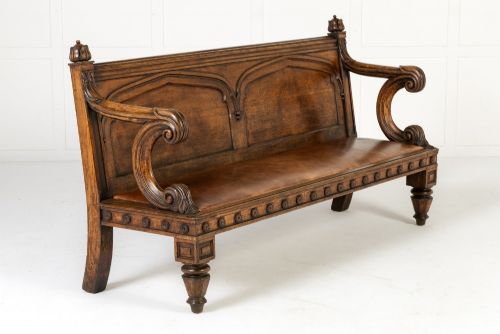
A dark brown settle is a substantial wooden bench with high backs and solid sides designed to block draughts in older homes. The forms seen here include high-backed panelled designs, box settles with integrated storage, and lambing chairs.
Most examples found on this page date from the 18th century and the 19th century, constructed from native hardwoods with deep patination. Regional variants range from North Country pieces to Welsh and Scottish country house examples.
These seats serve equally as hall benches or reception furniture, utilising traditional joinery and panel construction to create monumental silhouettes.
Materials and construction
Makers relied primarily on oak, elm, and ash, building frames with pegged mortise and tenon joints that provide structural rigidity. Box settles incorporate hinged lids into the base to create lidded storage chests beneath the seat.
Surfaces display carved ornamentation including geometric panels, linenfold motifs, and tracery associated with Gothic Revival and Jacobean styles. Timber was finished with wax or polish over centuries, producing the characteristic dark brown tone.
Some box settles feature secret compartments originally designed to hide small valuables from travelling pedlars and rogues.
Judging quality and proportion
Quality rests in the integrity of the timber framing and the depth of the original patination rather than surface flashiness. Early 17th century and 18th century examples show careful hand-planing and robust pegged construction that survived heavy domestic use.
Proportion and panel crispness distinguish vernacular cabinet-making from later revival pieces. Pieces retaining their original box bases, unaltered feet, and unthinned timber planks hold greater architectural weight.
Wylie Lockhead Manufacturers
The Dark Brown Settle Glossary
- Box settle
- A wooden bench featuring a lidded storage compartment beneath the seat and solid sides to keep out draughts. These pieces double as chests and seating.
- Panel-back
- A high wooden back constructed from framed wooden panels, frequently decorated with carvings or mouldings. This style deflects cold air in large rooms.
- Lambing chair
- An enclosed high-backed armchair, often with solid wooden wings and a box base, traditionally used by firesides or shepherds. They provide intimate shelter from room drafts.
- Vernacular furniture
- Items made by local provincial craftsmen using regional timbers and traditional methods rather than following metropolitan academic designs. These pieces reflect local utility.
- Patina
- The surface sheen and colour developed by wood through age, handling, and wax polishing over generations. It indicates genuine antiquity.
Dark Brown Settle: Frequently Asked Questions
What is a dark brown settle used for today?
These pieces function as striking hall benches or dining seating, providing a strong architectural anchor against a wall.
The enclosed box bases also offer practical hidden storage for blankets, shoes, or household items in busy entryways.
How do I date an antique oak settle?
Dating relies on examining the construction methods, such as hand-split timbers, pegged joints, and the style of panel mouldings.
Earlier pieces from the 17th century show simpler, heavier framing, while 18th century and Victorian examples often feature more refined carving or applied ornamentation.
Are box settles comfortable to sit on?
Traditional wooden settles have upright wooden seats designed for posture rather than lounging, much like church pews.
Adding a loose fabric cushion or squab pad easily softens the seat for everyday living room use.
Where were settles placed in old houses?
Settles were positioned close to the hearth in the main hall or kitchen to shield occupants from cold draughts coming off stone floors.
The high wooden back and solid arms trapped the heat from the fire and created a micro-climate for the sitter.