


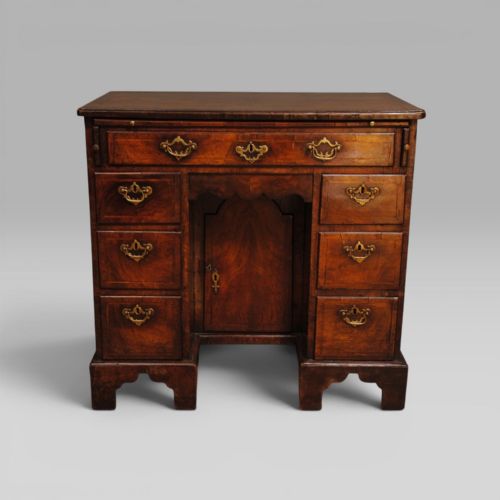
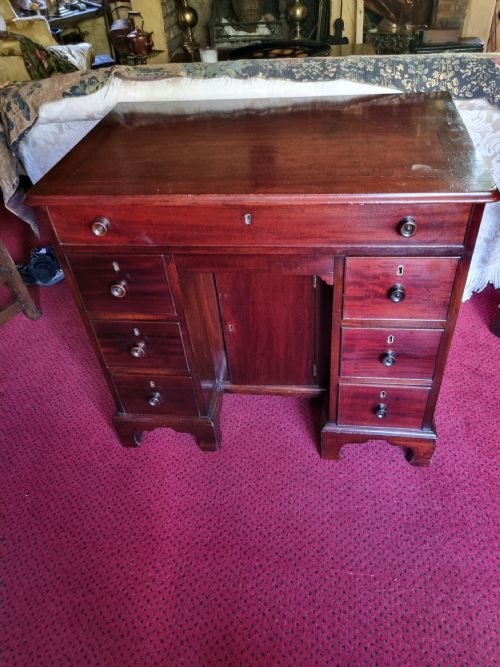
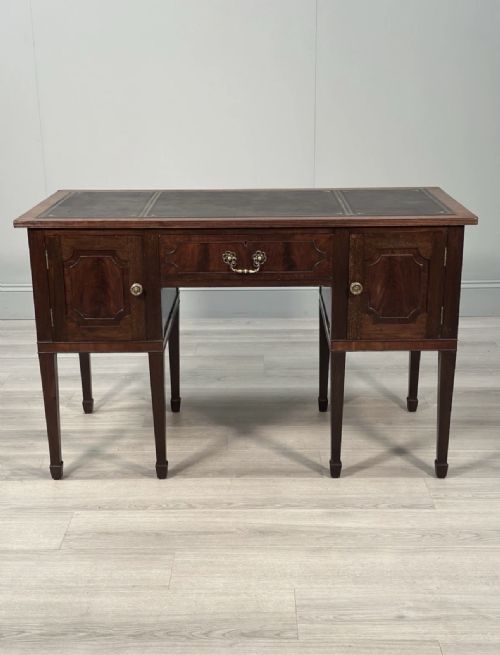


Dark Brown Kneehole Desk
A dark brown kneehole desk provides a compact, purposeful workspace framed in rich timbers from the Georgian, Victorian, and Edwardian periods.
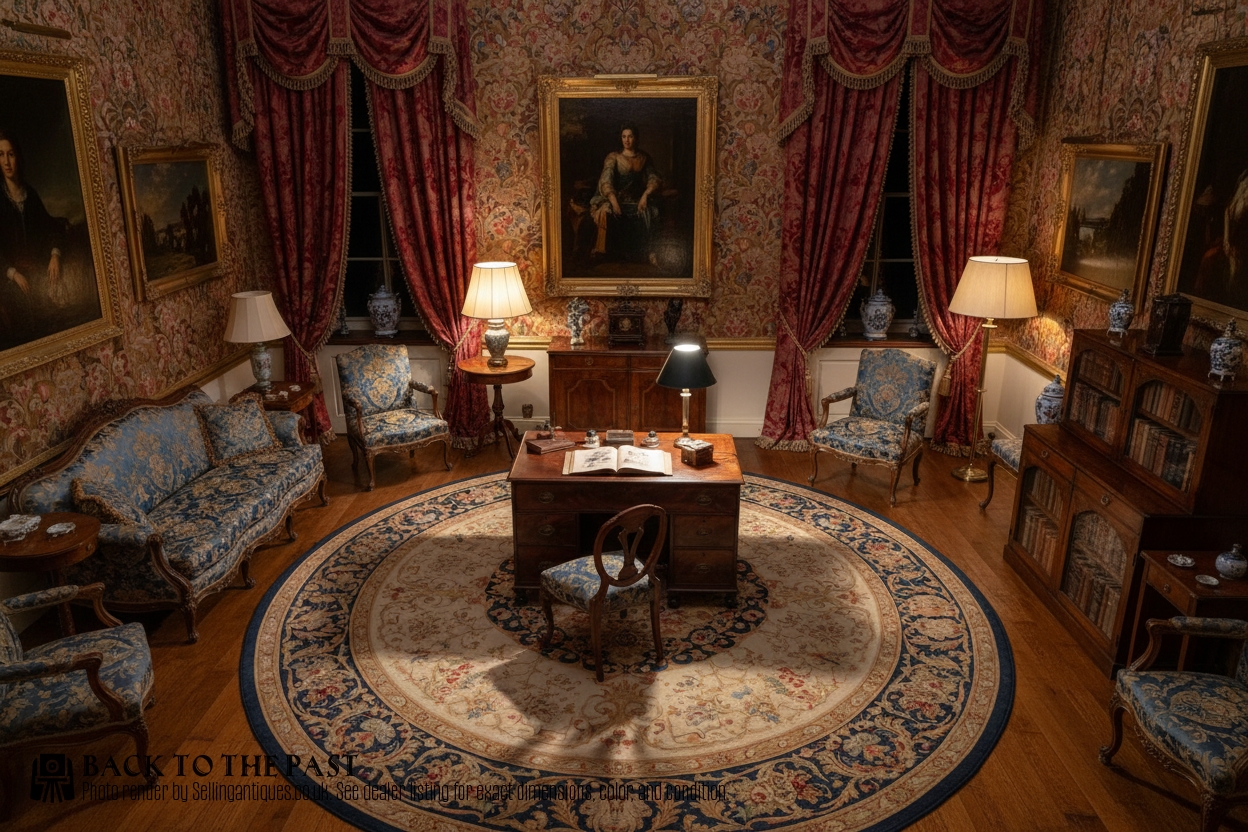
Dark Brown Kneehole Desk
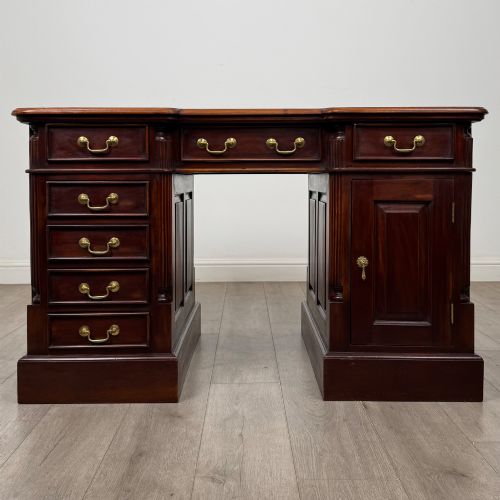
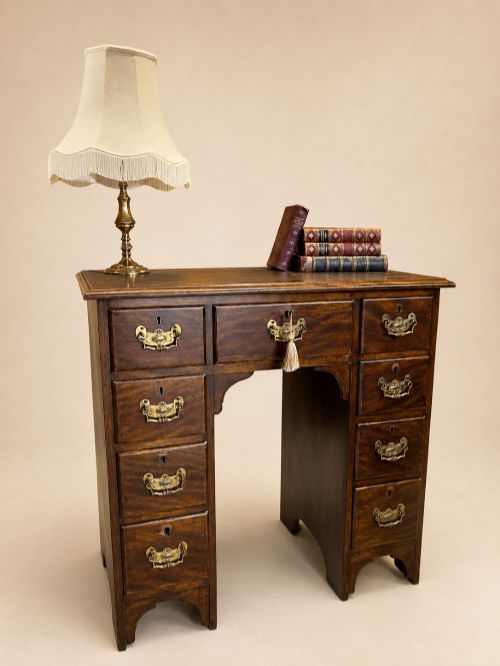
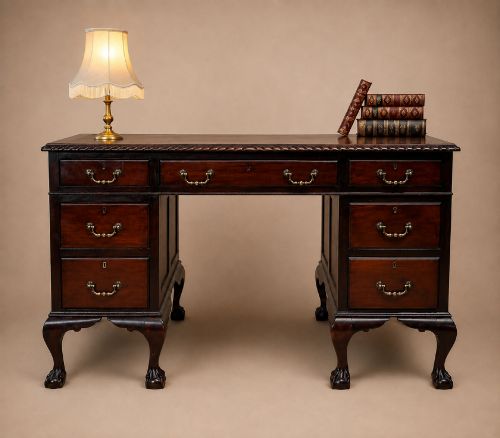
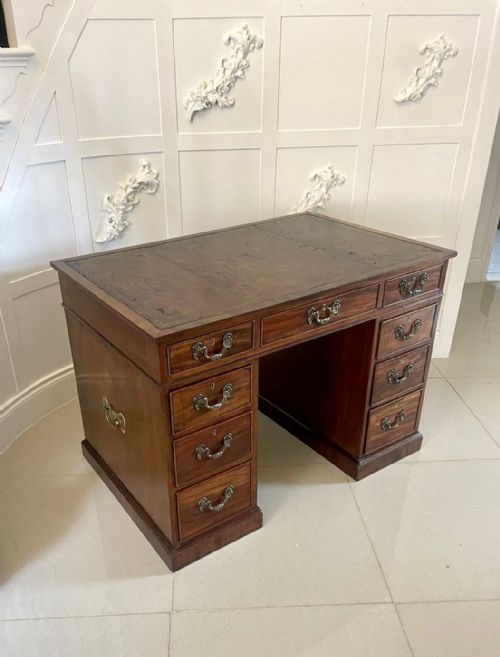
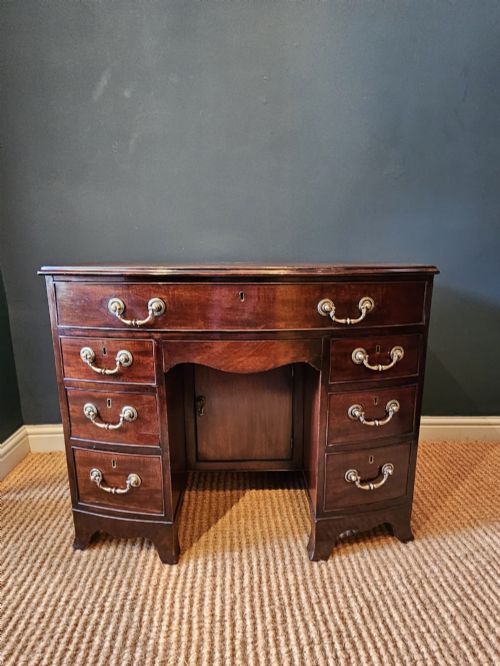
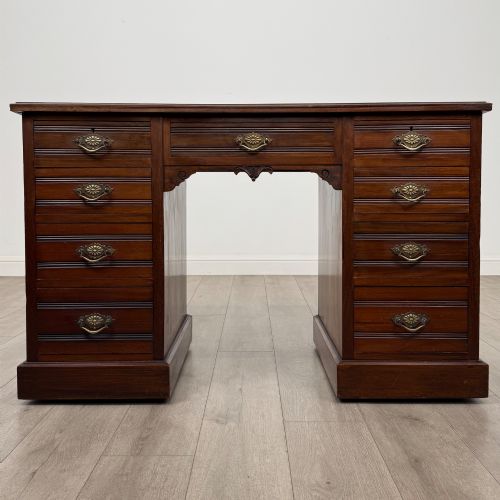
A dark brown kneehole desk typically presents a central recessed space flanked by banks of drawers, designed for writing and private correspondence. These pieces span centuries of cabinetmaking, with Georgian and Victorian examples forming the backbone of the selection.
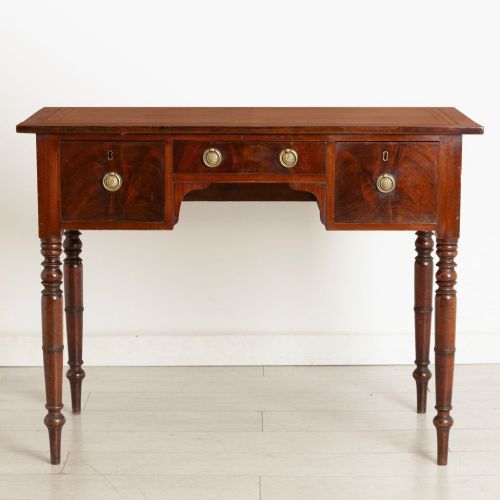
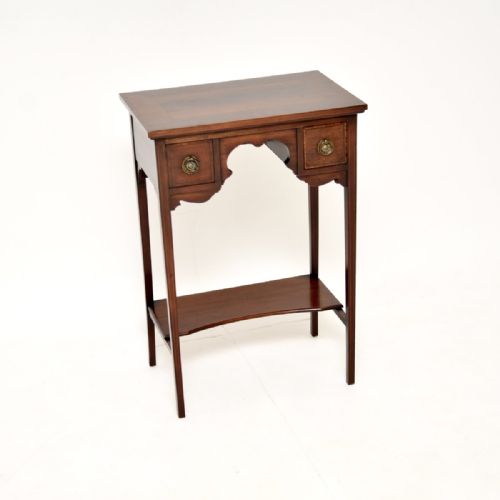
Makers utilised dense timbers such as mahogany, walnut, and oak to construct these pedestal forms. Alongside standard desks, related lowboy tables and side variants appear in the listings with similar proportions and kneehole configurations.
The domestic scale of these pieces suits smaller studies and bedrooms. Earlier 18th-century examples sit alongside later Edwardian interpretations and revival pieces, offering distinct stylistic accents from each era.
Timbers and Construction
Cabinetmakers built the carcase and drawer linings from solid timbers, applying figured mahogany, walnut, or oak veneers to the primary surfaces. Drawer construction relies on hand-cut dovetails, while structural joints employ traditional mortise and tenon techniques.
Surfaces often feature inset leather writing panels tooled with gilt borders. Original brass drop handles, backplates, and working locks complete the construction of period pieces.
Listings feature pedestal desks, side tables, and lowboys spanning the eighteenth, nineteenth, and early twentieth centuries in mahogany, oak, and walnut.
Distinction in Craftsmanship
The selection of timber grain defines the visual weight of the piece, with highly figured mahogany or burr walnut marking out superior examples. Crispness in the carving of mouldings and drawer framing separates standard workshop production from finer cabinet work.
Integrity of the secondary woods, survival of original hardware, and retention of the fitted interior drawers dictate the standing of an individual desk.
Trollope & sons·Johnstone & Jeanes·Étienne Kohlmann·John Gregory
The Dark Brown Kneehole Desk Glossary
- Kneehole
- A compact writing desk or dressing table featuring a central recess for the sitter's legs, enclosed by pedestals of small drawers. This configuration concentrates storage space beneath the work surface.
- Pedestal desk
- A heavy library or writing table constructed from two independent drawer pedestals supporting a wide top. The design allows drawers to flank both sides of the central user space.
- Lowboy
- A small occasional table with one or more rows of drawers beneath the top surface, originating in the late 17th century. These tables frequently serve as writing or dressing surfaces.
- Padauk
- A dense tropical hardwood displaying a deep reddish-brown tone, utilised in colonial and Anglo-Indian cabinetmaking. It offers exceptional durability and weight.
- Dovetail
- A traditional interlocking joint used to join drawer sides to drawer fronts. Hand-cut variations help indicate the age and origin of period furniture.
Dark Brown Kneehole Desk: Frequently Asked Questions
What is a kneehole desk?
A kneehole desk is a freestanding or pedestal writing table designed with a central recessed opening beneath the desk surface. This arrangement allows the user to sit directly in front of the writing surface with banks of small drawers positioned on either side.
These pieces emerged to provide private storage and a writing space without the larger footprint of a partners desk. Cabinetmakers built them in various timbers, making them adaptable to smaller domestic rooms.
How do I date a mahogany desk?
Dating a mahogany desk involves examining the construction methods of the drawers, the thickness of the timber, and the overall style. Georgian examples often display fine hand-cut dovetails and understated bracket feet, while Victorian versions tend to be heavier with bolder mouldings.
Hardware such as brass handles and key escutcheons also offer clues, though locks and pulls are frequently replaced. Secondary woods inside the drawer linings help confirm the regional origin and period.
Are these desks suitable for daily work?
Many period desks accommodate modern writing tasks, though original kneehole clearances can sit lower than contemporary office furniture. Assessing the height of the knee recess ensures comfortable seating.
The leather writing surfaces require gentle care to prevent scuffing from modern stationery. Using blotters preserves the historic hide while providing a smooth workspace.
What is the difference between an 18th and 19th century desk?
Eighteenth-century desks typically exhibit restrained proportions, subtle veneer selections, and lighter structural framing. Cabinetmakers of this era focused on balanced grain patterns and refined bracket or ogee feet.
Nineteenth-century pieces often embrace heavier proportions, richer carving, and more robust plinth bases. Victorian workshops introduced mechanical fittings and wider variations in pedestal arrangements to suit changing domestic habits.