
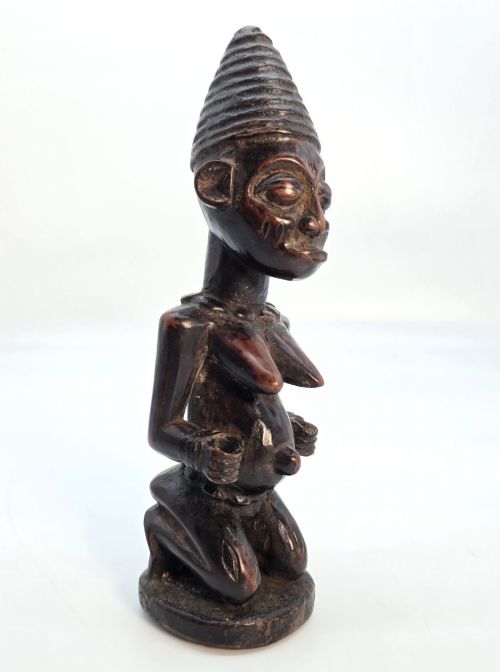


Dark Brown African Sculpture
Dark brown african sculpture gathers carved wooden figures, ceremonial masks and functional objects shaped across the nineteenth and twentieth centuries.
Dark Brown African Sculpture
A dark brown african sculpture brings together carved wooden figures, tribal masks and utilitarian objects created across diverse regions of the continent. The selection spans the nineteenth century through to the mid twentieth century, including pieces originating from Mali, Nigeria, the Ivory Coast and the Democratic Republic of the Congo.
Buyers encounter distinct forms such as fertility figures, helmet masks, figural headrests and animal carvings including warthog masks and friction oracles. Alongside figural sculptures, the category accommodates functional wooden items like ceremonial beds, tables and camel saddles.
The objects reflect specific tribal traditions, featuring styles associated with the Edo, Dogon, Yoruba, Kuba, Luba Hemba and Bamileke peoples. These pieces demonstrate the varied sculptural output of different African communities during the colonial and pre-colonial periods.
Materials and construction
Makers shaped these works primarily from dense timbers, utilising hardwood and carved wood to achieve durable forms. Surfaces often display a dark natural patina developed through handling, age and oils, occasionally supplemented by kaolin pigment or natural fibre attachments.
Carvers employed traditional hand tools to shape logs and planks into complex human and animal figures, sometimes incorporating articulated joints as seen in specialised lay figures.
The listings span the nineteenth century, Edwardian era, and the nineteen thirties through to nineteen fifty, recording materials including hardwood, kaolin pigment and natural fibre.
Assessing quality in carving
Quality rests on the precision of the hand carving and the depth of the regional style expressed in the wood. Strong anatomical proportions and clean surface definition separate finer figural sculptures from simpler utilitarian work.
The character of the aged surface patina and the integrity of the timber influence the visual impact of each piece. Surviving natural fibres and pigments contribute to the completeness of ceremonial masks and figures.
The Dark Brown African Sculpture Glossary
- Patina
- The surface sheen and colour developed on wood through age, handling and environmental exposure. This characteristic layer helps signal the age and history of a carved object.
- Tribal Mask
- A carved wooden face or helmet worn during ceremonies, dances or rituals. These pieces often represent spirits, animals or ancestors within specific cultural traditions.
- Hardwood
- Dense timber derived from broad-leaved trees, selected by carvers for its durability and fine grain. It forms the structural base for most traditional sculptures.
- Headrest
- A carved wooden support for the head during sleep, often featuring figural pedestals. These portable items double as symbols of status and personal property.
Dark Brown African Sculpture: Frequently Asked Questions
How old are these sculptures?
The pieces date from the nineteenth century up to the mid twentieth century, with specific items attributed to periods around eighteen eighty, nineteen hundred and nineteen thirty.
Dates reflect the stylistic evidence and estimated period of origin recorded for each individual carving.
What woods were used?
Carvers utilised dense timbers and hardwood suited to detailed chisel work and long-term durability.
Surfaces frequently exhibit a dark patina formed over decades of handling and exposure.
Where do these pieces originate?
Origins span various regions across the continent, including Mali, Nigeria, the Ivory Coast and the Democratic Republic of the Congo.
Many objects connect directly to specific cultural groups such as the Dogon, Yoruba, Edo, Luba Hemba and Kuba peoples.
How should I live with wooden sculptures?
Place wooden carvings away from direct heat sources and sudden humidity changes to protect the timber and historic patina.
Dust the surfaces gently with a dry cloth and avoid applying modern polishes or oils to the antique wood.
Are all the items figures?
The selection includes human and animal figures alongside ceremonial masks, helmets and friction oracles.
Functional objects such as headrests, tables, beds and saddles also appear within the wider category.