




Dark Bronze Putti Sculpture
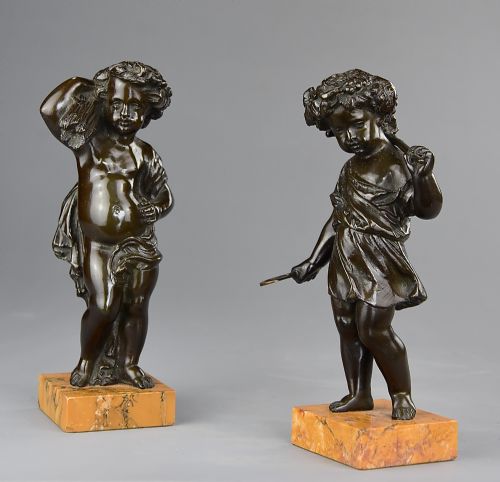
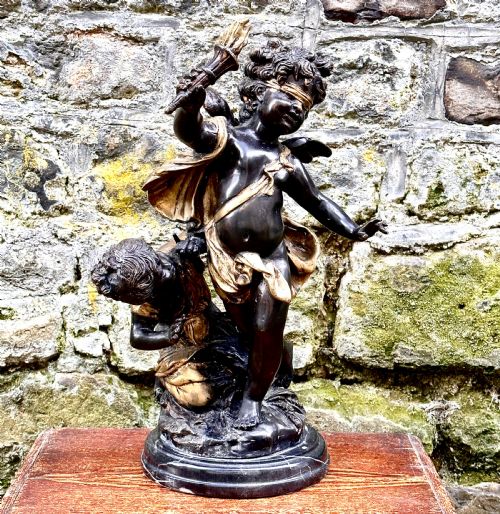
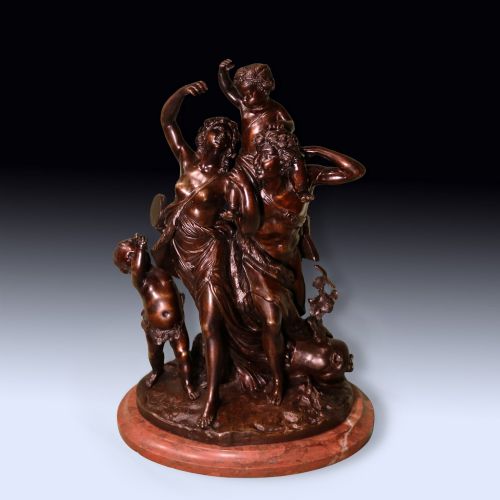
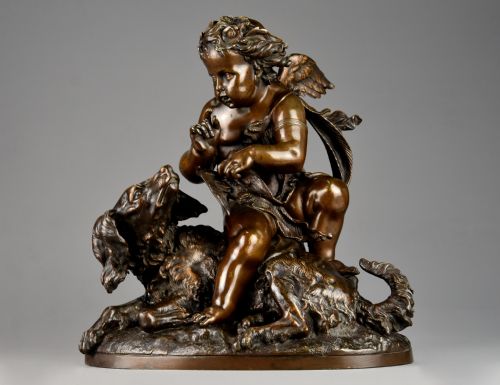
These dark bronze putti sculpture pieces capture winged child figures cast in metal, bringing classical mythology and decorative French influence into interiors.
Dark Bronze Putti Sculpture
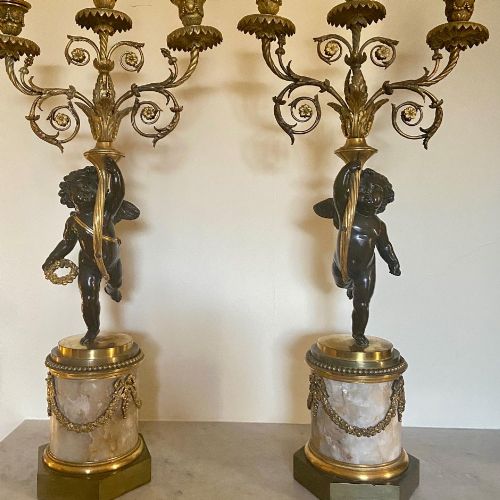
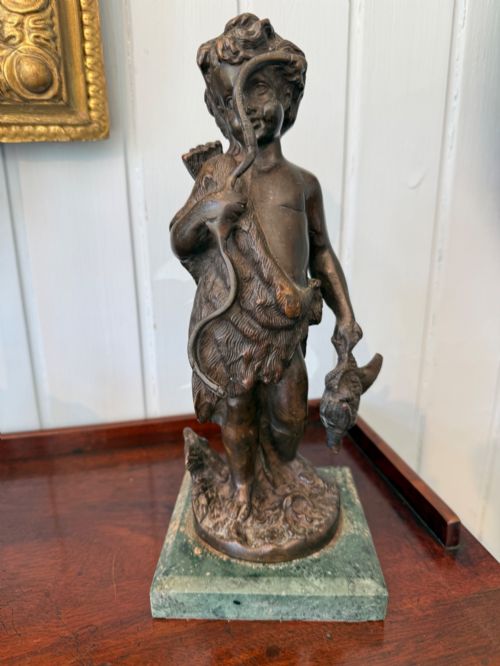
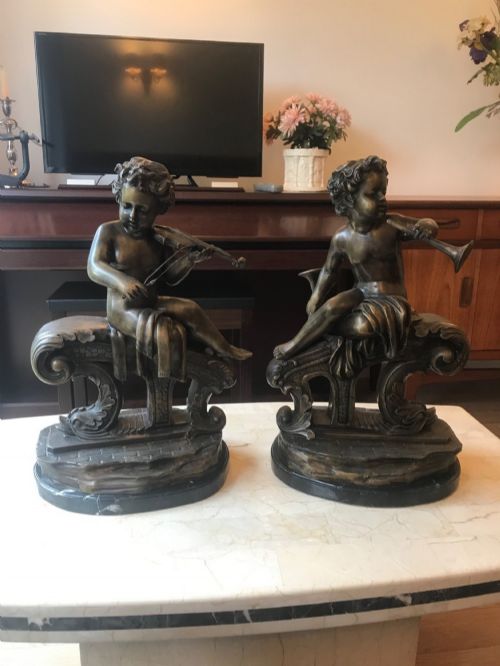
A dark bronze putti sculpture presents winged child figures, cherubs, or cupids cast in metal, frequently originating from nineteenth-century France or inspired by Italian Grand Tour travels. These figures appear as single statuettes, paired candelabra components, table lamps, bookends, and group compositions involving musical instruments, grapes, or animals.
The aesthetic draws heavily from Neoclassical, Rococo Revival, and Louis XVI styles, often following the sculptural compositions of Claude Michael Clodion. Pieces span multiple decades of the nineteenth century alongside occasional twentieth-century interpretations.
Buyers encounter subjects ranging from mythological putti holding bows, triangles, or conch shells to playful children gathering wheat sheaves or grapes.
Materials and casting methods
The construction relies primarily on bronze, patinated bronze, and gilt bronze, occasionally accented with ormolu, marble bases, fluorspar, and wooden elements. Artisans utilised traditional foundry casting techniques to achieve detailed figures of cherubs, children, and mythological subjects.
Surfaces received patination treatments to create the characteristic dark bronze finish, while select works incorporated marble pedestals or carved stone bases to support the weight of the metal cast.
Several bronze putti share their sculptural space with unexpected companions, including spaniel dogs, cats, and musical triangles.
Assessing quality in bronze figures
Quality rests upon the crispness of the metal chasing and the depth of the dark bronze patina, which dictate how well anatomical details like hair and wings are defined. Finer examples display subtle transitions in surface texture and secure mounting to heavy marble or stone bases.
The sophistication of the composition also separates standard decorative items from superior works, particularly when pieces bear signatures from known sculptors or follow established classical models closely.
Claude Michael Clodion·Francois Redmond·Louis Auguste Moreau·Charles Cumberworth·Ferrand
The Dark Bronze Putti Sculpture Glossary
- Putto
- A plump, often winged child figure derived from classical art. These motifs appear frequently in Renaissance and nineteenth-century decorative bronzes.
- Grand Tour
- A cultural journey undertaken by wealthy young Europeans visiting historical sites in Italy. Souvenirs from these trips included small bronze sculptures and architectural models.
- Ormolu
- Gilded bronze used for decorative mounts and furniture ornamentation. This technique involves applying finely ground gold-mercury amalgam to bronze.
- Patination
- The process of treating a metal surface to alter its colour and tone. Dark bronze patination creates the deep, aged brownish-black finish seen on these sculptures.
- Neoclassical
- An artistic movement reviving the styles of ancient Greece and Rome. This aesthetic influenced nineteenth-century bronze casting through balanced compositions and mythological themes.
Dark Bronze Putti Sculpture: Frequently Asked Questions
What is a putto sculpture?
A putto sculpture depicts a small child, often winged, modelled after classical artistic traditions. These figures represent cherubs or cupids in various decorative contexts.
They appear as standalone figures, lamp bases, or parts of larger sculptural groups involving music and mythology.
Where were these bronzes made?
Many of these pieces originated in France during the nineteenth century, reflecting popular revival styles. Others stem from Italian workshops catering to travellers on the Grand Tour.
English makers also produced similar decorative cast figures and doorstops during the Victorian era.
How do I style a bronze figure?
These sculptures suit placement on mantelpieces, desks, or library bookshelves where their dark metal tones contrast with wood or stone. Pairs of figures often function well as decorative bookends or framing elements.
Stable surfaces like marble or wooden furniture accommodate the weight of heavier bronze and stone composite pieces safely.
How can I date a bronze sculpture?
Dating relies on stylistic clues, casting methods, and any visible signatures or foundry marks on the base. Nineteenth-century examples often display specific patination styles and connections to classical revival movements.
Examining the underside and the fastening screws can also help determine the age of the mountings and the marble base.