
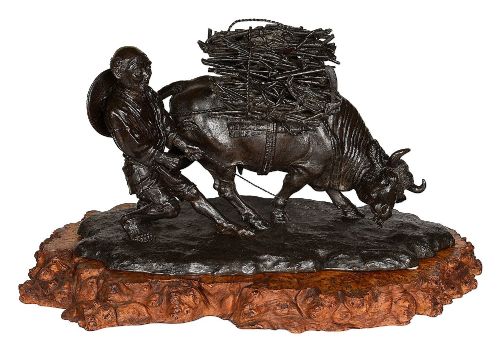

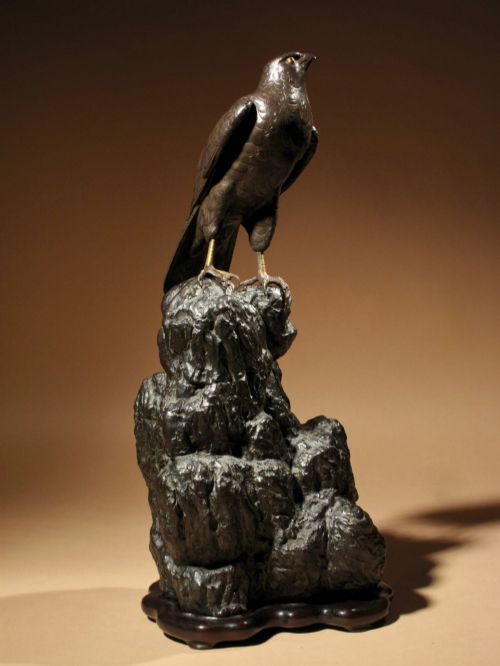
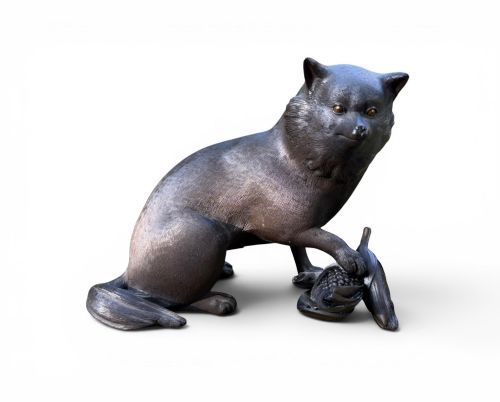
Dark Bronze Oriental Sculpture
Dark bronze oriental sculpture unites figures, animals and deities cast in distant workshops across centuries.
Dark Bronze Oriental Sculpture
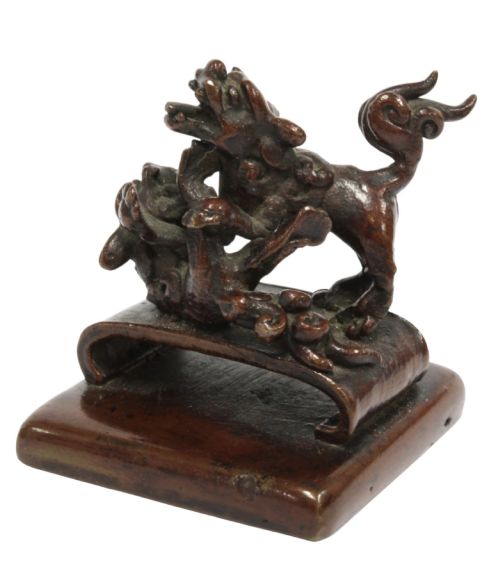
A dark bronze oriental sculpture brings together cast metal figures, animals and deities originating from Japan, China, India, Burma, Thailand and Tibet. These works span centuries of production, from the Ming and Qing dynasties to the Meiji period and the early twentieth century. Sculptures range from small scholar's seals and paperweights to large temple lions and garden dragons.
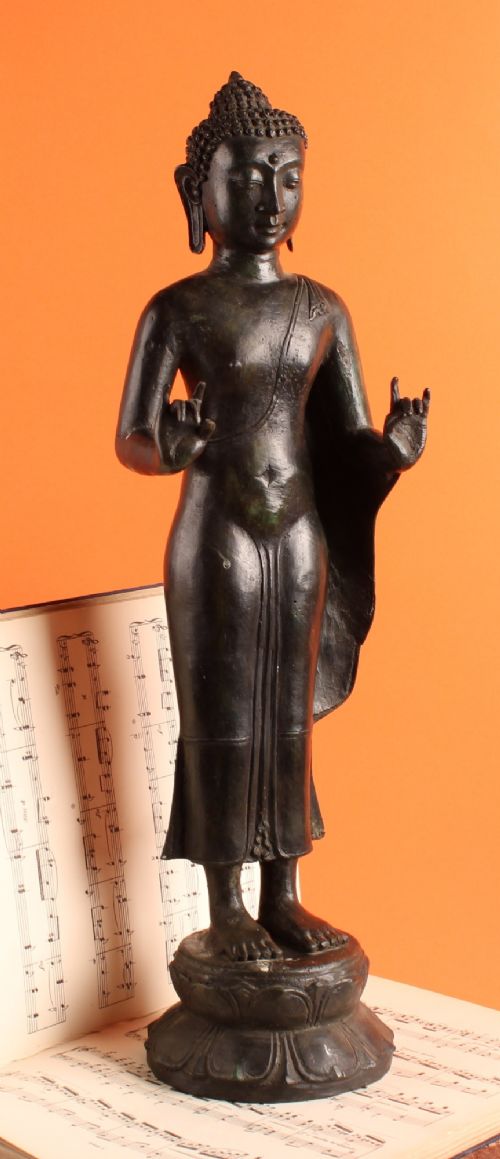
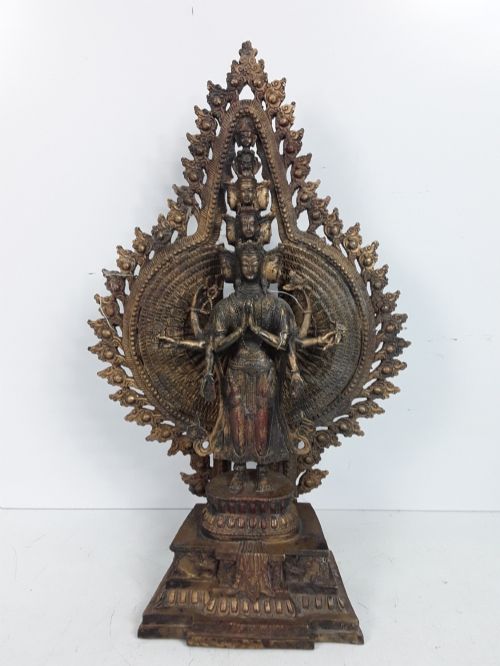
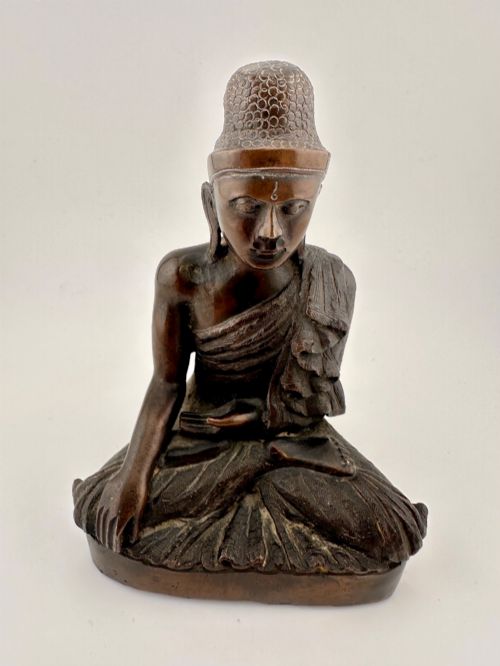
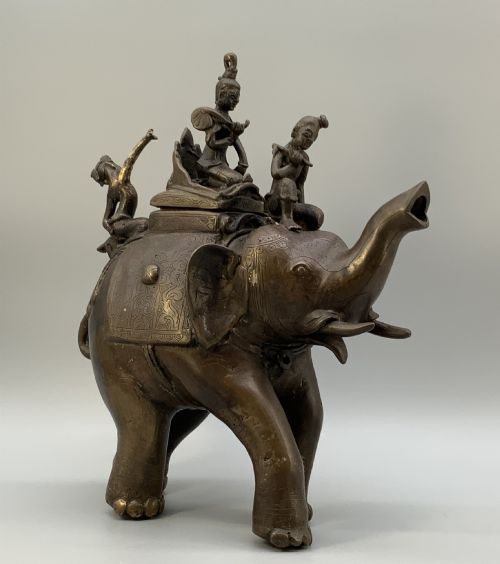
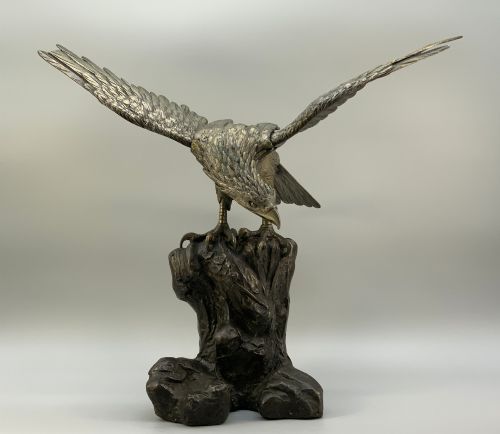
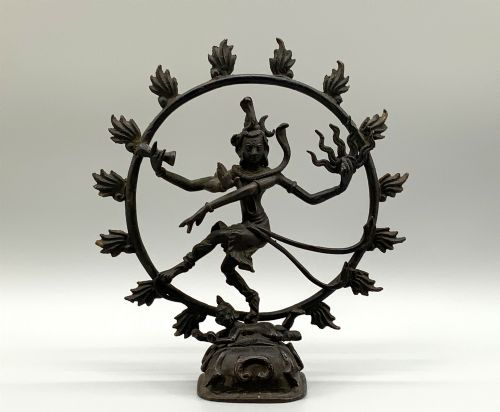
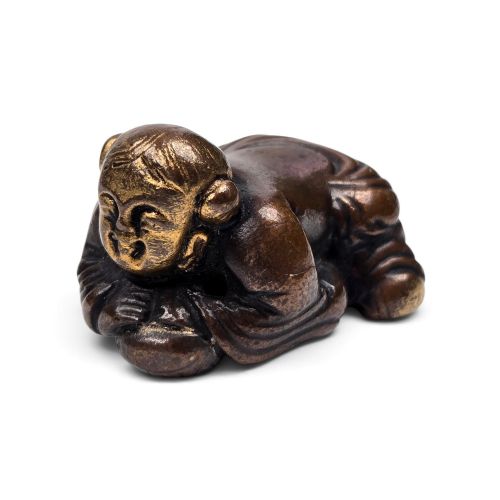
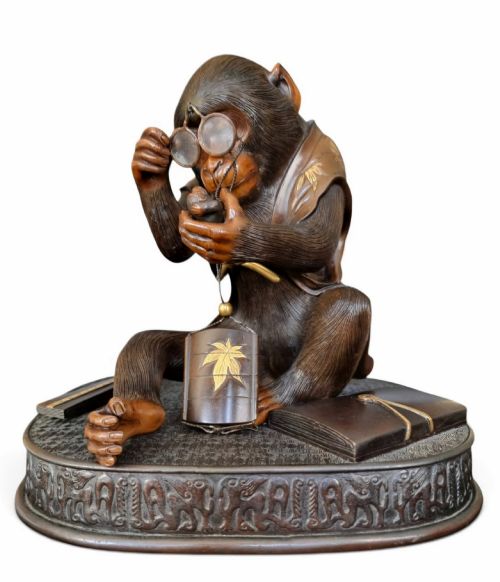
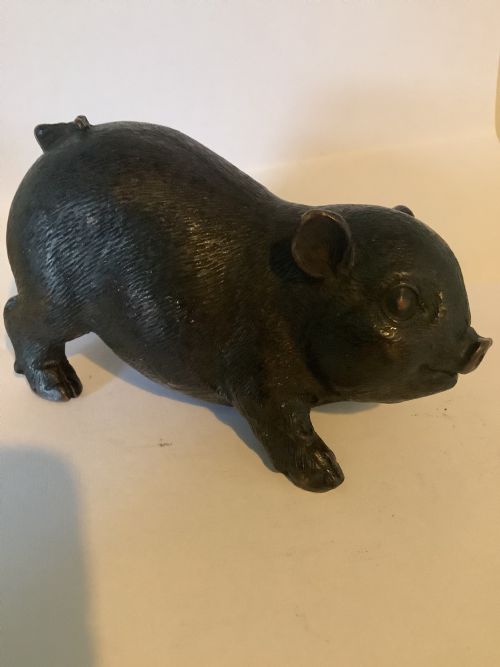
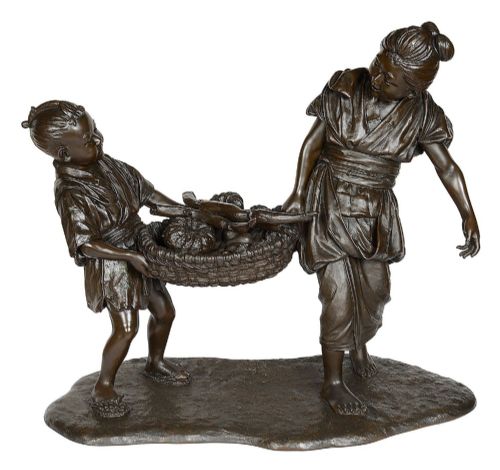
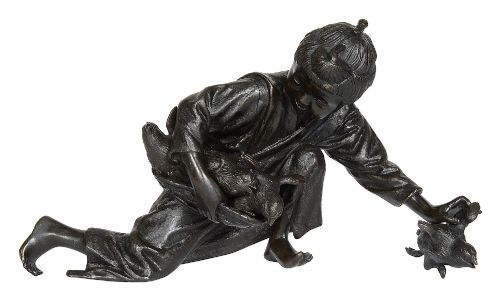
Japanese okimono and animal studies dominate the available selection, frequently depicting elephants, birds, monkeys and figures engaged in daily tasks. Alongside these are Buddhist and Hindu deities including Buddha, Guanyin, Shiva and Avalokiteshvara. The forms vary from solitary figures to complex groups involving tigers, buffalo and children.
Materials and casting methods
The objects are primarily produced using the lost-wax casting technique or solid casting methods, yielding dense metal forms with considerable weight. Bronze is occasionally paired with wood, bone, ivory, marble or gold inlay to accent specific details on the figures. Patination is applied to achieve deep brown, black and aged metallic surfaces.
Selected pieces incorporate mixed metals, shakudo or selective fire-gilding to contrast against the dark bronze ground. Artisans engrave fine surface patterns onto robes, feathers and naturalistic bases, while specialised workshops utilise inlay to render eyes and decorative motifs.
Listings feature bronze sculptures spanning from the Ming Dynasty and 17th Century through the Meiji period to the 1940s.
Evaluating craftsmanship and execution
The distinction between standard commercial output and masterwork production lies in the handling of movement and composition. Master carvers and founders integrate complex multi-figure scenes with dynamic tension, whereas lesser objects present static postures without contextual depth.
Jomi Eisuke·Kunio Itô·Sakai Kōzan·Tsunemitsu
The Dark Bronze Oriental Sculpture Glossary
- Okimono
- A Japanese ornamental statue designed for display on a shelf or in a tokonoma alcove. These sculptures typically depict animals, figures or mythical beings.
- Shakudo
- A Japanese billon alloy of copper and a small percentage of gold that develops a deep purple-black patina when treated. It provides rich dark contrast in mixed-metal works.
- Mudrā
- A symbolic hand gesture used in Buddhist iconography to denote specific teachings, fearlessness or meditation. These gestures help identify the deity represented.
- Seal
- A carved stamp used for signing documents, frequently topped with animal or figurative sculptures for the scholar's desk. Chinese examples from the Ming and Qing periods are particularly notable.
Dark Bronze Oriental Sculpture: Frequently Asked Questions
How are these bronzes cleaned?
Dusting with a soft, dry brush is sufficient for maintenance.
Moisture and harsh cleaning agents will damage the historic patina.
What is an okimono?
An okimono is a decorative Japanese carving meant for interior display.
They frequently depict naturalistic subjects or folklore figures.
How do I date a bronze?
Dating relies on stylistic markers, casting techniques and foundry marks.
Meiji period works often feature specific signatures or distinct patination.
Where were these pieces displayed?
Asian sculptures were placed in temples, scholar's studios and gardens.
Smaller objects rested on desks alongside writing implements and seals.