
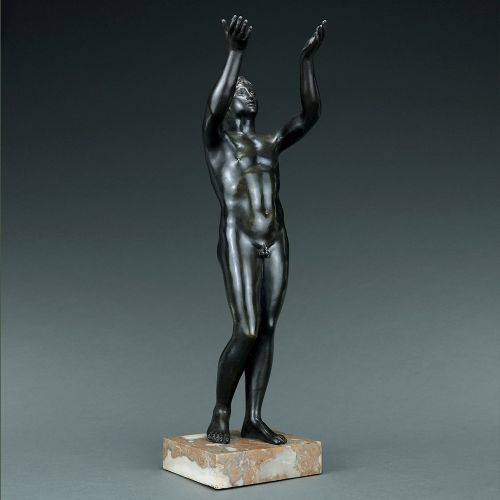
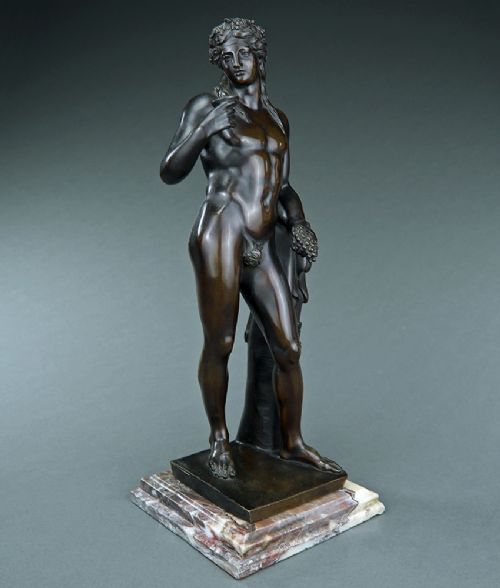

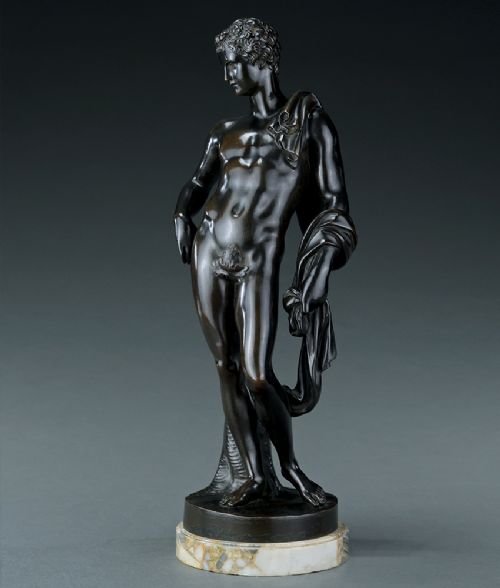
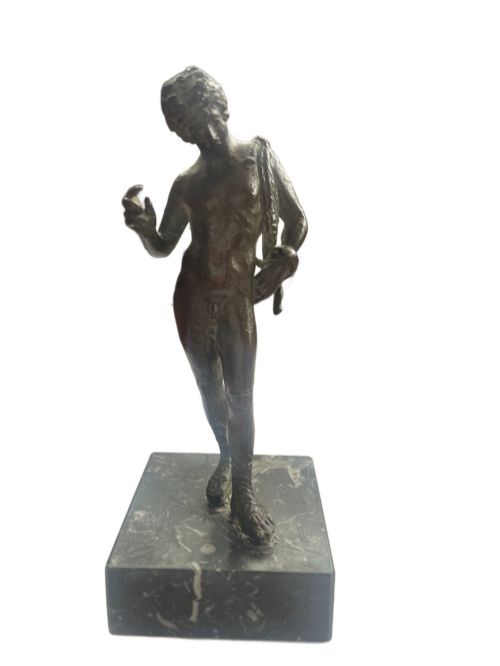
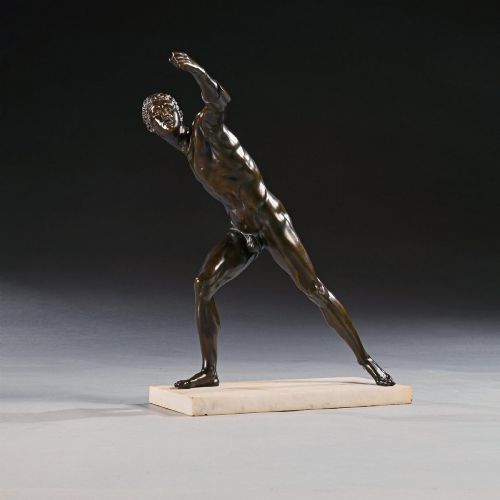
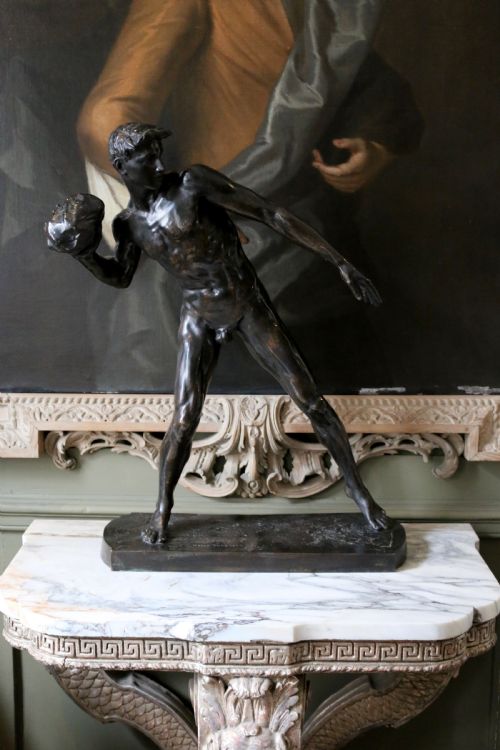
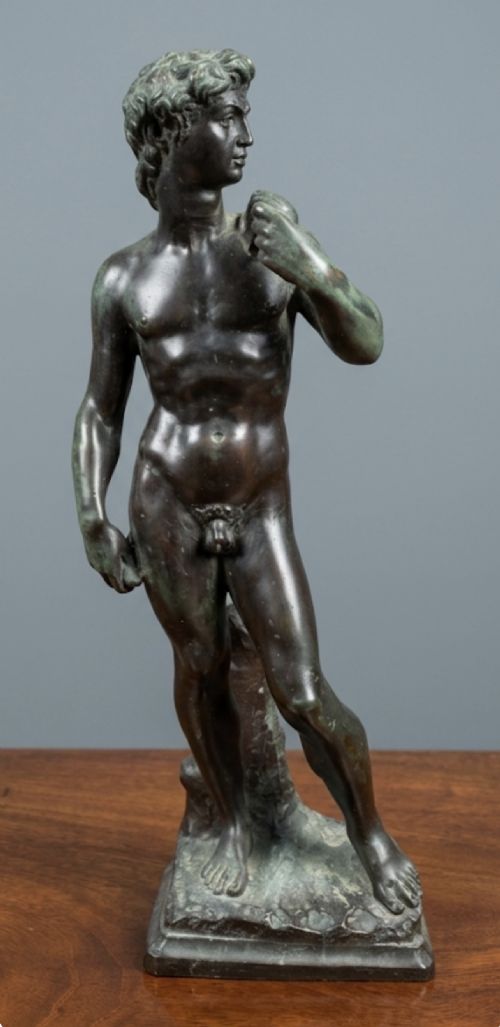
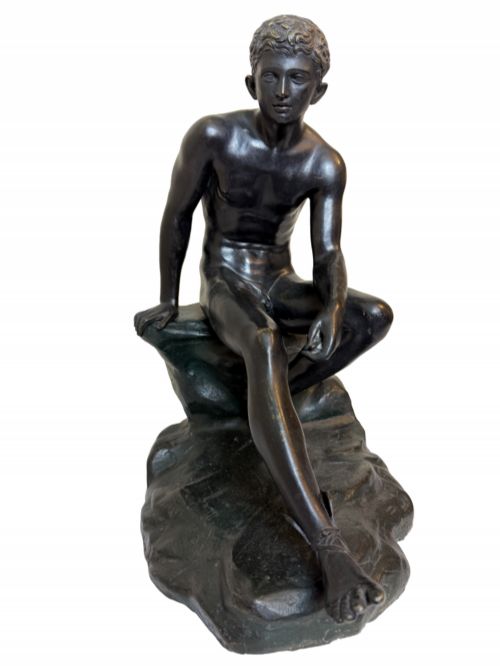
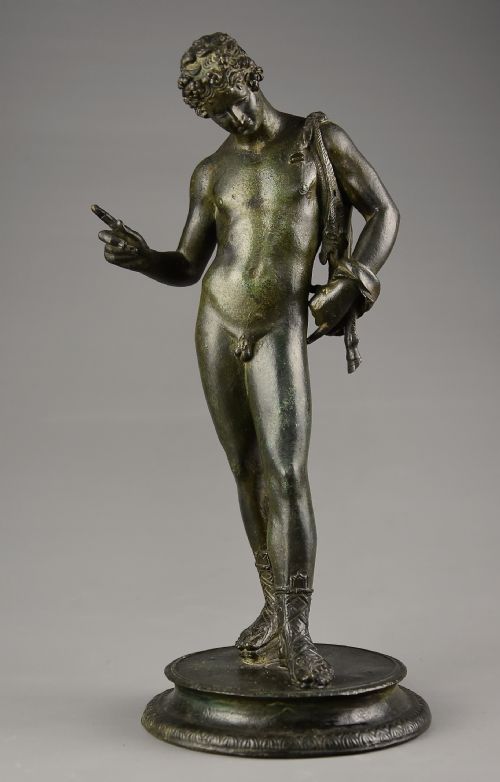


Dark Bronze Male Nude
These dark bronze male nude figures bring classical mythology and athletic form into your interior through enduring cast metal.
Dark Bronze Male Nude
A dark bronze male nude represents the classical human form cast in metal, frequently drawing upon ancient Greek and Roman prototypes. When exploring this selection, buyers frequently encounter reductions of famous sculptures and bespoke foundry works produced across the nineteenth century. These figures capture mythological deities, victorious athletes, and gladiators with distinct anatomical precision.
The objects span varied cultural movements, encompassing Grand Tour souvenirs acquired by travellers in Italy, Victorian New Sculpture, and later Art Deco interpretations. Figures of Narcissus, Dionysus, and resting athletes dominate the selection, often posed thoughtfully upon integral bases. Their scale ranges from cabinet pieces to substantial floor-standing bronzes.
Originating largely from French and Italian foundries, these works reflect the persistent academic interest in the male physique throughout the Victorian era and into the early twentieth century. Each piece serves as a physical record of nineteenth-century foundry skill and classical revival taste. Collectors acquire them to anchor a study, library, or drawing room with sculptural weight.
Methods of creation and materials
Foundries produced these sculptures primarily through the lost-wax casting method or sand casting, capturing intricate muscular detail and facial expression. Artisans then applied chemical patination to the raw metal surface to achieve deep brown, black, or dark green tones. This patinated layer protects the underlying alloy while defining the contours of the musculature.
Mounting formed an integral part of the fabrication process, with many figures secured to heavy stone supports. Sculptors utilised fossil marble and plain marble bases to anchor the heavier bronzes and provide a contrasting texture to the dark metal. The combination of dense stone and patinated metal gives these figures their characteristic heft and stability.
Several figures of Narcissus stare eternally downward, trapped in bronze admiration of their own reflected beauty upon the foundry floor.
Distinguishing quality in the cast
The depth and consistency of the patination further separate standard foundry output from exceptional work. A fine patinated surface shows subtle gradations of tone that accentuate the contours of the body rather than appearing flat or painted on. The integration between the bronze figure and its marble base also demonstrates the care taken during assembly.
Hamo Thornycroft·Eugene Barillot·Raoul Francois Larche·Franz Iffland·Michele Amodio
The Dark Bronze Male Nude Glossary
- Grand Tour
- A traditional trip through Europe undertaken by upper-class young men to absorb classical art and culture. Pieces acquired during these travels often served as educational souvenirs for domestic display.
- Patination
- The chemical treatment applied to the surface of bronze to alter its colour and protect the metal. Dark patination mimics the appearance of buried antiquities recovered from archaeological sites.
- Lost-wax casting
- A metalworking process where a molten metal is poured into a mould that has been created by means of a wax model. This technique allows for the reproduction of complex undercuts and fine surface textures.
- Neoclassical
- A Western cultural movement drawing inspiration from the classical art and culture of ancient Greece or Rome. Sculptors working in this style emphasised linear precision and heroic subjects.
- Fossil marble
- A natural limestone containing distinct prehistoric organic remains, frequently cut and polished for use as sculptural plinths. It provides a heavily patterned contrasting base for dark bronze figures.
Dark Bronze Male Nude: Frequently Asked Questions
What is a Grand Tour bronze?
A Grand Tour bronze is a miniature or reduced-scale sculpture purchased by travellers in Italy during the eighteenth and nineteenth centuries. These pieces typically reproduced famous classical antiquities seen in museums and excavations.
Foundries in Naples and Rome specialised in producing these souvenirs for foreign visitors. They allowed collectors to display canonical works of art within their private homes.
How do I care for patinated bronze?
Maintaining patinated bronze involves dusting the surface regularly with a soft, dry cloth to prevent particulate accumulation. Avoid using chemical cleaners, polishes, or abrasive cloths that can strip away the original chemical patina.
Occasional application of microcrystalline wax can protect the metal from atmospheric moisture and handling oils. Ensure the display environment remains stable away from excessive humidity and direct heat sources.
Why are many figures mounted on marble?
Marble bases provided both visual weight and physical stability to tall or cantilevered bronze sculptures. Heavier stones kept figures balanced when their poses shifted weight away from the centre.
Foundries selected specific stones, such as fossil marble, to complement the dark tones of the cast metal. The contrasting textures enhanced the overall presentation of the classical subject.
How can I tell a nineteenth-century cast?
Nineteenth-century casts often exhibit traditional foundry marks, patination methods appropriate to the period, and specific metallurgical composition. The hand-chasing work on the surface displays individual tool marks rather than uniform modern machine finishing.
Examining the underside reveals the fastening pins, threaded rods, or mounting nuts typical of historical assembly techniques. Comparing the anatomical proportions to known academic models helps confirm the era of production.