


Dark Bronze Grand Tour
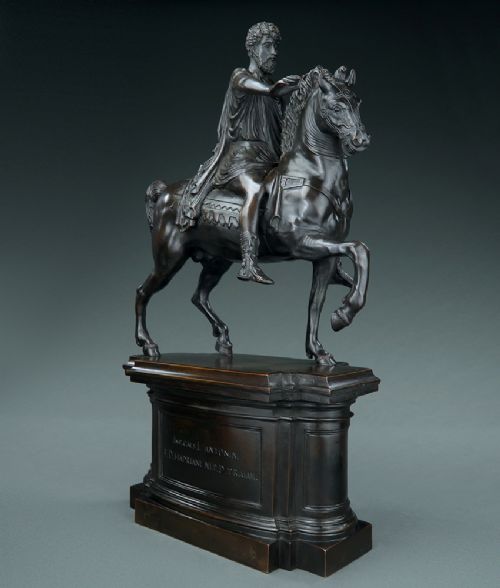
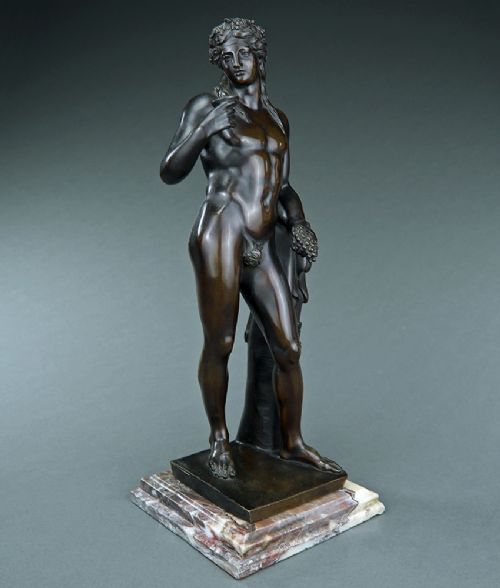
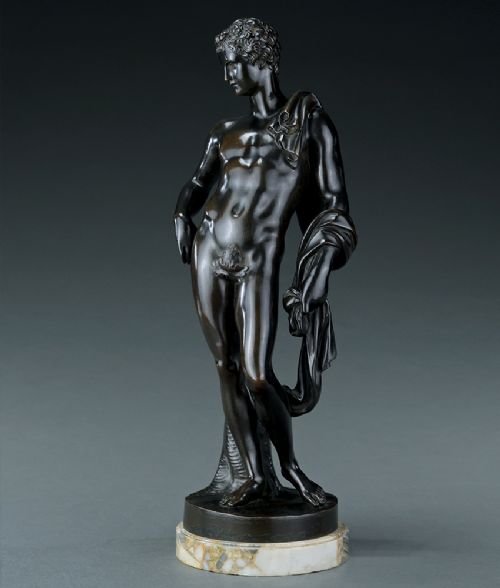
These dark bronze grand tour pieces bring classical antiquity and Renaissance sculpture into the nineteenth-century interior as portable bronze reductions and architectural souvenirs.
Dark Bronze Grand Tour
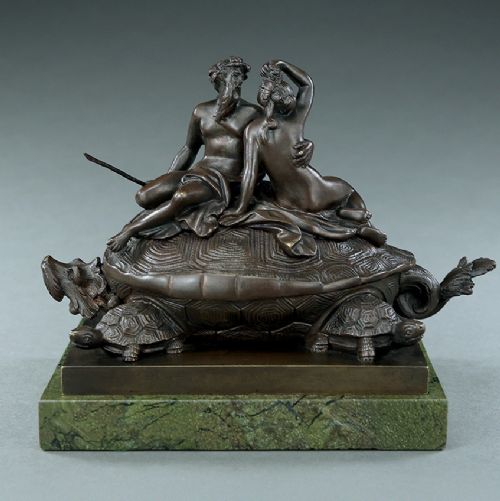
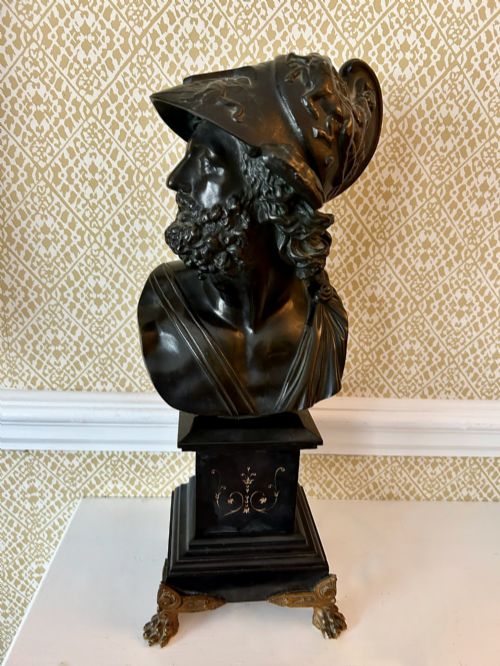
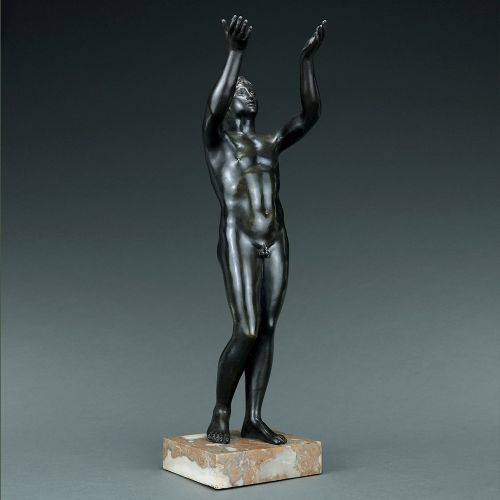
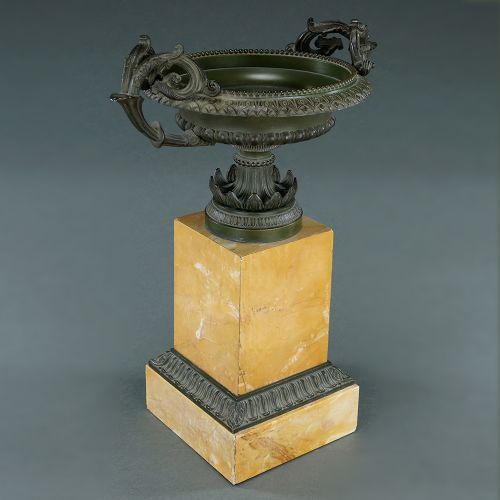
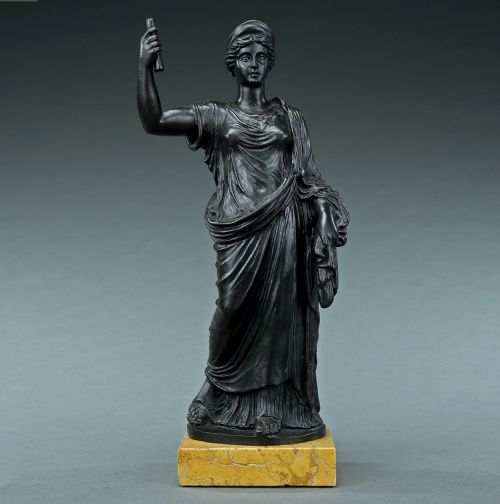
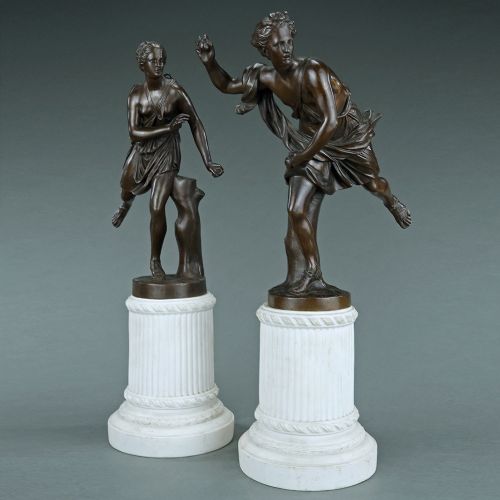
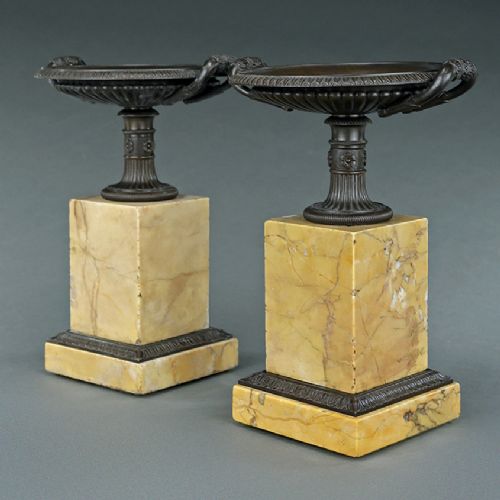
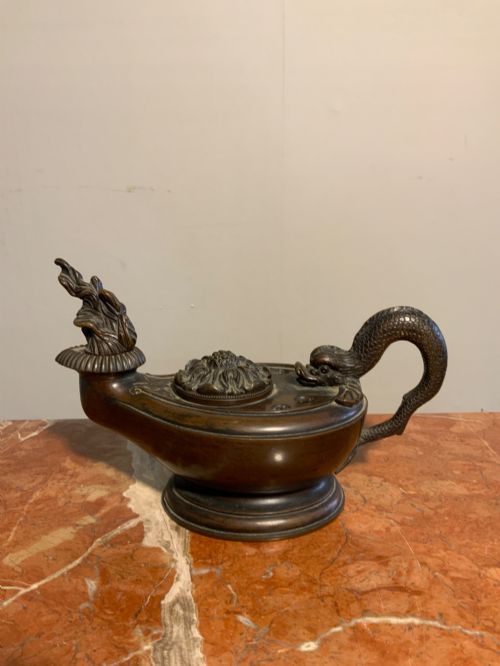
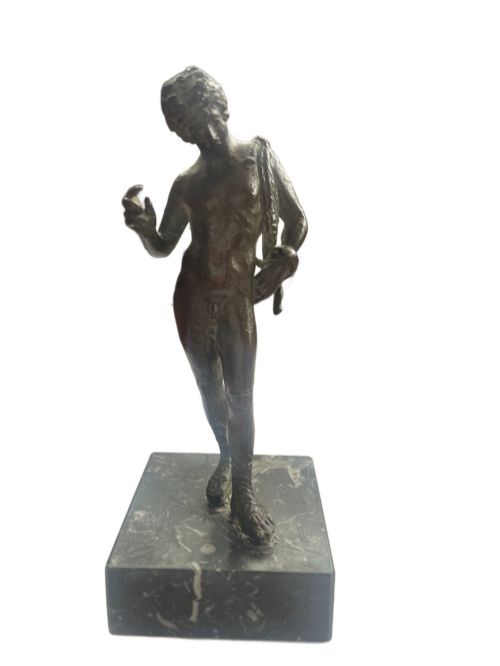
Most examples date from the nineteenth century, drawing upon Neoclassical, Baroque, and Renaissance Revival styles. They take the form of freestanding sculptures, oil lamps, inkwells, and tazzas, frequently mounted upon marble plinths made of green marble or fossil marble.
How they were made
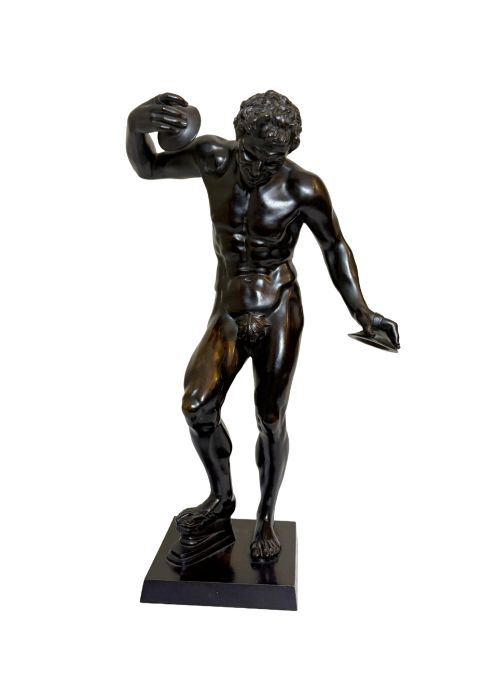
The objects are cast in bronze, patinated dark brown or black to emulate antiquity, and occasionally combined with ormolu or mounted on bases of marble, green marble, fossil marble, or Siena marble. Foundries utilised lost-wax casting or sand-casting methods to achieve precise reductions of large-scale marble monuments.
Listings feature nineteenth-century patinated bronze figures mounted on fossil marble and Siena marble bases.
What varies in quality
The choice of mounting also distinguishes the piece, with dense, figured marble bases or integral cast bronze plinths marking out finer productions from standard foundry work.
Barbedienne·Ferdinand Barbedienne·G. Amodio Naples·Hamo Thornycroft·Émile Louis Picault
The Dark Bronze Grand Tour Glossary
- Patinated bronze
- Bronze that has been treated with chemical solutions to produce a specific surface colour, most frequently dark brown, black, or green, rather than left as bright polished metal.
- Reduction
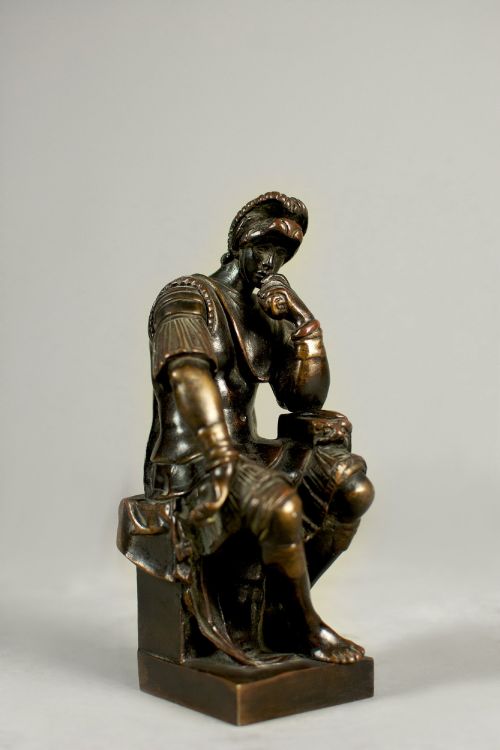
- A small-scale copy of a large monumental sculpture, produced accurately in bronze so travellers could pack the piece for transport home.
- Tazza
- A shallow bowl or cup raised on a stem and foot, frequently rendered in pairs as decorative bronze vessels in nineteenth-century interiors.
- Ormolu
- Gilded bronze, where a layer of gold is applied to the metal surface to provide bright metallic highlights against darker patinated areas.
- Grand Tour
- The traditional journey of Europe undertaken by upper-class young men in the eighteenth and nineteenth centuries to study classical art and architecture.
Dark Bronze Grand Tour: Frequently Asked Questions
What is a grand tour bronze?
A grand tour bronze is a small nineteenth-century cast metal copy of a famous classical, Renaissance, or baroque sculpture encountered by travellers in Italy.
These pieces served as portable reminders of classical education and foreign travel, displayed in libraries and drawing rooms.
How are these bronzes mounted?
Many examples are fixed directly onto heavy stone plinths made from marbles such as Siena, fossil marble, or green marble.
This mounting style anchors the relatively heavy metal figures and echoes the presentation of museum antiquities.
How do I identify the subject?
Subjects are typically drawn from Greek and Roman mythology, classical history, or renowned Renaissance statues such as works by Michelangelo and Giambologna.
Figures often include recognizable attributes like cymbals, lions, oil lamps, or specific classical stances.
Were these made only as sculptures?
While figurative statues form a large portion of the works, foundries also cast functional or decorative objects.
Listings include items designed for domestic use such as inkwells, oil lamps, tazza vases, and locking vessels.