
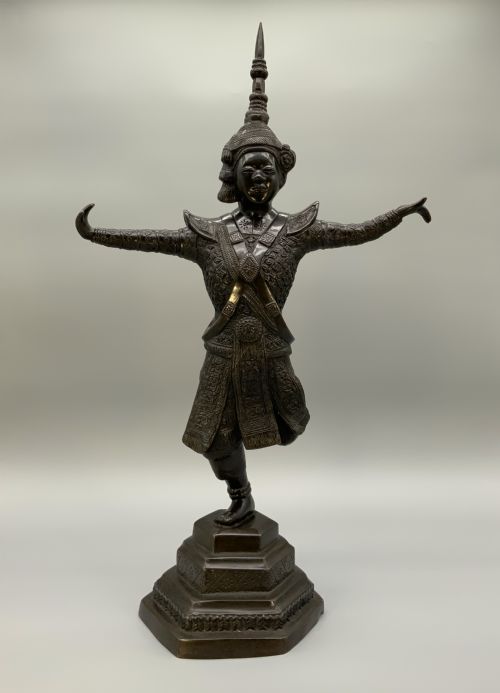


Dark Bronze Dancer Statue
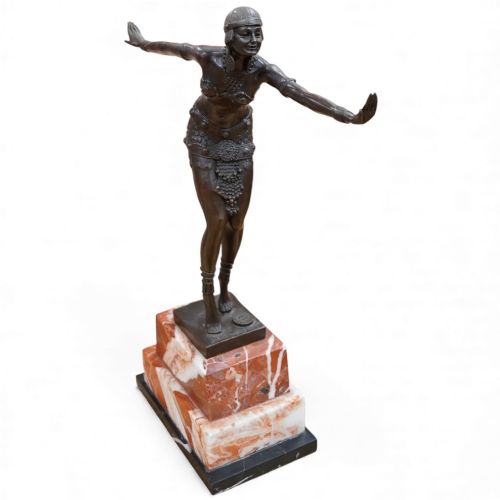
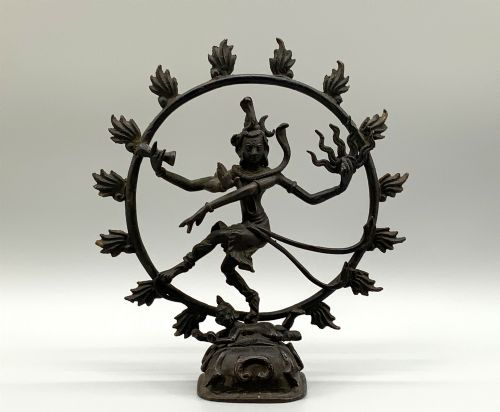
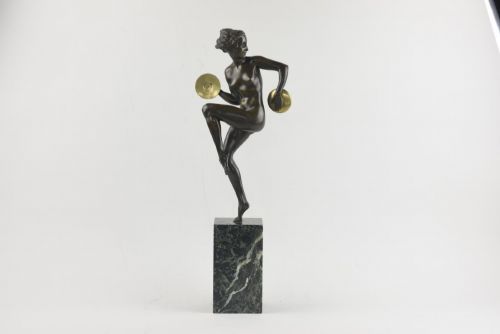
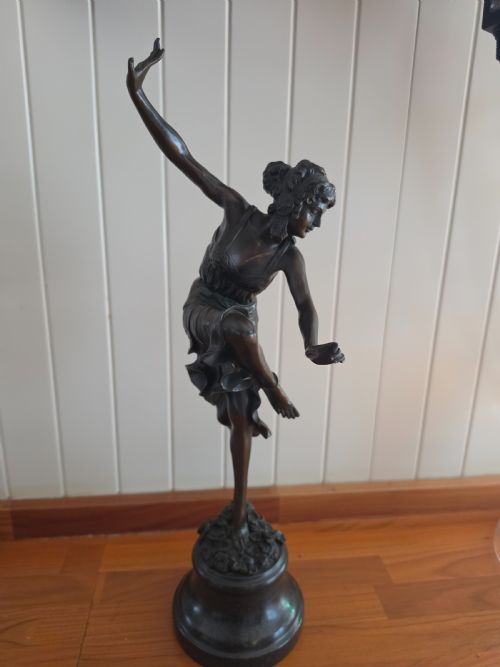
These dark bronze dancer statue pieces capture movement in metal, prized for their dynamic forms and rich patination.
Dark Bronze Dancer Statue
A dark bronze dancer statue captures human movement in metal, often mounted on a sturdy base of marble or onyx to anchor the energetic pose.
The selections here span nineteenth century French and Indian works alongside twentieth century Art Deco and Art Nouveau creations.
Buyers will encounter figures ranging from traditional deities like Shiva Nataraja to theatrical performers, harvest dancers and modernist nudes.
How they were made
Foundries cast these figures in bronze, frequently applying a dark patina or parcel-gilt highlights to emphasise the muscular definition and drapery.
Many twentieth century figures pair the cast metal body directly with a carved marble or onyx plinth to provide structural stability and visual contrast.
Listings feature bronze, marble, onyx, gilt and parcel-gilt materials across the nineteenth and twentieth centuries.
What varies in quality
The refinement of the casting and the crispness of the chased surface detail distinguish the work of skilled sculptors from standard commercial production.
The integration of the figure with its stone base and the nuance of the patination reveal the care taken during manufacture.
Aurore Onu·C J R Colinet·Rousseau·D H Chiparus·Josef Lorenzl·Paul de Boulogne·Eugène Désiré Piron·Jean Jacques Pradier·Claire Colinet·Bruno Zach·Mario Korbel·Francisque Joseph Duret
The Dark Bronze Dancer Statue Glossary
- Bronze
- An alloy of copper and tin used for casting sculpture. It takes fine detail and develops a rich patina over time.
- Patina
- The surface colour and texture achieved through chemical treatment or natural ageing. It protects the metal and adds visual depth.
- Parcel-gilt
- Partial gilding applied to specific areas of a bronze sculpture. This technique highlights ornaments, costume details or hair.
- Onyx
- A banded variety of chalcedony often used for sculptural bases. Its translucent layers provide a decorative plinth for the metal figure.
Dark Bronze Dancer Statue: Frequently Asked Questions
How do I clean a bronze dancer statue?
Dust the surface gently with a soft, dry brush to prevent dirt accumulation. Avoid harsh chemical cleaners that can strip the original patina.
Apply a very light coat of microcrystalline wax occasionally if the metal requires protection. Buff it gently with a clean cloth to restore a soft sheen.
Are these statues mounted on stone bases?
Many twentieth century pieces incorporate heavy marble or onyx plinths to support cantilevered poses. This construction balances the weight of outstretched limbs.
Nineteenth century examples more commonly utilise integral bronze bases or simpler footing. Examine the joinery to understand the original mounting method.
How do I distinguish Art Deco from earlier figures?
Art Deco pieces from the nineteen twenties and thirties favour stylised geometry, energetic athleticism and modern theatrical themes. The patination is often sleek and uniform.
Nineteenth century figures generally display classical proportions, romantic drapery or traditional narrative subjects. Their surface finishes tend towards deeper, warmer brown tones.
What is the significance of the foundry signature?
Signatures and foundry marks indicate the creator and the workshop responsible for the cast. These inscriptions help contextualise the origin of the work.
Check the base or robes of the figure for incised names or stamps. Researching these markings clarifies the historical period of production.