

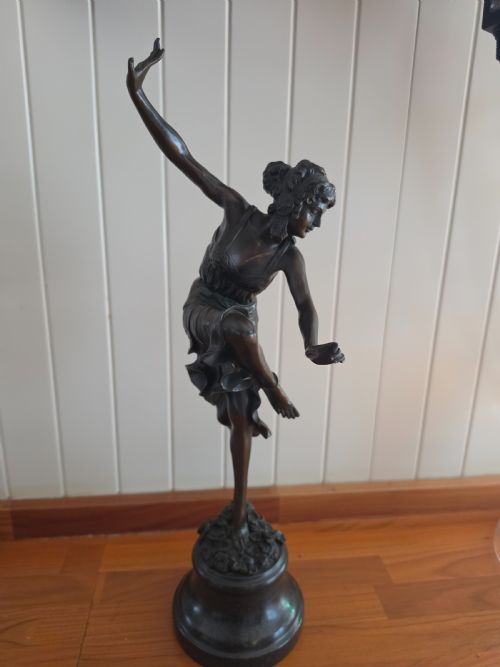


Classical Maiden Bronze Statue
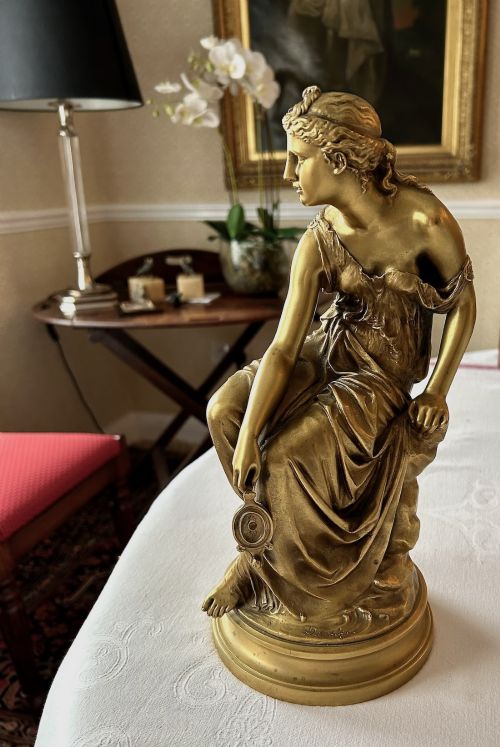
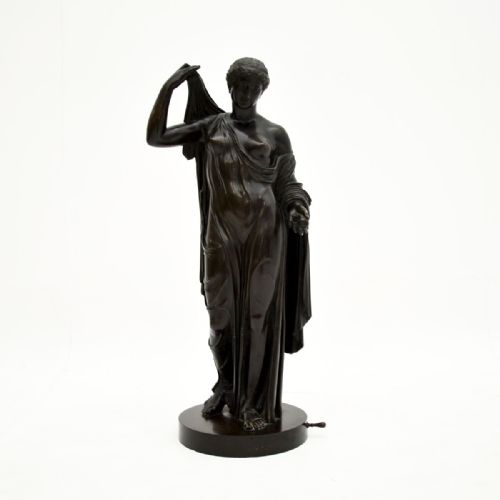
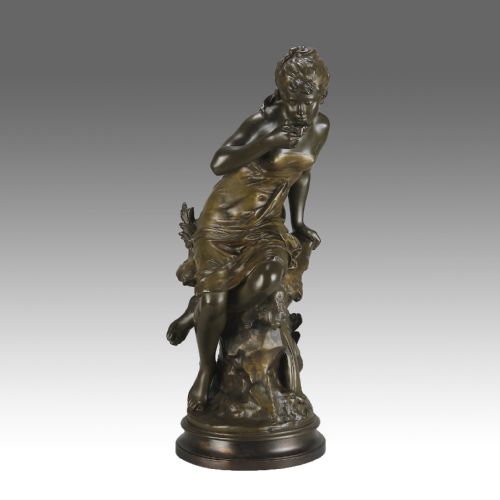
A classical maiden bronze statue brings the grace of antiquity and nineteenth-century foundry work straight into a room.
Classical Maiden Bronze Statue
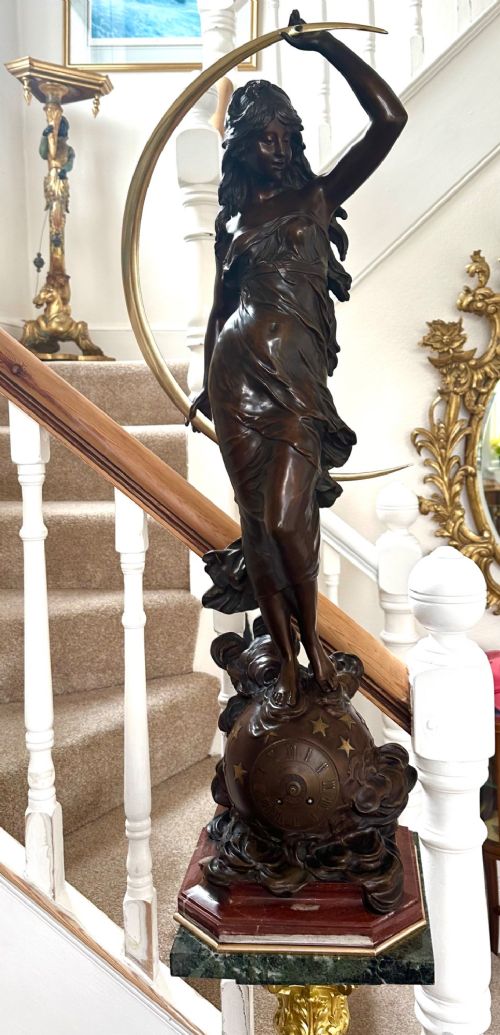
A classical maiden bronze statue represents female figures drawn from mythology, allegory and historical tradition, cast primarily during the nineteenth century. Buyers searching for a classical maiden bronze statue encounter depictions of robed ladies, dancers, water carriers and mythological subjects like Selene and Danaides.
Most examples originate from French foundries and workshops, spanning periods from the early nineteenth century through the Art Nouveau and Art Deco eras. Forms range from freestanding cabinet sculptures and large mantel clock figures to figural table lamps and portrait busts.
Makers and sculptors represented in these works include members of the Moreau family, Etienne-Henri Dumaige, Mathurin Moreau, and C.J.R. Colinet. Materials extend beyond pure metal to include patinated bronze, gilt bronze, bronzed terracotta, and earthenware.
How they were made
Gilt bronze pieces received layers of gold amalgam, while other works combined metal with carved marble bases or incorporated paint and terracotta elements. Spelter and earthenware also served as alternative casting and modelling mediums for similar figural subjects.
Object types vary from standalone sculptures and portrait busts to functional mantel clocks and figural table lamps.
What varies in quality
The distinction between standard commercial castings and masterworks rests upon the crispness of the chasing and the subtlety of the surface finish. Superior figures retain sharp details in hair, fingers and textiles that weaker secondary casts lose during reproduction.
The depth and complexity of the patination or the application of fire gilding separate mass-produced items from signed works by celebrated sculptors and premier foundries.
Etienne-Henri Dumaige·Moreau Family·Mathurin Moreau·C J R Colinet·Hans Müller·Goldscheider·Maurice Bouval·Jean Jacques Pradier·Emmanuel Villanis·Henri Honore Ple·A Gaudez·Leon Pilet
The Classical Maiden Bronze Statue Glossary
- Patinated bronze
- Metal treated with chemical solutions to produce a specific surface colour, ranging from deep brown to greenish tones. This layer protects the metal and defines the visual mood of the sculpture.
- Gilt bronze
- Metal coated with a thin layer of gold, often using mercury amalgamation during the nineteenth century. It provides a bright, reflective surface that does not tarnish easily.
- Spelter
- A zinc alloy frequently utilised as a less expensive substitute for bronze in nineteenth and twentieth-century figures. It is softer and lighter than true bronze.
- Terracotta
- Fired clay used for sculptural models and finished figures, sometimes painted or bronzed to imitate metal. It allows for direct hand-modelling by the artist.
- Grand Tour
- The nineteenth-century practice of collecting classical antiquities and smaller bronze reproductions during travels through Europe. These pieces often depict mythological figures and architectural subjects.
Classical Maiden Bronze Statue: Frequently Asked Questions
How do I identify a bronze from spelter?
True bronze is heavier, colder to the touch, and rings with a clear tone when tapped gently. Spelter is softer, lighter, and often shows a greyish metal underneath any worn surface finish.
Examining the underside or areas of natural wear usually reveals the true nature of the cast metal.
What is patination?
Patination is the intentional colouring of a metal surface through chemical treatments, heat, and acids. It creates rich brown, black, or verdigris tones that accentuate the contours of the figure.
Over time, handling and environment can alter this outer layer, adding depth to the sculpture.
Are all these statues French?
Many nineteenth-century sculptures originated in French foundries, particularly in Paris, which dominated European artistic metal casting. However, makers and foundries across Europe produced similar classical and Art Nouveau figures.
Signatures, foundry stamps, and registration marks often help pinpoint the exact origin of a piece.
How should I clean my bronze statue?
Dust the surface regularly with a soft, dry cloth to prevent particulate accumulation. Avoid using water, oils, or commercial metal polishes, as these can strip the original patination.
Occasional application of microcrystalline wax can protect the metal finish from atmospheric moisture.