
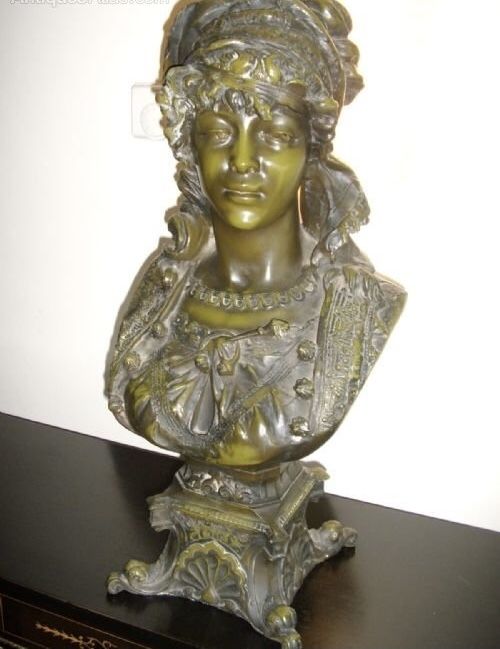
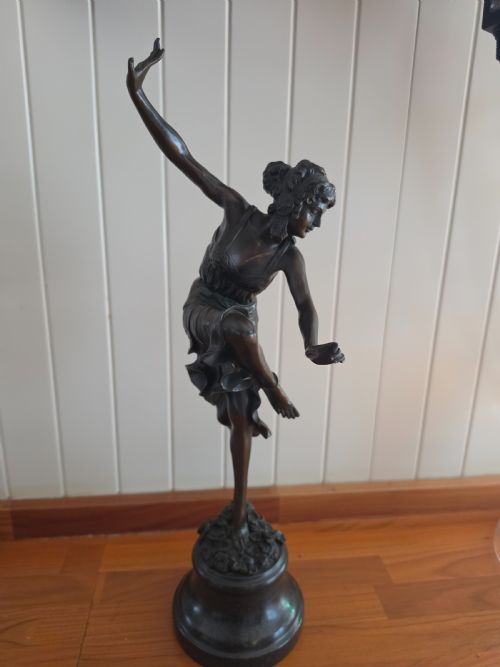


Signed Bronze Female Figure
A signed bronze female figure captures human form through enduring metal, rewarding collectors with master signatures and classical grace.
Signed Bronze Female Figure
A signed bronze female figure represents sculptural works spanning the nineteenth and twentieth centuries, including Victorian, Art Nouveau, Art Deco, and Neoclassical styles. Buyers examining this page will frequently encounter French academic bronzes, dancers, maidens, and allegorical busts bearing authentic signatures from notable period artists.
The forms range from full-length figures such as water carriers and dancers to portrait busts and functional pieces like lamps and torcheres. Many examples incorporate carved marble bases or mixed materials to complement the cast metal work.
Materials and construction methods
Foundries utilised the lost-wax casting technique or sand casting to produce these sculptures, capturing intricate details in bronze, patinated bronze, gilt bronze, and ormolu. Some nineteenth-century examples employ silvered spelter as an alternative metallic medium.
Sculptors frequently mounted their cast figures onto multi-coloured marble bases, including red marble and portoro marble, occasionally combining carved Italian marble elements with the cast metal.
Cats, water jugs, and dancing shoes frequently accompany these bronze figures, proving that nineteenth-century ladies possessed varied pastimes.
Assessing quality and craftsmanship
The quality of the patina significantly influences the character of the piece, with carefully applied chemical patination or original gilding adding tonal richness. Additionally, the execution of the signature and the integration with marble plinths reflect the standing of the foundry and artist.
Henry Wissen Senior·C J R Colinet·Messina Roma·D.H. Chiparus·Guillot·Coutan·E. Laurent·Hans Schork·Auguste Moreau·A.Gaudez·Henri Plé·Gory Paris·R.C. Ireland·Andor Ruff·Math Moreau
The Signed Bronze Female Figure Glossary
- Patina
- The surface coloration and sheen acquired by bronze over time or applied chemically by the foundry. This layer protects the metal and enhances the visual depth of the sculpture.
- Lost-wax casting
- A traditional method of metal casting where a molten metal is poured into a mould that has been created by means of a wax model. This technique allows for highly intricate sculptural detail.
- Ormolu
- Gilded bronze, typically produced in France during the eighteenth and nineteenth centuries. The process involves applying a finely ground gold-mercury amalgam to a bronze object.
- Spelter
- An alloy of zinc and other metals used as a less expensive alternative to bronze. It was commonly employed for nineteenth-century figural sculptures and lamps.
- Chasing
- The process of hand-finishing a metal casting using hammers and punches. Skilled artisans use this technique to refine surface textures and remove casting flaws.
Signed Bronze Female Figure: Frequently Asked Questions
How do I verify the signature on a bronze figure?
Signatures are typically cast directly into the bronze during the creation of the mould, though some are incised by hand into the cooled metal. Compare the lettering style and placement against authenticated works by the same artist.
Examining the natural wear and oxidation around the signature area helps determine whether the mark is contemporary with the casting or a later addition.
How should I clean a antique bronze sculpture?
Dust the sculpture regularly with a soft, dry brush to prevent particulate accumulation in the crevices of the casting. Avoid using water, chemical solvents, or metal polishes, as these can strip away the historic patina.
Applying a very light coat of microcrystalline wax by professional conservators can help protect the metal surface from environmental moisture.
Why are some figures mounted on marble bases?
Marble bases provide structural stability for heavy metal sculptures, particularly those with slender forms or dynamic poses. They also serve an aesthetic function, elevating the artwork and framing the bronze composition.
Different marble types, such as portoro or red marble, were selected by artists to complement the tone of the patinated metal.
How can I distinguish spelter from bronze?
Spelter is lighter in weight than bronze and tends to feel softer under a file test, though testing should be avoided. When the surface finish wears, spelter often reveals a greyish or silvery metal underneath rather than the warm reddish-brown of bronze.
Figures made from spelter frequently show more brittle casting details compared to the robust durability of traditional bronze.