


Dark Background Artwork
Dark background artwork gathers oil paintings and portraits framed by deep, light-absorbing shadows to draw the eye entirely toward the subject.
Dark Background Artwork
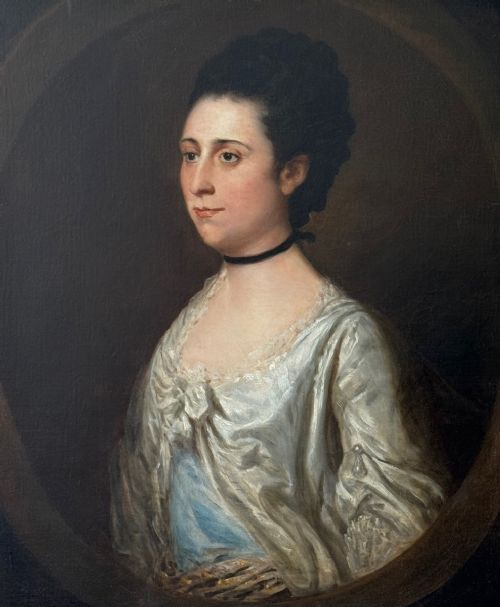
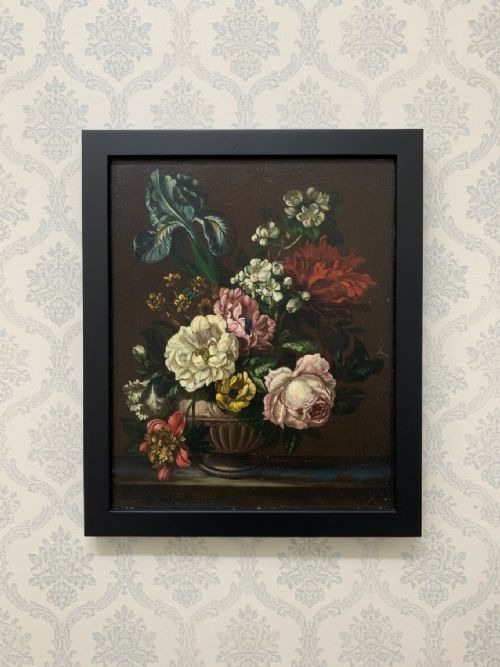
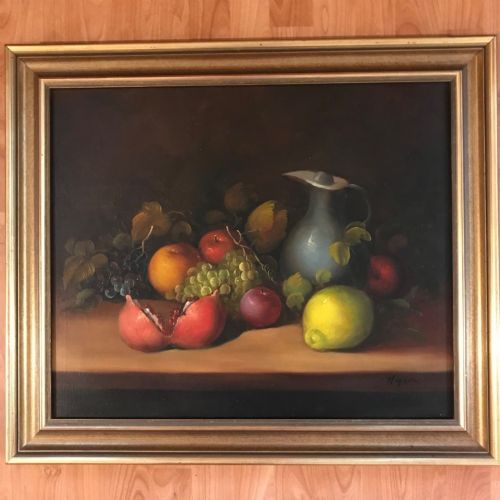
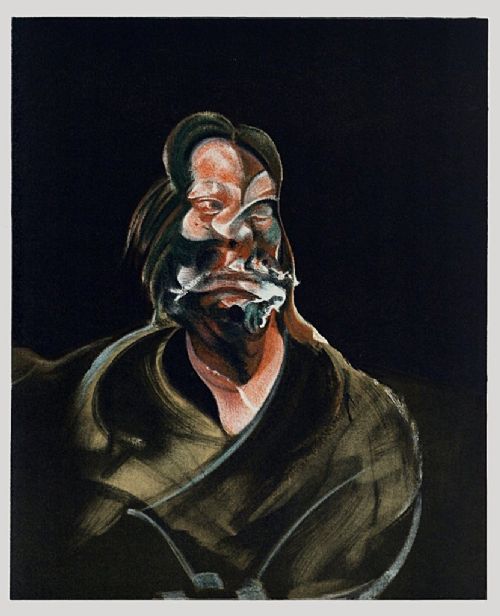
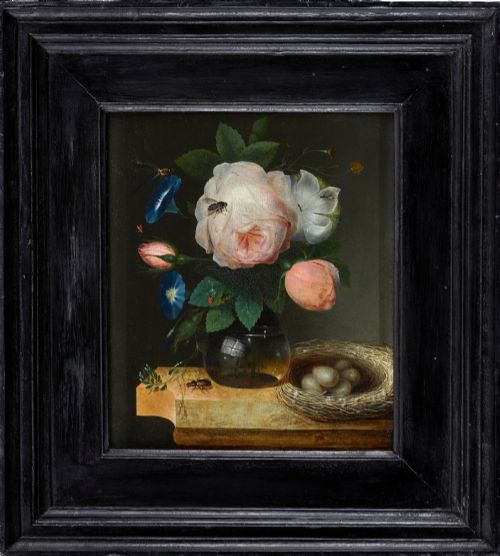
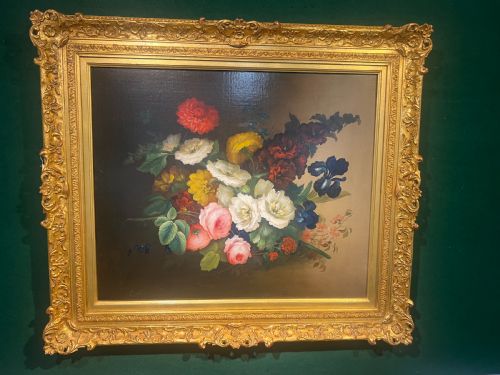
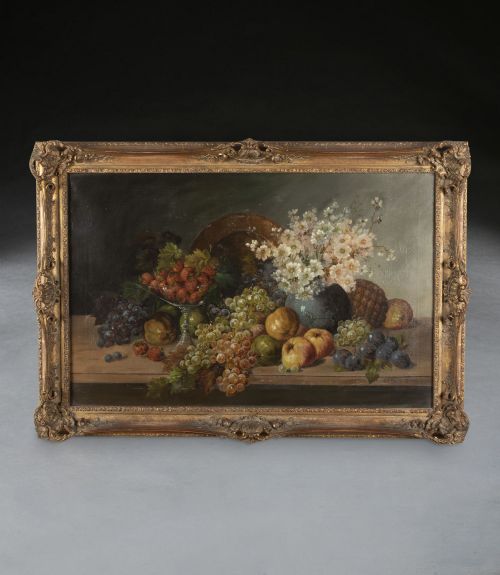
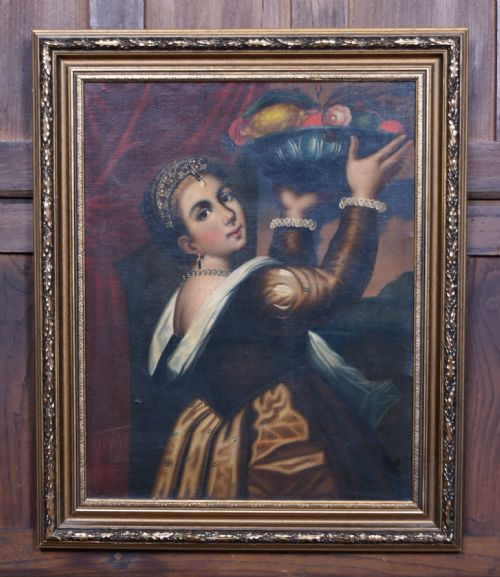
Dark background artwork encompasses centuries of oil paintings, from Dutch school panels to twentieth-century portraits, united by sombre tonal depths. These pieces frequently isolate flora, fauna, or human subjects against profound, murky backdrops that create dramatic contrast.
The selection ranges from seventeenth-century botanical and fruit arrangements to Victorian and Edwardian character studies. Buyers encounter Dutch Golden Age floral compositions alongside regional British portraits and modern still life variations.
Subjects emerge from shadow through deliberate chiaroscuro, giving domestic interiors a sense of quiet gravity and historical depth. Such paintings anchor a room by introducing rich, subdued pigments that absorb natural light.
Materials and Construction
Painters relied principally on oil paint applied to woven canvas or rigid wooden panels, building opacity through successive layers. Grounds were often tinted dark to assist the development of deep shadows and luminous highlights.
Frames frequently utilised carved gilt wood or gilded wood, providing a bright metallic border that defined the shadowy picture plane. Pigments derived from natural earths and minerals achieved the enduring umbers, ochres, and blacks characteristic of these periods.
Subject matter moves between floral still life arrangements, domestic animals, and formal human portraits.
Evaluating Quality and Depth
Condition of the canvas and stability of the underlying wood panel dictate longevity, with undisturbed historical surfaces commanding greater attention. The integrity of the original giltwood frame further contributes to the piece's completeness.
Gaspar Peeter Verbruggen·Sir Godfrey Kneller·Margaret Sarah Carpenter·Edwin Steele·Agnes Augusta Talboys
The Dark Background Artwork Glossary
- Chiaroscuro
- The treatment of light and shade in a drawing or painting, creating spatial depth and volumetric form through stark contrast. This technique defines the dramatic interplay seen across seventeenth-century and baroque canvases.
- Canvas
- A heavy woven fabric used as a surface for oil painting, stretched tightly across a wooden frame before application. It provides the flexible yet durable foundation for the majority of nineteenth and twentieth-century works.
- Panel
- A flat piece of wood prepared as a rigid support for painting, common in earlier Dutch and European works. Panels offer a stable ground that resists the sagging associated with aged textiles.
Dark Background Artwork: Frequently Asked Questions
How do I hang dark background artwork?
Position these pieces against lighter walls to let the deep shadows create strong visual contrast in the room.
Consider placing them near a localized picture light to illuminate the fine details emerging from the dark tones.
Are these paintings executed on canvas or wood?
The listings feature a mixture of traditional woven canvas supports and rigid wooden panels depending on the period.
Earlier Dutch works tend toward panels, while nineteenth-century portraits and still lifes predominantly utilise canvas.
How do I clean an antique oil painting?
Dust the surface gently with a soft, dry brush without applying pressure to the delicate painted layers.
Leave deeper conservation and varnish removal entirely to professional restorers to prevent permanent surface damage.
What periods do these dark paintings span?
The collection ranges from seventeenth-century baroque and Dutch Golden Age pieces through Victorian and Edwardian examples.
Later mid-century modernist and contemporary still lifes also appear alongside these historical works.