




Classical Fruit Painting
A classical fruit painting brings the rich colours of the harvest indoors, offering a traditional composition of oil and canvas.
Classical Fruit Painting
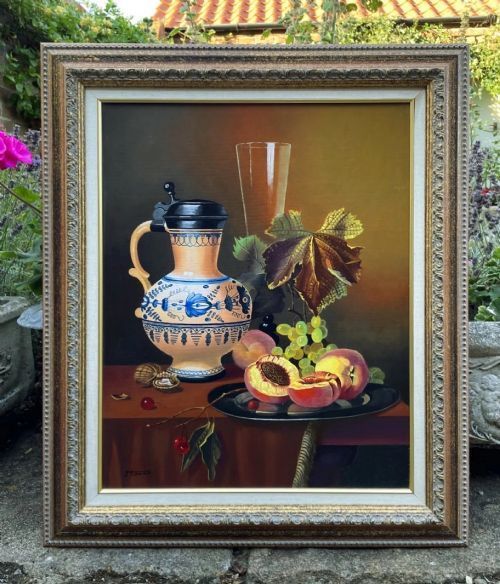
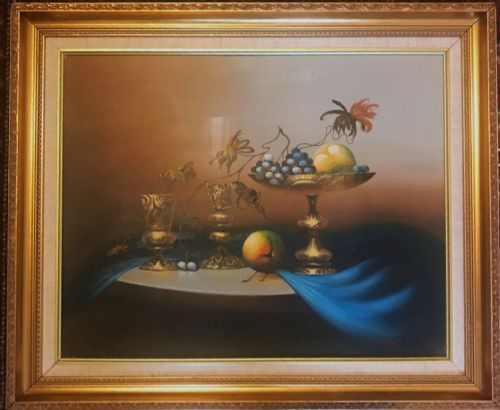
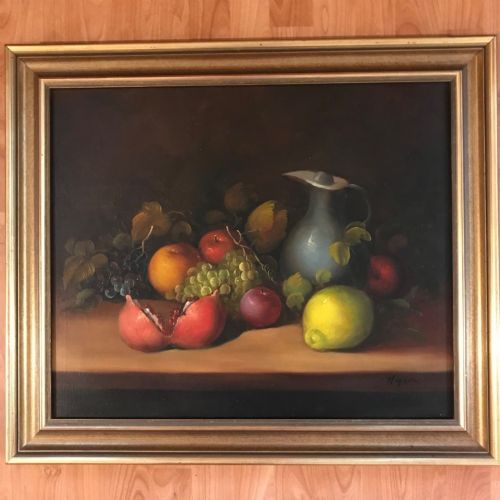
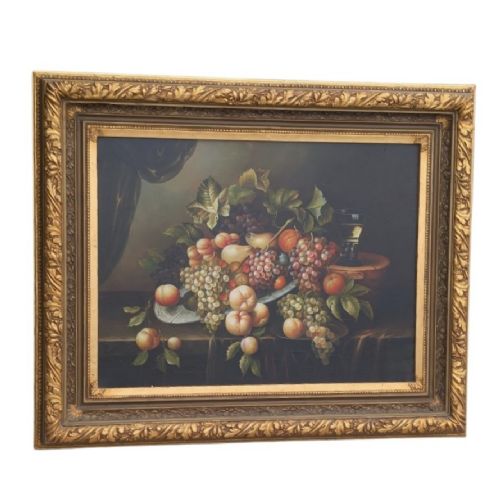
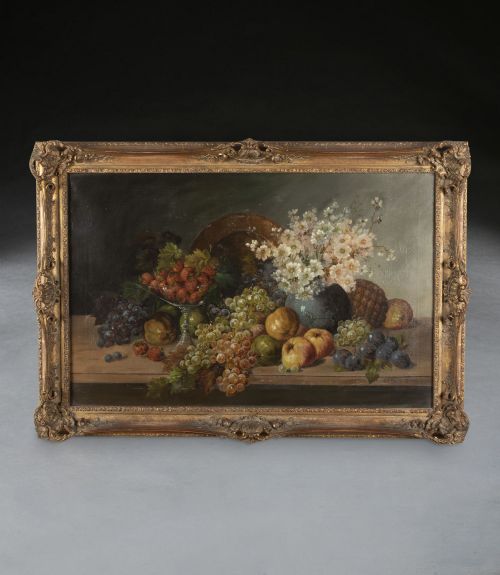
When you search for a classical fruit painting, you encounter oil paintings on canvas stretching from the seventeenth century through the Victorian era to the mid-twentieth century. These works capture arrangements of apples, grapes, baskets, and vases rendered in classical realism, baroque, and traditional styles.
You will regularly find pieces depicting detailed banquet scenes, wicker baskets filled with produce, and studies by European schools. The formats range from intimate canvases to large works carrying considerable presence on a wall.
How they were made
Artists painted these subjects using oil paint applied to canvas, often supported by wood stretchers. The technique relies on building up rich layers of pigment to achieve depth and texture in the rendering of fruit, foliage, and vessels.
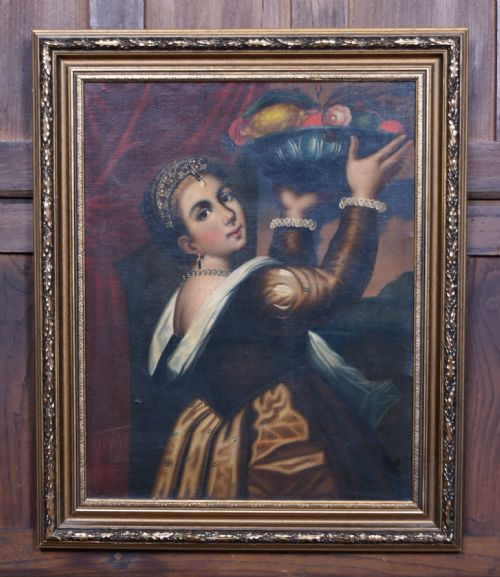
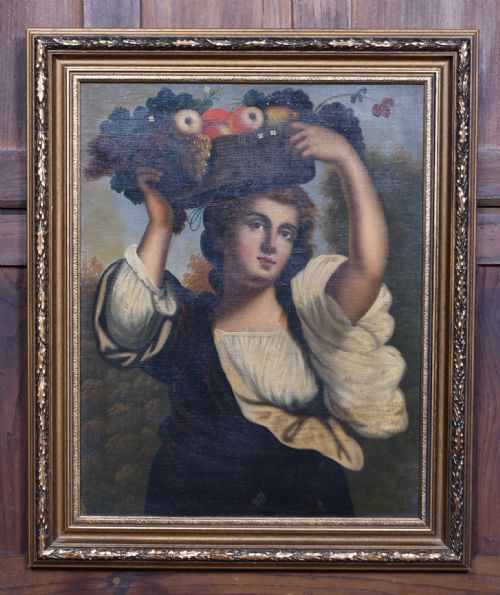
Many of these canvases are housed within gilded wood frames adorned with gesso moulding. The preparation of the canvas and the application of gold leaf on the frames reflect traditional craftsmanship from various centuries.
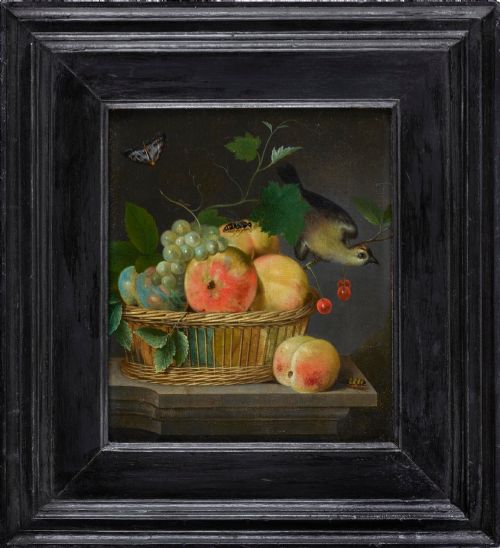
Look closely for the unexpected feathered guest sharing the fruit basket.
What varies in quality
The degree of realism and anatomical precision in the depiction of fruit and natural textures distinguishes the handling of the subject. Masterly control over light and shadow creates a tangible sense of three-dimensional form on the flat canvas.
The richness of the surrounding composition, such as the inclusion of detailed wicker baskets, birds, or architectural elements, sets apart more ambitious works. The preservation of the original oil paint and the character of the associated gilded frame also influence the overall standard.
Jozsef Molnar·Gaspar Peeter Verbruggen·William Duffield·Bela Balogh·John Robertson Reid·George Lance
The Classical Fruit Painting Glossary
- Oil on Canvas
- A painting medium where pigments bound in drying oil are applied to stretched fabric. This combination allows for smooth blending and rich depth of colour.
- Baroque
- An artistic style originating in the seventeenth century, characterised by drama, exuberant detail, and deep contrast between light and dark. In still life, it manifests as lavish banquet compositions.
- Gesso
- A plaster-like mixture used as a base for moulding on wooden frames before gilding. It provides a smooth surface for applying gold leaf.
- Classical Realism
- An artistic approach focusing on accurate observation and representation of visual appearance. These paintings present fruit and vessels with a lifelike fidelity.
Classical Fruit Painting: Frequently Asked Questions
What subjects appear in these paintings?
These works primarily depict arrangements of fruit such as apples, grapes, melons, and berries, often placed within wicker baskets or ceramic vases. Additional elements like flowers, birds, and architectural backgrounds frequently complement the central harvest theme.
Such compositions draw on long artistic traditions of still life, presenting the produce with careful attention to light, texture, and natural detail.
How do I hang a large canvas?
Large oil paintings require secure wall fixings suited to the combined weight of the heavy canvas, stretcher frames, and ornate gilded wood surrounds. Position the piece at eye level where adequate ambient light can reveal the subtle tones within the brushwork.
Avoid placing these works in direct sunlight or areas of high humidity to protect the integrity of the oil paint and canvas over time.
How are different centuries distinguished?
Clues to a painting's age lie in the stretcher construction, canvas texture, frame style, and the specific characteristics of the pigment. Seventeenth-century works often display darker, dramatic baroque lighting, whereas Victorian and Edwardian examples lean towards brighter realism.
Signatures, dealer labels, and historical framing techniques further help to place an artwork within its correct period.
What is classical realism?
Classical realism is an aesthetic approach centred on the faithful depiction of physical reality without modern abstraction. Artists working in this manner prioritised accurate proportions, convincing textures, and believable illumination.
In the context of still life, this means fruit and foliage rendered to look tactile and immediate to the viewer.