





Danish Silver Jewellery
These pieces of danish silver jewellery span decades of Scandinavian design, offering distinct twentieth-century forms that collectors prize.
Danish Silver Jewellery
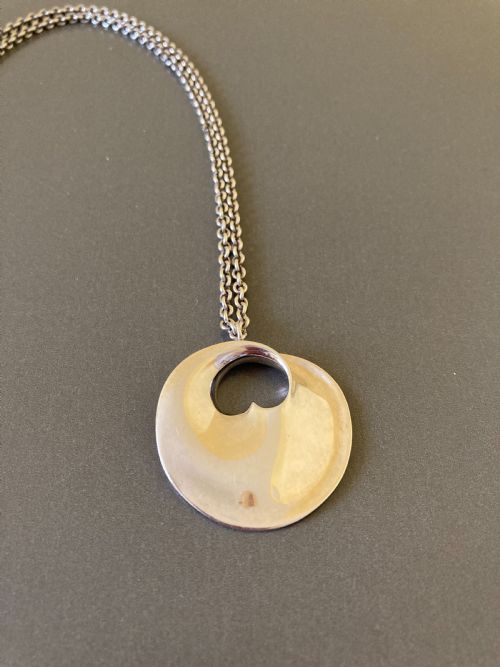
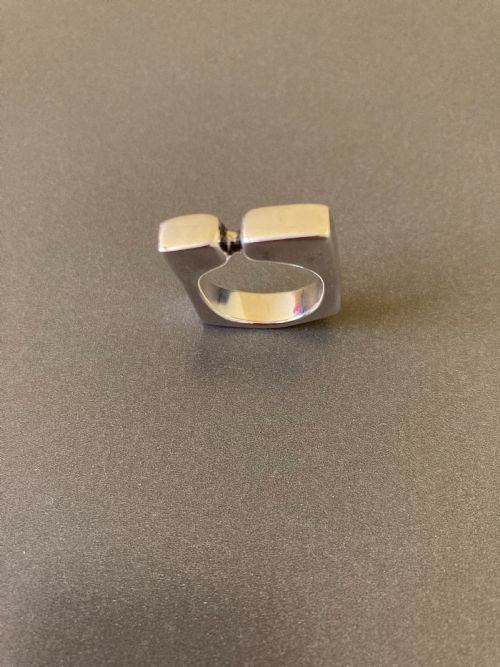
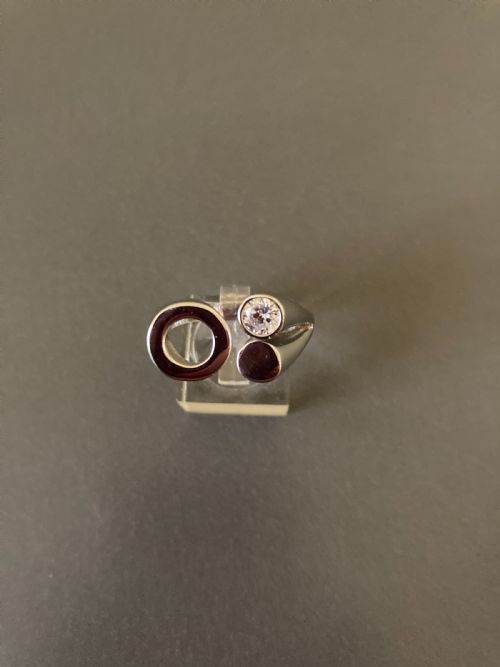
When you search for danish silver jewellery, you encounter wearable works from the early twentieth century through to the modern era. The selection centres heavily on brooches, necklaces, pendants, rings and earrings originating from Denmark.
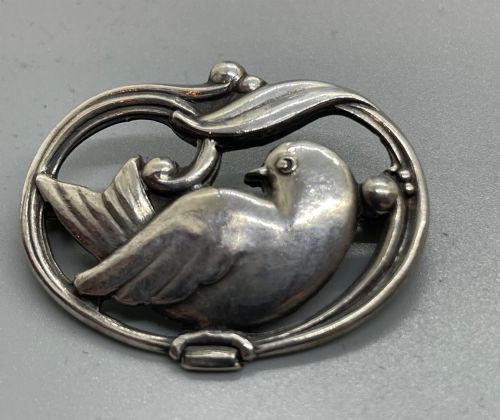
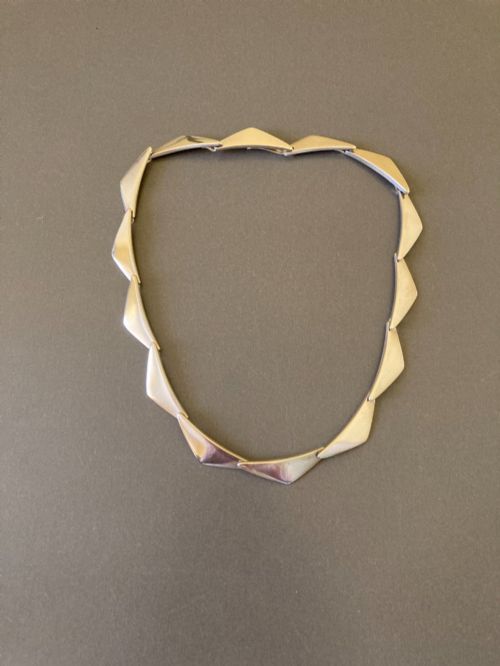
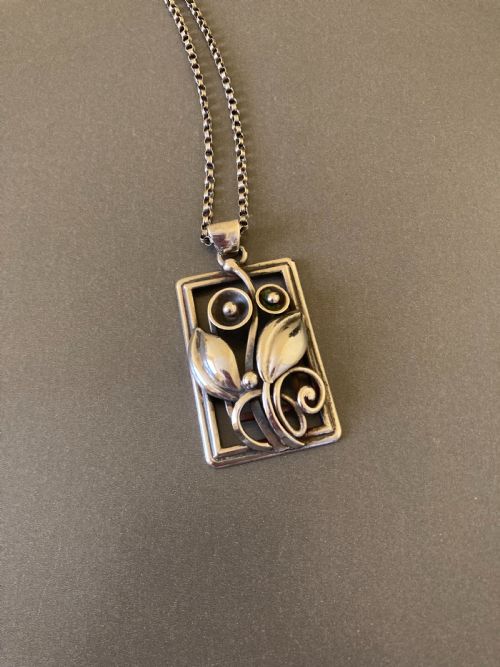
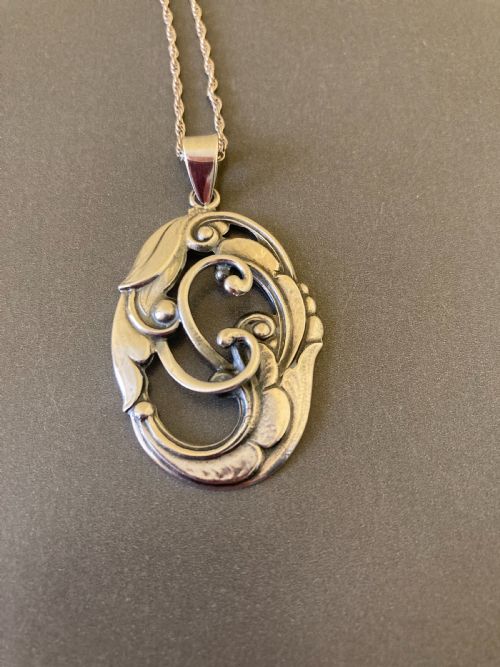
You are most likely to meet mid-century examples alongside earlier pieces from the nineteen-thirties and nineteen-forties. These range from floral brooches to named modernist necklaces and sculptural rings.
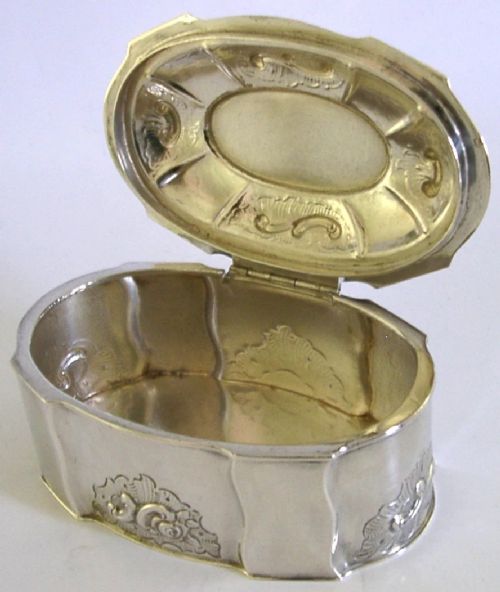
The category also encompasses larger silver accessories and dressing table boxes made in the same workshops. Each piece reflects the shifting design vocabulary of Scandinavian modernism and its roots in earlier styles.
How they were made
Makers utilised sterling silver as the primary foundation, frequently applying gilding or vermeil to enrich the surface. Oxidised silver treatments also appear to deepen contrast within recessed details.
Enamel work adds vibrant colour to floral motifs and geometric designs. Selected pieces incorporate gemstones such as amethyst and zirconia to punctuate the metalwork.
A solitary snail makes an unexpected appearance among flowers on a vintage Georg Jensen brooch.
What varies in quality
The distinction between standard commercial output and exceptional work lies in the sharpness of the hand-finishing and the weight of the metal. Master workshops achieved cleaner lines and more sculptural depth in their casting and hammering.
The application of enamel and the setting of stones reveal the precision of the maker. Smooth, even colour transitions and secure mounts elevate the piece above ordinary production.
Georg Jensen·G. Hoppe·Sigvard Bernadotte·Randers Silver
The Danish Silver Jewellery Glossary
- Skønvirke
- The Danish variant of Art Nouveau, focusing on organic motifs and traditional craftsmanship. It defined much of the early twentieth-century output before modernist styles took hold.
- Sterling silver
- An alloy containing a high proportion of pure silver combined with other metals for durability. It forms the structural core of nearly all pieces in this category.
- Silver gilt
- Sterling silver that has been coated with a thin layer of gold. This technique provides a warm two-tone appearance, visible on specific enamel items.
- Enamel
- Vitrified glass fused to metal through high-temperature firing. It supplies the brilliant colour found in floral brooches and earrings.
- Oxidised silver
- Silver treated intentionally to darken recessed areas. This creates visual depth and highlights the raised portions of the design.
Danish Silver Jewellery: Frequently Asked Questions
How do I identify mid-century Danish designs?
Mid-century Danish designs rely on clean, organic lines and abstract motifs rather than heavy ornamentation. They frequently feature smooth silver surfaces inspired by natural forms.
You will notice maker marks and period hallmarks stamped on the reverse, which help anchor the piece to decades such as the nineteen-fifties or nineteen-sixties.
What is Skønvirke jewellery?
Skønvirke represents the Danish interpretation of the Art Nouveau movement from the early twentieth century. These pieces draw heavily on flora, fauna and flowing natural lines.
They appear less frequently than later modernist works and showcase an emphasis on hand-wrought artisan construction.
How should I clean silver jewellery with enamel?
Enamel requires gentle care to avoid scratching the glass surface or loosening the surrounding metal settings. Warm water and mild soap applied with a soft cloth suffice for routine maintenance.
Avoid chemical dips and ultrasonic cleaners, as these harsh methods damage delicate enamel and compromise oxidised finishes.
Are Georg Jensen pieces marked?
Most pieces produced by the Georg Jensen workshop carry specific stamped signatures, maker initials, or numbered design codes. These stamps evolved over time, assisting in dating the item.
Checking the reverse or clasp area usually reveals these essential workshop stamps.