


Damask Upholstered Chair
A damask upholstered chair brings patterned textile and timber frames together, offering seating with a rich visual texture rooted in centuries of design.
Damask Upholstered Chair
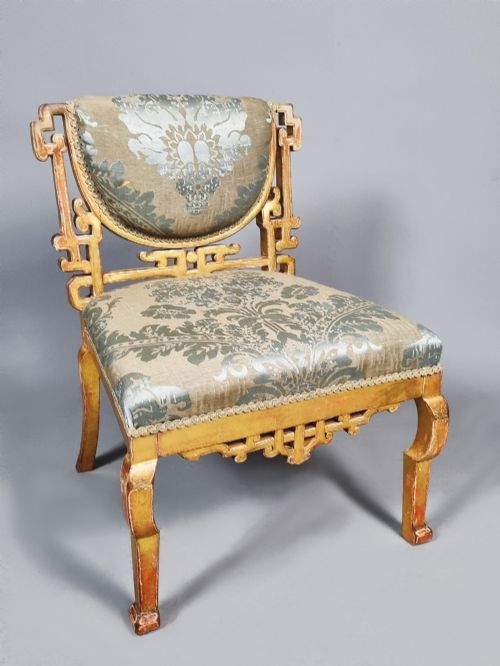
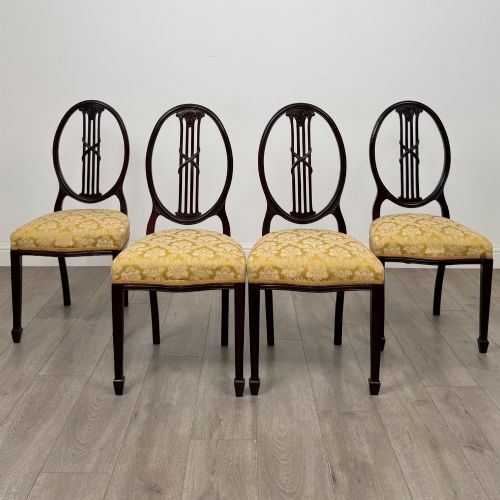
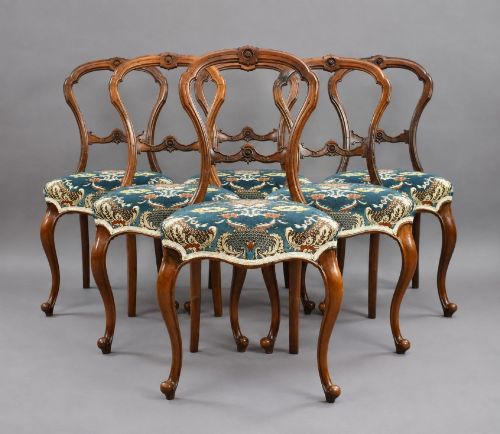
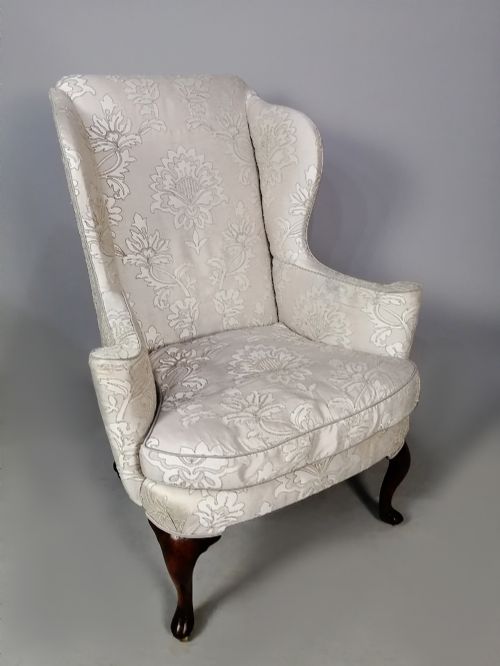
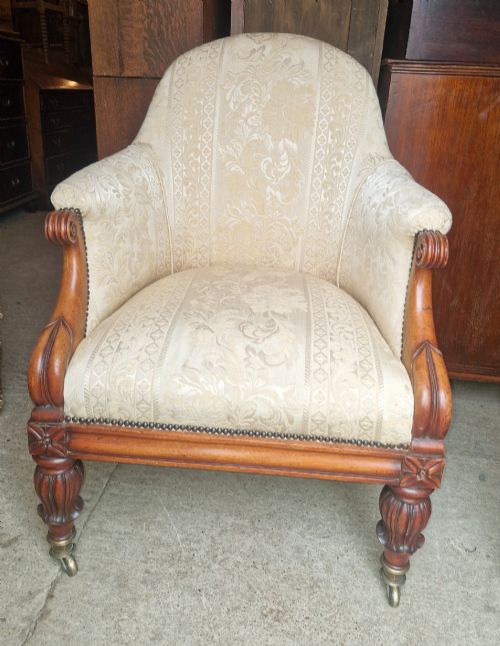
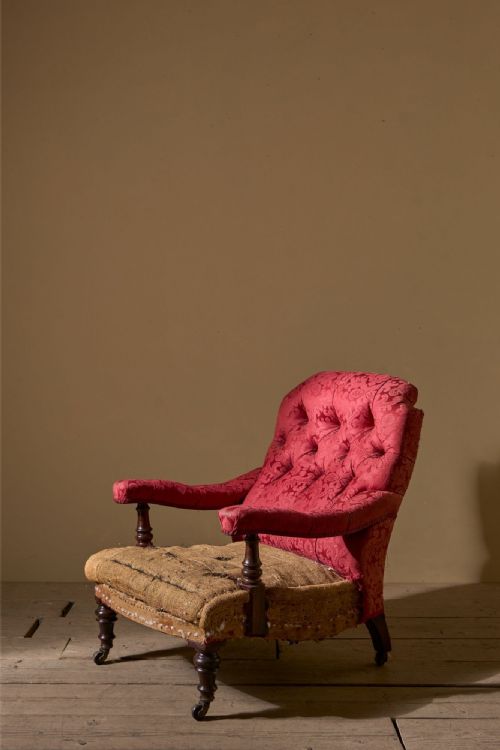
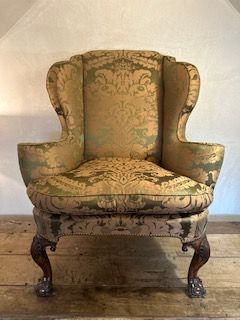
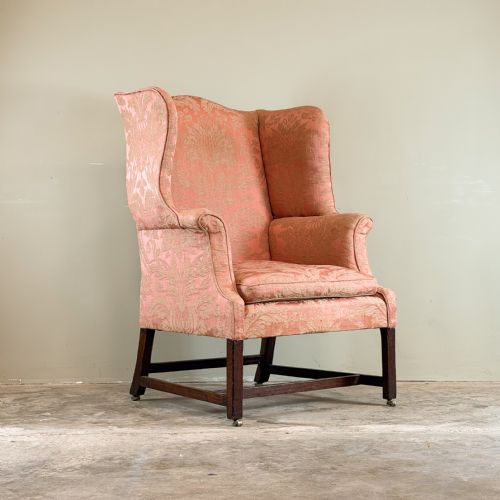
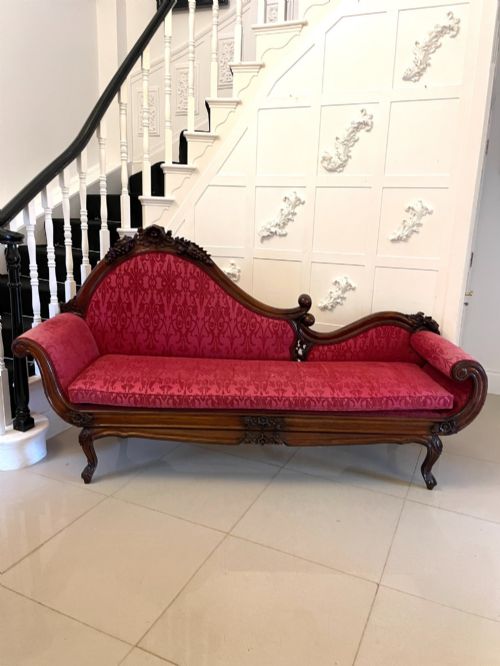
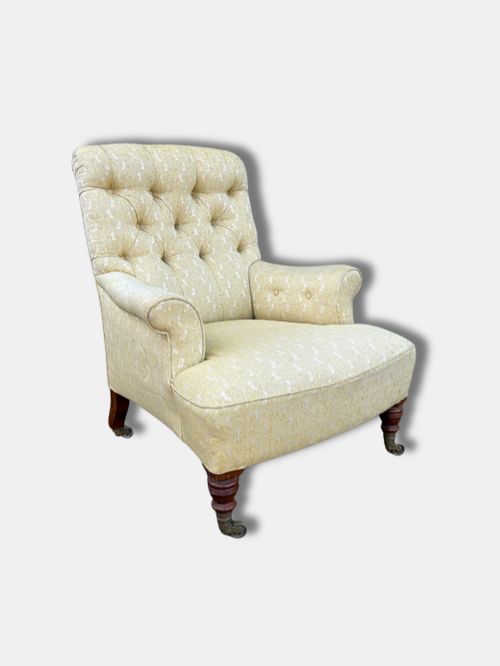
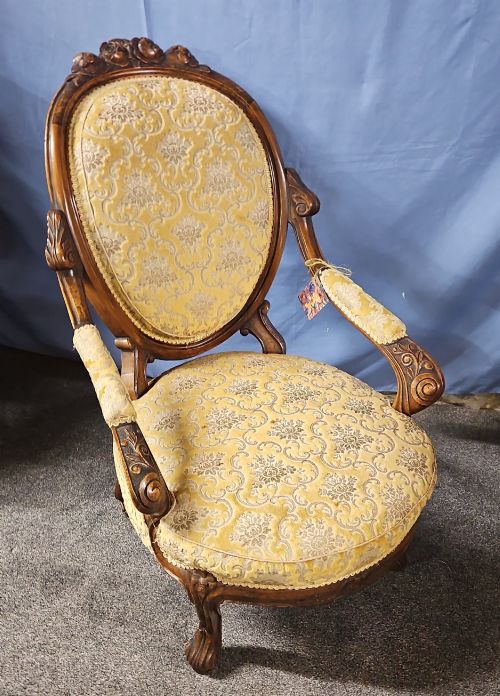
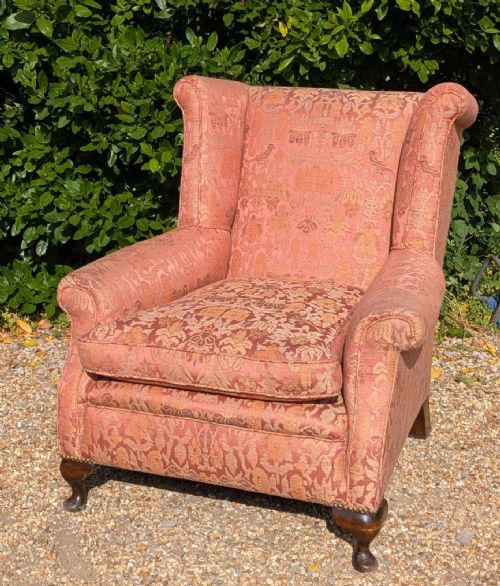
A damask upholstered chair encompasses various forms ranging from single armchairs and salon seats to sets of dining chairs and deep Victorian wingbacks. The search for a damask upholstered chair most frequently leads to 19th-century and Victorian pieces, alongside Georgian, Edwardian and occasional French Revival examples.
The objects span multiple structural types, including side chairs, library armchairs, tub chairs, and chaise longues. Walnut and mahogany frame the majority of these pieces, carrying patterned textile coverings that define their decorative appeal.
How They Were Made
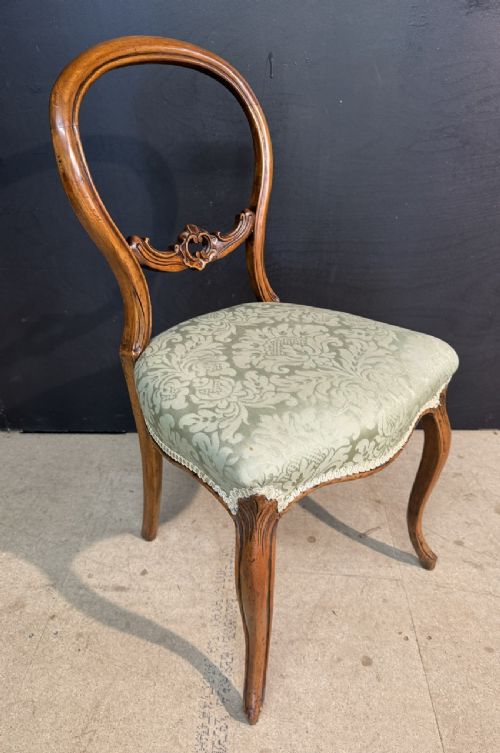
Frames rely principally on solid hardwoods such as mahogany and walnut, shaped through carving, turning, and joinery traditions ranging from Georgian cabriole legs to Victorian balloon backs. Giltwood and painted finishes also appear on French style salon pieces.
Upholstery involves traditional stuffing methods fixed to wooden foundations, overlaid with patterned damask fabric woven with intricate motifs. Silk and standard damask textiles secure directly to the frame using brass tacks or piping.
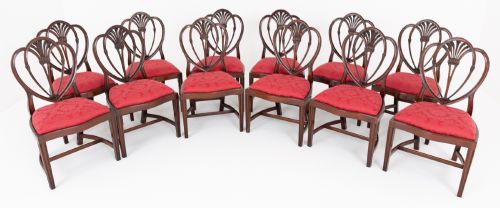
Listings feature mahogany, walnut, and giltwood frames paired with damask fabric across Victorian, Georgian, and Edwardian periods.
What Varies in Quality
The distinction between tiers rests upon the crispness of the timber carving, the integrity of the frame construction, and the density of the underlying padding. Superior examples demonstrate fluid joinery and substantial timber proportions rather than flat or purely decorative detailing.
Textile execution also differentiates the range, with higher-grade pieces retaining finely woven silk damask patterns that complement the scale of the chair. Secondary elements like brass fittings and well-proportioned cabriole or barley twist legs elevate the overall standard.
Howard and Sons·Blaise Maucuy
The Damask Upholstered Chair Glossary
- Damask
- A reversible figured fabric with patterns woven flat into the ground, historically produced in silk, wool, or cotton.
- Cabriole leg
- A furniture leg featuring a double curve, curving outward at the knee and inward at the ankle, common in 18th-century designs.
- Giltwood
- Timber treated with gold leaf or gold paint applied to the carved surface.
- Balloon back
- A rounded, oval-shaped chair back resembling a balloon, popular during the Victorian period.
- Bergère
- An enclosed upholstered armchair with wooden framing exposed around the sides and back.
Damask Upholstered Chair: Frequently Asked Questions
How do I date a damask upholstered chair?
Dating relies on combining the timber species, frame silhouette, and structural details like leg shape. Victorian pieces often show balloon backs or barley twist supports, while Georgian examples display simpler lines and cabriole legs.
Upholstery fabrics themselves are frequently later replacements, so the underlying timber frame remains the primary indicator of age.
Where were these chairs used historically?
Armchairs and winged forms served primarily in libraries, parlours, and drawing rooms as comfortable seating for reading or conversation. Lighter side chairs and dining chairs populated formal dining spaces and bedrooms.
Their placement depended heavily on the room's social function within country houses and urban residences.
Can I mix different styles of these chairs?
Mixing periods is common in eclectic interiors, pairing Victorian walnut frames with Georgian side chairs around a shared table. Matching sets are harder to find and typically reserved for larger dining groups.
Matching the wood tone or fabric palette helps unify disparate chairs placed within the same room.
How should I care for vintage damask fabric?
Protecting textile upholstery requires keeping pieces away from direct sunlight to prevent fading of the woven pattern. Regular gentle vacuuming with a soft brush attachment removes surface dust safely.
Professional cleaning is recommended for deeper maintenance to avoid damaging delicate silk or wool threads.