



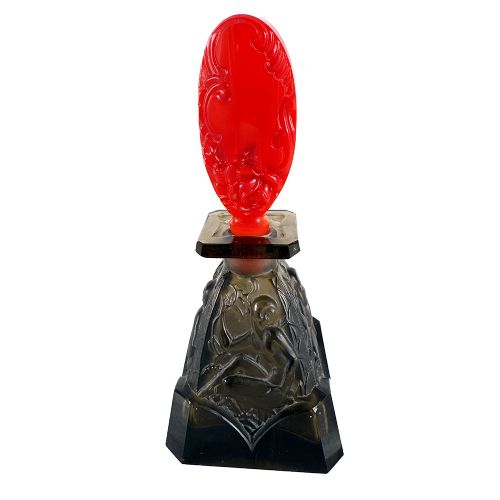


Czech Art Glass
Czech art glass brings together bold geometric forms, vibrant enamelling, and striking modernist design from the interwar period.
Czech Art Glass
When searching for czech art glass, buyers encounter a distinct output originating primarily from Bohemia and Czechoslovakia during the 1920s and 1930s. The selection heavily reflects the prevailing Art Deco aesthetic, translating architectural lines and modernist principles into domestic objects.
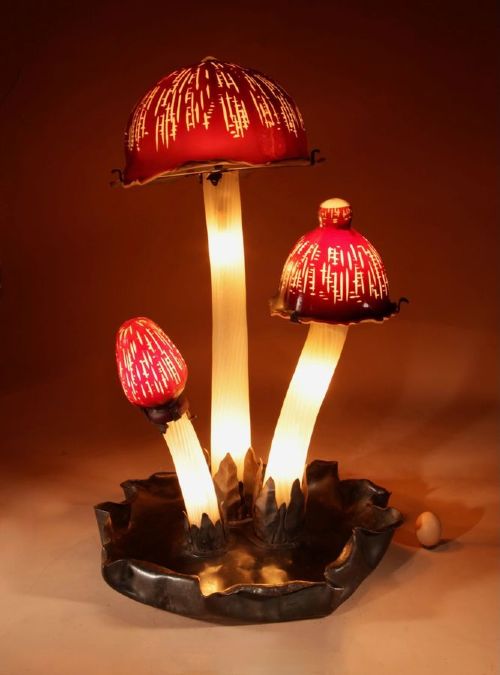
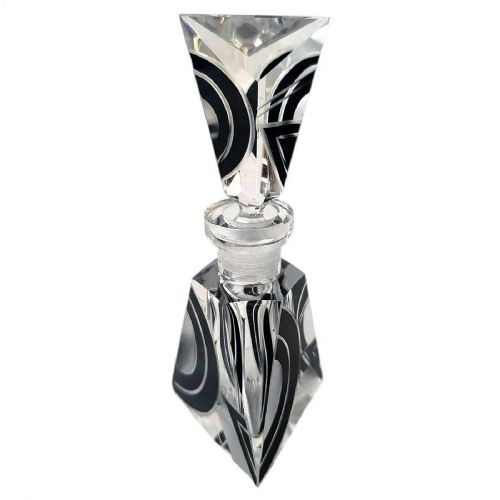
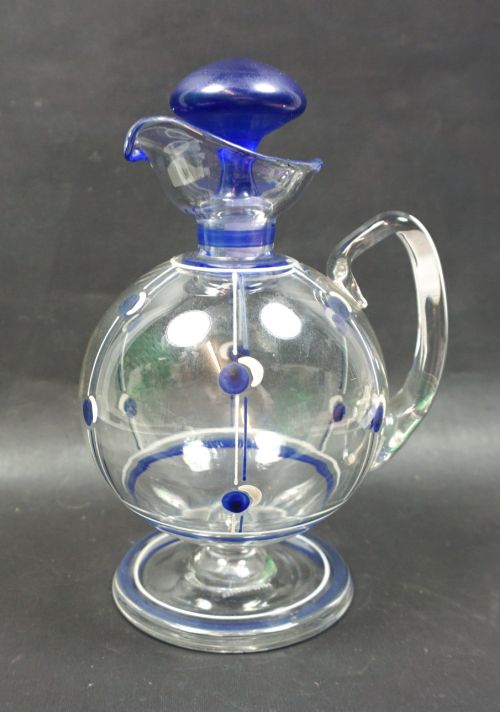
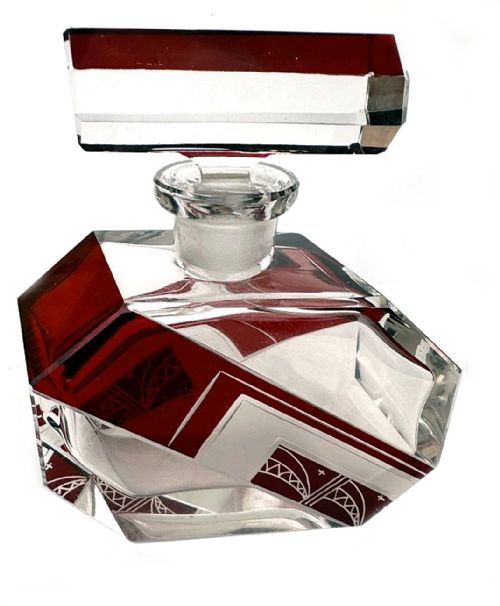
The objects span practical and decorative forms, with perfume bottles, decanter sets, and vases appearing most frequently. These pieces often incorporate vivid colour palettes, including deep ambers, striking blues, and uranium glass components.
Earlier examples bridge the shift from late Victorian output toward modernism, whilst the bulk of the material remains rooted in the interwar years. Table lamps, centrepiece bowls, and scent bottles complete the typical inventory encountered by collectors.
Materials and Techniques
Production relies heavily on clear crystal, lead crystal, and coloured glass substrates shaped through moulding, cutting, and blowing. Craftsmen then applied surface decoration using acid etching, geometric cutting, and hand-painted enamel.
Metal accents frequently complement the glass body, utilising chrome mountings, silver overlay, or fabric elements in lamps and atomisers. Gold leaf also appears on select high-end decorative vessels to heighten the visual contrast against coloured grounds.
Some perfume bottles arrived with atomiser bulbs still intact, surviving a century of vanity table service.
Assessing Quality
Quality in these objects rests upon the precision of the glass cutting and the complexity of the enamel work. Crisp geometric facets and densely saturated colours distinguish finer workshops from standard commercial output.
The integration of secondary materials, such as heavy chrome hardware or intricate silver overlay, marks out superior examples. Consistency in the hand-applied enamel decoration and the weight of the underlying crystal also indicate higher grade production.
Karl Palda·Rudolf Hlousek·Hermanova·Mosey·Libochovice
The Czech Art Glass Glossary
- Lead crystal
- Glass containing lead oxide to increase refractive index, weight, and clarity. This material allows for sharper geometric cutting.
- Uranium glass
- Glass coloured with uranium oxide that glows vibrant green under ultraviolet light. It represents a popular medium during the interwar period.
- Enamel
- Opaque vitreous composition applied to the glass surface as decoration and fired for permanence. It often forms geometric motifs on vases and decanters.
- Bohemian Biedermeier
- An earlier stylistic influence predating the Art Deco movement, known for clean lines and functional decorative arts. It provides context for the regional glassmaking tradition.
- Silver overlay
- Technique where silver is bonded directly to the exterior of a glass vessel in decorative patterns. This metalwork creates a heavy, tactile contrast.
Czech Art Glass: Frequently Asked Questions
What defines czech art glass?
These pieces comprise decorative and functional glass objects produced in Bohemia and Czechoslovakia, predominantly during the 1920s and 1930s. They are characterised by strong Art Deco geometries, vibrant colour schemes, and surface treatments like enamelling and cutting.
The items bridge industrial glass production and individual artistic design. They reflect a period of immense experimentation in form, texture, and colour among regional glassworks.
How were decanter sets used?
Decanter sets served a practical role in hosting and entertaining during the interwar period, typically comprising a central vessel accompanied by matching glasses or liqueur tumblers. They were displayed on sideboards or drinks cabinets as functional ornaments.
The sets were designed for serving spirits and cordials during social gatherings. Their bold geometric forms ensured they doubled as decorative art objects when not in active use.
How do I care for enameled glass?
Enamelled and cut glass pieces require gentle handling, avoiding abrasive cleaning agents that can degrade the surface decoration. Hand washing in lukewarm water preserves both the glass and any applied metal accents.
Display these items away from direct, prolonged sunlight to prevent colour fading in sensitive glasses. Ensuring stable placement protects delicate elements like perfume atomiser hardware and tall vase necks.
How to identify period pieces?
Dating relies on stylistic markers such as typical Art Deco geometric cuts, tango colour combinations, and specific manufacturing techniques associated with interwar workshops. Familiarity with known maker outputs assists in confirming origins.
The presence of characteristic materials like uranium glass and specific enamel palettes points directly to the 1920s and 1930s era. Archive comparisons help verify recurring forms and decorative motifs.