

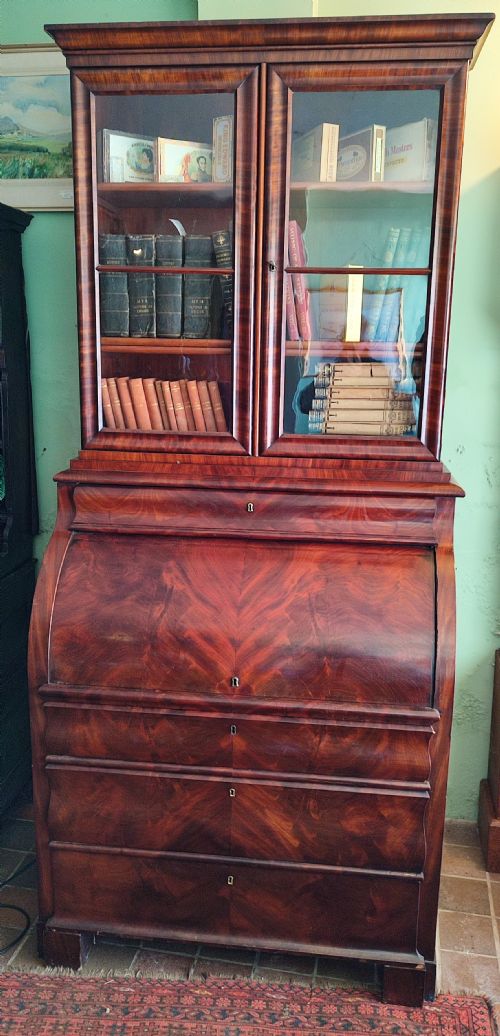


Cylinder Desk Bookcase
A cylinder desk bookcase combines a curving roll-top writing surface with a shelved upper cabinet, offering concealed storage alongside visible display.

Cylinder Desk Bookcase
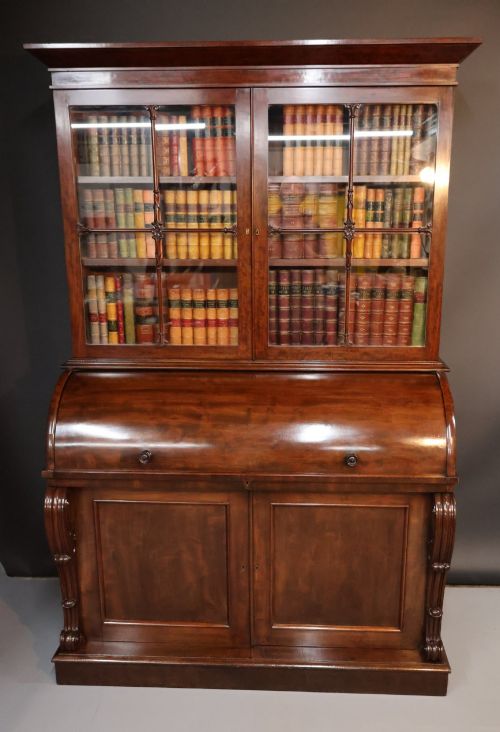
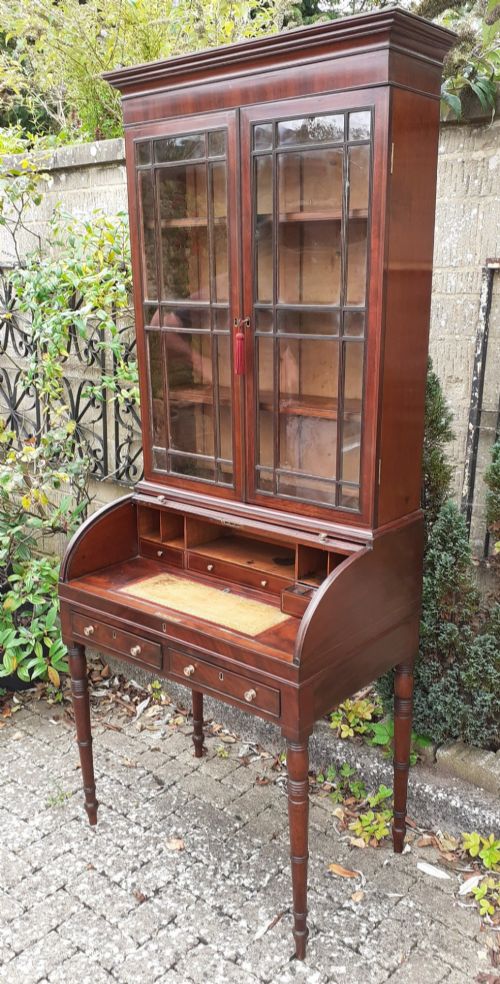
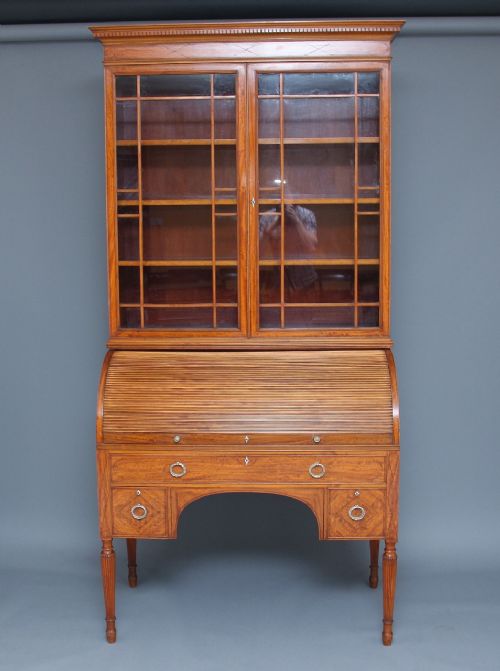
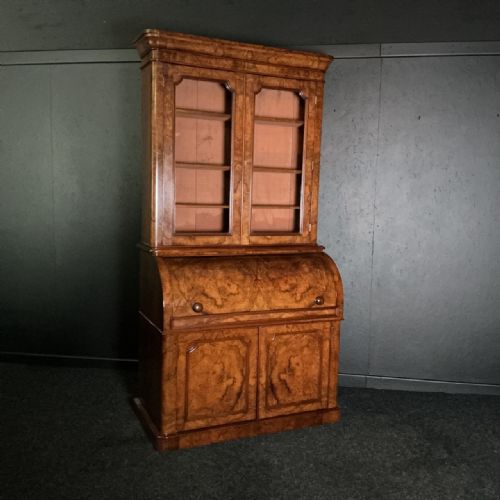
A cylinder desk bookcase unites a roll-top writing compartment with an upper bookcase section, appearing in periods from Georgian and Regency through to Victorian and William IV. These dual-purpose pieces serve as both working writing desks and architectural storage for libraries and studies.
How they were made
Cabinetmakers constructed the curving cylinder roll-top from narrow vertical timber strips glued to a flexible backing canvas, allowing the mechanism to slide smoothly along grooved tracks. Primary timbers such as mahogany, satinwood, burr walnut, and rosewood received polished finishes that highlighted natural grain patterns.
Decorative detailing incorporated brass inlays, marquetry, and crossbanding, while upper bookcase sections utilised glazed wooden framework to display book collections. Interiors often featured fitted compartments of leather-lined writing surfaces and small drawers.
At least one piece shrinks the grandeur down to scale as a miniature mahogany bookcase.
What varies in quality
The precision of the mechanical cylinder mechanism and the smoothness of its operation dictate baseline quality, requiring tight tolerances so the roll-top glides without binding. Cabinetmaking standards appear in the selection of timbers, where figured veneers and matching grain alignments across drawer fronts signal superior workshop execution.
Secondary detailing separates standard production from exceptional pieces, visible in the refinement of internal pigeonholes, hand-cut brass mounts, and the intricacy of marquetry or inlay work. Structural integrity in the upper glazed bookcase doors and the stability of internal pigeonhole framing further distinguish finer examples.
Tudor and Burrey·Edwards and Roberts
The Cylinder Desk Bookcase Glossary
- Cylinder
- A curved wooden roll-top that rotates back into the desk body to reveal the writing surface and interior fittings. It encloses the desk area when closed to keep documents secure.
- Secretaire
- A piece of furniture designed for writing, typically incorporating a drop-front or pull-out writing slide. This term often appears interchangeably with bureau in historical titles.
- Crossbanding
- A border veneer applied around the edges of a panel or drawer front with the grain running perpendicular to the central wood. It creates a defined visual frame.
- Marquetry
- The art of forming decorative patterns using fitted pieces of various coloured veneers. Craftsmen assemble these designs to adorn cabinet doors and desk surfaces.
- Glazed
- Fitted with glass panels within the cabinet doors. This protects book collections while allowing them to remain visible.
Cylinder Desk Bookcase: Frequently Asked Questions
How does the cylinder mechanism work?
The curved wooden shutter slides along grooved tracks within the desk sides, rotating backward into the interior housing when pulled open. This action uncovers the internal writing slide and stationary compartments.
Well-maintained mechanisms glide evenly with minimal resistance, guided by the original timber or metal tracks built into the desk frame during construction.
Where were these pieces used?
These cabinets belonged in formal libraries, private studies, and drawing rooms of large townhouses and country estates. They provided a secure place to manage correspondence while keeping reference volumes close at hand.
The combined storage allowed owners to display leather-bound books above while hiding unfinished paperwork inside the locked desk compartment.
How do I care for the timber?
Maintain polished mahogany, satinwood, and walnut surfaces by keeping them away from direct sunlight and sudden temperature changes that cause wood to warp or split. Regular dusting with a soft, dry cloth preserves the finish without requiring heavy polishes.
Leather writing inserts benefit from occasional gentle conditioning to prevent the material from drying out or cracking over time.
How do I distinguish Georgian from Victorian pieces?
Georgian and Regency examples often emphasise restrained classical proportions, using timbers like satinwood and figured mahogany alongside subtle brass stringing. Eighteenth-century and early nineteenth-century pieces frequently display hand-cut dovetails and simpler internal arrangements.
Victorian interpretations tend to incorporate heavier proportions, darker walnut tones, and more ornate carved details or extensive inlay work reflecting later nineteenth-century revival styles.