




Cut to Clear Glassware
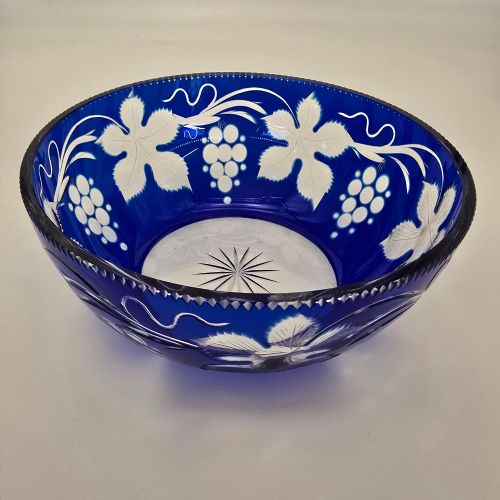
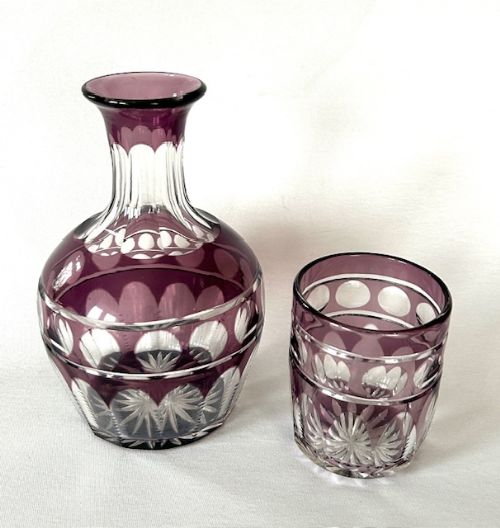
Cut to clear glassware brings striking colour and brilliant facet-cutting to a room, offering rich visual contrast through layered glass.
Cut to Clear Glassware
The pieces on this page span the nineteenth century and early twentieth century, including Victorian examples and Bohemian productions. Common forms range from carafes, decanters and tumblers to bowls, champagne coupes and vases.
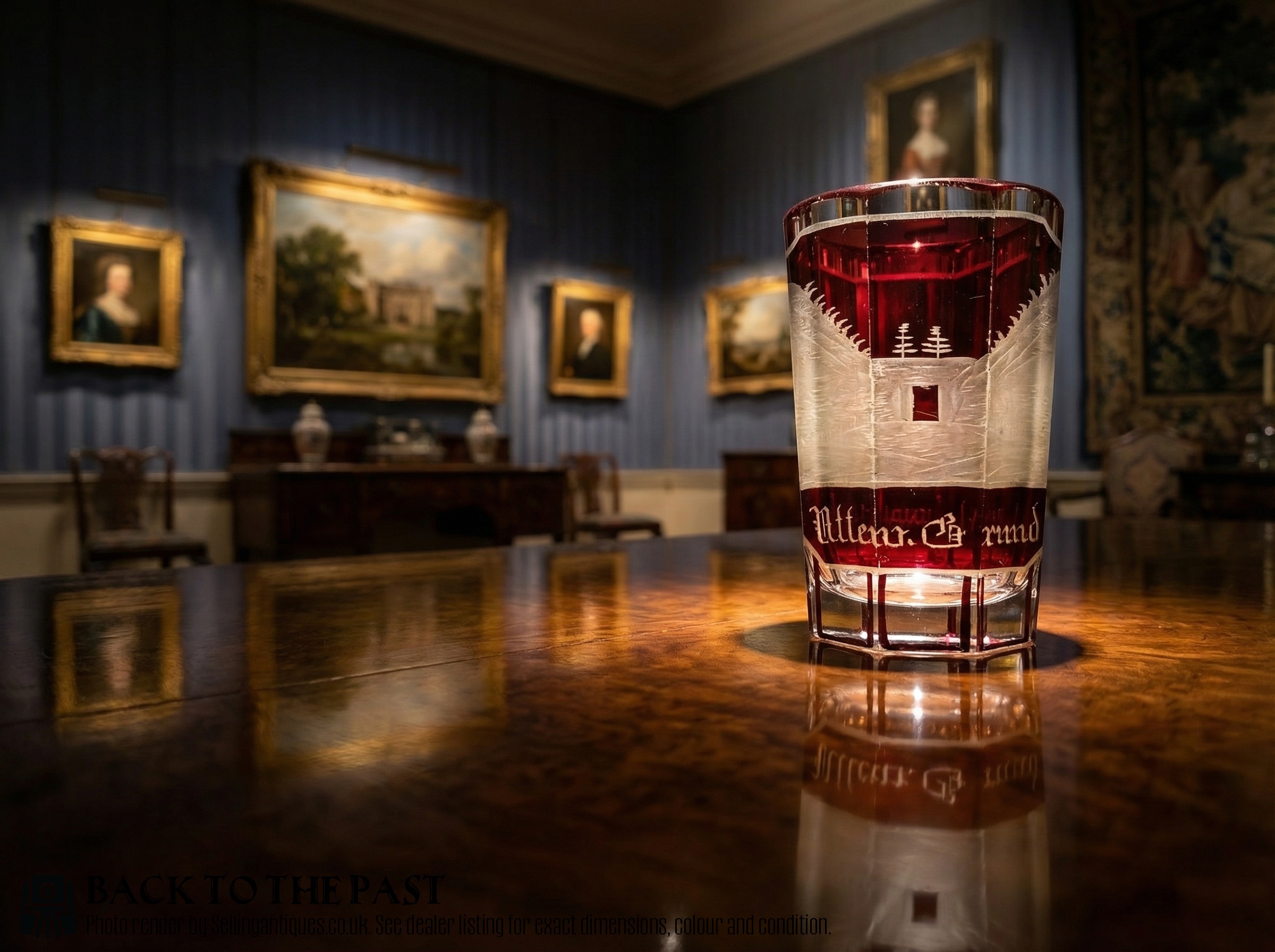
English and Bohemian makers dominate these items, utilising techniques that developed across multiple decades. Buyers encounter vibrant hues such as cranberry, ruby red, cobalt blue, yellow and amethyst.
Materials and Techniques
Craftsmen utilised lead crystal and overlay glass, fusing a richly pigmented outer layer of glass onto a clear glass body while molten. This dual-layer construction provided the necessary depth for subsequent carving.
Makers applied wheel-engraving and deep facet-cutting to slice through the coloured exterior, exposing the clear glass underneath. Artisans also detailed the surfaces with engraved floral designs like convolvulus or panelled facets.
Cut to Clear Glassware Retail Price Guide 2026
Typical asking prices for cut to clear glassware among the pieces listed under this phrase on Sellingantiques today, from the lower quarter to the upper quarter. They describe what is for sale here now, not the wider market.
Every piece relies on a clever optical trick, sacrificing its own colourful skin just to show off what is underneath.
Assessing Quality and Execution
Quality rests upon the precision of the wheel-cut facets and the depth of the coloured overlay. Superior examples display crisp borders where the colour meets the clear layer, without blurring or uneven depth.
The weight of the lead crystal and the sharpness of any engraved details distinguish finer pieces. Heavier glass bodies and deeply carved patterns indicate skilled execution by the workshop.
Moser Crystal·Otto Prutscher
The Cut to Clear Glassware Glossary
- Overlay glass
- Glass formed by fusing two or more distinct layers of different colours. This layered method is essential for creating cut to clear items.
- Lead crystal
- A high-clarity glass containing lead oxide, which increases weight and refractive brilliance. It permits deeper, sharper cutting than standard glass.
- Cranberry glass
- A rich pinkish-red transparent glass coloured with gold chloride. It frequently forms the outer layer of Victorian overlay pieces.
- Tazza
- A shallow decorative bowl elevated on a stem and foot. They often showcase bright colours and elaborate wheel-cut patterns.
- Champagne coupe
- A broad, shallow-bowled glass designed for sparkling wine. In this category, they feature coloured overlays cut back to clear bases.
Cut to Clear Glassware: Frequently Asked Questions
How can I tell Bohemian pieces from English ones?
Bohemian production frequently relies on heavy lead crystal combined with deep cobalt blue, ruby red or amber overlays. The cutting often incorporates dense geometric panelling and elaborate architectural shapes.
English examples from the same period tend to utilise cranberry or yellow overlay glass paired with lighter, refined floral engravings like convolvulus.
Were these glasses used daily or kept for display?
Many of these vessels, such as carafes, tumblers and wine glasses, served functional purposes during formal Victorian dining and social gatherings. Their vibrant colours and reflective surfaces added visual drama to the table.
Larger items like vases and tazzas were primarily intended for decorative display in parlours and drawing rooms. They caught the natural light of the room through their cut facets.
What periods do these glass items date from?
The pieces span the nineteenth century and early twentieth century, with strong representation from the Victorian era and the decades around eighteen-eighty to nineteen-ten. Production styles evolve from mid-century English overlay work to later Wiener Werkstätte designs.
Dates are determined by the manufacturing techniques, stylistic motifs, and the specific colour palettes popular during those decades.