




Cut Glass Writing Inkstand
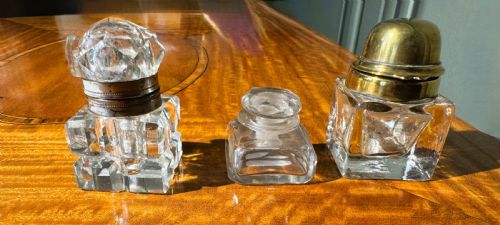
A cut glass writing inkstand brings substance to a desk, holding ink in heavy, faceted wells mounted on silver, brass, or fine timber bases.
Cut Glass Writing Inkstand
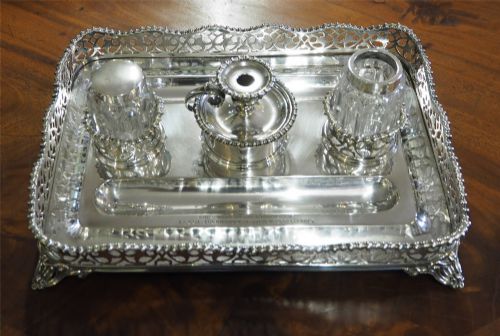
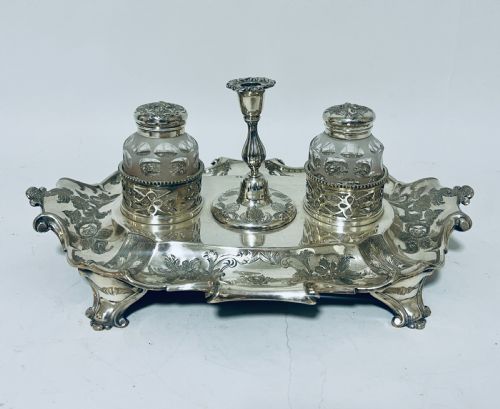
A cut glass writing inkstand combines glass reservoirs for ink with a fitted tray or stand designed to hold pens securely. These pieces range from compact single inkwells to substantial desk sets incorporating silver mounts, candlesticks, or clock movements.
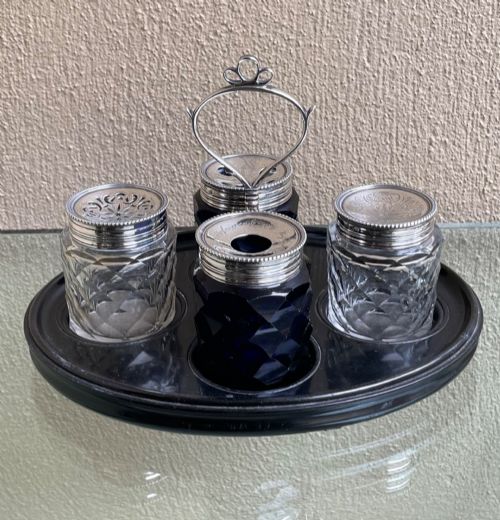
The selections available here span the Georgian, Victorian, and Edwardian periods, reflecting changing desk habits across the nineteenth and early twentieth centuries. Trays appear in sterling silver, silver plate, ormolu, brass, and dense timbers like mahogany, oak, coromandel, and tortoiseshell.
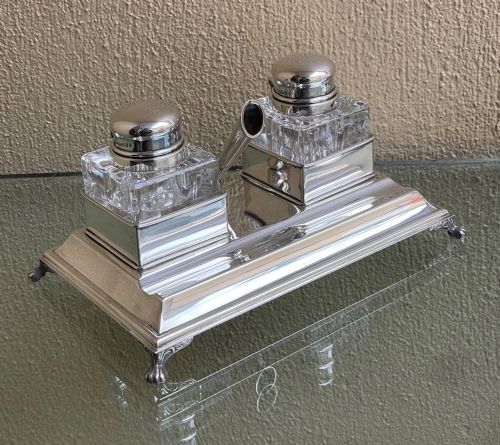
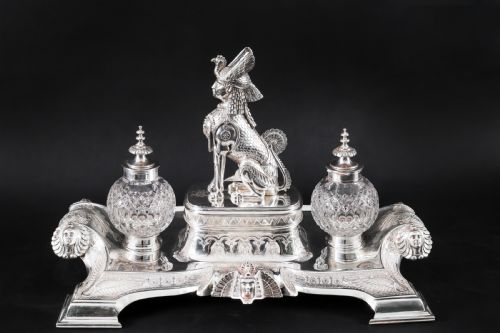
Buyers often encounter Victorian double inkstands featuring heavy cut glass bottles with hinged metal lids, paired with matching pen trays. Simpler glass ink pots and single wells also appear frequently alongside elaborate Egyptian Revival and Gothic pieces.
Materials and Construction
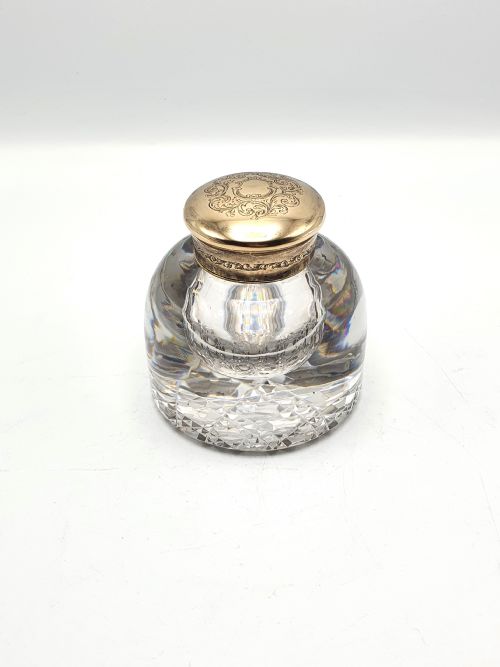
The glass elements are heavy and thick, shaped by blowing or moulding before craftsmen cut deep geometric facets into the surface to catch the light. These glass bodies are then fitted with collars and hinged lids in sterling silver, Sheffield plate, or cast brass.
Wooden stands utilise dense cabinet timbers such as coromandel, walnut, mahogany, and oak, frequently inlaid with brass or mother of pearl. Metal stands combine cast bronze, ormolu, and silver plating, often incorporating applied galleries, pen rests, and decorative feet.
Listings feature items from the Georgian, Regency, and Victorian eras through to the mid-twentieth century, constructed in cut glass, silver, oak, and coromandel.
Distinguishing Quality
Quality rests in the crispness of the glass cutting, where sharp, deep facets demonstrate superior hand-polishing compared to softer, mould-pressed alternatives. The weight of the glass and the clarity of the metal mounts set finer examples apart from everyday utility items.
The integration of materials dictates the standing of a piece, seen in flush brass inlay, well-fitted silver collars, and heavy, stable timber bases. Maker attribution through clear hallmarks on silver mounts or stamped bronze signatures elevates the historic standing of an inkstand.
Wilkinson & Co·James Cartland & Sons·Rupert Favell·Daniel Holy of Sheffield·Elkington
The Cut Glass Writing Inkstand Glossary
- Standish
- A complete desk accessory set combining inkwells, pen holders, and sometimes sanders or wafer boxes on a single tray. This term is frequently used interchangeably with desk stand.
- Ormolu
- Gilded bronze mounted upon decorative objects, common in French-influenced nineteenth-century designs. It provides a rich, warm metallic contrast to dark timber and clear glass.
- Coromandel
- A dense, heavily figured exotic timber from Asia utilised in high-end Victorian cabinet-making. Its dark brown grain with dramatic black streaks makes it a prized base material for luxury desk stands.
- Sheffield Plate
- An early composite material made by fusing a thin sheet of silver to a thicker copper base. It is typical of Georgian and early nineteenth-century manufacturing before electroplating replaced the process.
- Hallmark
- Official stamps struck into precious metals to guarantee purity and origin. These marks assist in dating silver mounts and identifying the silversmith responsible.
Cut Glass Writing Inkstand: Frequently Asked Questions
How do I date an antique inkstand?
Dating relies heavily on hallmarks stamped into silver mounts, style markers such as Victorian Gothic or Edwardian simplicity, and construction methods. Timber choices and brass inlay techniques also point to specific decades.
Examining the depth and style of the glass cutting provides further clues regarding the manufacturing period.
Are these inkstands practical for daily use?
Many inkstands remain entirely functional for modern writing enthusiasts who enjoy fountain pens and bottled ink. The heavy glass wells with hinged lids protect ink from dust and evaporation.
Care must be taken with antique silver mounts and delicate timber frames when cleaning or refilling the wells.
What materials were used in these stands?
Materials vary widely across the inventory, combining heavy cut glass with sterling silver, silver plate, brass, and ormolu mounts. Bases frequently employ dense hardwoods such as mahogany, oak, walnut, and coromandel.
Some exceptional pieces incorporate mother of pearl inlay, tortoiseshell, or gilt bronze figures.