
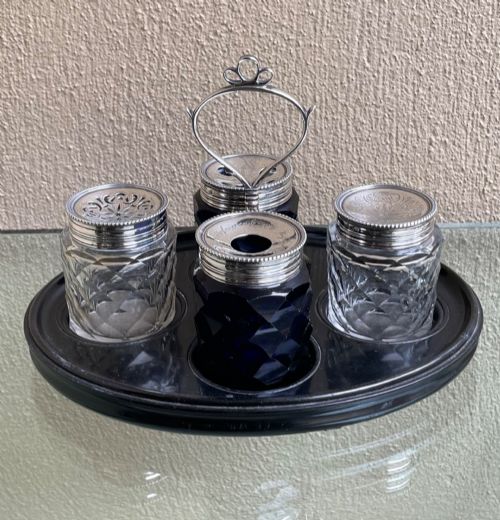


Antique Silver Topped Inkwell
These antique silver topped inkwell designs combine functional desktop utility with the enduring craftsmanship of past centuries.
Antique Silver Topped Inkwell
When you search for an antique silver topped inkwell, you are looking at practical desk accessories designed to hold writing fluid safely in the eras before ballpoint pens. These pieces combine heavy glass, crystal, or organic materials with precious metal lids.
The versions you are most likely to meet on this page span the Georgian, Victorian, and Edwardian periods. They appear as standalone desktop bottles, larger stands with pen trays, or portable travelling containers.
Makers utilised various regional styles, ranging from classic Georgian simplicity to Scottish Baronial woodwork and later Art Deco geometric forms. Each iteration reflects the specific writing habits and interior aesthetics of its decade.
Materials and Construction Methods
The bodies of these pieces rely heavily on transparent cut glass and heavy crystal to provide stability on a writing desk. Manufacturers paired these transparent reservoirs with sterling silver mounts, hinged lids, and occasionally decorative collars.
Alternative structural elements incorporate natural materials such as oak, ebony, horn, antler, and papier mache to create varied desk stands and inkstands. Metalwork components frequently display hallmarks indicating the assay office and year of production.
Listings feature items spanning the Georgian, Victorian, and Edwardian eras, incorporating materials such as sterling silver, cut glass, ebony, enamel, and oak.
Factors Defining Superior Examples
Quality in these items rests upon the clarity and depth of the glass cutting, alongside the thickness and weight of the silver mounts. Finer examples retain crisp hallmarks and well-fitted hinges that operate smoothly without slack.
The inclusion of supplementary materials like guilloche enamel, gilt interiors, or unusual organic bodies such as horn and antler elevates the desirability of a piece. Condition and proportion remain paramount when assessing the overall merit of any desk accessory.
Asprey
The Antique Silver Topped Inkwell Glossary
- Capstan inkwell
- A desk accessory shaped like a ship's capstan, typically widening toward the base for stability. This profile was widely favoured during the Edwardian period.
- Standish
- A complete inkstand incorporating inkwells, pen holders, and sometimes a sander or taperstick. These comprehensive desk sets formed the centrepiece of a Victorian writing table.
- Guilloche enamel
- A decorative technique where metal is engraved with precise geometric patterns beneath a translucent layer of enamel. This ornamentation frequently appears on early twentieth-century silver lids.
- Silver gilt
- Sterling silver that has been coated with a thin layer of gold, often used on the interior components of travelling inkwells to prevent corrosion from liquid ink.
- Hallmark
- An official stamp applied to precious metals indicating the standard of purity, the assay office, and the date of manufacture. These marks allow collectors to verify the exact age and origin of a silver lid.
Antique Silver Topped Inkwell: Frequently Asked Questions
What is an antique silver topped inkwell?
These desk accessories consist of a glass or crystal reservoir fitted with a hinged silver lid designed to keep writing fluid contained. They served as essential writing desk equipment throughout the Georgian, Victorian, and Edwardian eras.
Craftsmen produced them in numerous configurations, ranging from simple standalone desktop bottles to elaborate stands featuring integrated pen trays and multiple containers.
How do I date my inkwell?
Dating relies primarily upon the hallmarks stamped onto the silver components, which indicate the assay office and specific year of production. Stylistic details, such as the transition from heavy Georgian cutting to Edwardian capstan shapes, also provide clear chronological clues.
The materials used for the body, including specific types of glass, oak, or papier mache, help narrow down the manufacturing decade.
How were these inkwells used?
Owners filled the glass or crystal reservoir with liquid ink to dip their quill or steel-nib pens during correspondence. The heavy silver lid protected the fluid from dust and reduced evaporation when the desk was not in use.
Portable variants featured secure screw or hinged caps specifically engineered for travellers carrying writing equipment in luggage.
How do I clean the silver top?
Cleaning requires a soft cloth and a gentle silver polish applied carefully to avoid touching the surrounding glass or enamel. Preservation of the original hallmarks and any delicate surface detail is essential during maintenance.
Harsh chemical dips should be avoided, particularly on pieces featuring guilloche enamel or organic materials like horn and ebony.