






Cut Crystal Inkwell
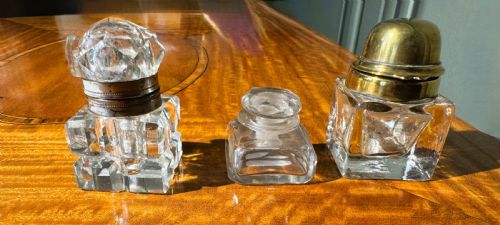
A cut crystal inkwell brings weight and sparkle to a desk, pairing deep glass faceting with heavy metal mounts from the nineteenth and early twentieth centuries.
Cut Crystal Inkwell
A cut crystal inkwell is a desk accessory designed to hold writing fluid safely while catching the light in deep geometric facets. The pieces found here span from the early nineteenth century through the Art Deco decades, taking the form of heavy desktop pots, double stands, and novelty pieces.
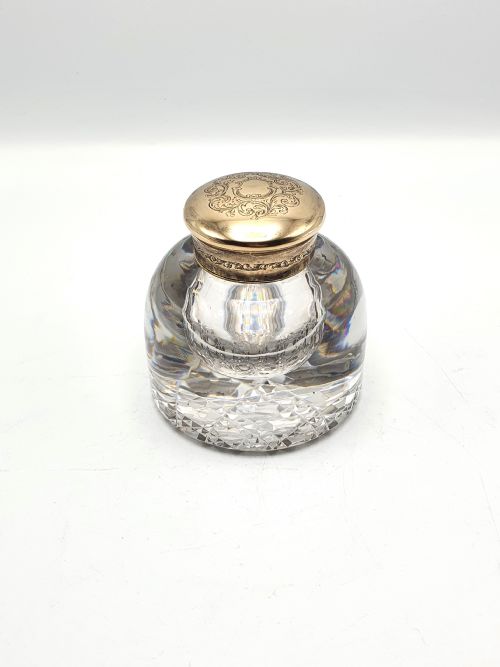
The version most commonly met on this page is the Victorian or Edwardian cut glass body fitted with a sterling silver hinged lid. These range from simple hobnail-cut ink pots to massive desk stands accompanied by pen rests and matching accessories.
Judging the Work
Quality rests in the depth and precision of the glass cutting, where sharper facets and heavy crystal walls demonstrate superior craftsmanship. The proportion and weight of the metal mount, particularly thick sterling silver or cast bronze, separate standard commercial items from exceptional workshop productions.
Listings feature periods from the nineteenth century through the 1930s, combining cut glass, crystal, sterling silver, brass, and ormolu.
Tiffany and Co·John Grinsell and Sons·Asprey
The Cut Crystal Inkwell Glossary
- Hobnail cut
- A pattern of sharp, pyramid-shaped facets cut into the glass surface. This texture catches the light and adds considerable weight to the inkwell.
- Sterling silver mount
- The collar and hinged lid fitted to the top of the glass body. These components often bear hallmarks indicating the year and city of assay.
- Ormolu
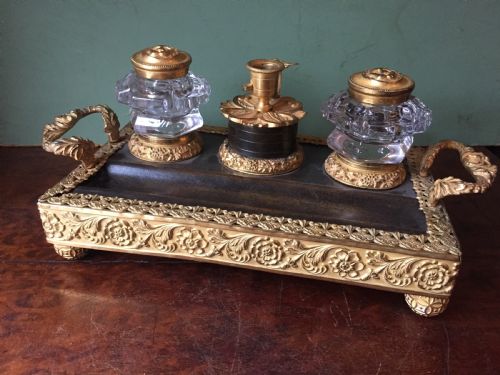
- Gilded brass or bronze used for decorative mounts on French Empire designs. This metalwork provides a warm, golden contrast to the clear crystal glass.
- Guilloche enamel
- Decorative mechanical engraving beneath a translucent coloured enamel layer. This technique appears on select lids to add vibrant colour.
- Inkstand
- A complete desk tray holding one or more inkwells alongside space for pens. These larger desk accessories often incorporate wood or metal bases.
Cut Crystal Inkwell: Frequently Asked Questions
How do I date a cut crystal inkwell?
Dating relies heavily on the hallmarks stamped onto the silver mounts, which indicate the assay office and year of production. Stylistic clues like Art Deco geometry or Victorian proportions also help place the piece in its era.
Without hallmarks, the weight of the glass, the style of the cutting, and the construction of the hinged lid provide a reliable guide to age.
Were these used for fountain pens?
These inkwells served dip pens rather than modern fountain pens. Writers dipped the steel or quill nib directly into the reservoir before writing.
The heavy glass walls kept the well stable while the pen met the ink.
How do I clean an antique inkwell?
Cleaning requires warm water and mild soap, taking care to protect any sterling silver or brass mounts from harsh polishing agents. Soft cloths reach inside the glass reservoir to remove dried ink residue.
Harsh abrasives should be avoided to preserve the crisp edges of the crystal facets.
What is the difference between glass and crystal?
Crystal contains lead oxide, which increases the weight, clarity, and refractive index of the material. This lead content allows for deeper, sharper cuts than standard glass.
Most antique examples utilise heavy crystal to achieve that characteristic desk sparkle.