
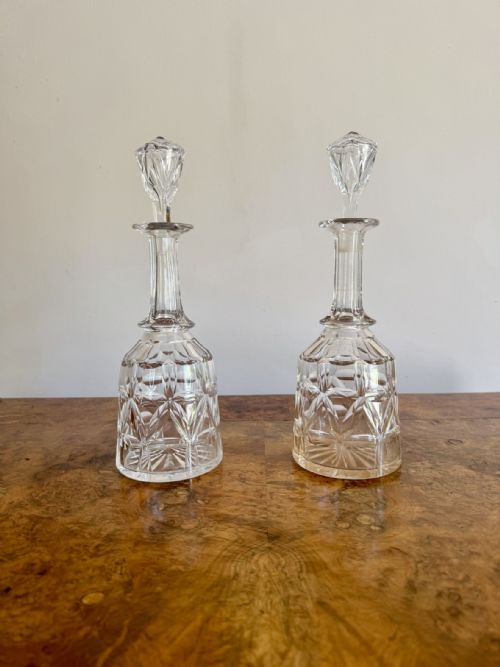
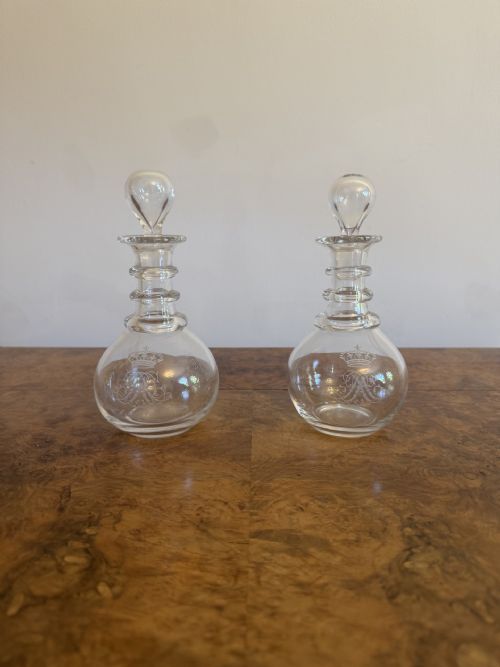
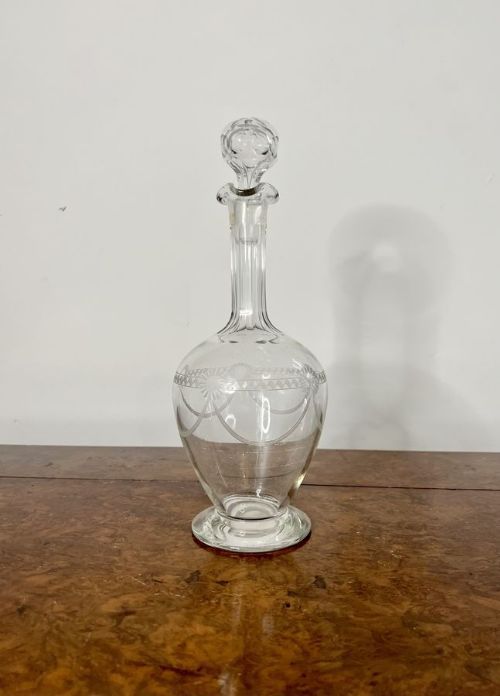


Cut Glass Wine Bottle
These cut glass wine bottles bring weight and clarity to the table, spanning Georgian origins through to Edwardian service.
Cut Glass Wine Bottle
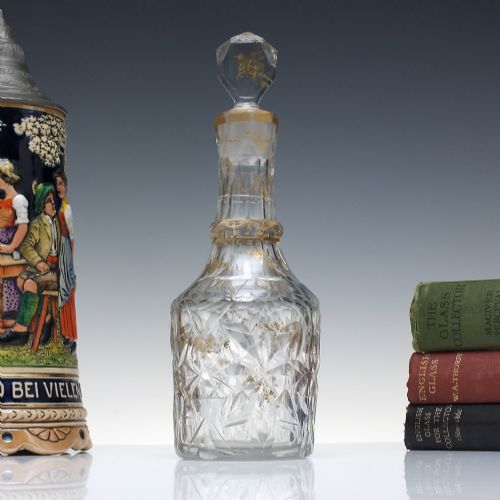
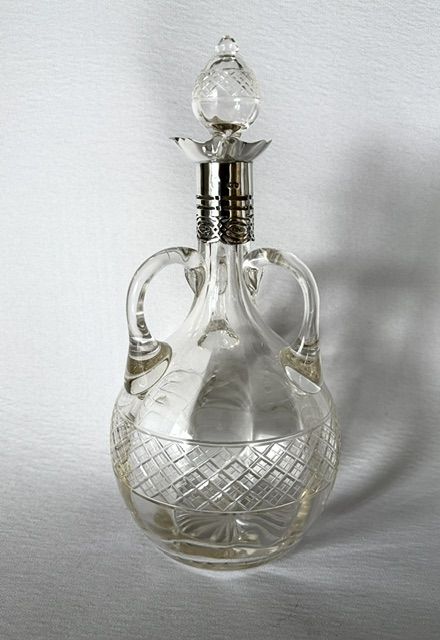
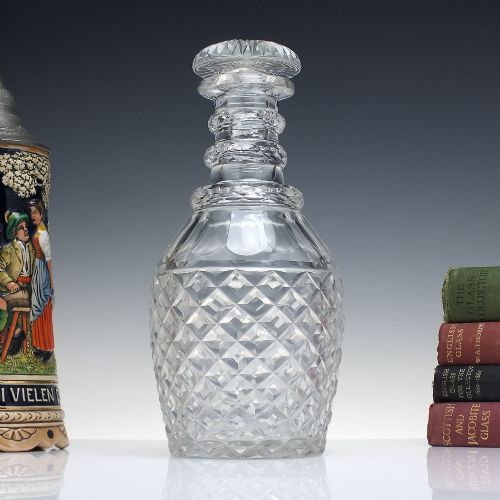
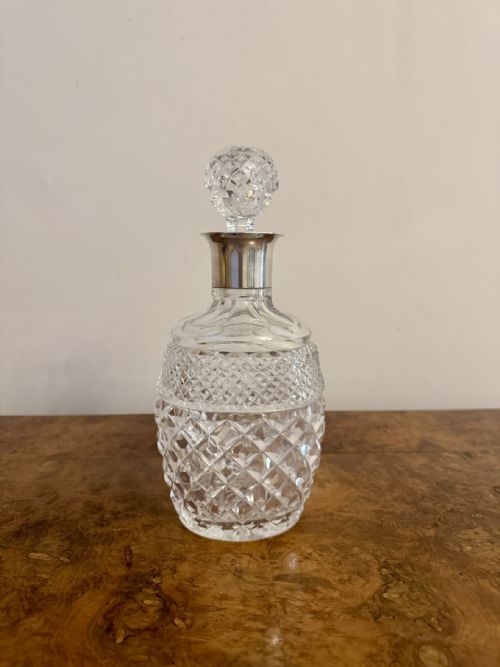
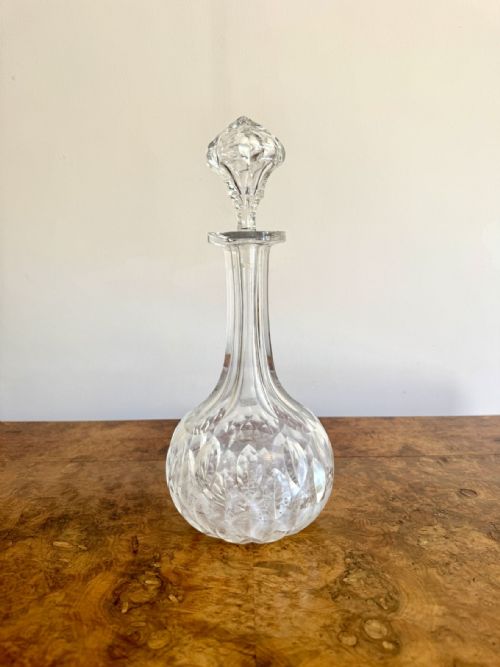
A cut glass wine bottle encompasses heavy lead crystal vessels, bell shaped decanters, and tall shaft and globe forms designed for serving and holding wine. When looking at this selection, the most common pieces you will encounter date from the Edwardian and Victorian eras, often bearing deep wheel-cut facets and silver collars or plate.
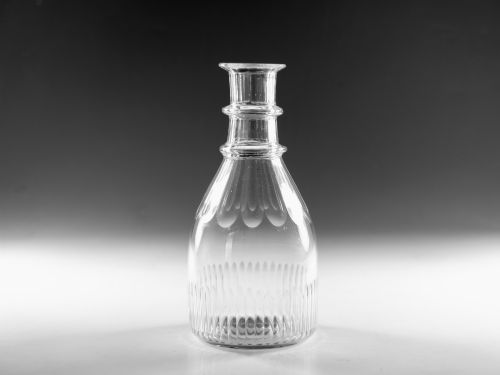
Earlier examples reach back into the Georgian and Regency periods, showing hand-blown bodies with polished flutes or gilt highlights. Alongside standard decanters, related serving vessels such as hock bottles, ewers, and even champagne coolers appear within the wider grouping.
How they were made
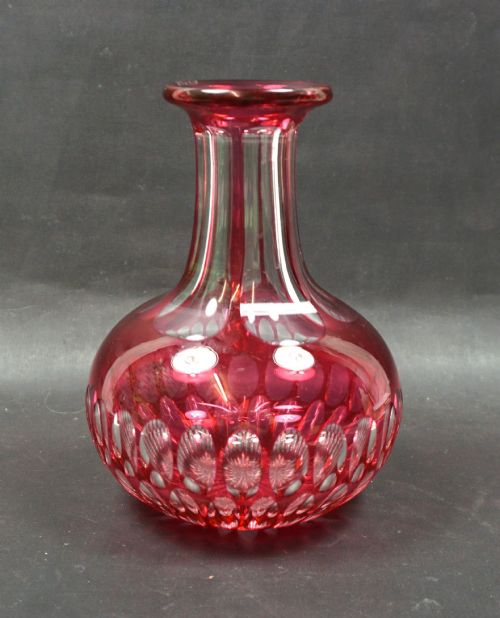
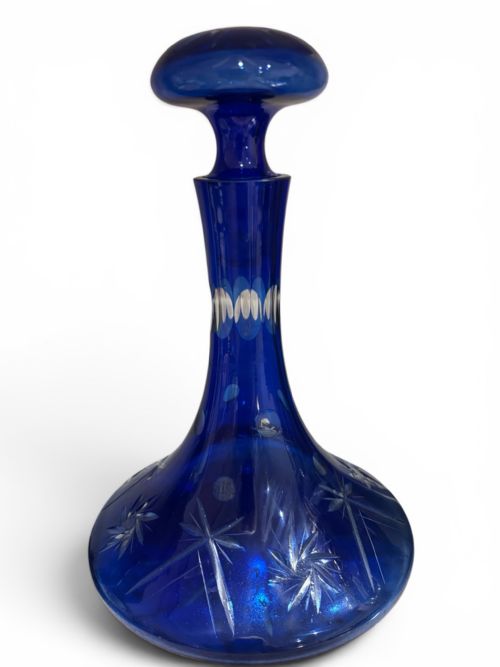
The primary material is clear glass, lead crystal, or crystal, frequently enhanced with ruby or cranberry colour over crystal overlays. Artisans shaped these vessels by blowing molten glass into moulds or free-blowing the body before employing cold-work wheel cutting to carve geometric or floral patterns into the surface.
Mounts in sterling silver, silver plate, or gilt bronze were often added to the necks and rims of Edwardian and Victorian specimens. Additional decorative flourishes include gold leaf detailing and engraved motifs, particularly on shaft and globe vessels from the nineteenth century.
Materials range from plain clear glass and lead crystal to coloured overlays of ruby and cranberry, paired with silver, silver plate, and gilt bronze.
What varies in quality
The depth, crispness, and precision of the wheel-cut facets dictate much of the visual distinction across these pieces. Sharply defined cutting catches the light directly, whereas softer, shallower impressions lack the same refractive brilliance.
The weight of the lead crystal and the integration of metalwork, such as properly fitted silver collars, separate standard production items from finer workshop pieces. Furthermore, the clarity of the metal itself and the absence of clouding in the glass define the preservation standard.
Atelier of James Giles
The Cut Glass Wine Bottle Glossary
- Cut Glass
- Glass decorated by grinding facets or patterns into the surface using a rotating wheel. This technique creates sharp edges that refract light.
- Lead Crystal
- Glass containing a high proportion of lead oxide, increasing the weight, brilliance, and clarity of the vessel. It is the preferred material for heavy decanters.
- Shaft and Globe
- A decanter silhouette featuring a long, slender neck above a bulbous, rounded body. This form became popular during the Victorian period.
- Overlay
- A layer of coloured glass fused over a clear crystal body before being cut through to reveal the clear glass beneath. Cranberry and ruby are typical colours seen in this technique.
- Silver Collar
- A metal band fitted around the neck of a decanter, frequently found on Edwardian and Victorian examples to strengthen the pouring rim.
Cut Glass Wine Bottle: Frequently Asked Questions
What is a cut glass wine bottle used for?
These vessels were originally designed to hold, decant, and serve wine at the dining table. The heavy glass construction helped maintain the temperature of the contents while separating sediment from aged vintages.
Today, they function both as decorative dining accessories and practical servers for modern wines. Collectors often display them on sideboards or drinks trolleys.
How do I clean an antique decanter?
Cleaning requires warm water and mild detergent, avoiding harsh abrasives that might scratch the delicate surface of the glass or damage any silver mounts. Bottle brushes with soft bristles help reach internal residue without scratching.
Silver collars should be polished with care to prevent any chemical residue from touching the glass or interior. Air drying upside down on a specialised rack ensures moisture escapes completely.
How can I tell a Georgian decanter from a Victorian one?
Georgian and Regency decanters frequently display hand-polished flutes, three-ring necks, and heavy kick-ups on the base. The glass often has a slightly darker, warmer tone due to early manufacturing methods.
Victorian and Edwardian versions tend to feature more complex, machine-cut geometric patterns and heavier lead crystal composition. They are also more likely to incorporate marked silver collars or plated mounts.