
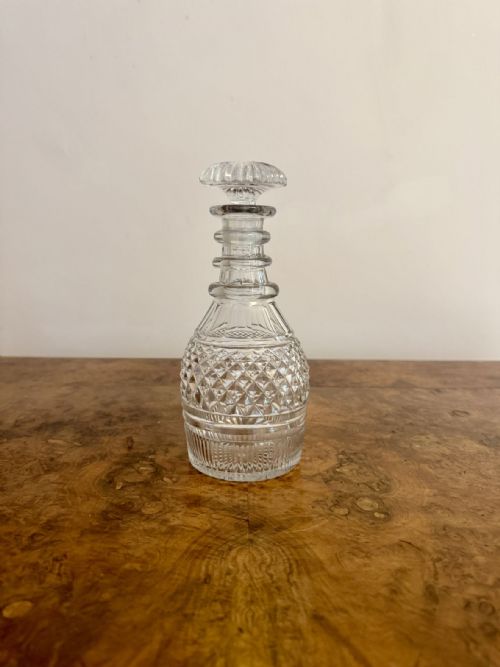
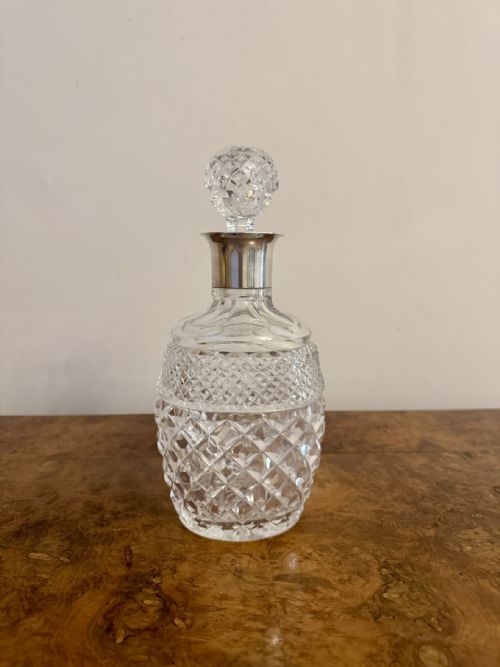
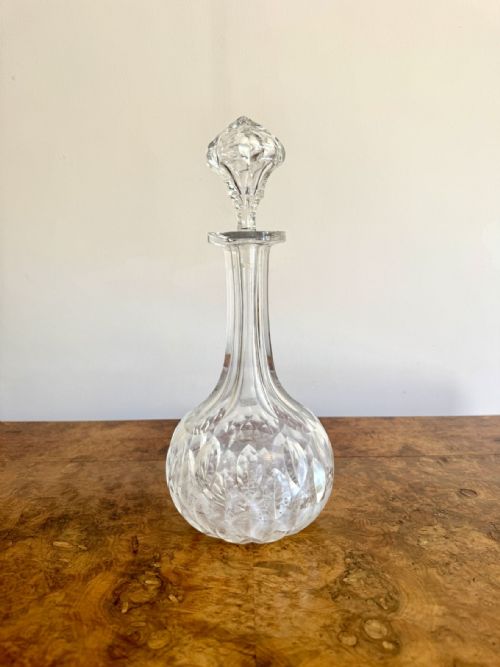
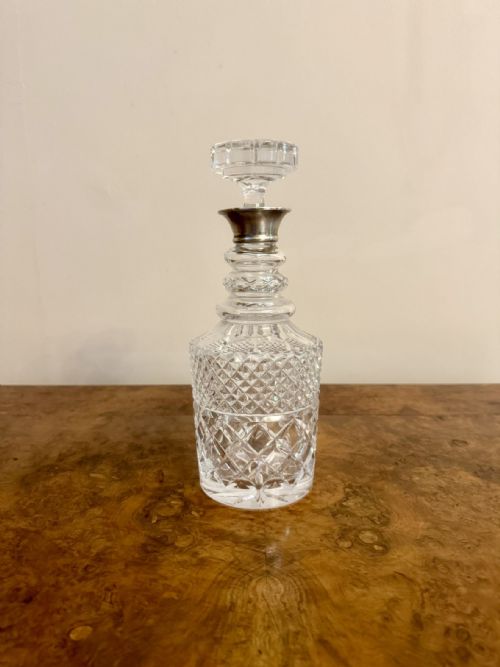
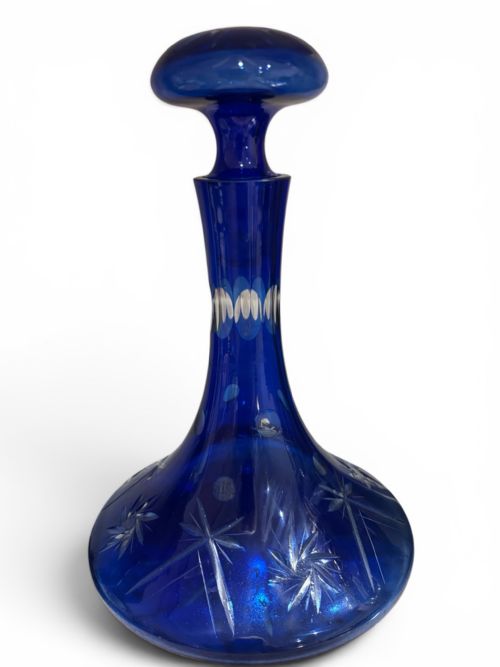
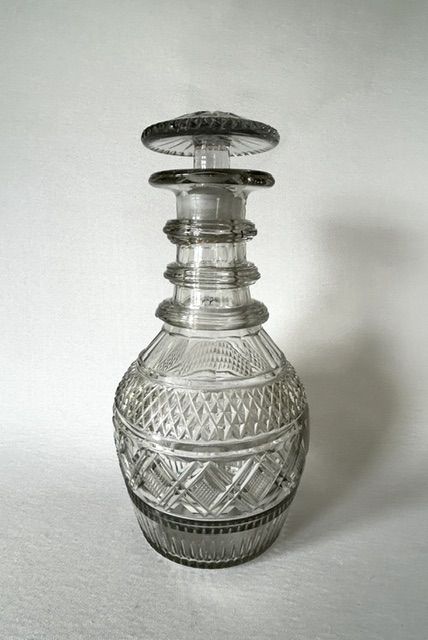
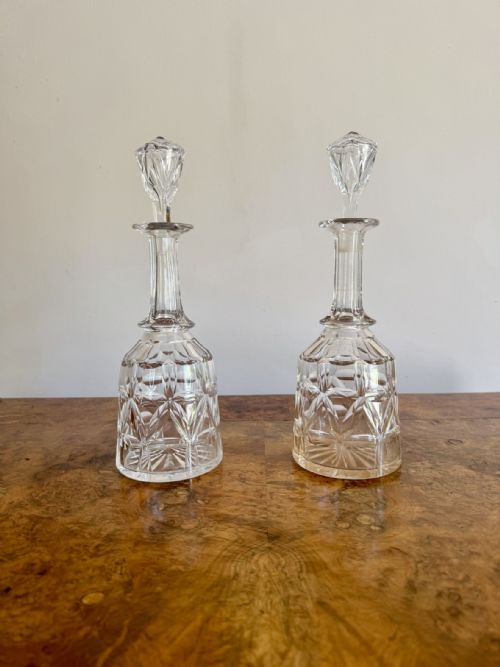
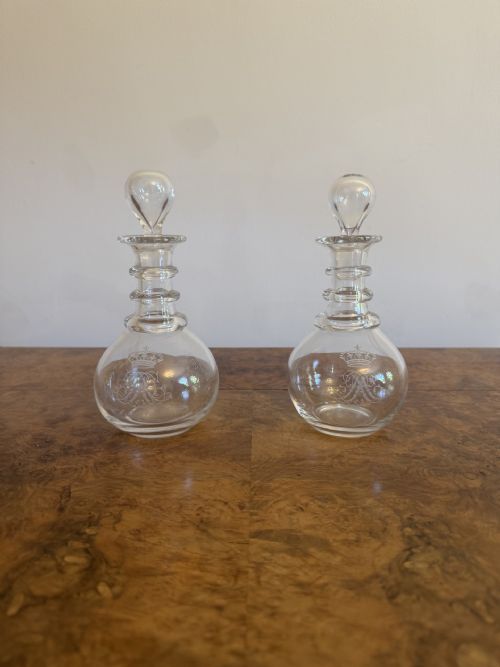
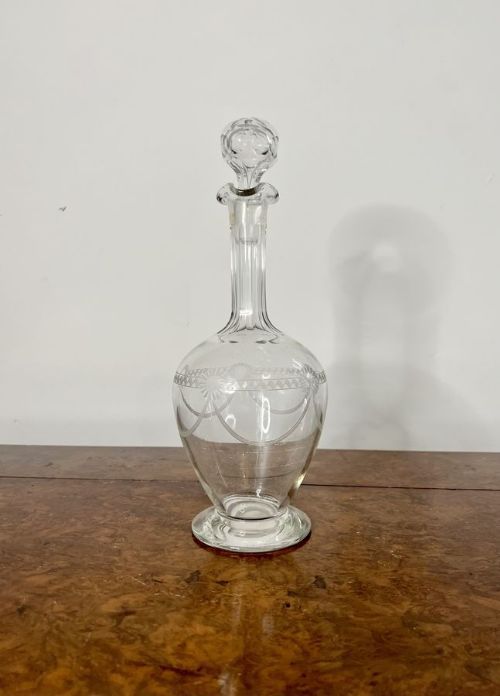


Cut Glass Spirit Carafe
A cut glass spirit carafe holds your favourite tipple with undeniable elegance, catching the light in any room.
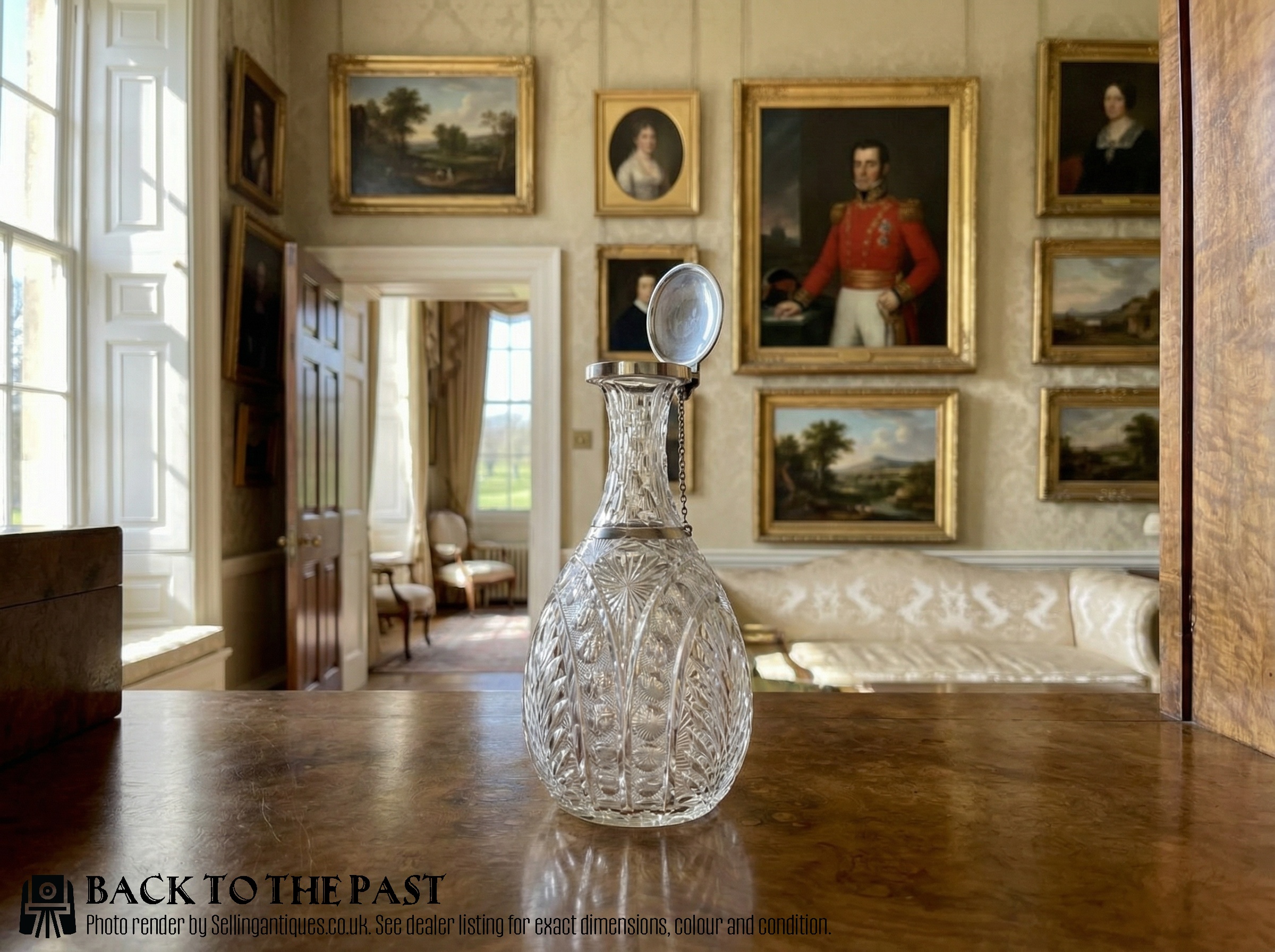
Cut Glass Spirit Carafe
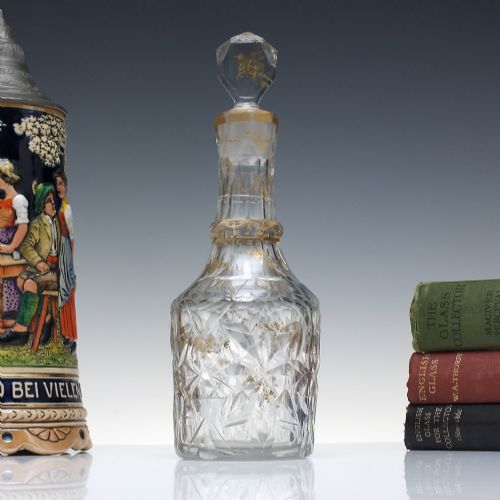
A cut glass spirit carafe serves spirits like whisky, brandy, sherry and port from the table or sideboard. These vessels span Georgian, Victorian, Edwardian and Art Deco periods, originating from English, Irish and Bohemian workshops.
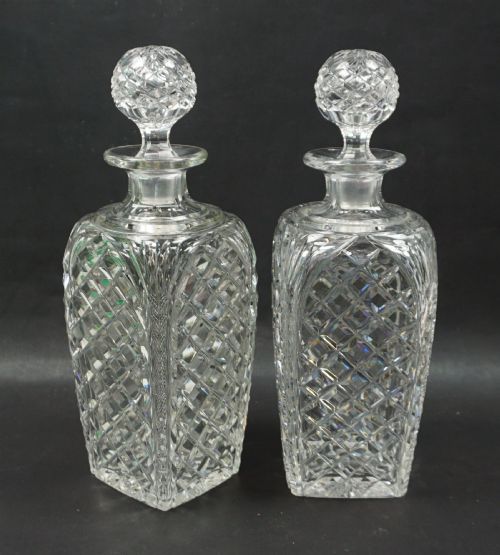
The Edwardian pieces dominate this selection, frequently appearing alongside Victorian examples, square-section shapes, bell-shaped bodies and ship's decanters. Many incorporate sterling silver collars or silver-plate mounts, alongside smaller whiskey noggins.
Buyers look for these items to display spirits or complete a period dining setting. The forms range from plain glass to heavily engraved and faceted crystal bodies.
How they were made
Makers utilised lead crystal, clear glass and coloured crystal, shaping vessels through blowing and optical blowing techniques. Artisans then applied wheel-cutting to create deep facets and geometric patterns across the exterior surface.
Silversmiths added fitted sterling silver or silver-plate collars to many vessels, securing mounts to the glass necks. Engravers finished the pieces with detailed surface decoration, lettering or crests.
Bohemian and English glasshouses produced various hues, including cobalt blue, paired with precise hand-cutting that gave the material its weight and brilliance.
Some Edwardian spirit bottles even whisper names like brandy and whisky across their glass sides so nobody accidentally pours the port.
What varies in quality
The depth and crispness of the wheel-cutting separate standard vessels from superior examples. Sharp, well-defined facets refract light cleanly, whereas softer cutting lacks the same visual impact.
The weight and purity of the lead crystal contribute to overall quality, alongside the integration of sterling silver collars. Balanced proportions and undamaged rims indicate careful historic handling.
James Giles·James Powell·Hukin & Heath
The Cut Glass Spirit Carafe Glossary
- Lead crystal
- Glass containing metal oxides that increase weight, clarity and the refractive index. This material allows for deeper and sharper cutting.
- Whiskey noggin
- A small spirit carafe fitted with a handle and a silver collar, designed for individual servings. These often include a matching silver-mounted pouring lip.
- Ship's decanter
- A vessel with a wide base and tapered body designed to prevent tipping at sea. This shape provides stability on furniture or cabin tables.
- Silver collar
- A metal band fitted around the neck of a decanter, frequently made of sterling silver. These mounts often carry hallmarks indicating the date and maker.
Cut Glass Spirit Carafe: Frequently Asked Questions
How do I date a cut glass spirit carafe?
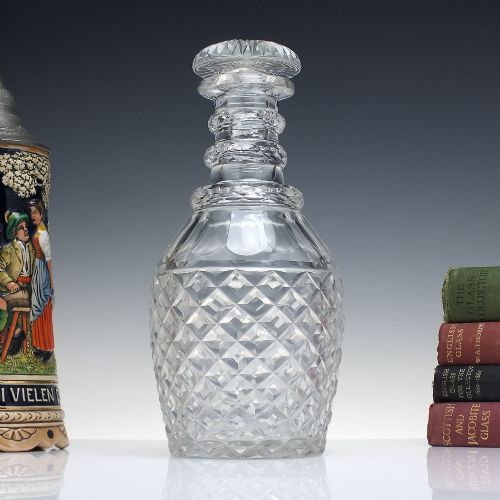
Examine the cutting style, the shape of the body and any silver hallmarks present on the collar. Georgian and Regency pieces often feature heavy ring necks, while Edwardian examples favour bell shapes and lighter floral or geometric engraving.
Silver mounts carry date letters and assay office marks that pinpoint the exact year of manufacture. Comparing the form to known Victorian or Art Deco silhouettes helps narrow down the period.
Can I use these carafes for daily serving?
These vessels function well for serving spirits during dinner parties or quiet evenings. Their robust lead crystal and fitted stoppers keep contents secure.
Hand washing protects the historic glass and silver collars from modern dishwasher detergents. Storing them on a sideboard or tray keeps them accessible for regular use.
What is the difference between a noggin and a decanter?
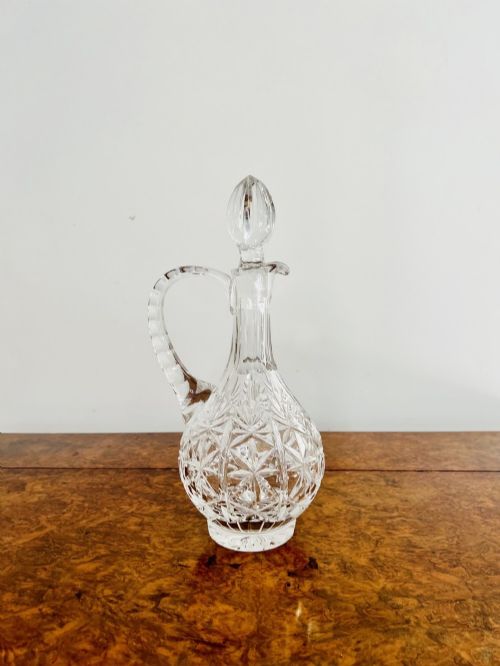
A whiskey noggin is a miniature serving vessel featuring a side handle and a small pouring lip. It holds a single measure or small quantity of spirit.
A standard decanter possesses a larger capacity, lacks a side handle and relies on a ground glass stopper to seal the contents. Both items appear across the Victorian and Edwardian periods.
How do I clean inside an old decanter?
Fill the vessel with warm water and specialised cleaning beads or uncookd rice to agitate stubborn residue. Avoid sudden temperature changes that could crack the old glass.
Allow the carafe to dry completely upside down on a mat before replacing the stopper. Gentle handling preserves the interior clarity.