



Cut Glass Silver Jars
Cut glass silver jars combine heavy faceted crystal with hallmarked metal covers for dressing table and dining use.
Cut Glass Silver Jars
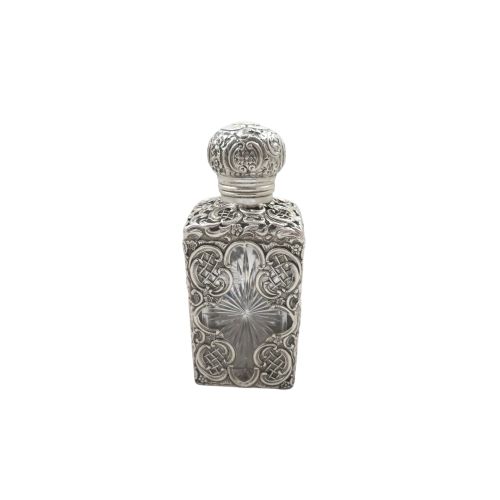
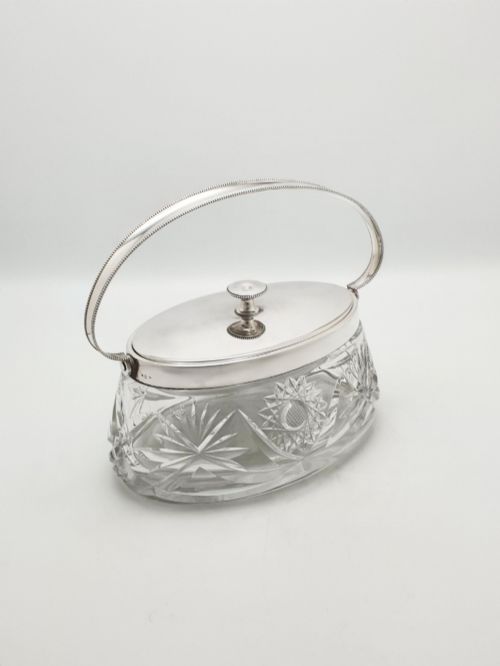
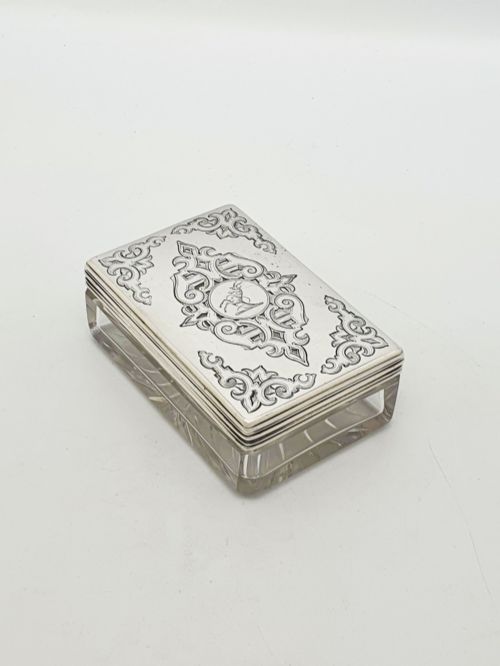
Cut glass silver jars span domestic containers designed for dressing tables, vanity surfaces, and dining service. The phrase encompasses scent bottles, trinket boxes, dressing table jars, and biscuit barrels spanning the Victorian, Edwardian, and Art Deco periods. Buyers seeking cut glass silver jars will encounter everything from small perfume flagons with hinged metal lids to substantial crystal jars intended for condiments or preserves.
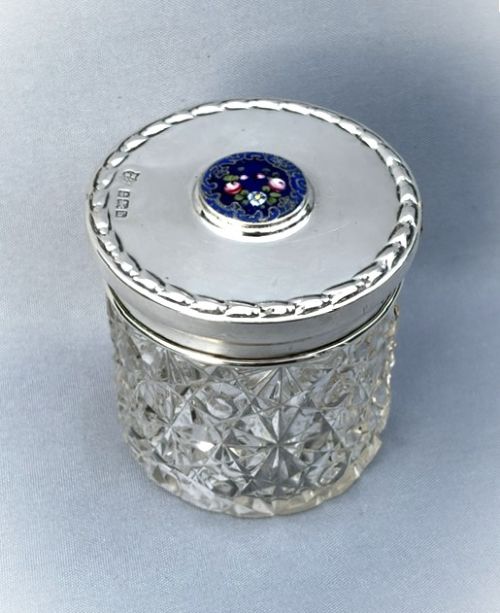
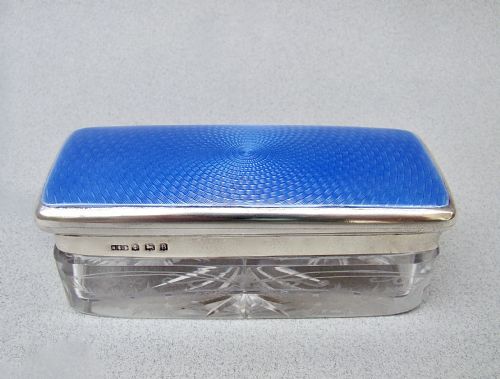
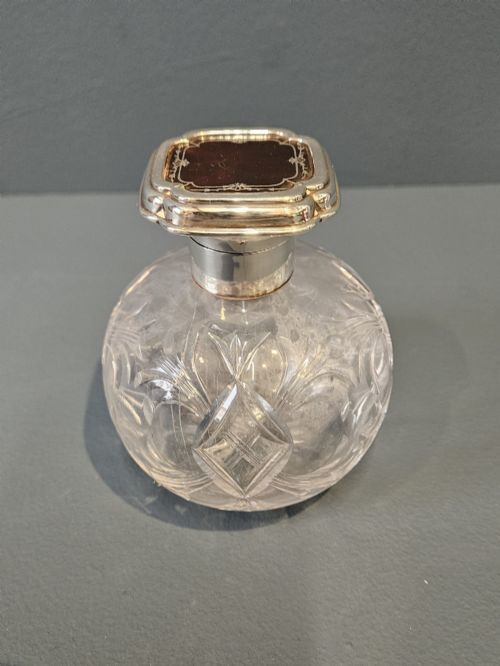
The selection on this page relies heavily on early twentieth century production alongside substantial nineteenth century examples. Victorian pieces sit alongside geometric Art Deco designs and Edwardian accessories decorated with guilloche enamel or tortoiseshell inserts. These containers functioned as personal grooming items or table wares, combining transparent glass bodies with contrasting metal mounts.
Materials and technique
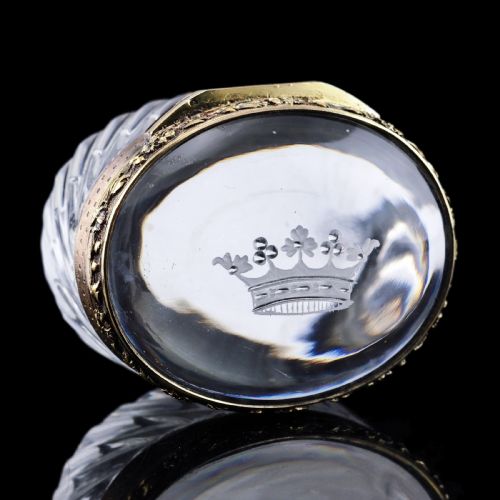
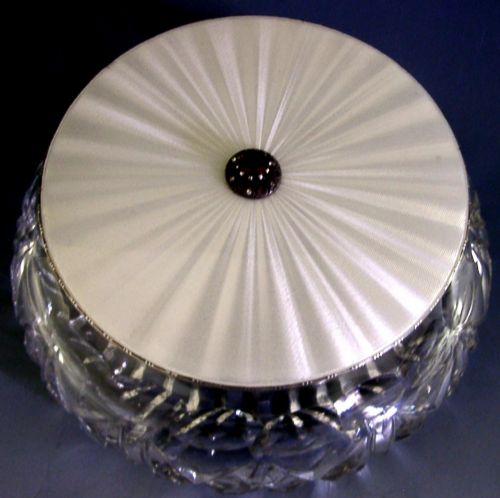
Makers shaped the vessels using heavy cut glass, cut crystal, and amethyst glass, often applying hobnail cutting or deep geometric facets to refract light. These glass bodies received mounts cast or spun from sterling silver, silver plate, or silver gilt, secured directly to the neck or rim. Many lids incorporate decorative elements such as translucent guilloche enamel, tortoiseshell panels, or heraldic finials.
Metal components typically bear hallmarks indicating the assay office and year of production, while some continental pieces utilise silver mounts without British marks. Artisans combined these materials with precision, utilising hinged collars or screw threads to join the metal top to the glass base securely.
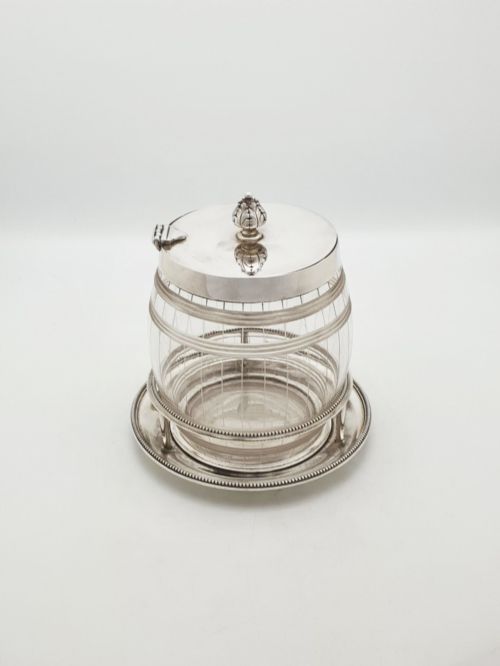
A dragon finial keeps watch over one Victorian biscuit barrel.
What separates the tiers
Quality rests in the crispness of the glass cutting and the weight of the metal mount. Superior pieces display deep, sharp facets on the crystal and thick gauge silver that resists denting on the lid. Lesser examples feature thin metal stampings and shallow, moulded glass patterns that lack the brilliance of hand cut crystal.
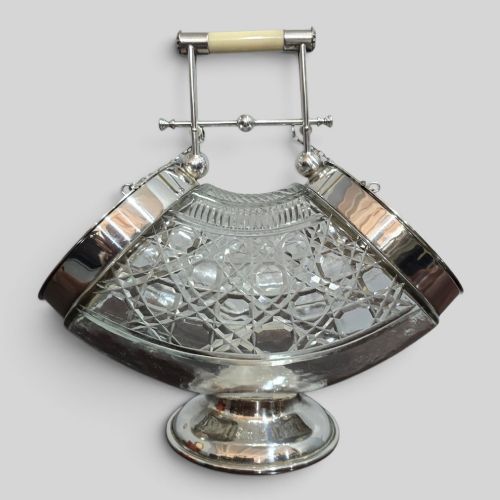
The integration of decorative panels also dictates the hierarchy of these objects. Master workshops applied flawless enamel layers or genuine tortoiseshell inserts, whereas standard production relied on plain metal tops or simpler engraving. The presence of matching sets or specialised forms like swing handles elevates an individual piece above routine dressing table wares.
Henry Clifford Davis·Elkington·WMF·Henry Perkins·Walker And Hall·Posen·Barnsley And Co·Jonathan Douglas·William Comyns
The Cut Glass Silver Jars Glossary
- Guilloche
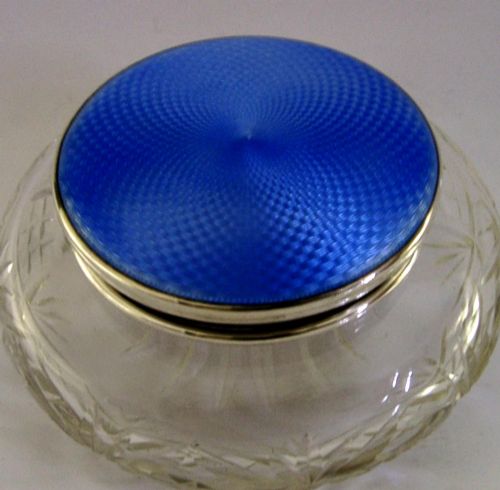
- An intricate mechanical engraving technique producing precise, repeating geometric patterns beneath a translucent layer of coloured enamel. This finish appears frequently on Art Deco dressing table lids.
- Hobnail cut
- A sharp, pyramidal pattern cut into the surface of glass to catch and refract light intensely. This treatment adds considerable weight and brilliance to biscuit barrels and scent bottles.
- Sterling silver
- An alloy consisting of silver and other metals, traditionally containing a high silver proportion by weight to meet strict standard regulations. British pieces usually display a lion passat mark alongside date letters and assay office symbols.
- Silver gilt
- Sterling silver that has been coated with a thin layer of gold on its surface. This process provides the rich warmth of gold while maintaining a solid silver structure underneath.
- Tortoiseshell
- The mottled brown and amber shell material harvested from sea turtles, utilised historically for decorative inlay on brush backs and jar lids. Pieces featuring this material are now strictly regulated under antique exemptions.
Cut Glass Silver Jars: Frequently Asked Questions
What were cut glass silver jars used for?
These vessels served diverse domestic functions ranging from personal grooming to dining table presentation. Owners stored perfumes, powders, and pins in vanity jars, while larger containers held biscuits, preserves, or tea.
Their dual construction allowed them to sit visibly on dressing tables and sideboards, displaying the owner's taste through precious metal mounts and brilliant crystal.
How can I date my jar?
Dating relies primarily on the hallmarks stamped into the silver mounts, which indicate the assay office, standard, and specific year of manufacture. Stylistic indicators like geometric enamel work point to the 1920s and 1930s, while heavy hobnail cutting often suggests the Edwardian era or late Victorian period.
Comparing the closure mechanism and glass colour also helps distinguish nineteenth-century examples from later twentieth-century production.
Are the lids solid silver?
Most British lids on this page consist of sterling silver, confirmed by official hallmarks stamped directly onto the metal. Other examples utilise silver plate over a base metal core, or incorporate panels of enamel and tortoiseshell set within a metal frame.
Continental pieces occasionally use different purity standards or bear foreign marks rather than standard British assay office stamps.
How do I care for cut glass with silver?
Maintenance requires cleaning the glass body with warm soapy water while protecting the metal mounts and any delicate enamel or tortoiseshell inserts from excessive moisture. Silver components benefit from gentle polishing with a soft cloth to prevent tarnish accumulation without abrasive contact.
Harsh chemical cleaners should remain entirely away from fitted panels like tortoiseshell or coloured enamel.