
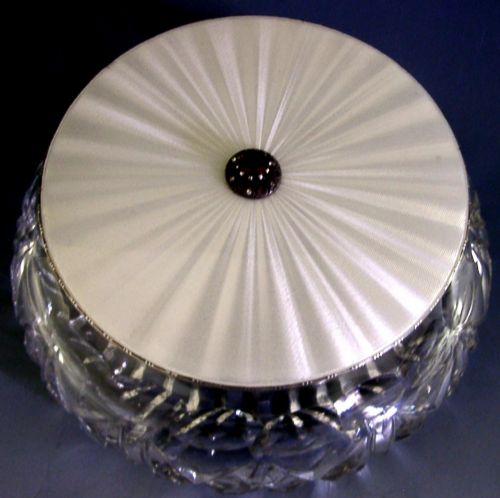


Glass Silver Trinket Box
A glass silver trinket box brings together polished metal and heavy crystal to hold small treasures on a dressing table.
Glass Silver Trinket Box
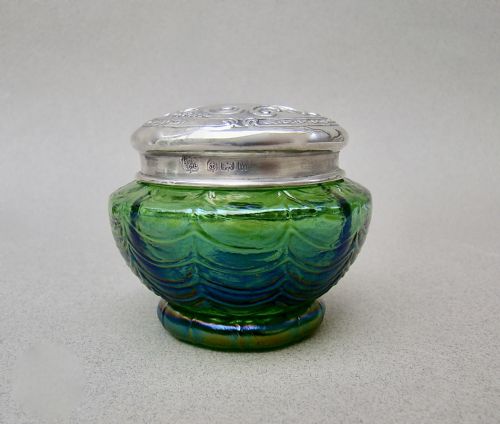
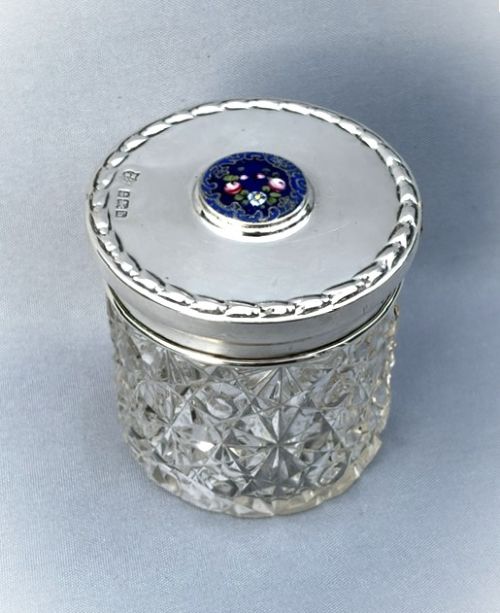
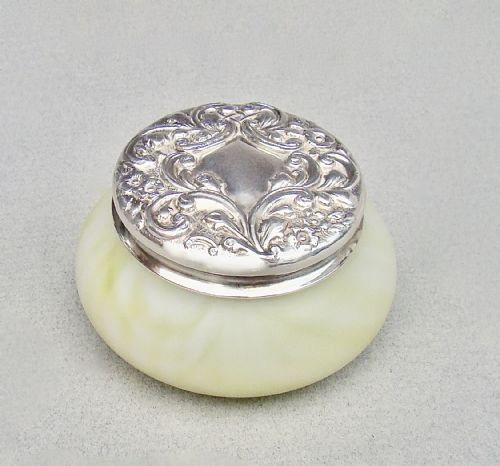
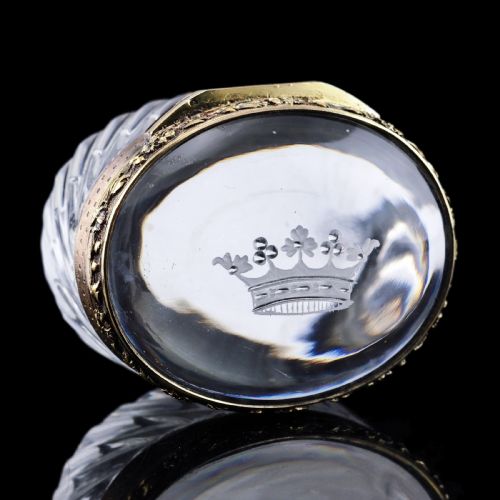
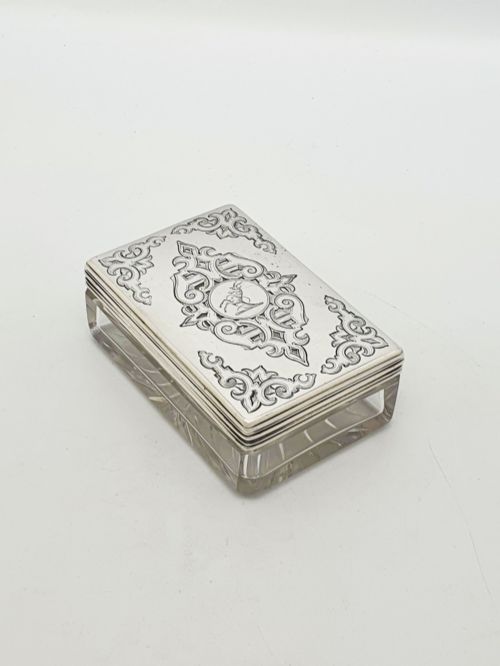
A glass silver trinket box combines a fitted sterling silver lid with a receptacle fashioned from cut glass, crystal, or coloured glass. These pieces serve primarily as dressing table accessories, vanity jars, and small desk containers designed to hold personal keepsakes.
The selections span multiple eras, with Edwardian and Art Deco examples appearing frequently alongside Victorian, 19th-century French, and mid-century items. Common shapes range from straightforward round and heart-shaped vessels to larger vanity boxes with hinged or lift-off covers.
Materials and Technique
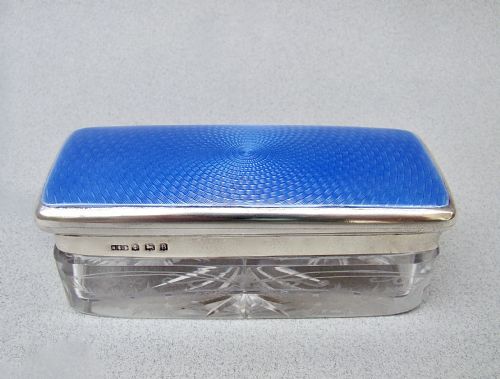
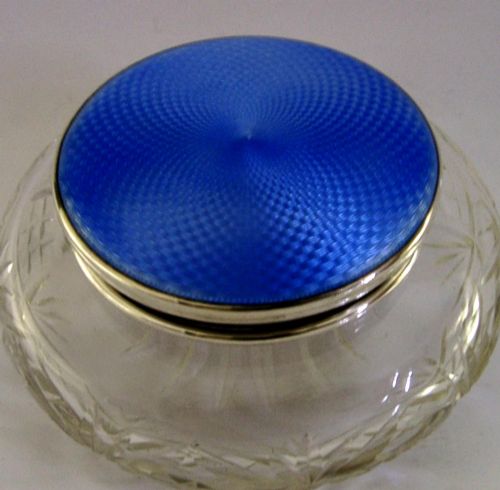
Maker's workshops combined heavy cut crystal, satin glass, or coloured glass bodies with sterling silver mounts, often incorporating intricate guilloche enamel or tortoiseshell into the lids. Glass bodies were heavily faceted or etched to catch the light, while the silver components received hallmarks indicating assay offices such as Birmingham and London.
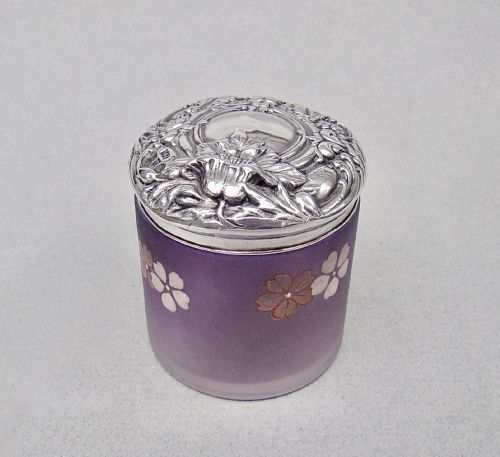
Hinged or loose-fitting metal rims secure the glass bodies, requiring precise metalwork to ensure a snug closure against the brittle material. Surface decoration on the metal lids frequently includes embossed floral motifs, geometric engine-turned patterns, or applied coronets.
Listings feature Edwardian, Victorian, and Art Deco periods, utilising materials such as guilloche enamel, tortoiseshell, cut crystal, and sterling silver.
Distinguishing Character
The standard of a glass silver trinket box depends heavily on the depth and crispness of the glass cutting alongside the weight of the silver mount. Thick, resonant crystal and substantial silver gauges indicate superior manufacture compared to lighter, thinner alternatives.
Artistry in the lid treatment defines the upper tier, particularly where complex multicoloured guilloche enamel or delicate tortoiseshell panels remain intact and undamaged. Maker attributions and clear assay office hallmarks further elevate pieces by connecting them to known silversmiths.
A. J. Pepper & Co·Henry Clifford Davis·A. Bromet & Co·Posen of Frankfurt and Berlin·Jonathan Douglas·Henry Matthews
The Glass Silver Trinket Box Glossary
- Guilloche enamel
- A decorative technique involving precise mechanical engraving beneath translucent enamel layers. This creates repeating geometric patterns that catch the light on vanity jar lids.
- Sterling silver
- An alloy containing substantial silver content, traditionally marked with a lion passant on British items. This metal forms the hinged lids and rims of the containers.
- Cut crystal
- Glass containing lead oxide that increases brilliance and weight, allowing for deep faceted designs. It forms the heavy transparent body of many dressing table jars.
- Tortoiseshell
- The mottled brown material sourced from sea turtles, utilised historically for luxury box lids. It provides a warm contrast against polished silver mounts.
- Assay mark
- An official stamp indicating the purity of the metal and the town of testing. These marks help date the silver components accurately.
Glass Silver Trinket Box: Frequently Asked Questions
How do I date a silver trinket box?
British pieces typically feature hallmarks that include a date letter indicating the exact year of assay alongside the maker's mark.
Style indicators such as Art Deco geometric lines or Edwardian floral embossing also help narrow down the period of manufacture.
What were these glass boxes used for?
These vessels sat on dressing tables to hold rings, pins, small cosmetics, and personal trinkets.
Some variations served specific roles as stamp boxes or desk accessories in a study.
How should I clean the silver and glass?
Use a soft cloth and a gentle metal polish specifically formulated for sterling silver, taking care to avoid getting polish trapped in glass crevices or enamel.
Wash the glass body separately in warm soapy water and dry thoroughly before reassembling the piece.
Are all the glass boxes British?
While many examples originate from Birmingham and London assay offices, continental workshops also produced significant numbers.
French 19th-century makers and German firms like Posen contributed distinct crystal and silver styles to the market.