



Silver Topped Crystal Jars
Silver topped crystal jars combine cut crystal bodies with precious metal lids, offering practical storage for dressing tables.
Silver Topped Crystal Jars
Silver topped crystal jars include scent bottles, dressing table jars, trinket boxes, and biscuit barrels spanning the Georgian, Victorian, Edwardian, and Art Deco periods. These vessels range from small perfume containers to large vanity boxes and preserving pots.
Edwardian and 1920s examples appear most frequently, alongside Victorian and mid-century items. The forms serve both vanity and table use, housing cosmetics, perfumes, preserves, or sweets.
Materials and Construction
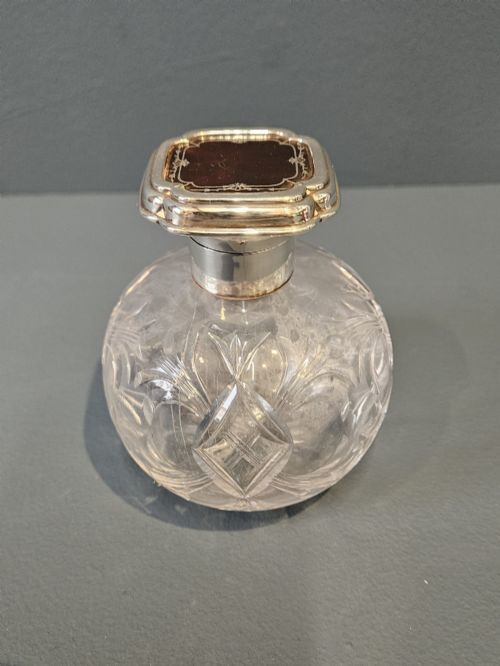
Craftsmen shaped the bodies from cut glass, cut crystal, and occasionally rock crystal, employing deep geometric cutting to catch the light. Lids and mounts utilise sterling silver, silver plate, and Dutch silver.
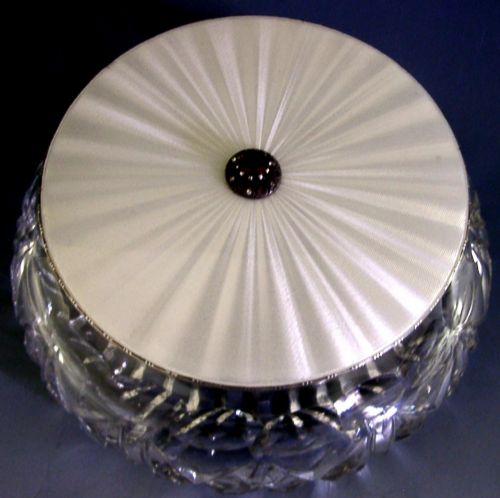
Many lids incorporate decorative elements such as tortoiseshell panels or coloured enamel details set directly into the metal. Assay office hallmarks stamped into the silver provide precise Birmingham and English origins.
Gentlemen required lockable cologne bottles to keep their grooming scents safe from light-fingered valets and curious guests.
Factors of Quality
Quality rests in the weight and clarity of the crystal vessel alongside the thickness of the silver lid. Deep, crisp cutting on the glass body contrasts with shallow or worn facet work on simpler pieces.
The presence of organic materials like tortoiseshell or applied enamel elevates the piece, especially when intact and undamaged. Maker marks from established silversmiths further distinguish finer examples from unmarked work.
Walker and Hall·Jonathan Douglas·Barnsley and Co·William Comyns·Asprey·James Dixon and Sons
The Silver Topped Crystal Jars Glossary
- Hallmark
- Official marks stamped onto precious metal items to show the standard of silver, assay office, and year of testing. These stamps confirm the authenticity of the metal lid.
- Cut crystal
- Glass containing lead oxide that increases weight and brilliance, allowing deep geometric facets. This material forms the sparkling body of the jar.
- Tortoiseshell
- The mottled brown and amber shell of certain turtle species used to inlay decorative panels on lids. It provides a rich contrast against polished silver.
- Enamel
- Opaque vitreous material fused to metal through heat to add colour and pattern. Blue enamel frequently appears on Art Deco lids.
- Sterling silver
- An alloy containing ninety-two point five percent silver by mass, used for the substantial lids and mounts. This metal forms the standard for quality British wares.
Silver Topped Crystal Jars: Frequently Asked Questions
What were silver topped crystal jars used for?
These vessels held perfumes, cosmetics, and toiletries on dressing tables, or served biscuits and preserves at the dining table. Their secure lids kept contents fresh and private.
Smaller scent bottles and trinket boxes sat on vanity sets, while larger jars and barrels functioned in dining rooms and parlours.
How do I date an antique silver topped jar?
Silver lids typically bear hallmarked date letters corresponding to specific assay office years. Comparing these stamps to hallmarking tables reveals the exact year of manufacture.
Stylistic cues such as Edwardian proportions or Art Deco enamel patterns also help assign pieces to broad production eras.
What is the difference between glass and crystal?
Crystal contains lead oxide, which adds weight, clarity, and a resonant ring when struck. Cut crystal creates sharper refraction and deeper facets than standard glass.
Standard glass bodies appear lighter and lack the dense brilliance found in high-grade crystal containers.
How should I clean silver and crystal jars?
Wash the glass body gently in warm soapy water, avoiding abrasive pads that scratch the surface. Polish the silver lid with a soft cloth while keeping polish away from glass and inlays.
Care must be taken with tortoiseshell and enamel components to prevent moisture damage during cleaning.