
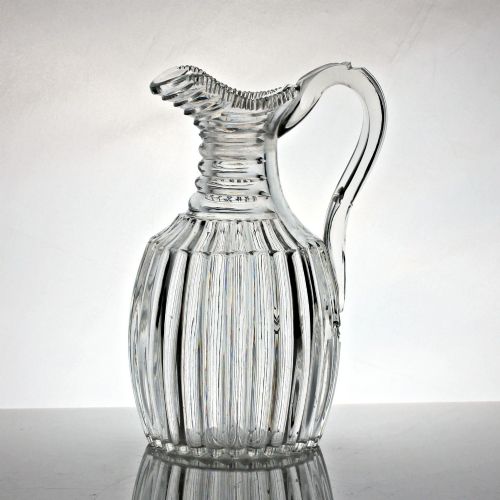



Cut Glass Prisms
Cut glass prisms catch the light across chandeliers and mantel lustres, bringing a brilliant sparkle to any room.
Cut Glass Prisms
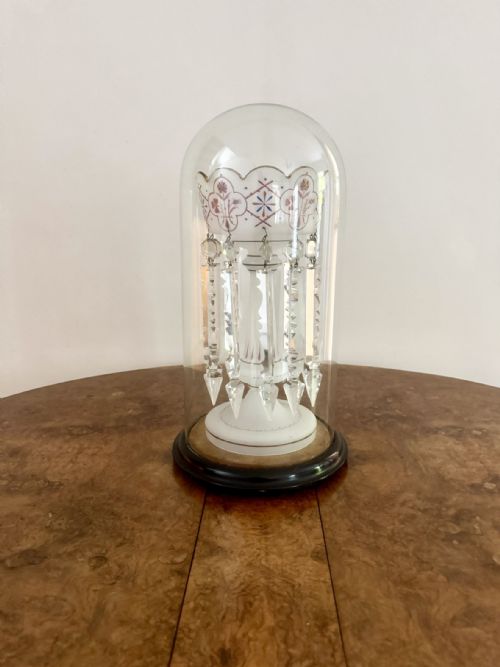
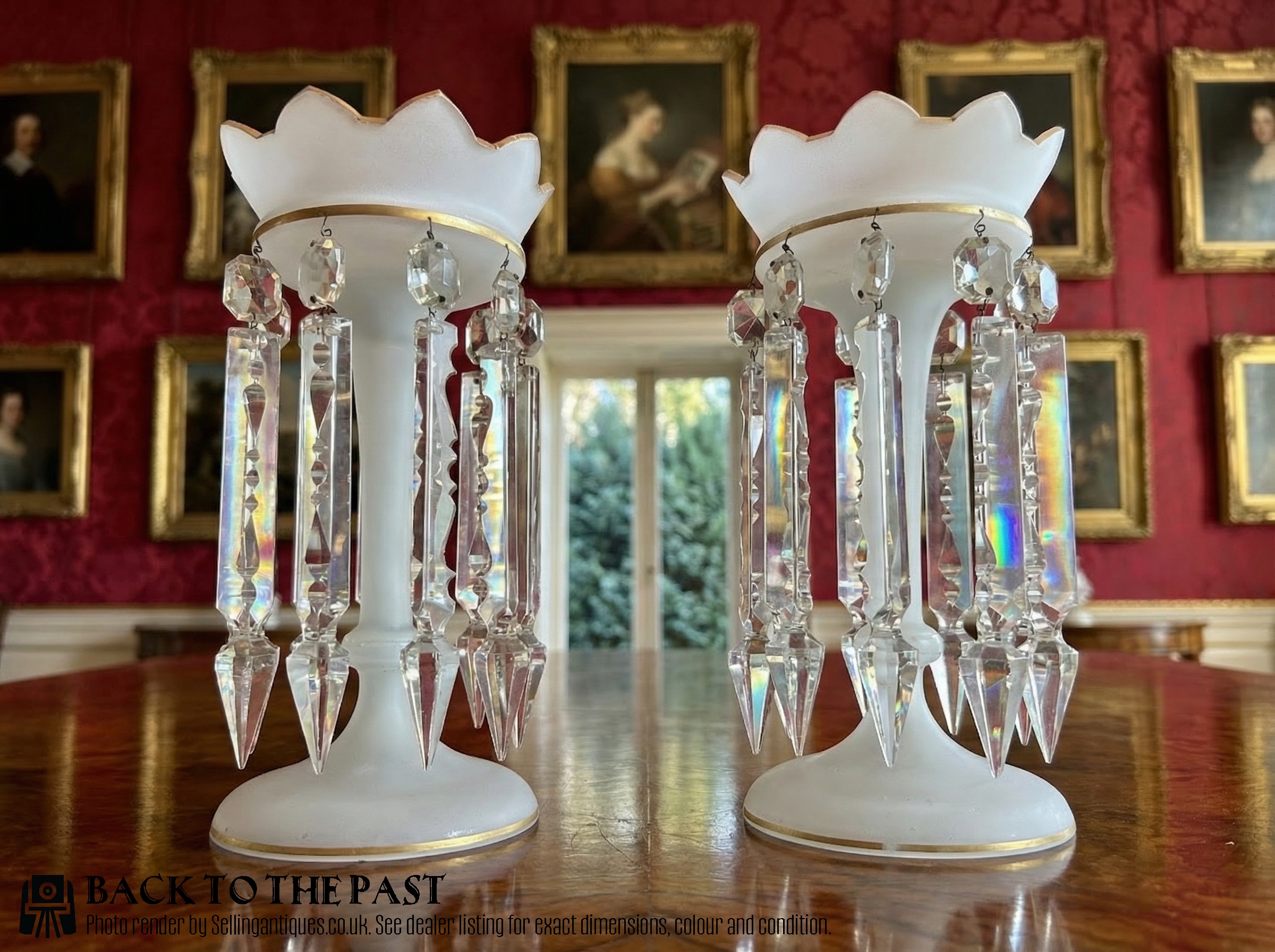
Cut glass prisms form the sparkling pendent drops and hanging ornaments found on antique lighting and decorative mantel pieces. When you search for cut glass prisms, you encounter components designed to refract light as well as complete objects adorned with these sparkling elements.
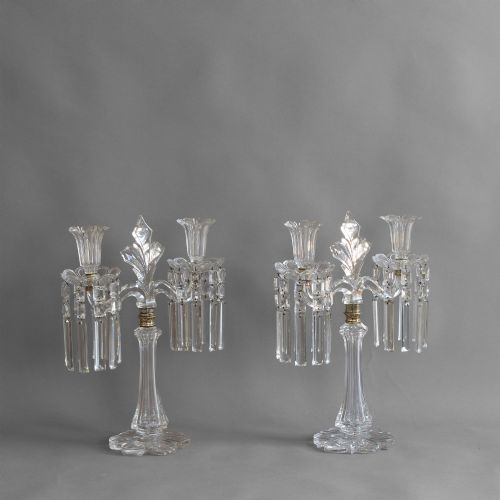
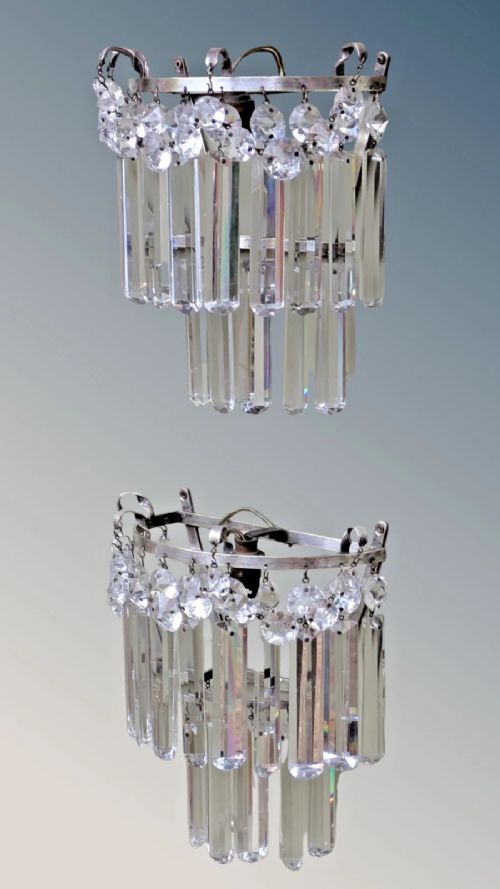
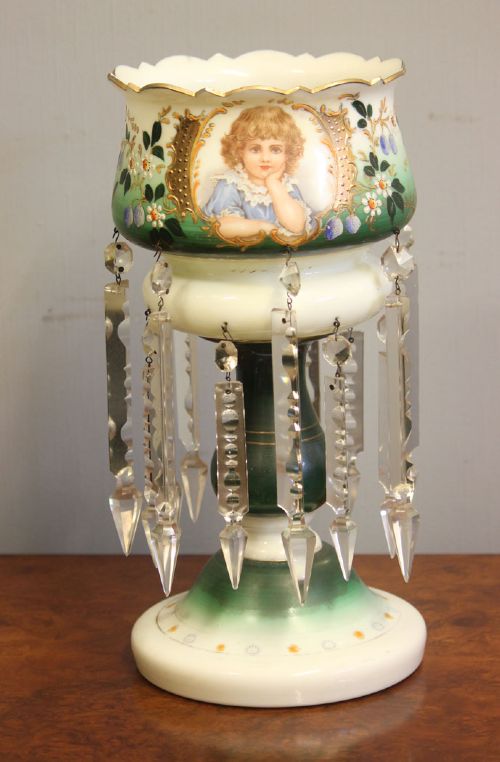
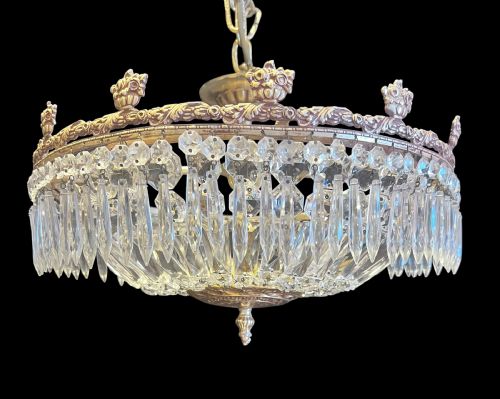
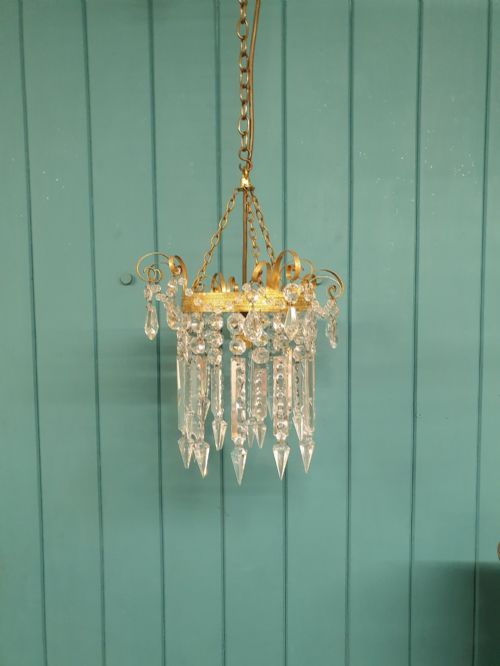
The most common forms on this page include Victorian mantel lustres, chandeliers, and wall lights decorated with hanging crystal drops. These items originate predominantly from the nineteenth and early twentieth centuries, spanning Victorian, Edwardian, and Regency periods.
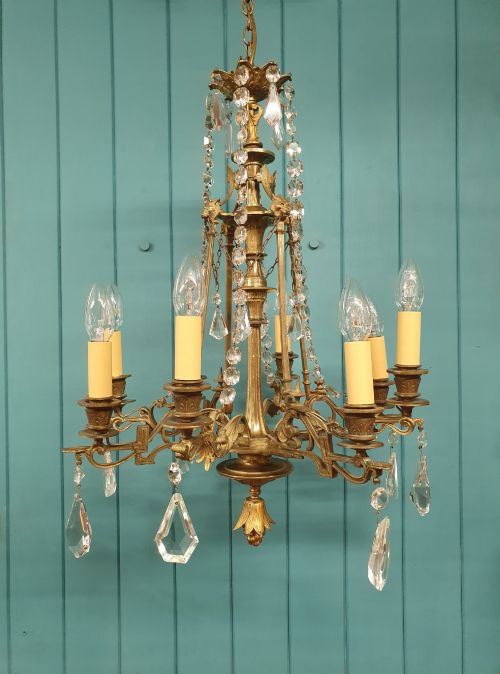
Pieces range from single table lustres to large multi-arm brass and crystal chandeliers. English and French workshops produced the majority of these decorative items, utilising coloured or clear glass suspended from metal frames.
Materials and Craftsmanship
Items rely on a combination of glass or crystal and metal supports such as brass, gilt metal, or bronze. Craftsmen shaped the glass through blowing and mould-pressing before cutting facets by hand to maximise light refraction.
Prisms and drops hang from their parent objects using delicate wire loops or pins fitted through drilled holes in the glass. Frames combine cast brass or gilded bronze with threaded rods and nuts to secure the arms and candle nozzles.
Listings feature items from the 19th Century, Victorian, Edwardian, and Regency periods, utilising brass, crystal, and coloured glass.
Assessing Quality
Quality rests upon the clarity of the glass and the precision of the cutting. Superior pieces feature sharp, clean facets on heavy lead crystal that catch the light intensely, whereas simpler items use softer mould-pressed glass with rounded edges.
The integration of the metalwork and the completeness of the hanging prisms dictate the overall standard of a piece. Original matching sets of prisms with uniform colour and consistent facet patterns indicate higher craftsmanship than mismatched replacement drops.
The Cut Glass Prisms Glossary
- Mantel lustre
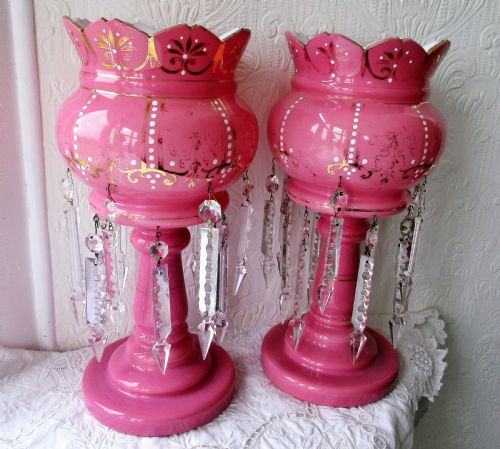
- A decorative two-piece ornamental vase or candlestick fitted with hanging glass prisms designed for display on a mantelpiece.
- Plafonniere
- A ceiling light fixture mounted flush or close to the ceiling, frequently trimmed with crystal drops and brass frames.
- Candelabra
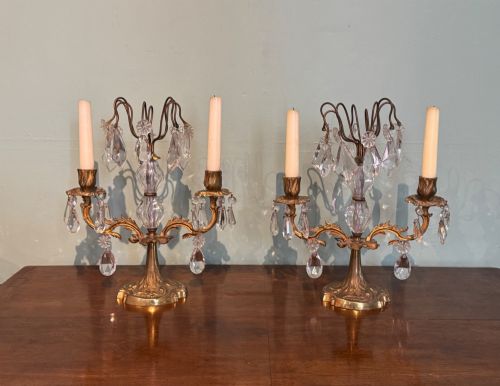
- A branched candlestick holder that often incorporates hanging glass prisms around the central stem or drip pans.
- Lead crystal
- A heavy variety of glass containing lead oxide, which increases brilliance and makes the material softer for intricate cutting.
- Overlay glass
- A glass-making technique involving layers of different coloured glass where outer layers are cut away to reveal the contrasting colour beneath.
Cut Glass Prisms: Frequently Asked Questions
What are cut glass prisms?
Cut glass prisms are faceted hanging pendants designed to refract light on antique chandeliers, wall lights, and mantel lustres. They hang from metal pins or wire loops attached to the arms and bodies of the light fixtures.
Craftsmen produced these drops in various shapes including spears, teardrops, and spearheads. Their primary function was to multiply the illumination from candles or early electric bulbs.
How do I clean mantel lustres?
Clean mantel lustres gently by removing the hanging prisms one by one and washing them in lukewarm soapy water. Dry each piece thoroughly with a soft lint-free cloth before reattaching them to the main body.
Avoid submerging parts that feature painted enamel decoration or gilded surfaces in water. Wipe metal frames and bases with a dry or slightly damp cloth to preserve the original finish.
Where were these pieces made?
These items originated mainly from English and French workshops during the nineteenth and early twentieth centuries. Major manufacturing centres included Birmingham and Bohemian glass-producing regions.
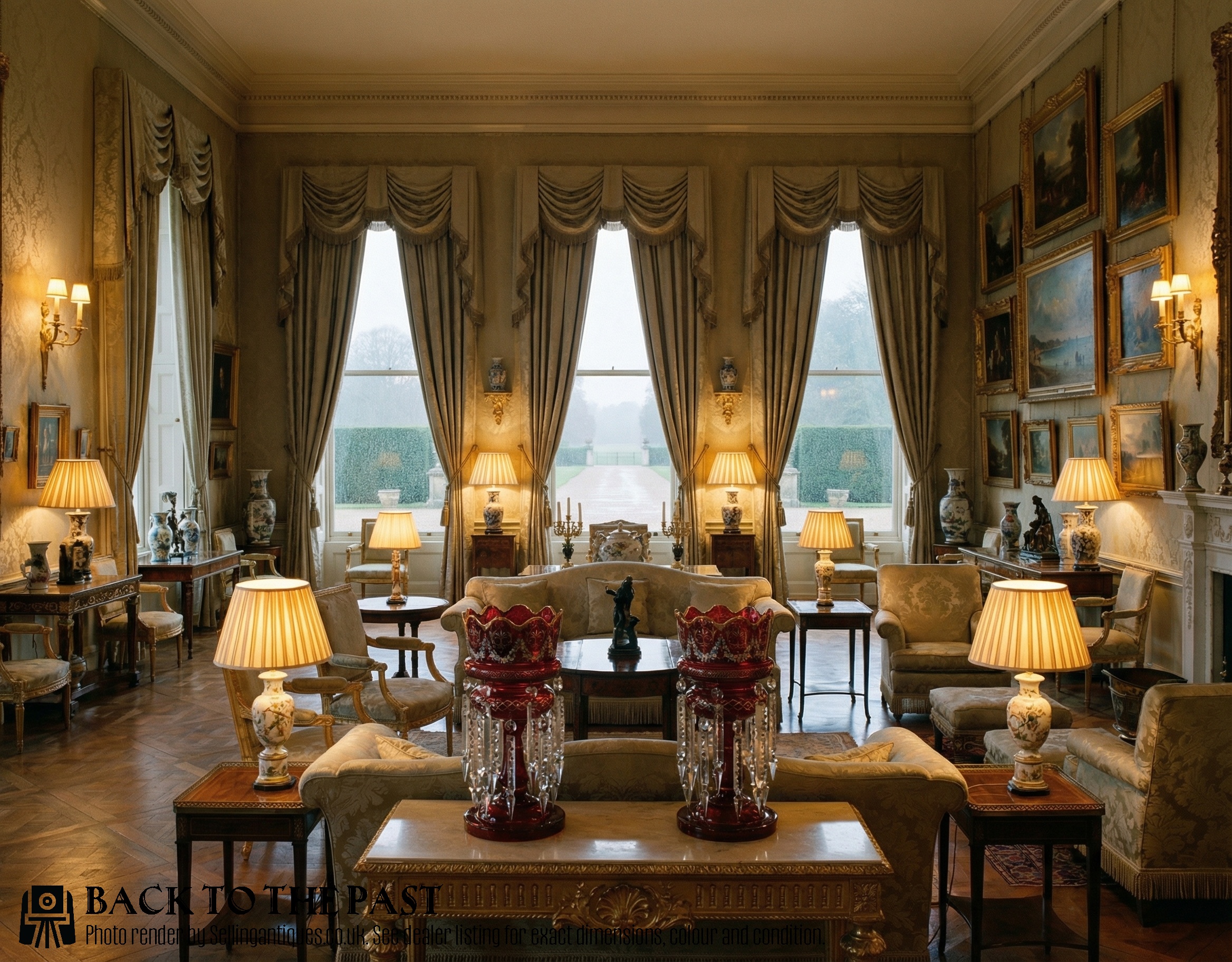
French makers often combined gilded bronze and brass with intricate crystal drops, while English makers favoured ruby, green, and cranberry glass lustres.
Are replacement prisms acceptable?
Replacement prisms are common on antique lighting because hanging drops frequently suffered damage over decades of use. Collectors accept matched replacement drops provided they match the period, glass colour, and cutting style of the original piece.
Examine the hanging loops and wear patterns on the attachment points to determine whether the prisms match the age of the main fixture.