


Cut Glass Centrepiece Bowl
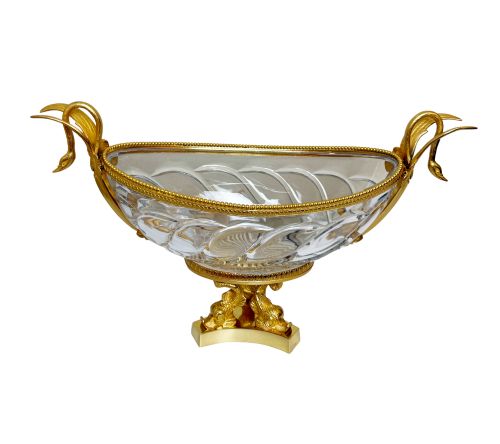
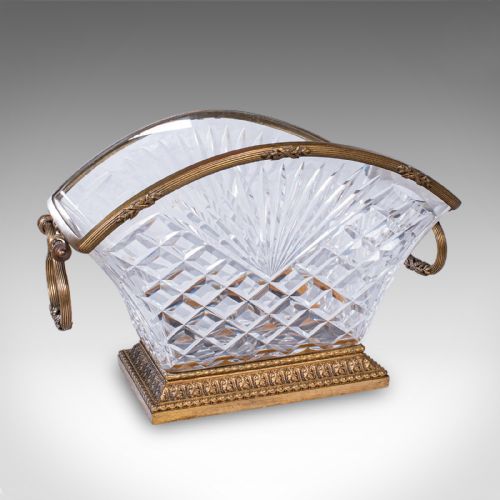
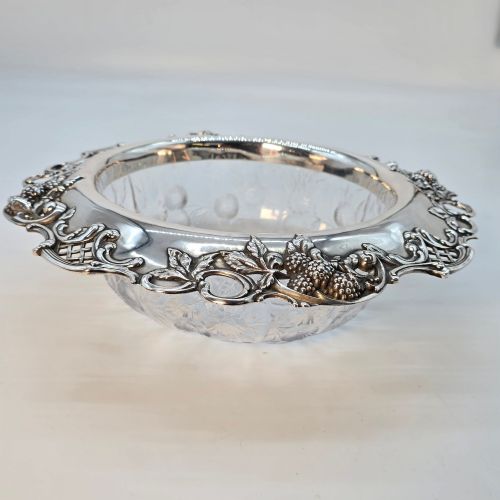
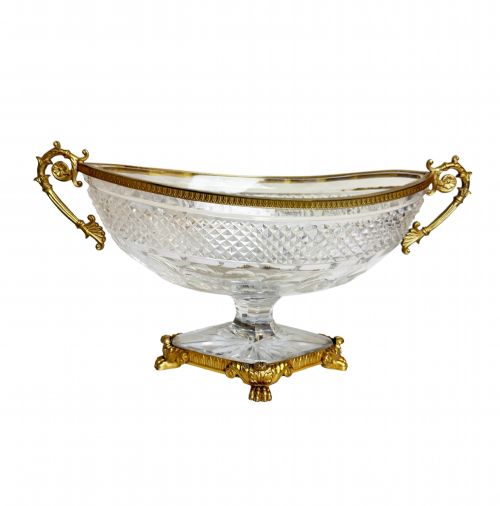
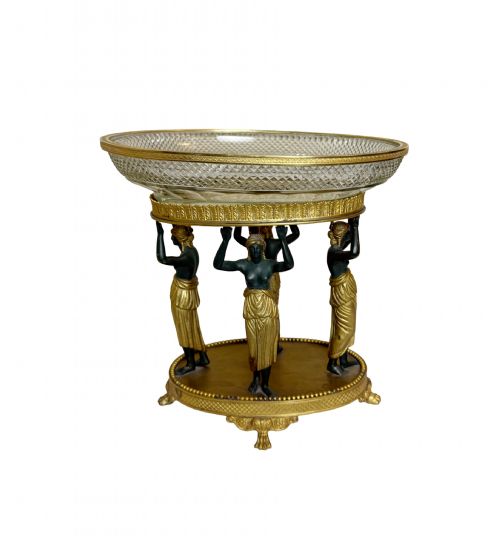
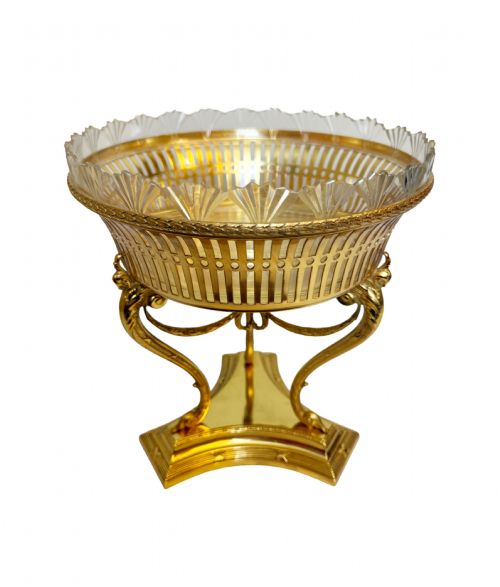
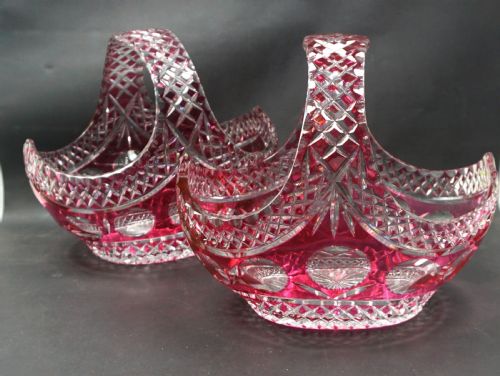
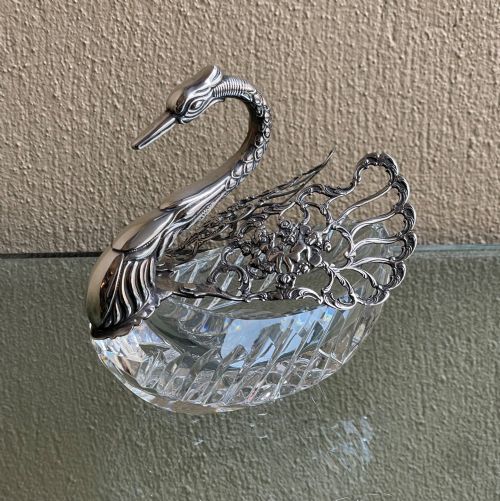
A cut glass centrepiece bowl anchors a dining table with heavy refractive brilliance, combining deep-wheel cutting with mounts of bronze, silver or gilt metal.
Cut Glass Centrepiece Bowl
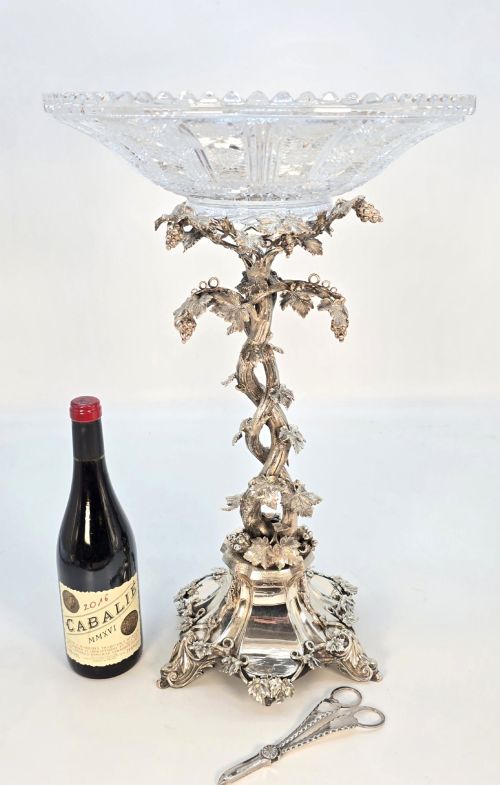
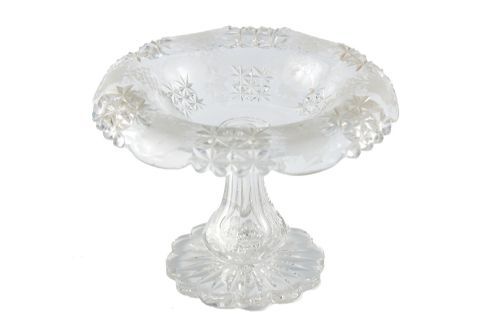
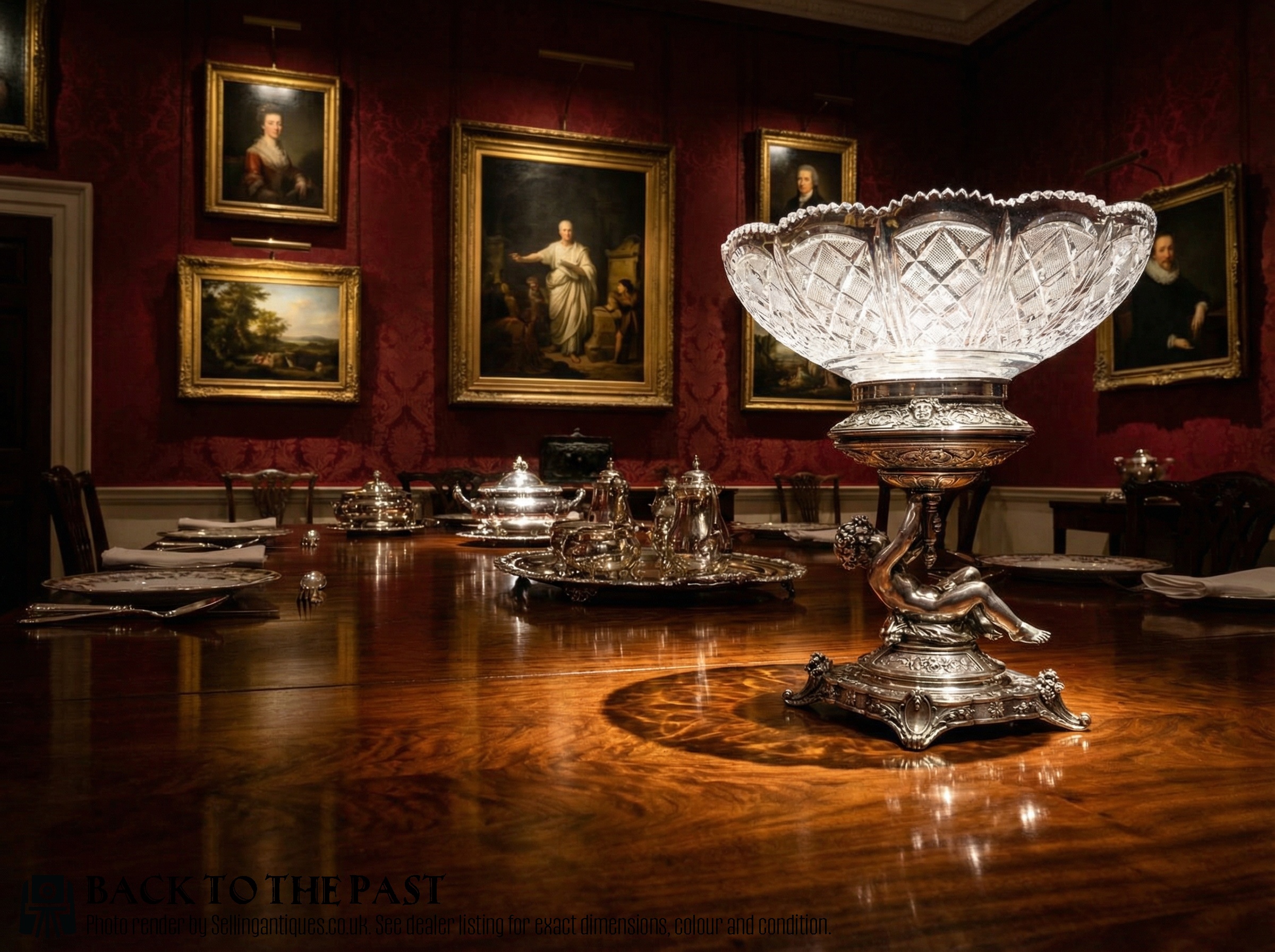
A cut glass centrepiece bowl serves as a dramatic table focal point, drawing the eye through mass and intricate surface work. Buyers seeking this phrase encounter heavy footed vessels, pedestal comports and low display dishes designed to hold fruit or stand alone.
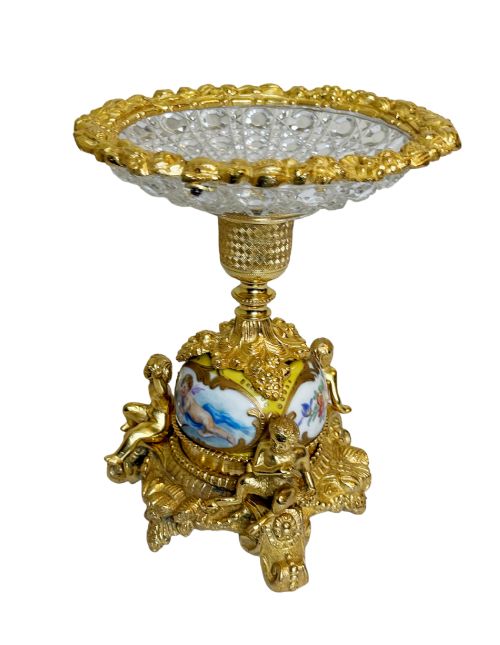
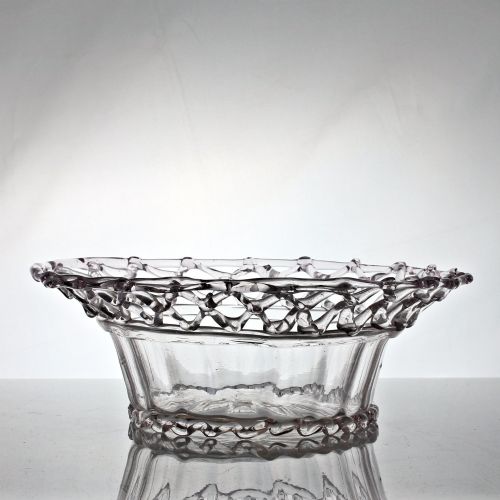
The pieces span periods from the late Georgian era through the Victorian and Edwardian decades into Art Deco, with Victorian and Edwardian examples appearing most frequently on this page. Forms range from simple pedestal bowls to elaborate mounts featuring cherubs or swing handles.
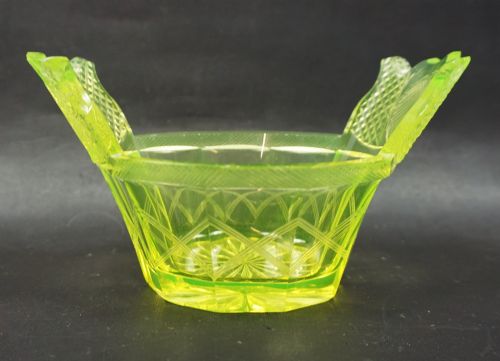
Origins stretch across England, Ireland, France and Belgium, encompassing distinct regional styles like heavy Irish pillar moulding and delicate Bohemian coloured overlays. The common thread is a substantial vessel of glass paired with metal stands in silver plate, ormolu or bronze.
Materials and technique
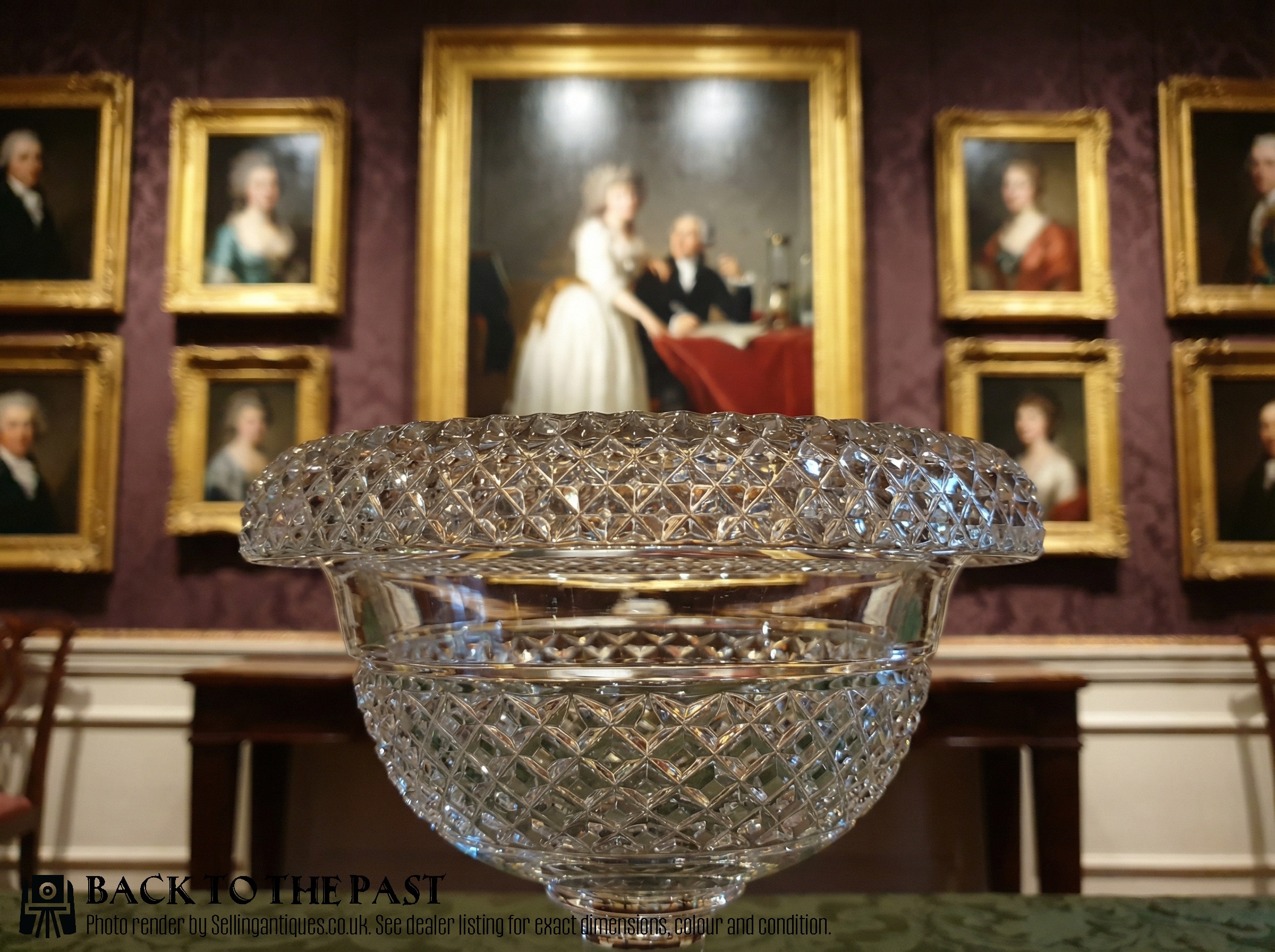
Vessels start as heavy lead crystal or standard glass blanks formed by hand blowing or pressing into moulds. Artisans then apply wheel-cutting techniques, grinding deep flutes, diamonds, cross-hatching and hobnail patterns into the cold surface before polishing the facets to a high shine.
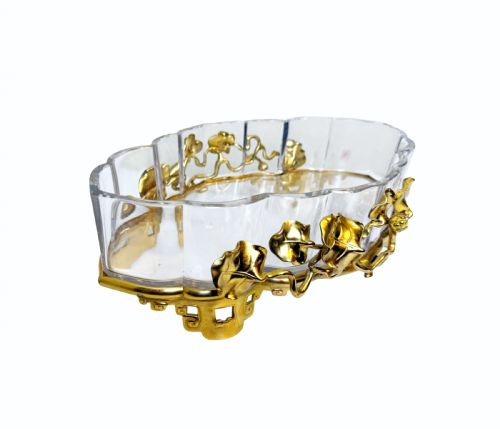
Metal components play an integral structural role, particularly in French and English pieces where cast gilt bronze, ormolu or silver plate form secure frames, handles and stands. Elements like paste gilt decoration or applied coloured glass layers provide contrasting colour and texture to the clear crystal.
Listings feature lead crystal, cut glass, gilt bronze, silver plate, ormolu and sterling silver across Georgian, Victorian, Edwardian and Art Deco periods.
Separating the grades
Quality rests primarily on the crispness and depth of the wheel cutting, where sharp, clean facet edges demonstrate superior artisan control over soft, blurred lines. The weight and purity of the glass blank also dictate standard, with dense lead crystal offering heavier mass and brighter light refraction.
The execution of the metal mount separates standard production from exceptional work, visible in the fine chasing of gilt bronze or the substantial gauge of silver plate. Harmony between the glass bowl and its metal support determines the overall success of the piece.
Tiffany and Co·Val St Lambert·Joseph Simon
The Cut Glass Centrepiece Bowl Glossary
- Hobnail
- A raised, faceted glass pattern resembling the hobnails on sturdy boots. It creates intense texture and sparkle across the body of the bowl.
- Ormolu
- Gilt bronze mounted onto decorative objects, providing a rich golden contrast to the clear or coloured glass above. It requires careful cleaning to preserve the original finish.
- Tazza
- A shallow bowl or plate mounted upon a stem and foot, used traditionally for serving fruit or sweets. These elevate the display above the surface of the table.
- Comport
- A large standing dish or pedestal bowl intended for centrepiece fruit displays. They often feature deep cut crystal basins supported on sturdy stems.
- Epergne
- An elaborate multi-branched centrepiece combining a large central bowl with smaller hanging baskets or dishes. They utilise matching cut glass and metalwork throughout.
Cut Glass Centrepiece Bowl: Frequently Asked Questions
What were these bowls originally used for?
These vessels served primarily as decorative table focal points, often holding fresh fruit, flowers or sweetmeats during formal dining. Their elevated design ensured guests could converse across the table beneath or around them.
In grand dining rooms, matching sets anchored the centre of long tables alongside smaller dishes and candelabras.
How do I date an antique cut glass bowl?
Examine the base of the glass for a polished pontil mark, which indicates hand-blown production typical of Georgian and Victorian eras. Sharp, deep cutting and heavy lead content generally point to nineteenth-century manufacture.
Style markers in the metal mounts, such as Art Deco geometric lines or Victorian neoclassical cast cherubs, help narrow the period of creation.
Can I use these bowls for daily dining?
These pieces function well for serving dry foods like fruit or bread rolls during special meals. Their substantial weight and historic value suggest handling them with care during use.
Position them away from table edges where heavy traffic might cause accidental knocks against the cut crystal.