





Cut Crystal Vase
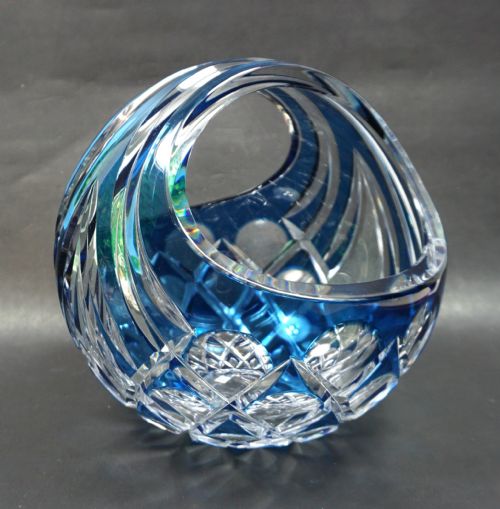
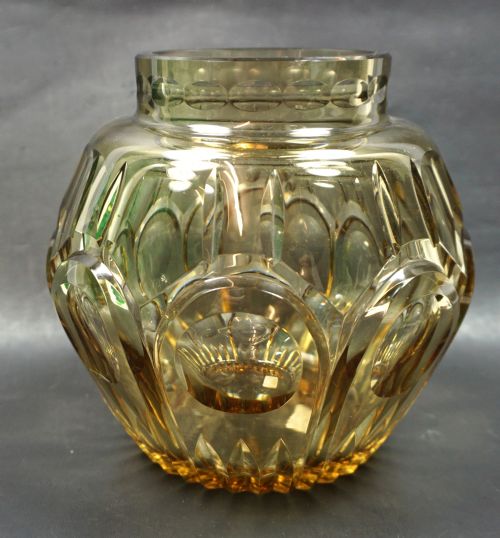
These heavy, refractive cut crystal vase examples bring genuine historical weight to a room through deep optical patterns and brilliant light play.
Cut Crystal Vase
A cut crystal vase is a heavy, light-reflecting vessel designed for floral display or as an architectural centrepiece, shaped by abrasive wheel-cutting. When searching this phrase, buyers encounter everything from early nineteenth century celery vases to crisp Art Deco silhouettes.
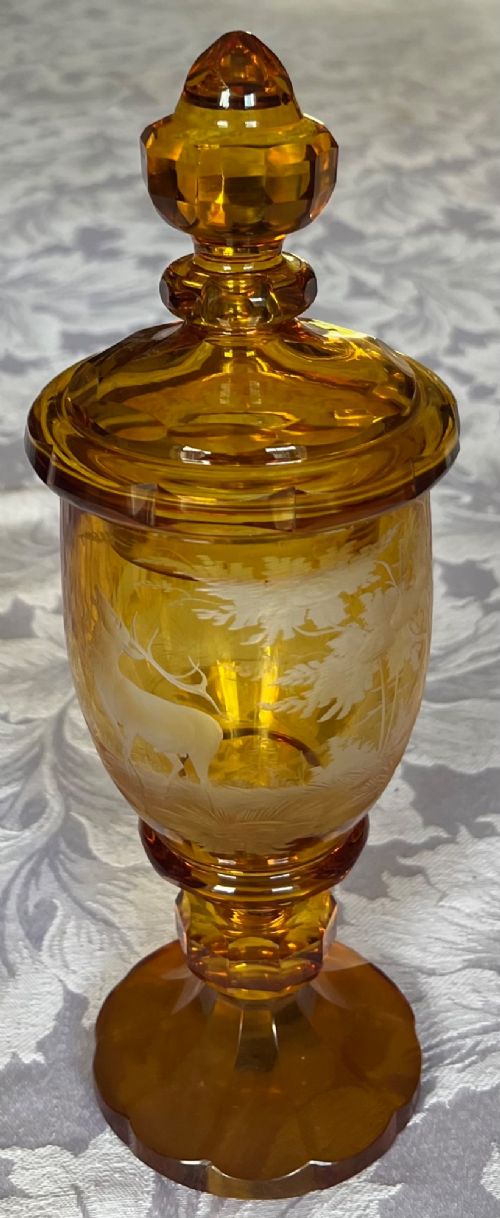
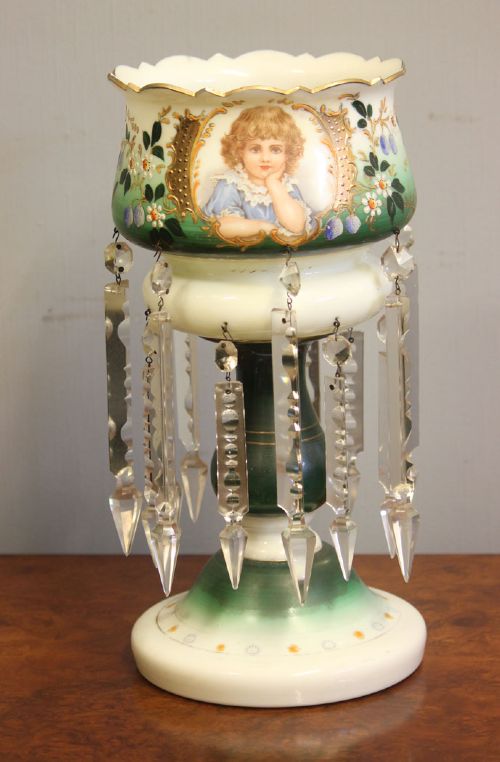
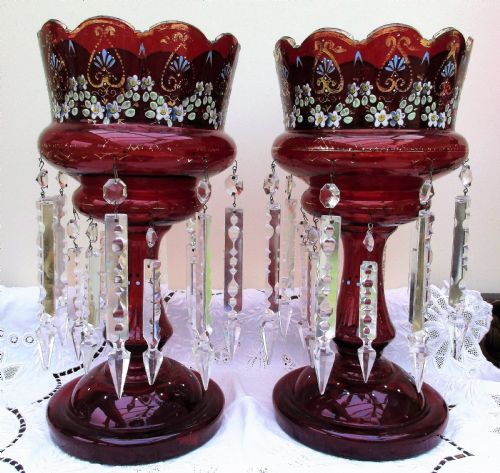
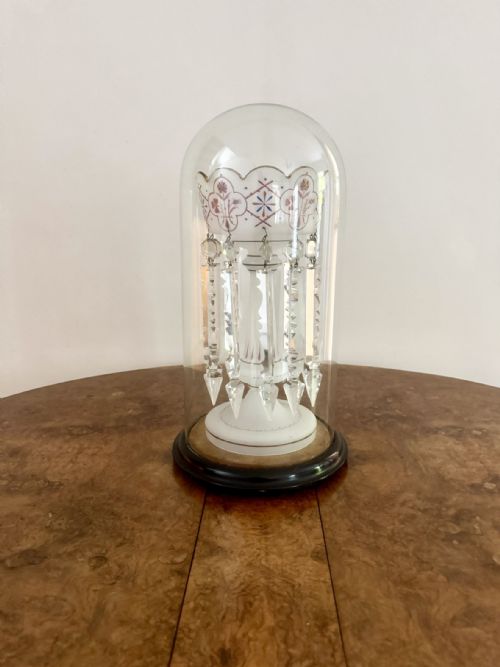
The pieces on this page lean heavily towards nineteenth century Victorian and Edwardian examples, alongside striking continental overlay pieces from the 1930s. Forms vary from simple cylindrical shapes and tall celery holders to elaborate lidded urns and mantle lustres hung with glass drops.
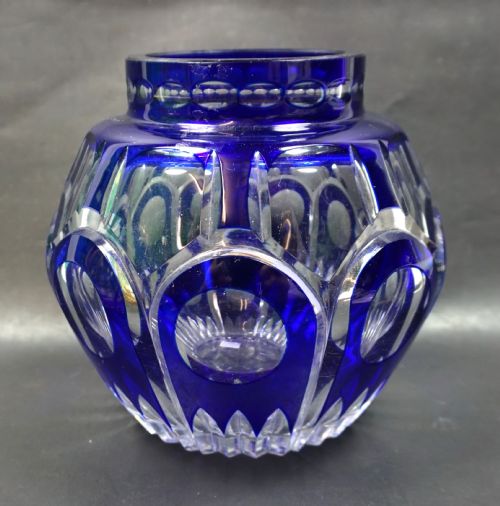
Origins stretch across England, France, Belgium, and Bohemia, bringing distinct regional cutting traditions into play. Whether the vessel is a modest spill vase or a grand cobalt blue cut-to-clear centrepiece, each object relies on substantial glass weight to hold its engraved facets.
How they were made
These vessels are formed from heavy lead crystal or glass blanks, then subjected to precise wheel-cutting and wheel-engraving to carve deep geometric or floral motifs into the surface. Overlay techniques involve fusing a coloured layer of glass over a clear crystal base before cutting through the outer stratum to reveal the contrasting colour underneath.
Makers often enriched the cut surfaces with paste gilt decoration, gold leaf, or silver plated mounts to heighten the visual contrast against the brilliant glass. Further surface embellishment appears as delicate etching, flashing, or enamel work, particularly on continental and Bohemian pieces from the Victorian and Art Deco eras.
Several nineteenth-century specimens double as celery holders, proving that Victorians took their salad greens with absolute seriousness.
What varies in quality
Quality rests in the crispness and depth of the wheel-cutting, where superior examples exhibit sharp, clean facet intersections rather than soft, rounded edges. The clarity and resonance of the underlying crystal also dictate value, with higher-grade lead content producing a brighter ring and superior light refraction.
Proportion and execution elevate certain pieces, such as when overlay layers are carved with absolute symmetry to expose the exact depth of the clear crystal beneath. The integration of mounts, whether ormolu or silver plate, and the finesse of any accompanying engraving mark the distinction between standard production and masterwork output.
Val St. Lambert·St Louis Crystal·Stevens & Williams
The Cut Crystal Vase Glossary
- Cut to clear
- A technique where a coloured outer layer of glass is carved away to reveal clear crystal beneath, creating a stark, high-contrast two-tone pattern.
- Celery vase
- A tall, footed nineteenth-century vessel originally designed to hold and display stalks of celery on the dining table.
- Overlay glass
- Glass composed of two or more distinct layers of different colours fused together during the blowing process before subsequent surface cutting.
- Mantle lustre
- A decorative ornamental vase or urn fitted with a ring of hanging glass prisms designed to catch the candlelight.
- Lead crystal
- Glass containing a high proportion of lead oxide, which increases the weight, refractive index, and acoustic resonance of the material.
Cut Crystal Vase: Frequently Asked Questions
How do I date a cut crystal vase?
Dating relies on observing the weight, depth of the cut, and the stylistic vocabulary of the piece, whether it leans towards Regency neoclassical lines or 1930s geometric shapes. Tool marks on the base, such as polished pontil scars, also offer firm clues regarding the manufacturing era.
Heavier lead crystal with hand-polished facets often points to the Victorian or Edwardian periods, whereas sharper, more stylised cuts paired with coloured glass frequently signal a 1920s or 1930s origin. Comparing the form against documented house styles helps narrow the decade further.
What is the difference between glass and crystal?
True crystal contains a significant percentage of lead oxide, which adds substantial weight and dramatically increases the material's ability to refract light. Standard glass lacks this metallic oxide content and generally feels lighter and less refractive.
When tapped, high-lead crystal produces a clear, sustained musical ring rather than the dull thud typical of ordinary soda-lime glass. This high lead content also makes the material softer, allowing artisans to cut deeper, crisper facets into the surface.
Can I use these vases for fresh flowers?
These vessels are entirely functional and hold water safely for fresh floral displays, provided they are handled with care due to their significant weight. Tall shapes like celery vases or cylindrical forms lend themselves well to structured arrangements.
Avoid using wire brushes or abrasive cleaning tools inside the vase when removing stem residue after use. Gentle soaking in warm water with a bottle brush will safely clear any organic matter from the interior.