



Cut Crystal Port Glasses
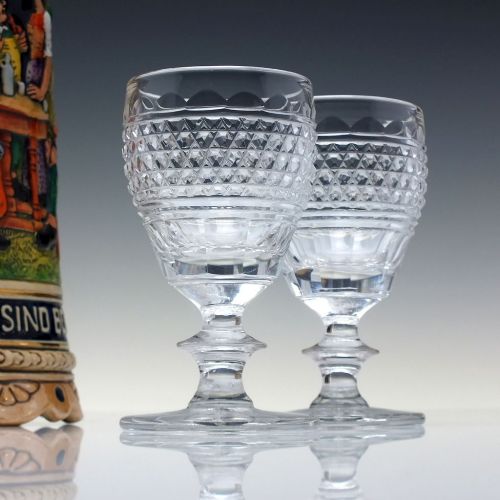
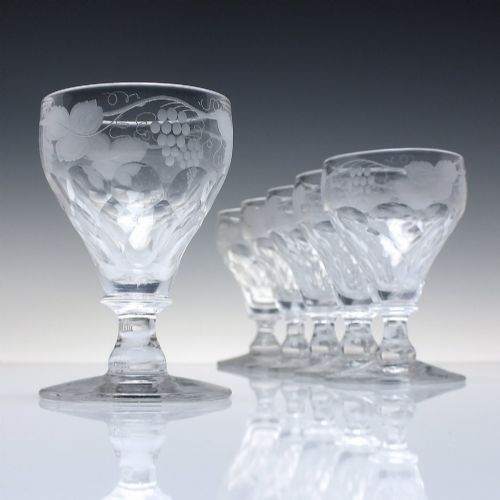
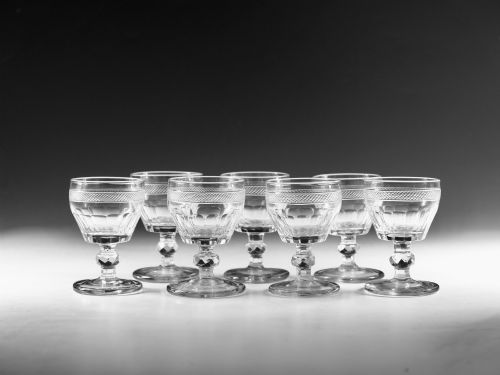
Cut crystal port glasses are small, faceted drinking vessels designed for fortified wine, offering considerable weight and brilliance in the hand.
Cut Crystal Port Glasses
When you search for cut crystal port glasses, you enter a domain of heavy, light-catching glassware designed specifically for fortified wine. The pieces appearing here span the Georgian, Regency, Victorian, and Edwardian periods, alongside related decanters and barware.
The versions you are most likely to meet on this page include antique port glasses, sherry glasses, and dessert wine glasses, often accompanied by matching decanters. These items reflect the formal dining habits of the nineteenth and early twentieth centuries, scaled precisely for strong wines.
Makers such as Webb appear in the historical archive alongside uncredited regional English workshops. The material evidence centres firmly on lead crystal and clear glass, shaped into stems and bowls that catch the candle or gas light of a traditional dining room.
Materials and construction
The primary material visible across these listings is lead crystal, prized for its high refractive index and heavy feel. Glassmakers shaped molten metal into bowls and stems before applying intricate surface decoration by hand.
Cutting and engraving techniques defined the period style, producing geometric facets, flutes, and intaglio patterns on clear glass. Artisans also utilised silver plate and cork for associated decanters and stoppers.
Cut Crystal Port Glasses Retail Price Guide 2026
Typical asking prices for cut crystal port glasses among the pieces listed under this phrase on Sellingantiques today, from the lower quarter to the upper quarter. They describe what is for sale here now, not the wider market.
Some nineteenth-century port glasses feature tiny bowls because eighteenth-century drinkers preferred their wine potent and served in modest measures.
Judging quality in antique glassware
Quality in these drinking vessels rests upon the crispness of the cutting and the purity of the metal. Sharp, deep facets disperse light cleanly, whereas worn or shallow incisions lack definition.
The weight of the lead crystal and the balance of the stem distinguish finer productions from heavier utility ware. Consistency across a set indicates skilled hand-production rather than mass output.
Webb
The Cut Crystal Port Glasses Glossary
- Port glass
- A small stemmed drinking vessel designed for fortified wine. These pieces generally feature small bowls to concentrate the aroma.
- Intaglio
- A design carved into the surface of the glass rather than raised above it. This technique creates a sunken motif that catches the light differently than relief cutting.
- Lead crystal
- Glass containing a significant proportion of lead oxide. This addition increases the weight, clarity, and refractive qualities of the material.
- Prussian style decanter
- A form of bottle featuring horizontal neck rings. These rings provided a secure grip for wet hands when pouring at the dining table.
- Regency
- A design period spanning the early nineteenth century. Pieces from this era often display restrained neoclassical proportions and clean optical cutting.
Cut Crystal Port Glasses: Frequently Asked Questions
What are cut crystal port glasses?
These are small, footed vessels fashioned from heavy lead crystal and decorated with hand-cut facets. They were traditionally used to serve port and other fortified wines at the conclusion of a meal.
Today, they survive as functional antiques that bring period elegance to modern dining tables.
How do I date an old port glass?
Dating relies on examining the form of the bowl, the thickness of the metal, and the style of the cutting. Earlier pieces often display thicker lead and hand-polished pontil marks on the base.
Comparing the silhouette to documented examples from the Georgian or Victorian eras helps narrow down the decade of manufacture.
Can I use antique port glasses daily?
Many collectors prefer to use these glasses for special occasions rather than daily dining. Hand-washing in warm, soapy water is essential to preserve the clarity of the lead crystal.
Avoid thermal shock by steering clear of dishwashers and extreme temperature changes.
Why are they so heavy?
The weight comes from the high lead content used in the glass formulation. This heavy metal oxide increases the density and refractive index of the material.
Heavier crystal allowed artisans to cut deeper facets without compromising the structural integrity of the small bowl.