




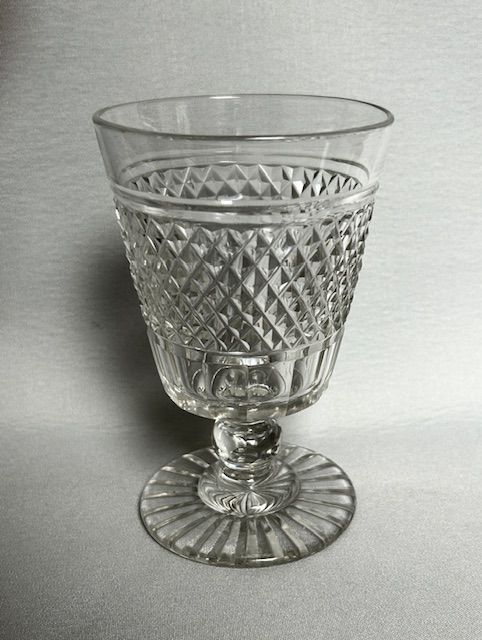


Georgian Cut Glass Stemware
Georgian cut glass stemware brings heavy lead crystal and bright facet cutting straight to the table, offering a tangible link to eighteenth and nineteenth century dining.
Georgian Cut Glass Stemware
When you search for Georgian cut glass stemware, you encounter drinking vessels, rummers, wine glasses, port glasses, and ale flutes spanning the eighteenth century, the Regency era, and the early nineteenth century. These forms reflect the drinking habits of the period, from substantial table rummers to delicate cordial and jelly glasses.
The pieces appearing on this page most frequently showcase facet cut stems, engraved bowls, and wide foot bases. You will find items attributed to specific periods such as seventeen-seventy, seventeen-eighty, and eighteen-hundred, alongside pieces decorated with hop and barley motifs, Jacobite sympathy symbols, or James Giles gilding.
How they were made
Maker workshops utilised lead crystal, lead glass, flint glass, and clear glass to achieve the necessary weight and refractive brilliance for cutting. The high lead content allowed craftsmen to grind deep facets and polished geometric patterns directly into the thick walls of the vessel.
Decoration often combined wheel engraving with surface cutting, occasionally finished with gold leaf. Artisans shaped stems by faceting or pulling plain glass, then attached wide foot bases to anchor the substantial weight of rummers and goblets.
Georgian Cut Glass Stemware Retail Price Guide 2026
Typical asking prices for georgian cut glass stemware among the pieces listed under this phrase on Sellingantiques today, from the lower quarter to the upper quarter. They describe what is for sale here now, not the wider market.
Raise a toast with a Jacobite sympathy glass and ponder the clandestine loyalties hidden in the hop and barley engraving.
What varies in quality
The distinction between standard vessels and superior pieces lies in the clarity of the metal and the crispness of the wheel work. Heavier rummers and deeply cut hobnail patterns demand greater technical control from the glasshouse.
Engraving quality also sets examples apart, particularly where floral motifs or political emblems like Jacobite symbols show fine detail. The proportion between the bowl, the cut stem, and the wide foot base dictates the overall balance of the glass.
James Giles
The Georgian Cut Glass Stemware Glossary
- Lead crystal
- A heavy glass variety containing lead oxide, which increases brilliance and makes the material softer for deep cutting. This metal defines the weight of eighteenth century drinking vessels.
- Facet cut
- A surface decoration formed by grinding flat planes into the stem or bowl of the glass. These polished planes catch candlelight and daylight alike.
- Rummer
- A large, robust drinking glass used for ale, wine, or punch during the Georgian and Regency periods. These substantial vessels frequently feature bucket or pan shapes.
- Flint glass
- An early term for high clarity glass developed in England, prized for its transparency. It provided an ideal canvas for detailed engraving and facet cutting.
- Ale flute
- A tall, slender drinking glass designed to retain the carbonation of ale or beer. They often display engraved botanical motifs such as hops and barley.
Georgian Cut Glass Stemware: Frequently Asked Questions
What is Georgian cut glass stemware used for?
These vessels served various drinking traditions at the Georgian table, accommodating wine, port, sherry, cordials, and ale. Larger rummers handled heavy pours of punch or beer during communal dining.
Today, collectors use them to recreate historical table settings or display the heavy lead crystal forms in cabinets. Their robust weight makes them surprisingly tactile objects for modern use.
How do I tell an 18th-century glass from a Regency one?
Eighteenth-century examples often feature lighter facet-stem profiles, plain stems with detailed engraving, or specific motifs like Jacobite symbols associated with mid to late seventeen-hundreds production. The glass metal itself may show tiny bubbles and characteristic surface wear.
Regency pieces tend toward heavier, more substantial forms such as hobnail cut bucket rummers and pan rummers. The cutting becomes bolder and the overall presence of the glass feels noticeably heavier by eighteen-hundred.
Why are some glasses called rummers?
The term rummer describes a large, deep-bowled drinking glass that emerged in popularity during the late eighteenth and early nineteenth centuries. They were designed for hearty portions of ale, wine, or punch.
Their sturdy construction and wide foot bases helped prevent tipping on crowded dining tables. Bucket and pan rummers represent the most common silhouettes found in this group.