



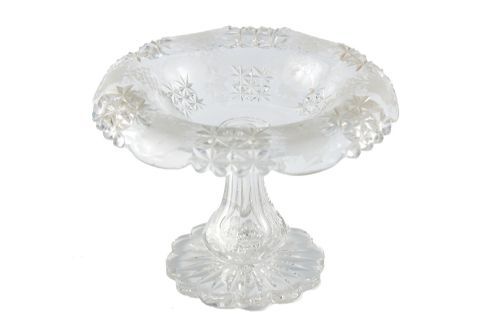


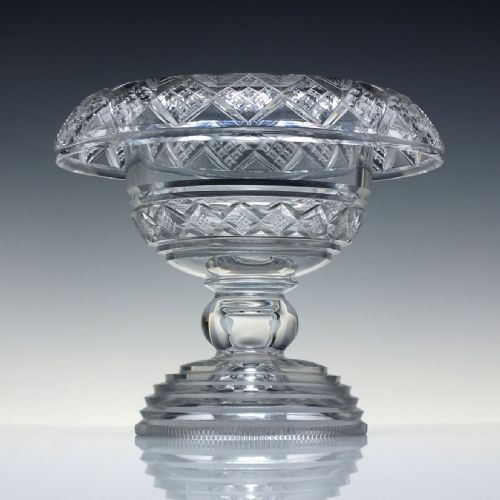


Cut Crystal Pedestal Bowl
These cut crystal pedestal bowl examples combine weighty glass with elevated stands, bringing sparkle and presence to any room.
Cut Crystal Pedestal Bowl
When you search for a cut crystal pedestal bowl, you are looking at footed vessels designed to hold fruit, sweets, or simply to stand as decorative centrepieces on a table. The pieces available here span from the Georgian period through the Victorian and Edwardian eras, encompassing various forms of footed bowls, comports, and tazzas.
You will most frequently encounter Victorian and 19th-century examples on this page, often featuring deep diamond cutting or hobnail patterns. These range from simple glass vessels to grander creations mounted on silver plate, gilt bronze, or Dutch silver bases.
Many of these objects served specific functions in historic dining rooms, acting as fruit bowls or sweetmeat jars before transitioning into purely decorative display pieces today. Their elevated pedestals lift the heavy cut glass upward, catching the light from all angles.
What varies in quality
The clarity and weight of the glass dictate the baseline quality, with high-lead crystal offering a more resonant ring and sharper refraction of light. Crispness in the cutting distinguishes superior work, where every facet meets at exact angles without slip marks or uneven depths.
The integration between the glass bowl and its metal mount reveals the maker's hand, particularly in complex pieces involving gilt bronze or silver plate. Heavier, thicker metalwork and secure, balanced fitting separate fine showroom-grade centrepieces from utilitarian tablewares.
Cut Crystal Pedestal Bowl Retail Price Guide 2026
Typical asking prices for cut crystal pedestal bowl among the pieces listed under this phrase on Sellingantiques today, from the lower quarter to the upper quarter. They describe what is for sale here now, not the wider market.
Some nineteenth-century tables required sailors on duty as centrepiece mounts, proving that Victorian dining could handle a touch of nautical drama.
Christofle et Cie·Waterford
The Cut Crystal Pedestal Bowl Glossary
- Comport
- A shallow bowl raised on a high foot or pedestal, frequently used for serving fruit or sweetmeats during formal nineteenth-century dining. These pieces often match smaller tazzas in larger table services.
- Tazza
- A small, stemmed pedestal dish or shallow bowl designed to stand upon a dining table for display or service. The term derives from the Italian word for cup.
- Hobnail
- A raised, faceted glass-cutting pattern resembling the iron hobnails used on country boots. This texture provides a tactile grip and catches light across many small planes.
- Sweetmeat
- A confection such as crystallized fruit, nuts, or candied peel served from specialised covered jars or bowls. These vessels often feature lids and elevated pedestals.
- Lead crystal
- Glass containing a high proportion of lead oxide, which increases its weight, refractive index, and softness for deep cutting. This material forms the heavy, brilliant body of the finest bowls.
Cut Crystal Pedestal Bowl: Frequently Asked Questions
What is a pedestal bowl used for?
Historically, these elevated vessels held fruit, sweets, or flowers as the centrepiece of a formal dining table. Today, they serve primarily as decorative objects that catch light and anchor a room's display.
Their raised forms make them suitable for placing on sideboards, mantelpieces, or central tables where their cut glass patterns remain visible from a distance.
How do I date an old crystal bowl?
Dating relies on examining the cutting style, the pontil mark on the underside, and the material composition of any attached mounts. Georgian pieces often display hand-polished facets and heavier lead content, while Victorian examples introduce machine-aided precision and diverse metal bases.
Matching stylistic clues like Victorian hobnail patterns or Edwardian proportions helps narrow the decade of manufacture when hallmarks are absent.
Are these bowls dishwasher safe?
Historic lead crystal and delicate silver plate mounts require careful hand washing in warm water with mild soap. Sudden temperature changes or harsh dishwasher detergents can cloud the glass or damage metal patination.
Using a soft cloth to dry the facets preserves the brilliant shine and protects any fitted bronze or silver components from corrosion.
What is the difference between glass and crystal?
Crystal contains lead oxide, which adds significant weight, greater clarity, and a higher refractive index than standard soda-lime glass. This heavier material allows artisans to cut deeper, sharper facets without fracturing the structure.
When gently tapped, genuine lead crystal produces a clear, resonant ring rather than a dull thud.