




Cut Crystal Fruit Bowl
A cut crystal fruit bowl anchors a dining table with heavy refractive brilliance and historical weight, spanning Georgian simplicity to Edwardian flourish.
Cut Crystal Fruit Bowl
A cut crystal fruit bowl serves as a grand table centrepiece, designed to hold fruit or stand alone as a decorative vessel. These items emerge from periods ranging through the Georgian, Victorian, Edwardian, and Art Deco eras, carrying diverse regional aesthetics.
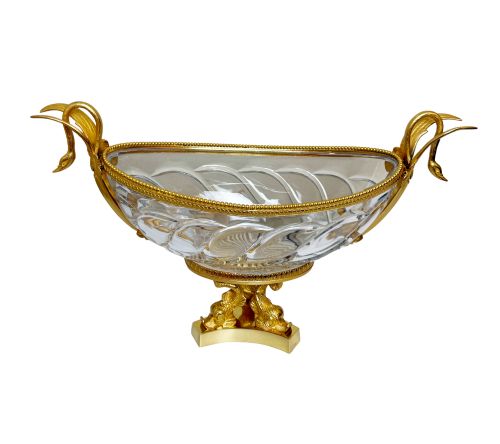
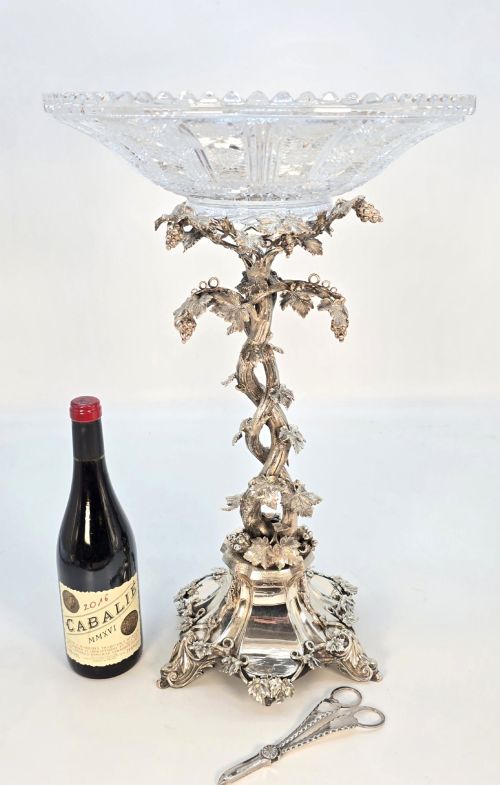
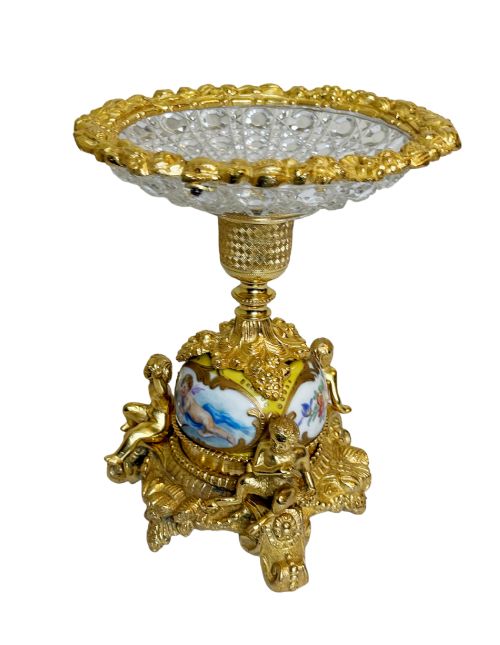
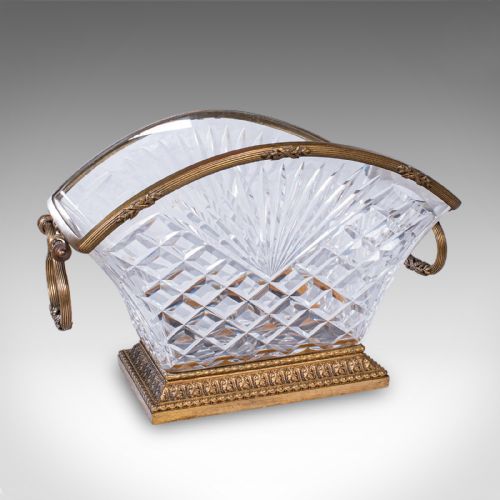
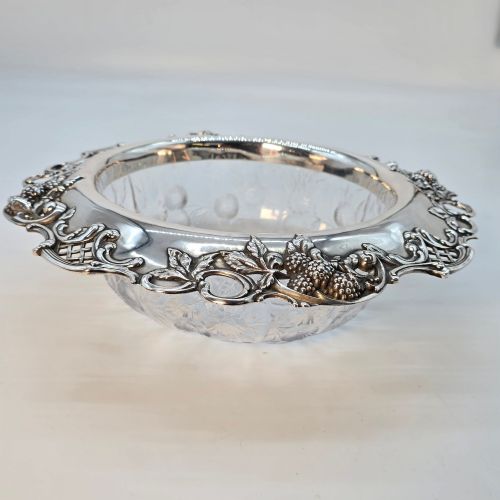
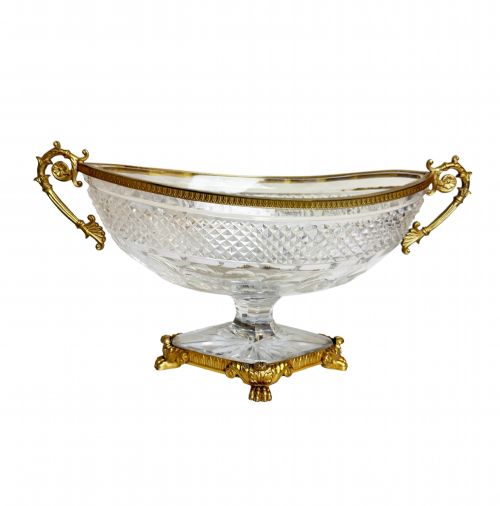
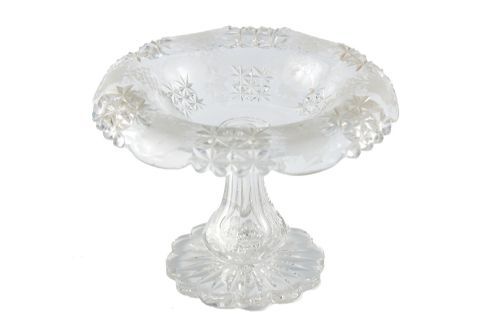
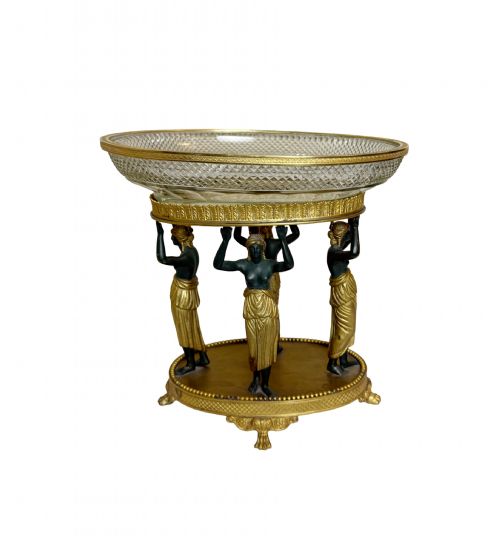
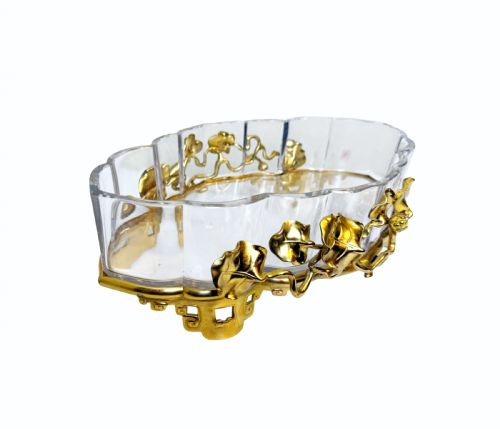
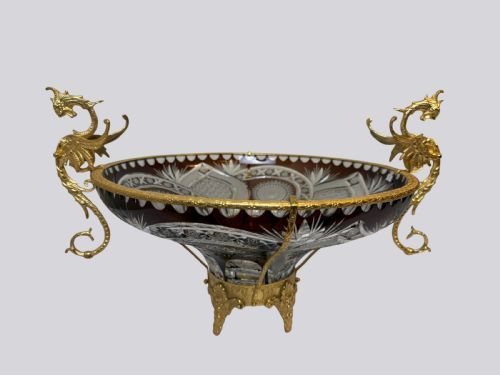
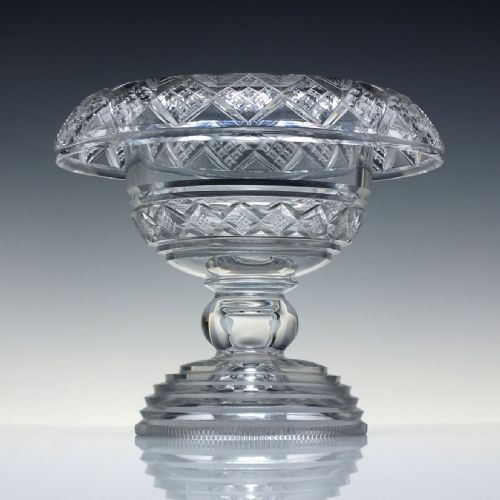
The objects take many forms, appearing as pedestal comports, low serving dishes, tazzas, and elaborate mounted centrepieces. On this page, buyers frequently encounter heavy Victorian and Edwardian cut glass dishes alongside continental pieces framed in gilt bronze and ormolu.
Originating from English, Irish, French, and Belgian workshops, these vessels reflect the shifting tastes of the nineteenth and early twentieth centuries. Some combine simple lead crystal with silver plate, while others integrate complex coloured glass overlays and cast bronze mounts.
How they were made
Makers produced these bowls using hand-blown lead crystal or heavy cut glass, shaped by glassblowers before cold-working artisans applied geometric or naturalistic incisions. Workers cut deep facets, flutes, and hobnail patterns into the material using iron and stone wheels, then polished the surfaces to achieve high transparency.
Many bowls integrate metal components, pairing the glass with silver plate, sterling silver, ormolu, and gilt bronze frames. Foundries cast these metal mounts separately, often incorporating cherubs or architectural details to support or encircle the glass vessels.
Listings feature lead crystal, cut glass, silver plate, and gilt bronze spanning from Georgian eras through the Art Deco period.
What varies in quality
The distinction between tiers rests upon the depth and crispness of the glass cutting, alongside the weight of the lead crystal. Superior pieces display sharp, clean facets that refract light evenly without optical distortion in the body of the glass.
Metalwork mounts also define the standard of a piece, where finely chased gilt bronze or substantial silver plating elevates the entire object. The integration between the glass bowl and its metal stand reveals the precision of the original maker.
Tiffany and Co·Val St Lambert·Christofle et Cie·Stuart Crystal·Waterford
The Cut Crystal Fruit Bowl Glossary
- Hobnail pattern
- A raised, faceted glass design resembling the hobnails used in heavy boots. This texture creates intense light refraction across the surface of the bowl.
- Tazza
- A shallow ornamental bowl set upon a pedestal base or foot. It functions primarily to display fruit or sweetmeats on a formal dining table.
- Ormolu
- Finely ground high-carat gold applied to a bronze base using a mercury amalgamation process. This technique gives metal mounts a rich, warm metallic lustre.
- Comport
- A elevated vessel or pedestal bowl used for serving fruit. It lifts the contents above the surface of the table to create height in a dining arrangement.
Cut Crystal Fruit Bowl: Frequently Asked Questions
How do I clean an antique cut crystal fruit bowl?
Wash the glass by hand in lukewarm water using a mild detergent, placing a towel at the bottom of the sink to prevent chipping.
Keep metal mounts dry and avoid submerging silver-plated or gilt bronze frames to protect the patination.
Can I use these bowls for serving food?
These vessels are suitable for serving dry fruits, nuts, or confectionery during gatherings.
Acidic foods should not remain in contact with older lead crystal or metal mounts for extended periods.
How do I distinguish Georgian cut glass from Victorian pieces?
Georgian glass frequently exhibits a darker metal tone with deep, hand-polished facets and heavier proportions.
Victorian and Edwardian items often display brighter metal content, more mechanical precision in the cutting, and a wider variety of applied colours.
Where should I place a heavy centrepiece bowl?
Position the vessel on a sturdy dining table or sideboard where its weight and height can be appreciated safely.
Ensure the surface remains level, particularly when displaying pieces set within metal frames.