
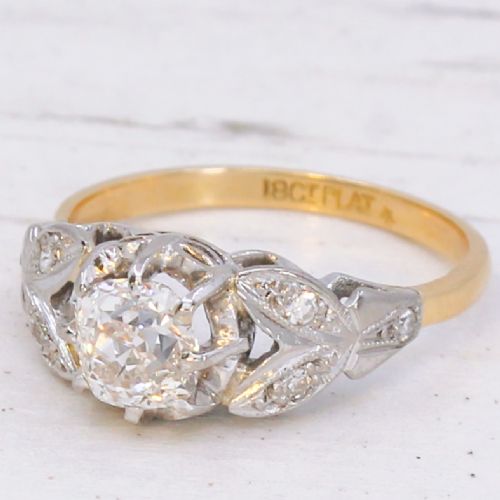
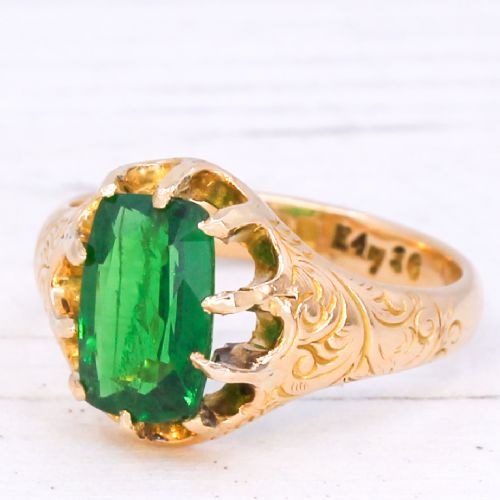
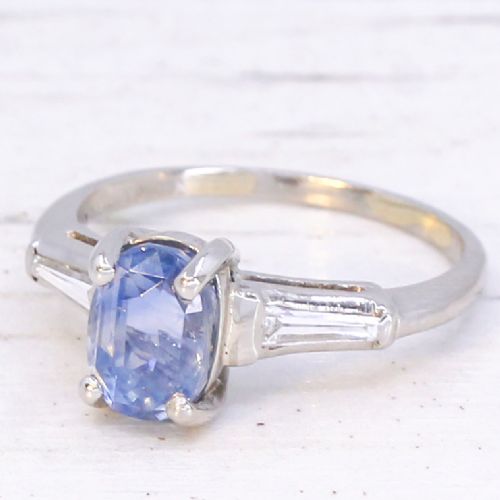
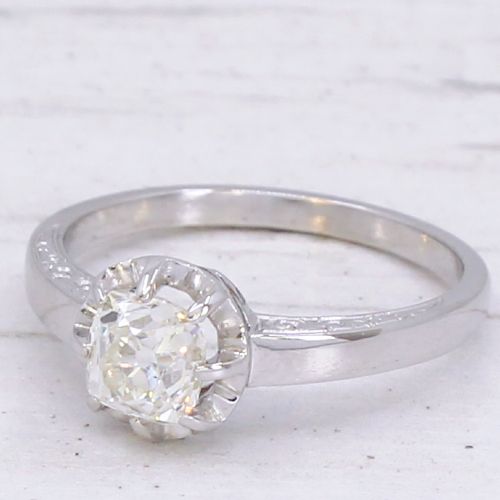



Cushion Cut Solitaire
Cushion cut solitaire rings and pendants showcase a single central gemstone shaped with soft corners and facets that catch candlelight.
Cushion Cut Solitaire
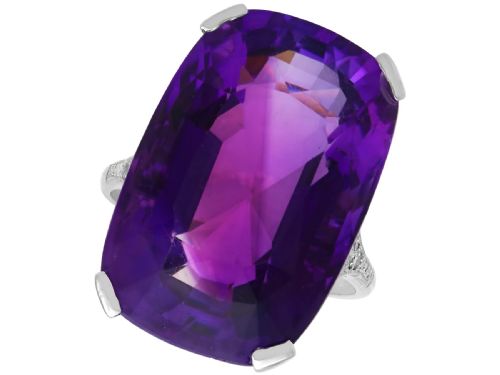
The stones themselves vary widely beyond traditional diamonds. While old mine and old cut diamonds appear frequently, the selection incorporates vibrant coloured gems such as sapphires, emeralds, tsavorites, garnets, aquamarines, and amethysts.
Mountings span multiple historical periods and aesthetic movements, reflecting the shifting tastes of jewellers from the eighteenth century into the twentieth. Platinum and various grades of gold, including yellow gold and white gold, serve as the primary settings for these single stone designs.
Materials and construction techniques
Goldsmiths and platinum smiths utilised durable precious metals to secure the central cushion shaped stones. Platinum became particularly favoured during the Art Deco era for its strength in delicate, geometric mountings, while yellow gold and white gold predominated in earlier Victorian and Edwardian examples.
Hand-cut facets defined the character of stones before modern standardised machinery existed. Old mine cuts and old cushion cuts were shaped by hand to maximise brilliance under artificial lighting, resulting in distinctive proportions that distinguish them from contemporary brilliant cuts.
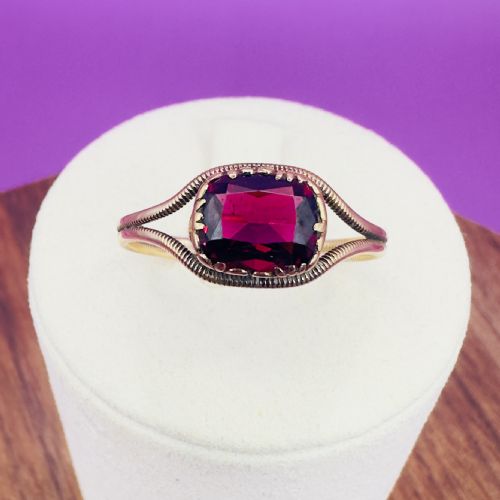
Some nineteenth century garnet solitaires manage to look surprisingly modern despite being older than your great-grandparents.
Factors determining quality and execution
Quality rests in the optical performance and proportions of the central cushion cut stone rather than mere carat weight. Symmetry in hand-cut facets and the retention of historic cutting characteristics distinguish superior examples.
The integrity of the metal setting and the harmony between the gemstone and its mounting dictate the overall execution. Fine craftsmanship ensures the stone sits securely while allowing maximum light entry through the pavilion.
The Cushion Cut Solitaire Glossary
- Solitaire
- A jewellery piece featuring a single mounted gemstone without smaller companion stones. This setting style focuses attention entirely upon the central gem.
- Old mine cut
- An early form of diamond cutting featuring a nearly square girdle, high crown, and large culet facet. These stones were shaped by hand before the advent of modern machinery.
- Transition cut
- A diamond cutting style that bridges old cut stones and modern brilliant cuts, prevalent during the early twentieth century. It displays smaller table facets and increased brilliance.
- Culet
- The small facet at the bottom tip of a gemstone. Older cushion cut stones frequently exhibit a prominent open culet visible through the table.
Cushion Cut Solitaire: Frequently Asked Questions
What is a cushion cut solitaire?
A cushion cut solitaire is a ring or pendant featuring a single central gemstone with rounded corners and curved sides, resembling a pillow shape.
These pieces span multiple historical periods, including Georgian, Victorian, Edwardian, and Art Deco eras, utilising both diamonds and coloured gemstones.
How do I identify an old cut diamond?
Old cut diamonds display smaller tables, higher crowns, and larger facets compared to modern stones. They are hand-cut to optimize sparkle under gaslight or candlelight.
Examining the culet at the base often reveals a visible flat facet rather than a sharp point.
What metals were used in antique solitaire rings?
Antique solitaire rings primarily employ platinum, yellow gold, and white gold. Platinum gained extensive popularity during the Art Deco period for secure, fine settings.
Earlier Victorian and Georgian pieces frequently utilise various karatages of yellow gold, including fifteen carat and eighteen carat compositions.
Can I wear a cushion cut solitaire daily?
These antique and vintage pieces suit daily wear provided they receive proper care and periodic inspection by a professional jeweller. Platinum and gold settings securely hold the stones, though delicate older prongs benefit from occasional checks.
Removing rings during rigorous physical activities helps preserve the historical mountings.